
Hiring a Contractor for an Indoor Air Quality Upgrade
Hiring a contractor for an indoor air quality upgrade? Get expert tips on costs, vetting, and questions to ask. Call (833)-365-8755 for guidance.

Learn more about Air Quality and Environmental Testing for guides, costs, and what to expect.
Compare Air Quality and Environmental Testing Pros Near You

Enter your ZIP code to compare top-rated local professionals and request free quotes.
Your home should be a refuge, but the air inside it can be two to five times more polluted than the air outside, according to the EPA. From lingering cooking odors and pet dander to volatile organic compounds off-gassing from furniture and building materials, the invisible threats in your indoor air can trigger allergies, exacerbate asthma, and even contribute to long-term health issues. If you have been waking up congested, noticing dust settling minutes after you clean, or simply want to protect your family from airborne pathogens, an indoor air quality (IAQ) upgrade is one of the most impactful home improvements you can make.
But here is the catch: IAQ upgrades are not a one-size-fits-all purchase. The right solution for a drafty old house in Denver may be entirely wrong for a tightly sealed new build in Houston. That is why hiring a contractor for an indoor air quality upgrade is a decision that demands more than a quick online search for the lowest bid. You need a professional who understands building science, can diagnose the root causes of poor air quality, and will design a system that works with your home's existing HVAC infrastructure. This guide will walk you through the options, the costs, and the critical questions to ask before you sign a contract.
Understanding the Core IAQ Upgrade Options
Before you start interviewing contractors, it helps to understand the menu of solutions available. Most IAQ upgrades fall into three broad categories: ventilation, filtration, and humidity control. Each addresses a different problem, and many homes benefit from a combination of strategies.
Ventilation is about bringing fresh air in and pushing stale air out. Modern homes are built tight to save energy, but that tightness can trap pollutants indoors. A simple exhaust fan in a bathroom or kitchen helps, but for whole-home ventilation, contractors often recommend a heat recovery ventilator (HRV) or an energy recovery ventilator (ERV). These systems exchange stale indoor air for fresh outdoor air while recovering heat (and in the case of an ERV, moisture) from the outgoing air. This keeps your home fresh without sending your heating and cooling bills through the roof.
Filtration is the most familiar upgrade. Standard furnace filters capture large particles, but high-MERV (Minimum Efficiency Reporting Value) filters can trap microscopic pollutants like pollen, mold spores, and even some viruses. MERV ratings range from 1 to 20; for residential use, MERV 13 to 16 is often the sweet spot for balancing filtration efficiency with airflow. However, not every HVAC system can handle a high-MERV filter without modification, which is why a contractor's assessment is critical.
Humidity control is often overlooked but equally important. Too much humidity breeds mold and dust mites; too little causes dry skin, static, and respiratory irritation. Whole-home humidifiers and dehumidifiers can be integrated into your HVAC system to keep humidity levels in the ideal 30 to 50 percent range.
Other specialized upgrades include UV germicidal lights (which neutralize bacteria and mold on the evaporator coil), bipolar ionization (which clumps particles for easier filtration), and duct sealing or cleaning. A qualified contractor will help you prioritize based on your specific concerns and budget.
Why IAQ Expertise Matters When Hiring a Contractor
Not all HVAC contractors are created equal when it comes to indoor air quality. Many are excellent at installing and repairing standard heating and cooling equipment, but IAQ diagnostics require a deeper understanding of building science, airflow dynamics, and contaminant pathways. Hiring a contractor for an indoor air quality upgrade without verifying their IAQ credentials is like hiring a general practitioner for brain surgery: you might get lucky, but the stakes are high.
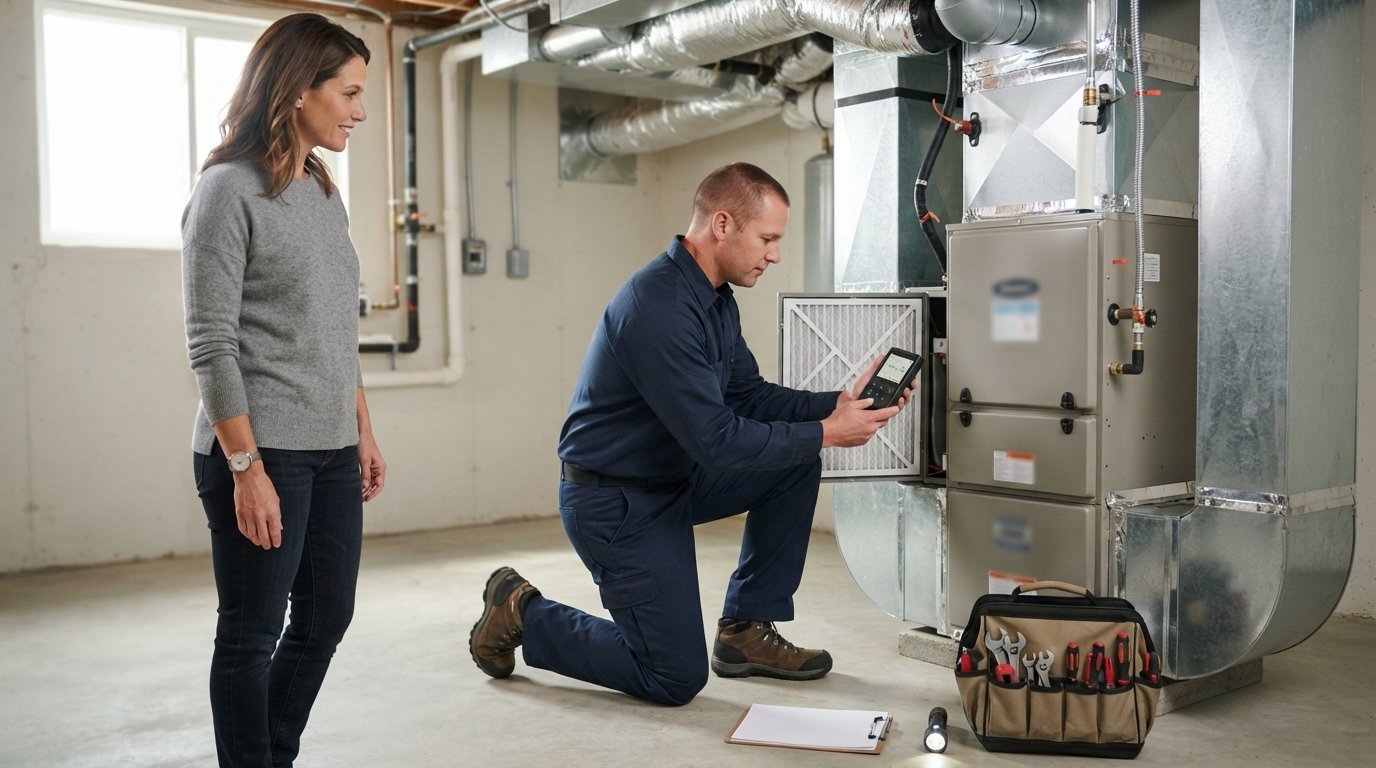
An IAQ-focused contractor will start with a comprehensive assessment. They will look beyond your HVAC equipment and consider your entire home as a system. They might perform a blower door test to measure air leakage, use a particle counter to identify pollutant hotspots, or inspect your ductwork for leaks and insulation gaps. They will also ask detailed questions about your health concerns, your home's age and construction, and any recent renovations.
In contrast, a contractor who lacks IAQ expertise might simply sell you the most expensive filter or a UV light without diagnosing the underlying problem. For example, if your home has a mold issue caused by excess humidity, adding a high-MERV filter will not solve the problem; you need to address the moisture source first. Similarly, if your ducts are leaky, a whole-home filtration system will be less effective because unfiltered air will be drawn in from attics or crawl spaces.
When vetting contractors, look for certifications such as the EPA's Indoor airPLUS program, the National Air Duct Cleaners Association (NADCA) certification for duct work, or manufacturer-specific training for products like ERVs and high-MERV systems. Ask directly: "How do you diagnose IAQ problems?" and "What testing equipment do you use?" A confident, detailed answer is a good sign.
Cost Ranges for Common IAQ Upgrades
Budgeting for an IAQ upgrade is tricky because costs vary widely by region, home size, and the complexity of the installation. However, having a ballpark range helps you compare quotes and avoid sticker shock. The following figures are national averages for professional installation, including equipment and labor.
- High-MERV filtration system: $500 to $1,500. This may include a media cabinet, filter, and any duct modifications needed to accommodate the larger filter.
- Whole-home humidifier or dehumidifier: $800 to $2,500. Steam humidifiers are at the higher end; bypass humidifiers are more affordable.
- Heat recovery ventilator (HRV) or energy recovery ventilator (ERV): $1,500 to $4,000. Installation complexity (especially in existing homes without dedicated ductwork) drives much of the cost.
- UV germicidal light: $300 to $1,000. Simple coil-mounted units are less expensive; whole-duct systems cost more.
- Duct sealing and cleaning: $500 to $1,500. Sealing is often priced per linear foot or by the number of leaks.
These ranges are guidelines, not guarantees. A contractor may recommend a combination of upgrades, and the total project cost can easily reach $5,000 or more for a comprehensive whole-home IAQ package. Always get at least three written estimates and make sure each quote itemizes equipment, labor, permits (if required), and any follow-up testing. Be wary of any contractor who quotes a price without inspecting your home first.
How to Vet an IAQ Contractor: A Step-by-Step Framework
Finding a trustworthy contractor is the most important part of the process. A poorly installed IAQ system can underperform, waste energy, or even create new problems like pressure imbalances that draw pollutants into living spaces. Use the following framework to separate qualified professionals from pretenders.
- Verify licensing and insurance. In most states, HVAC contractors must hold a specific license. Ask for the license number and verify it with your state's licensing board. Also, confirm that the contractor carries both general liability insurance and workers' compensation coverage. If they cannot provide proof, walk away.
- Check IAQ-specific credentials. Look for certifications from organizations like the Indoor Air Quality Association (IAQA), the Building Performance Institute (BPI), or manufacturer training for the specific products you are considering. These demonstrate a commitment to ongoing education in IAQ.
- Ask for references and case studies. A contractor who specializes in IAQ should be able to share examples of similar projects they have completed. Ask for references from customers who had similar concerns (e.g., allergies, mold, humidity issues) and follow up with those references.
- Request a detailed proposal. The proposal should include a diagnosis of your home's specific issues, the recommended solutions with model numbers, a clear scope of work, a timeline, and a total price. It should also outline any required maintenance and filter replacement schedules.
- Confirm post-installation testing. A reputable IAQ contractor will offer or include post-installation testing to verify that the system is performing as intended. This might include measuring airflow, checking pressure differentials, or using a particle counter to confirm improved air quality.
If you have had a previous contractor go out of business mid-project, you know how important it is to verify a contractor's stability and reputation. For more advice on protecting yourself, see our guide on what to do if a contractor went out of business mid project. The same due diligence principles apply when hiring for IAQ work.
Key Questions to Ask Before Signing an IAQ Contract
Once you have narrowed your list to two or three contractors, schedule in-home consultations. Pay attention not just to what they say, but how they say it. Do they listen to your concerns, or do they push a predetermined solution? Use these questions to gauge their expertise and honesty.
- "What diagnostic tests will you perform to identify the source of my air quality problems?" (Look for answers that mention blower door tests, particle counts, moisture mapping, or duct leakage testing.)
- "How will you ensure that the recommended system is properly sized for my home and existing HVAC equipment?" (A good contractor will perform a Manual J load calculation or at least measure airflow.)
- "What maintenance will this system require, and what are the ongoing costs?" (Filters, UV bulbs, and ERV cores all need periodic replacement.)
- "Will you provide a written performance guarantee or offer post-installation testing?" (This separates professionals from installers who just want to sell boxes.)
- "Can you provide references from customers with similar homes and similar IAQ concerns?" (And then actually call them.)
Also ask about warranties. Equipment warranties typically come from the manufacturer, but labor warranties vary by contractor. A one-year labor warranty is standard; some contractors offer longer terms on IAQ systems. Get all warranty details in writing.
Red Flags to Watch For
Even with a solid vetting process, some contractors may raise red flags. Be cautious if a contractor pressures you to sign on the spot, offers a price that is dramatically lower than competitors (often a sign of cut-rate equipment or hidden fees), or cannot explain the science behind their recommendations. Also, avoid contractors who propose solutions without inspecting your home or who dismiss your concerns about specific pollutants. A true IAQ professional will welcome questions and take the time to educate you.
Another red flag: a contractor who does not address ventilation. If your home is tightly sealed and they only recommend filtration, you may still have a problem with stale air and accumulated VOCs. A balanced approach that considers fresh air exchange, filtration, and humidity control is the hallmark of a knowledgeable contractor.
Integrating IAQ Upgrades with Your Existing HVAC System
One of the most common mistakes homeowners make is treating IAQ equipment as an add-on that can be slapped onto any HVAC system. In reality, your heating and cooling system is the delivery mechanism for your IAQ upgrades, and any changes must be carefully integrated. For example, adding a high-MERV filter increases resistance to airflow, which can strain your blower motor and reduce system efficiency if not accounted for. A contractor should evaluate your ductwork's static pressure and blower capacity before recommending a filter upgrade.
Similarly, an ERV or HRV requires dedicated ductwork to bring fresh air in and exhaust stale air out. In a retrofit, this can be challenging and may require creative routing through attics, closets, or exterior walls. A skilled contractor will plan the installation to minimize disruption and ensure the system operates efficiently.
If you are also planning to replace your furnace or air conditioner, consider bundling IAQ upgrades with that project. Doing so can save on labor costs and ensure that all components are designed to work together. Many contractors offer package pricing for combined HVAC and IAQ installations.
Financing and Budgeting for Your IAQ Upgrade
IAQ upgrades can be a significant investment, but they are also an investment in your family's health and comfort. If the upfront cost is a concern, ask contractors about financing options. Many HVAC companies partner with financing providers to offer low-interest loans or payment plans. Be sure to read the fine print and compare offers from multiple lenders.
For a broader look at how to budget for home projects and find vetted professionals, platforms like Repairmen connect homeowners with licensed local service professionals across the United States for appliance repair, remodeling, maintenance, and emergency repairs. Their directory and cost estimators can be a useful starting point as you plan your IAQ project and compare potential contractors.
Keep in mind that some IAQ upgrades may qualify for federal tax credits or local utility rebates. For example, certain high-efficiency ERVs and HVAC systems may be eligible for credits under the Inflation Reduction Act. Ask your contractor if they are familiar with available incentives and can help you apply.
Making the Final Decision
After you have gathered quotes, checked references, and asked your questions, take a step back and evaluate the entire picture. The lowest bid is rarely the best value if it comes from a contractor who lacks IAQ expertise or cuts corners on installation. Look for a contractor who communicates clearly, provides a detailed proposal, and demonstrates a genuine interest in solving your specific air quality problems.
Remember that hiring a contractor for an indoor air quality upgrade is a partnership. The best outcomes happen when you are informed, ask questions, and choose a professional who treats your home as a system rather than a collection of parts. With the right contractor and the right upgrades, you can breathe easier knowing that the air inside your home is clean, fresh, and healthy.