
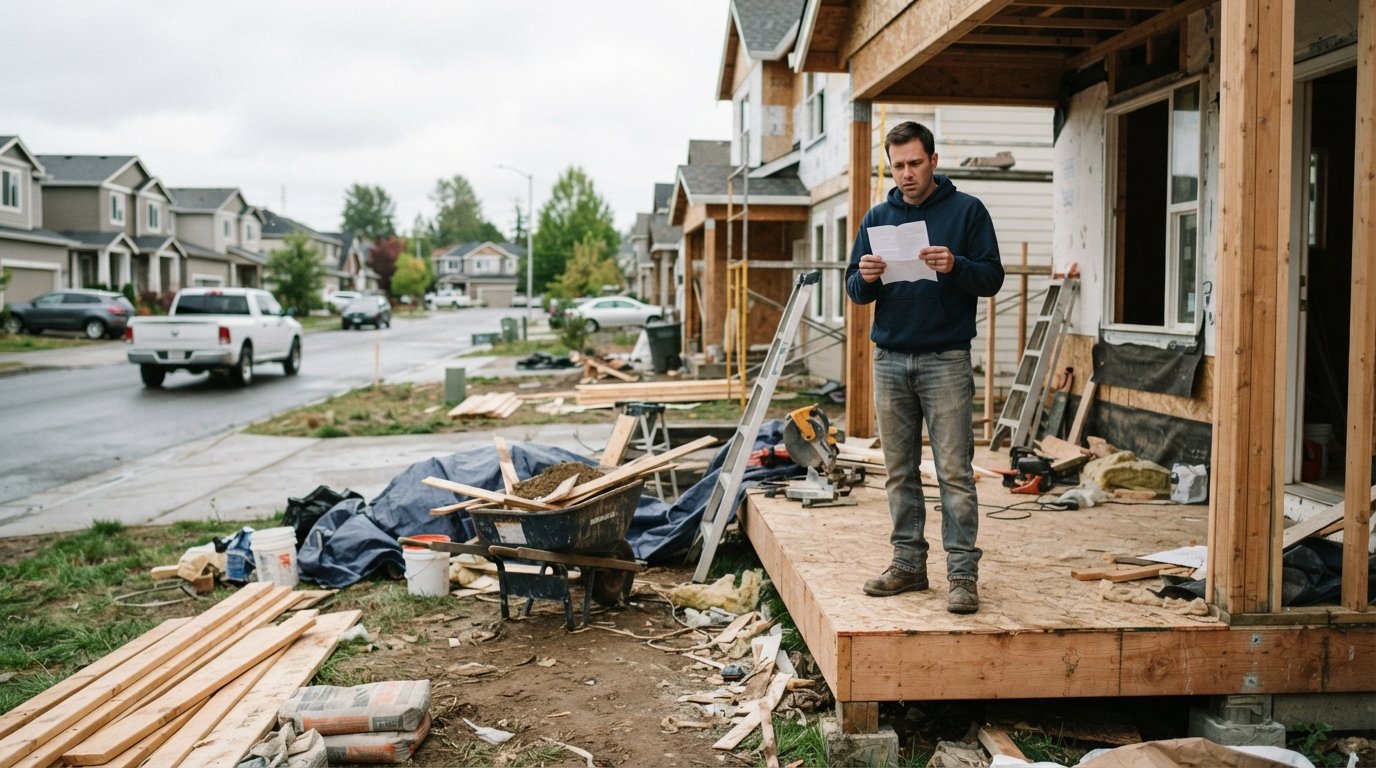
How to Spot a Contractor Who Will Abandon a Job
Identify red flags early and protect your deposit. Call (833)-365-8755 to compare quotes from independent local providers and avoid abandonment.

Learn more about General Contracting for guides, costs, and what to expect.
Compare General Contracting Pros Near You

Enter your ZIP code to compare independent local professionals and request free quotes.
You hired a contractor, paid a deposit, and watched the crew disappear. It is a scenario that plays out far too often, leaving homeowners with unfinished projects, drained bank accounts, and a mess to clean up. The good news is that contractors who abandon jobs usually broadcast warning signs long before they vanish. Learning how to spot a contractor who will abandon a job is not about being paranoid; it is about being prepared. This guide walks you through the behavioral red flags, financial stress signals, contract terms, and early warning signs that separate reliable professionals from those who may walk off the job.
Behavioral Red Flags: Pressure Tactics and Vague Promises
One of the earliest indicators of a contractor who may abandon your project is how they behave during the sales and negotiation phase. Reliable contractors are typically busy, and they do not need to pressure you into signing a contract on the spot. If a contractor insists on a large upfront payment before any work begins, especially if they demand cash or a check made out to an individual rather than a business, that is a serious red flag. According to industry guidelines, deposits should generally cover materials, not the contractor's entire profit. A request for 50 percent or more upfront is a sign that the contractor may be using your money to fund other projects or cover existing debts.
Another behavioral warning is vagueness about schedules. Ask the contractor for a detailed timeline with start and end dates, including milestones. If they cannot provide a clear schedule or repeatedly dodge questions about when work will begin, they may be overbooked or disorganized. Contractors who abandon jobs often start with enthusiasm but quickly become evasive when it is time to commit to dates. Pay attention to how they communicate: do they return calls promptly? Do they provide written estimates? If they are hard to reach before you hire them, they will likely be even harder to reach once they have your deposit.
Here are key behavioral red flags to watch for:
- Demanding a large upfront payment (more than 10 to 15 percent) before any work starts.
- Refusing to provide a written contract or detailed scope of work.
- Being evasive about start dates, timelines, or project milestones.
- Using high-pressure sales tactics, such as claiming a discount expires today.
- Lacking a physical business address or a verifiable online presence.
These signs do not guarantee abandonment, but they should prompt you to slow down and ask more questions. A professional contractor will welcome your diligence and provide clear answers. If they become defensive or dismissive, consider that a warning.
Financial Stress Signals in a Contractor's Operation
Contractors who are under financial strain are more likely to abandon a job, sometimes because they are juggling multiple projects and robbing Peter to pay Paul. How can you detect financial stress? Start by checking public records. Many states maintain a database of contractor licenses, and you can also check for liens or judgments against the business. If a contractor has a history of lawsuits or unpaid suppliers, that is a major red flag. You can also ask for references from recent clients and actually call them. Ask specific questions: Did the contractor finish on time? Were there any unexpected delays? Did they honor the contract terms?
Another financial signal is how the contractor handles material purchases. Reliable contractors often have accounts with suppliers and may order materials directly. If a contractor asks you to pay suppliers directly or requests that you purchase materials yourself, it could indicate they lack credit or cash flow. While this is not always a sign of trouble, it is worth questioning. Additionally, be wary of contractors who ask for payment in cash only or who refuse to provide receipts. These practices can be signs of a contractor operating on thin margins or trying to avoid taxes, both of which can lead to project abandonment.
Consider the contractor's equipment and crew. A contractor who shows up in a well-maintained truck with a consistent crew is likely more stable than one who arrives alone in a personal vehicle and hires day laborers. Turnover in crew members is another sign of instability. If the same faces are not on the job from day to day, the contractor may be struggling to retain workers, which can lead to delays and abandonment.
Contract Terms and Payment Schedules That Limit Your Exposure
The contract you sign is your best protection against abandonment. A well-written contract should include a detailed scope of work, a payment schedule tied to milestones, and a clear timeline. Never sign a contract that requires a large deposit before any work begins. Instead, structure payments so that you pay for work as it is completed. For example, you might pay 10 percent at signing, 25 percent when materials are delivered, 25 percent when the job is halfway done, and the remainder upon completion. This milestone-based approach limits your financial exposure if the contractor walks away.
Also, ensure the contract includes a clause about what happens if the contractor abandons the job. Some contracts specify that the contractor must refund unused portions of the deposit or that you can hire another contractor to finish the work at the original contractor's expense. While such clauses can be difficult to enforce, their presence signals that the contractor is willing to be held accountable. If a contractor refuses to include any language about abandonment or delays, that is a significant red flag.
Before signing, have a lawyer review the contract if the project is large. At the very least, read it carefully and ask questions. A contractor who is confident in their work will not hesitate to explain terms. If they pressure you to sign without reading or dismiss your concerns, walk away. For more guidance on protecting your deposit, see our article on how to handle a contractor who demands a large deposit.
Early Warning Signs: Slow-Walking and Disappearing Crews
Once work begins, stay vigilant. Abandonment rarely happens overnight; it is usually preceded by weeks of slow-walking, unexplained absences, and dwindling crew sizes. If you notice that work is progressing at a snail's pace, or that the crew shows up late and leaves early, address it immediately. Ask the contractor for a status update and a revised schedule. If they fail to provide a satisfactory explanation, document everything in writing. Send emails or texts summarizing your conversations and keep a log of dates and times.
Another sign is when the contractor stops answering calls or texts for days at a time. Everyone gets busy, but a reliable contractor will communicate delays proactively. If you are consistently left in the dark, it may be time to take action. Check the job site regularly and take photos of the progress. If you see that materials have been removed or that tools are missing, it could mean the contractor is packing up. In some cases, contractors abandon jobs by simply not returning after a break.
If you suspect the contractor is about to abandon the job, do not wait. Send a formal written notice requesting a meeting and a plan to complete the work. If they do not respond, you may need to terminate the contract and hire someone else. Keep in mind that you may need to pursue legal action to recover your deposit, so having a well-documented file is crucial. For more tips on managing your project and finding reliable help, explore resources like SolarEnergy.ai for energy-related upgrades, but always prioritize contractor due diligence.
Protecting Yourself: Practical Steps Before You Hire
The best defense against contractor abandonment is prevention. Before you hire anyone, do your homework. Verify that the contractor has a valid business license and carries general liability insurance and workers' compensation insurance. Ask for proof and call the insurance company to confirm coverage. Check online reviews and complaints with your state's consumer protection agency and the Better Business Bureau. While reviews can be faked, patterns of complaints are telling. Also, ask for references from at least three recent clients and visit a job site if possible.
Get multiple quotes and compare them carefully. A very low bid can be a red flag; it may indicate that the contractor plans to cut corners or is desperate for work. A reasonable bid will be in line with industry standards and will include a detailed breakdown of labor and materials. ContractorHomeQuotes is a free matching service that connects homeowners with independent local providers. You can compare quotes from multiple providers with no obligation. Remember that ContractorHomeQuotes does not perform any work itself; all work is performed by independent providers, and you should verify their credentials and insurance before hiring.
Finally, trust your gut. If something feels off about a contractor, it probably is. Do not let a smooth talker or a low price override your instincts. A little patience and diligence now can save you thousands of dollars and months of stress later.
Spotting a contractor who will abandon a job comes down to paying attention to the warning signs: pressure for large deposits, vague schedules, financial instability, and slow-walking once work begins. By structuring your contract carefully, monitoring progress, and acting quickly at the first sign of trouble, you can protect your investment and your peace of mind.
Learn more about General Contracting for guides, costs, and what to expect.
Compare General Contracting Pros Near You
Enter your ZIP code to compare independent local professionals and request free quotes.