
Whole House Water Filtration System Installation Cost: 2026 Pricing
Whole house water filtration system installation cost runs $1,200 to $7,500. Call (833)-365-8755 to compare local quotes and avoid surprise bills.

By Justin Blake
Learn more about Water Treatment System Installation or Replacement for guides, costs, and what to expect.
Compare Water Treatment System Installation or Replacement Pros Near You

Enter your ZIP code to compare top-rated local professionals and request free quotes.
Your water looks clear, but that does not mean it is clean. Sediment, chlorine, hardness minerals, and even trace contaminants can flow through every tap, shower, and appliance in your home. A whole house water filtration system installation cost typically ranges from $1,200 to $7,500, with most homeowners spending around $3,000 to $4,500 for a mid-range carbon and sediment setup. That single number, however, hides a wide spread shaped by system type, local water chemistry, plumbing layout, and permit rules. This guide breaks down the real numbers so you can budget with confidence before you request quotes.
Whole House Water Filtration System Installation Cost by System Type
The equipment you choose drives the largest share of your total. A basic sediment and carbon block system costs far less than a multi-stage reverse osmosis or softener combo. Below is a practical breakdown of common configurations, including typical equipment and installed cost ranges for 2026. These figures assume a single-family home with standard plumbing and do not include major repairs.
- Sediment and carbon filtration: $800 to $2,500 installed. Best for removing chlorine, taste, odor, and larger particles.
- Reverse osmosis (whole house): $2,500 to $6,500 installed. Reduces dissolved contaminants, but requires more plumbing and wastewater management.
- Water softener only: $1,500 to $4,000 installed. Targets hardness minerals like calcium and magnesium.
- Softener and carbon combo: $2,800 to $6,000 installed. A popular choice for municipal water with both hardness and chlorine issues.
- Multi-stage premium system (carbon, sediment, UV, and more): $4,500 to $10,000 installed. Suited to well water or specific contaminant concerns.
These ranges reflect national averages. Your final quote depends on brand, capacity, and the condition of your plumbing. For a broader look at how home service pricing works, including how to compare bids, see our guide on under deck drainage system installation cost, which shares the same estimating logic.
Keep in mind that whole house reverse osmosis systems often need a storage tank and a drain line, which adds both equipment and labor. If your home has high water pressure or older pipes, you may also need a pressure regulator or pipe upgrades. Those extras can add $300 to $1,200 to the project.
Labor, Plumbing Modifications, and Permit Costs
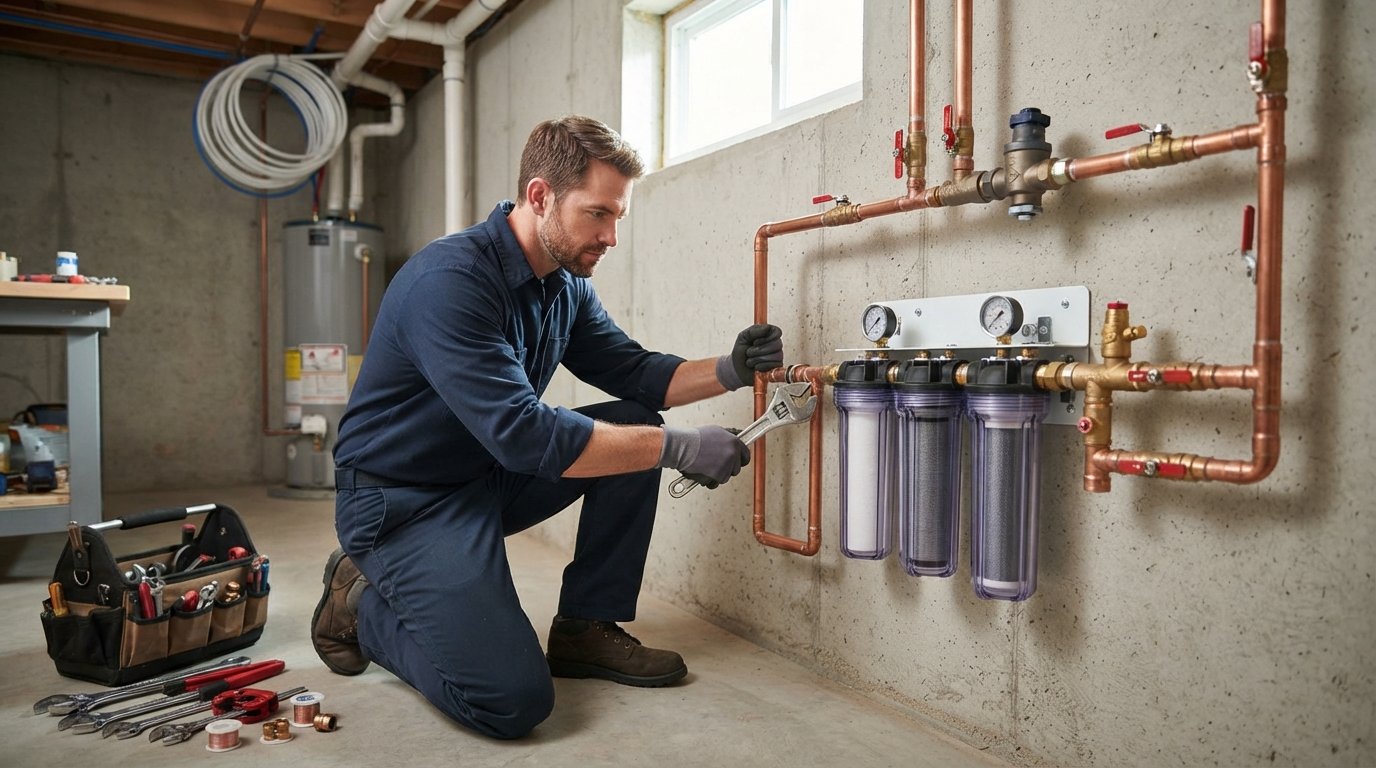
Installation labor typically runs $400 to $1,500 for a straightforward job, or roughly 30 to 50 percent of the total project cost. A plumber must tie the system into your main water line, often near the water meter or pressure tank. If your main line is accessible and in good shape, the work can take half a day. If the line is buried, corroded, or cramped, expect higher labor charges.
Plumbing modifications are the wild card. Common add-ons include:
- Bypass valve installation for easier maintenance ($100 to $300).
- New shutoff valves or pressure regulator ($150 to $500).
- Drain line routing for reverse osmosis or backwash systems ($200 to $600).
- Electrical outlet or dedicated circuit for UV or electronic systems ($200 to $800).
Permits are not always required, but many jurisdictions require one for water line modifications or softener drain connections. Permit fees usually range from $50 to $300, and some contractors include them in the quote while others list them separately. Always ask whether the bid includes permits and inspection fees. Skipping a permit can complicate home sales and insurance claims later.
If you are planning a larger renovation, such as a basement finish or utility room upgrade, the plumbing work can sometimes be bundled. For projects that involve exterior drainage or structural changes, our resource on USremodel connects homeowners with independent contractors for remodeling and repair work, which can be useful when filtration installation is part of a bigger upgrade.
How Water Hardness and Contaminants Change the Recommended System
Water chemistry varies dramatically by region, and it should dictate your system choice. Hard water, common in the Midwest and Southwest, contains high levels of calcium and magnesium. It scales pipes, shortens water heater life, and makes soap less effective. If your water hardness is above 7 grains per gallon, a softener or combo system is usually worth the investment. Testing your water first is essential; a $20 to $50 test kit or a free municipal report can save you from buying the wrong equipment.
Contaminants also matter. Chlorine and chloramine are common in municipal supplies and are best handled with catalytic carbon. Well water may contain iron, sulfur, manganese, or bacteria, which may require oxidation, sediment filtration, or UV disinfection. Reverse osmosis is effective for dissolved solids, nitrates, and some metals, but it wastes water and needs pre-filtration to protect the membrane. In coastal areas or older cities, lead and PFAS concerns may push homeowners toward certified carbon block or reverse osmosis systems.
Here is a simple decision framework:
- Test your water for hardness, chlorine, iron, and pH.
- Match the system to the top two or three issues, not every possible contaminant.
- Size the system for your household flow rate (gallons per minute) and peak demand.
- Confirm certification (NSF/ANSI) for the contaminants you care about.
Oversizing is common and expensive. A family of four with moderate hardness may do fine with a 32,000-grain softener and a carbon filter, while a large home with high flow may need a dual-tank system. Your installer should perform a site assessment and flow test before recommending equipment.
Maintenance Costs and Filter Replacement Intervals
The purchase price is only part of the story. Whole house systems require ongoing maintenance, and those costs should be built into your budget. Sediment filters typically need replacement every 3 to 6 months, costing $20 to $60 each. Carbon filters last 6 to 12 months and cost $50 to $150. Reverse osmosis membranes last 2 to 3 years and cost $100 to $300, while pre-filters need more frequent changes. Softener resin lasts 10 to 15 years, but salt costs $10 to $20 per month for a typical household.
Annual maintenance often runs $150 to $500 depending on system complexity. Some homeowners choose a service plan that includes filter changes and inspections, typically $200 to $400 per year. Budgeting for these costs prevents surprise expenses and keeps the system performing as intended. Neglecting filter changes can reduce water pressure and allow contaminants to pass through.
Energy use is modest for most systems, but reverse osmosis and UV systems consume a small amount of electricity. Backwashing softeners use water, typically 50 to 100 gallons per regeneration cycle. These operational costs are usually minor but worth noting when comparing options.
How to Budget and Get Accurate Quotes
Start with a water test and a clear list of your goals: better taste, scale reduction, contaminant removal, or all three. Then request at least three itemized quotes from licensed plumbers or water treatment specialists. An itemized quote should separate equipment, labor, permits, and any plumbing modifications. That transparency makes it easier to compare bids and spot outliers.
Ask these questions before signing:
- Is the system certified for the contaminants I care about?
- What is the expected filter replacement schedule and cost?
- Does the quote include permits, bypass valves, and drain lines?
- What is the warranty on parts and labor?
- Will you test my water before and after installation?
Be cautious of quotes that seem too low. They may exclude permits, use undersized equipment, or skip essential plumbing upgrades. A reputable contractor will explain trade-offs and help you choose a system that fits your water and your budget. For a deeper dive into comparing contractor bids, see our guide on under deck drainage system installation cost, which outlines how to evaluate line items and avoid hidden fees.
Finally, consider timing. If you are already planning a plumbing repair or renovation, bundling the filtration installation can reduce labor costs. If you are replacing a water heater or repiping, that is the ideal moment to add a whole house system. Planning ahead also gives you time to request multiple quotes without pressure.
Whole house water filtration is a long-term investment in your home and health. By understanding the cost drivers, testing your water, and comparing itemized quotes, you can choose a system that delivers clean water without straining your budget. Take the first step today: test your water, list your priorities, and reach out to licensed professionals for no-obligation estimates.