
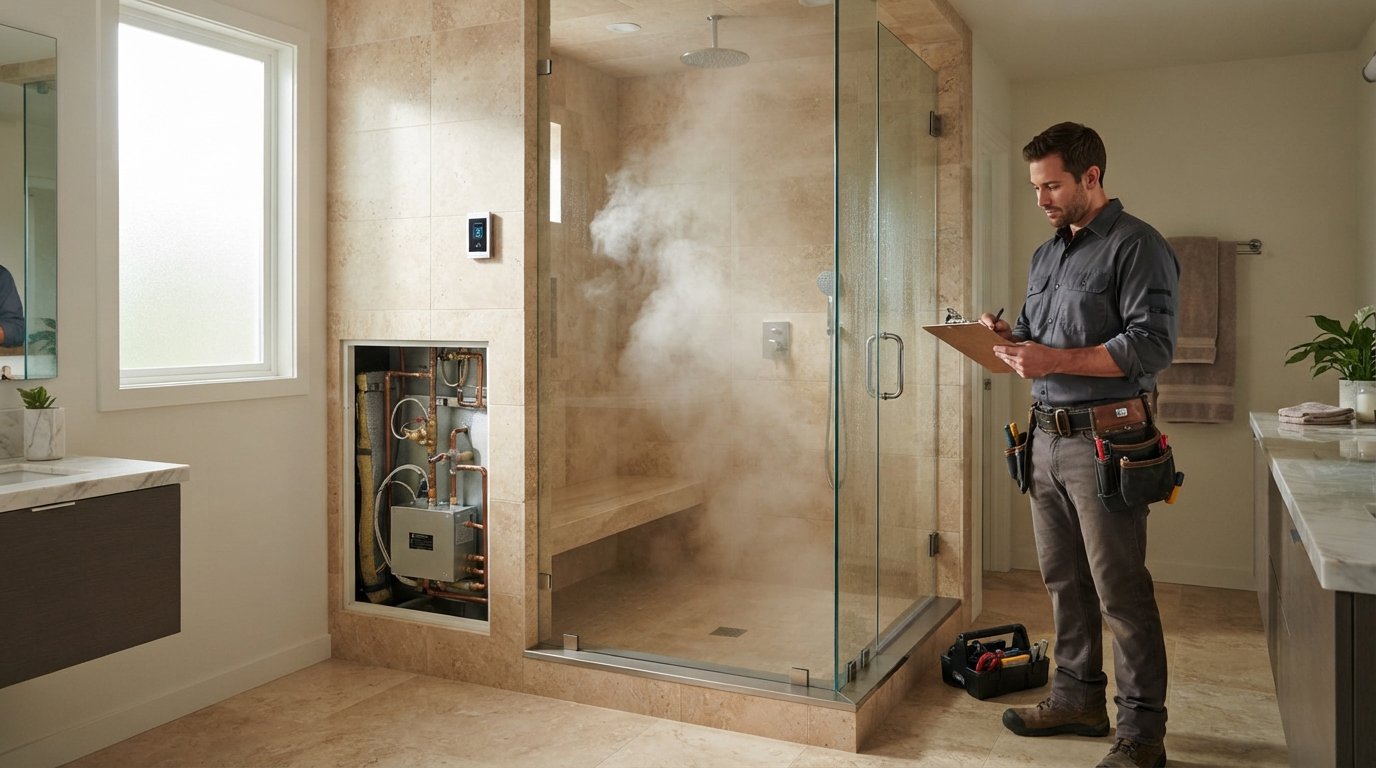
Steam Shower Installation Cost and Requirements: 2026 Guide
Steam shower installation cost and requirements vary widely. Call (833)-365-8755 to get matched with local pros and avoid costly mistakes.

By Chelsea Kris
Learn more about Shower and Bathtub Installation or Replacement for guides, costs, and what to expect.
Compare Shower and Bathtub Installation or Replacement Pros Near You

Enter your ZIP code to compare top-rated local professionals and request free quotes.
Imagine stepping into your own private spa every morning, with warm steam easing sore muscles and washing away stress. A steam shower can turn an ordinary bathroom into a daily retreat, but before you start dreaming about aromatherapy and chromotherapy, you need to understand the real costs and requirements. Steam showers are not just a fancy showerhead; they involve specialized generators, precise electrical work, enhanced waterproofing, and careful material selection. This guide breaks down steam shower installation cost and requirements so you can plan your project with confidence and avoid costly surprises.
What Drives Steam Shower Installation Cost?
The total cost of a steam shower installation depends on several factors: the type and size of the steam generator, the complexity of the enclosure, the condition of your existing bathroom, and the labor rates in your area. On average, homeowners spend between $2,500 and $10,000 for a complete steam shower installation, with most projects falling in the $4,000 to $7,000 range. However, high-end custom designs with premium materials can exceed $15,000. Understanding the components that contribute to the price will help you budget accurately.
At the heart of every steam shower is the steam generator, which heats water and delivers steam through a nozzle. Generator prices vary widely based on capacity (measured in kilowatts) and features such as auto-drain, aroma pumps, and digital controls. A basic 6 kW generator might cost $500 to $1,000, while a 12 kW unit with advanced features can run $2,000 to $3,500. The generator must be sized correctly for your enclosure volume; an undersized unit will struggle to produce enough steam, while an oversized one wastes energy and money.
The enclosure itself is another major cost driver. You will need a fully enclosed space with a steam-proof door, typically made of tempered glass with a tight seal. A standard glass door and panel set can cost $800 to $2,500, depending on size and customization. Custom frameless glass enclosures can exceed $4,000. Additionally, the walls and ceiling must be finished with steam-resistant materials such as ceramic tile, porcelain, or stone, and properly waterproofed with a vapor barrier. If your bathroom requires reconfiguration or structural changes, those expenses add up quickly.
Detailed Cost Breakdown: Generators, Enclosures, and Labor
To give you a clearer picture, here is a breakdown of typical cost ranges for the main components of a steam shower installation. Keep in mind that these are national averages; your local market may be higher or lower. Always obtain multiple quotes from licensed contractors to get accurate pricing for your specific project.
- Steam generator (6-12 kW): $500 to $3,500, depending on brand, capacity, and features.
- Glass enclosure and steam door: $800 to $4,000+, with custom sizes and frameless designs at the high end.
- Plumbing modifications: $300 to $1,500 for new water lines, drain adjustments, and steam nozzle installation.
- Electrical work: $500 to $2,000 for dedicated circuits, GFCI protection, and wiring from the panel to the generator.
- Materials (tile, waterproofing, vapor barrier): $1,000 to $5,000, depending on tile choice and area.
- Labor (installation of generator, enclosure, and finishes): $1,500 to $5,000, varying by region and complexity.
These figures highlight that the steam shower installation cost and requirements are intertwined: you cannot cut corners on electrical or waterproofing without risking safety and longevity. For instance, a cheap generator may save you a few hundred dollars upfront but could fail prematurely or lack the capacity to heat your enclosure efficiently. Similarly, skipping a proper vapor barrier can lead to mold and structural damage, turning a budget project into an expensive repair.
Labor costs vary significantly by region. In high-cost metro areas, skilled tradespeople charge $80 to $150 per hour, while rural areas may see rates of $50 to $90 per hour. If your project requires moving walls, relocating plumbing, or upgrading your electrical panel, expect additional costs. It is wise to allocate 10-20% of your budget for unexpected issues, especially in older homes.
Electrical Requirements for Safe Steam Shower Operation
Steam showers demand a significant amount of electricity, and the electrical requirements are non-negotiable for safety and performance. A steam generator typically requires a dedicated 240-volt circuit, and the amperage depends on the generator's wattage. For example, a 6 kW generator draws about 25 amps, while a 12 kW unit draws around 50 amps. Most homes have a 200-amp electrical panel, but if you are adding a large generator along with other high-demand appliances, you may need a panel upgrade, which can cost $1,500 to $3,000.
All electrical work must be performed by a licensed electrician and must comply with local codes. The generator should be connected to a GFCI (ground fault circuit interrupter) breaker to protect against shock in wet environments. The control panel, which is typically installed inside the shower, must be rated for wet locations and properly sealed. Additionally, the generator itself should be located in a dry, accessible area, such as a closet or utility room, within the maximum allowable distance from the steam room (usually 10 to 25 feet, depending on the manufacturer).
Proper grounding and bonding are critical. The National Electrical Code (NEC) requires that metallic components of the steam shower system be bonded to ensure equal electrical potential. Your electrician will handle this, but it is important to verify that they are familiar with steam shower installations. Ask potential contractors about their experience with steam generators and whether they will pull the necessary permits. Permits typically cost $100 to $500 and ensure that the work is inspected for code compliance.
Plumbing and Venting: Essential for Performance and Longevity
Steam showers require both a water supply and a drain, but the plumbing needs go beyond a standard shower. The steam generator needs a dedicated cold water line (some models can use hot water, but cold is more common) and a drain line for the auto-drain feature, which helps flush sediment and prevent mineral buildup. If your generator does not have an auto-drain, you will need to manually drain it periodically, which is less convenient. The water pressure must be adequate (usually 20-60 psi) for the generator to function correctly.
Venting is another critical aspect. Steam generators produce steam and heat, and the enclosure must be able to handle the moisture. A properly sealed steam shower will have a slight positive pressure, and some generators include a pressure relief valve. However, the room itself needs ventilation to prevent moisture buildup when the door is opened. Install an exhaust fan rated for high humidity (at least 150 CFM) and ensure it vents to the outside, not into the attic. Without proper ventilation, mold and mildew can thrive in the bathroom and adjacent spaces.
Additionally, the steam lines that carry steam from the generator to the shower must be insulated to prevent heat loss and condensation. The steam head should be installed at least 12 inches above the floor and away from seating areas to avoid scalding. All plumbing work should be done by a licensed plumber who understands steam systems. A common mistake is using standard shower valves and fittings that are not rated for steam; these can fail prematurely and pose a safety hazard.
Material Choices for Steam-Resistant Enclosures and Doors
The materials you choose for your steam shower enclosure are crucial for durability and safety. Steam is relentless: it penetrates porous surfaces, causes wood to warp, and promotes mold growth. Therefore, you need materials that can withstand constant moisture and heat. Here are the best options:
- Ceramic or porcelain tile: These are popular choices because they are waterproof, easy to clean, and available in many styles. Ensure they are installed over a proper vapor barrier and waterproof membrane.
- Natural stone (granite, marble, slate): These offer a luxurious look but require sealing to prevent moisture absorption. They are more expensive and need periodic maintenance.
- Glass: Tempered glass is the standard for steam shower doors and panels. It must be at least 3/8 inch thick and properly sealed with weatherstripping to keep steam inside.
- Solid surface materials (Corian, quartz): These are non-porous and resist mold, but they can be costly and may require custom fabrication.
- Stainless steel: Often used for steam heads and fixtures, stainless steel is durable and resistant to corrosion. Avoid mild steel or iron, which will rust.
When selecting materials, consider the coefficient of thermal expansion. Materials that expand and contract significantly with heat can crack or delaminate over time. Porcelain tile and tempered glass are excellent in this regard. Also, avoid using drywall or greenboard inside the steam enclosure; cement backer board is required. The ceiling should also be tiled or finished with a moisture-resistant material, as steam rises and condenses there.
The door seal is equally important. A steam shower door must have a tight-fitting seal, often achieved with magnetic strips or bulb seals. Frameless glass doors look sleek but require precise installation to ensure a proper seal. Framed doors are more forgiving and often less expensive. Regardless of style, the door should open outward to prevent trapping someone inside in case of emergency.
Maintenance and Warranty Considerations
Once your steam shower is installed, regular maintenance will keep it running efficiently and extend its lifespan. The steam generator requires periodic descaling, especially in areas with hard water. Most manufacturers recommend using a descaler solution every few months, following the unit's manual. Some generators have auto-drain and self-cleaning features that reduce maintenance, but they still need occasional attention. The steam head should be wiped clean to prevent mineral buildup, and the enclosure should be dried after each use to discourage mold.
Warranties vary by manufacturer and component. Steam generators typically come with a limited warranty of 1 to 5 years, while glass doors may have a 1-year warranty against defects. Labor warranties from contractors usually range from 1 to 2 years. It is essential to read the fine print: some warranties are voided if the generator is not installed by a licensed professional or if the water quality exceeds certain hardness levels. Keep your installation receipts and maintenance records in case you need to make a claim.
When choosing a contractor for your steam shower installation, look for one who specializes in bathroom remodeling and has experience with steam systems. Ask for references from past clients and verify their license and insurance. A reputable contractor will handle permits, coordinate with electricians and plumbers, and ensure that all work meets code. For larger remodeling projects, you might also consider solar energy installation and costs if you are planning other upgrades, but always prioritize getting multiple quotes to compare.
For homeowners seeking a reliable contractor, 180Remodel connects you with pre-screened professionals for a range of home improvement services, including bathroom remodeling. Their network can help you find specialists who understand the intricacies of steam shower installation. Remember that proper installation is key to safety and performance, so do not hesitate to ask questions and demand transparency.
Frequently Asked Questions
Can I install a steam shower in an existing bathroom?
Yes, but it often requires significant modifications. You will need to ensure the enclosure is fully sealed, which may mean replacing the shower door and possibly retiling. Electrical and plumbing upgrades are usually necessary. A contractor can assess your current bathroom and advise on feasibility and cost.
How long does a steam shower installation take?
A typical installation takes 3 to 7 days, depending on the complexity. If you are remodeling the entire bathroom, it can take several weeks. Factors include the availability of materials, the need for permits, and the scope of electrical and plumbing work.
Do I need a permit for a steam shower?
Most municipalities require permits for electrical and plumbing work associated with a steam shower. Some may also require a building permit for the enclosure. Your contractor should handle the permitting process and ensure all inspections are passed.
What is the lifespan of a steam generator?
With proper maintenance, a quality steam generator can last 10 to 15 years. Regular descaling and annual inspections can help maximize its lifespan. Cheaper models may fail sooner, so investing in a reputable brand is wise.
Steam shower installation cost and requirements are significant, but the payoff is a daily luxury that can enhance your home's value and your well-being. By understanding the components, planning for electrical and plumbing needs, choosing the right materials, and hiring qualified professionals, you can enjoy your steam shower for years to come. Start by getting multiple quotes from licensed contractors and verifying their experience with steam systems. With careful planning, your spa-like retreat is within reach.