
Home Security During a Renovation Project: 2026 Guide
Protect your property during construction with smart access control, cameras, and insurance checks. Call (833)-365-8755 for contractor quotes.

Learn more about Home Security and Alarms Install for guides, costs, and what to expect.
Compare Home Security and Alarms Install Pros Near You

Enter your ZIP code to compare top-rated local professionals and request free quotes.
Your renovation is finally underway. The dumpster is in the driveway, the crew is tearing out cabinets, and your home is a construction zone. In the middle of the chaos, the last thing you want to worry about is whether your valuables, your family, or your property are safe. Yet a renovation project opens your home to a rotating cast of workers, delivery people, and subcontractors, each with varying levels of access. Without a deliberate security plan, you risk theft, damage, or liability issues that can turn your dream remodel into a nightmare.
The good news is that you can protect your home without turning your life into a surveillance operation. By combining smart access control, strategic use of technology, and clear communication with your contractor, you can keep your project on track and your property secure. This guide walks you through the essential steps for home security during a renovation project, from key management to insurance documentation, so you can focus on the finished result instead of worrying about what might go missing.
Access Control and Key Management for Crews and Subcontractors
The moment you hand over a key, you lose a degree of control. During a renovation, multiple tradespeople may need entry at different times: the general contractor, electricians, plumbers, HVAC technicians, and delivery crews. The old habit of leaving a key under the mat or in a lockbox with a simple combination is a recipe for trouble. Instead, treat access as a privilege that you manage deliberately.
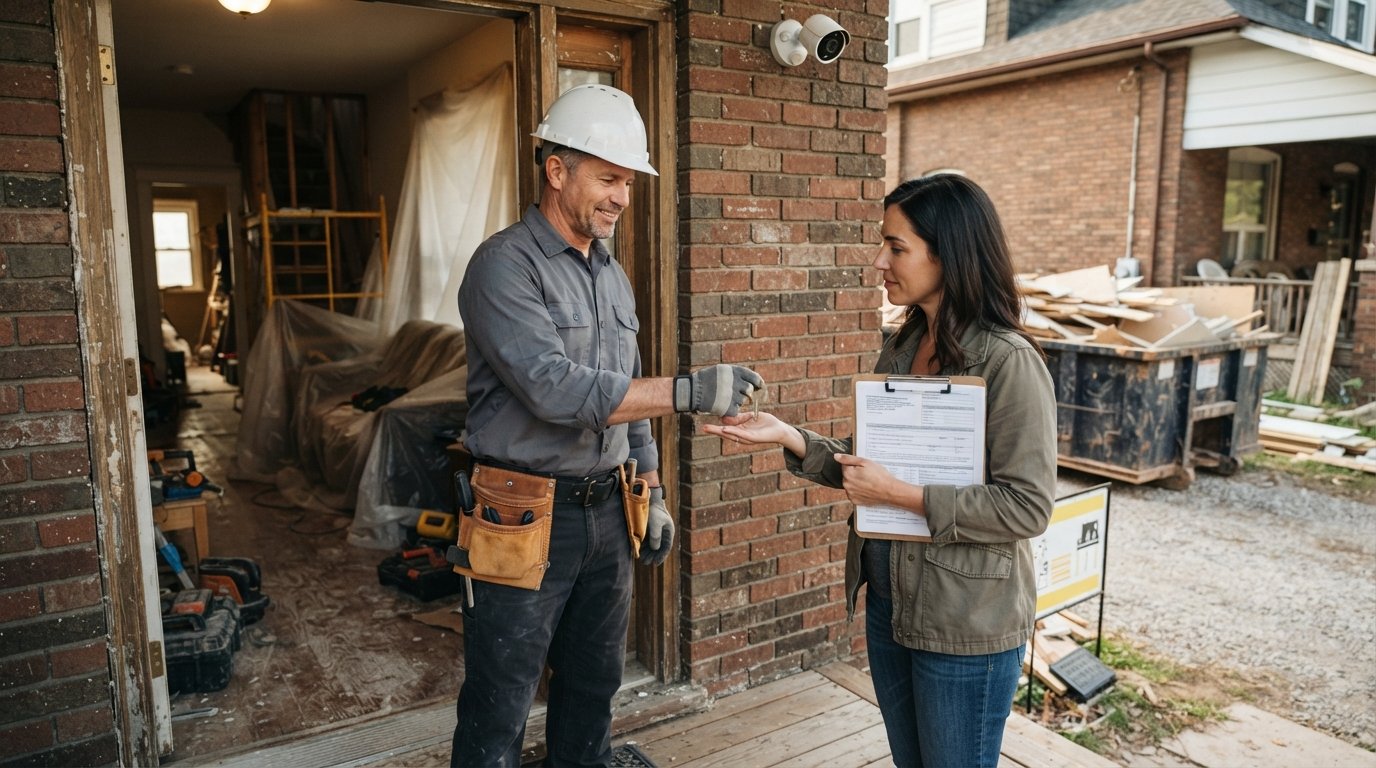
Start by designating a single point of contact, usually your general contractor, who is responsible for distributing and retrieving keys or codes. If your contractor uses a lockbox, insist on a heavy-duty model with an audit trail, and change the code after the project ends. Better yet, consider installing a smart lock that allows you to issue temporary codes to individuals and revoke them instantly. Smart locks range from simple keypad deadbolts to Wi-Fi-enabled models that log every entry and can be controlled from your phone.
For larger projects, a formal sign-in and sign-out log can help you track who is on site and when. This is not about distrust; it is about accountability. A simple clipboard by the door or a shared digital spreadsheet works fine. At the end of each day, walk the site and confirm that all windows and doors are locked. If a crew needs to leave early, make sure they know the locking protocol. The goal is to make security a routine part of the daily wrap-up, not an afterthought.
Finally, clarify in your contract who is responsible for securing the site after hours. Most general contractors carry insurance that covers theft or damage during the project, but that does not mean you should be careless. Ask your contractor about their security procedures and make sure they align with your expectations. If you are managing multiple trades yourself, you may want to read our guide on choosing a contractor for a multi trade renovation project to understand how to coordinate access without creating gaps.
Smart Locks, Cameras, and Temporary Lighting Options
Technology has made home security more accessible and affordable than ever. You do not need a full alarm system to monitor your renovation; a few well-placed devices can give you peace of mind and a record of activity. Start with a video doorbell. It lets you see who is at the door, communicate with workers, and record deliveries. Many models also integrate with smart locks, so you can unlock the door remotely for a trusted contractor.
For broader coverage, consider adding a couple of indoor or outdoor security cameras. Place one facing the main entrance and another covering the area where tools and materials are stored. Look for cameras with night vision, motion alerts, and cloud storage. If you are concerned about privacy, choose models that allow you to schedule recording only during work hours. A temporary security camera can be mounted with adhesive or a clamp, so you do not need to drill holes in finished surfaces.
Lighting is another powerful deterrent. A well-lit site is less attractive to opportunistic thieves. If your renovation involves electrical work, ask your electrician to install temporary weatherproof outlets or lights. Otherwise, battery-powered motion-sensor lights are easy to mount and require no wiring. Place them near entry points, the dumpster, and any area where materials are stacked. Solar-powered lights are another option, especially if you want to avoid batteries. For more ideas on leveraging solar technology for home security and energy savings, you can explore resources at SolarEnergy.ai, which offers guides on solar installations and incentives.
When choosing smart devices, check that they are rated for outdoor use and can withstand dust and temperature swings. Also consider how they will be powered: battery-operated models are easier to install but require monitoring, while wired models need an outlet. A combination of a video doorbell, two cameras, and motion lights typically costs a few hundred dollars and can be installed in an afternoon. That is a small investment compared to the value of your tools, materials, and peace of mind.
Scheduling Deliveries and Securing Materials on Site
Renovation projects generate a steady stream of deliveries: lumber, appliances, fixtures, and tools. Each delivery is a potential security risk if materials are left unattended or if delivery people have unescorted access. The key is to schedule deliveries when someone is on site to receive them and to have a clear plan for storing materials securely.
Work with your contractor to create a delivery schedule that matches the project timeline. Avoid having materials dropped off days before they are needed. If you must accept a delivery when no one is home, arrange for a lockbox or a secure staging area that is out of sight from the street. For high-value items like appliances or fixtures, consider having them delivered to a secure storage unit until installation day. Never leave boxes or packaging visible from the street, as this signals that new, valuable items are inside.
On-site storage is equally important. Tools and materials should be locked in a secure area, such as a locked room, a job box, or a storage container. If your garage is not part of the renovation, use it as a staging area and keep it locked. For open sites, a heavy-duty job box bolted to the floor is a good investment. Encourage your contractor to label and inventory tools daily, and consider a shared photo log of equipment. This not only deters theft but also helps with insurance claims if something goes missing.
Here is a quick checklist for securing deliveries and materials:
- Schedule deliveries for days when the crew is present.
- Use a lockbox or secure staging area for unattended deliveries.
- Store high-value items in a locked room or off-site until needed.
- Keep dumpsters and trash bins away from windows and doors to avoid providing a climbing aid.
- Ask your contractor to maintain a daily inventory of tools and materials.
Finally, communicate with your neighbors. Let them know about the project and ask them to keep an eye out for suspicious activity. A trusted neighbor can be your best security asset, especially during the day when you are at work. Exchange phone numbers and encourage them to call you if they see anything unusual.
Checklist for Insurance and Documentation Before Work Begins
Before the first hammer swings, take time to document your home and review your insurance coverage. A renovation increases the value of your home and introduces new risks, so you want to make sure you are protected. Start by contacting your homeowner's insurance agent to understand what is covered during construction. Most policies cover the structure and your personal belongings, but there may be exclusions for theft by workers or damage from construction activities. You may need a builder's risk policy or a renovation endorsement.
Next, create a detailed inventory of your personal property, especially items in the areas being renovated. Take photos or videos of each room, including closets and cabinets. Store valuable jewelry, artwork, and electronics in a safe or off-site during the project. If you have a home safe, make sure it is bolted down. For items you cannot move, document their condition before work begins to avoid disputes later.
Review your contractor's insurance certificates. Ask for a certificate of insurance showing general liability and workers' compensation coverage. Verify that the policy is current and that the limits are adequate for your project. If a worker is injured on your property and the contractor lacks workers' comp, you could be held liable. Keep copies of all certificates and contracts in a secure file, either physical or digital.
Here is a pre-renovation insurance and documentation checklist:
- Call your insurance agent to confirm coverage during renovation.
- Photograph or video each room and valuable item before work starts.
- Store jewelry, documents, and small valuables in a safe or off-site.
- Obtain and verify your contractor's certificate of insurance.
- Keep a folder with contracts, permits, and insurance documents.
Documentation also helps if you need to file a claim. If something is damaged or stolen, you will have a clear record of what existed before the project. Some insurers offer discounts for security devices, so mention your new cameras or smart locks when you update your policy. Remember that your contractor's insurance is the first line of defense for construction-related damage, but your own policy is your safety net for theft or unforeseen events.
Communication and Daily Routines That Keep Your Home Secure
Security during a renovation is not just about devices and locks; it is also about communication and routine. Establish a daily routine with your contractor that includes a walk-through at the end of each day. Check that all windows and doors are locked, that tools are stored, and that the site is tidy. A tidy site is easier to secure and reduces the risk of accidents.
Set clear expectations about who is allowed on site. Ask your contractor to provide a list of workers and subcontractors, and require that any new worker be introduced to you or your point of contact. If you have a home security system, provide temporary codes to trusted individuals and change them after the project. Consider a policy that no one works alone in the home; a buddy system reduces the risk of theft or false accusations.
Use a shared calendar or messaging app to communicate schedule changes, deliveries, and access needs. This keeps everyone on the same page and reduces the chance of misunderstandings. If you are living in the home during the renovation, set boundaries for work hours and private areas. A simple sign on a closed door can prevent accidental entry.
Finally, trust your instincts. If something feels off, address it immediately. A reputable contractor will welcome your attention to security because it protects their reputation and their crew as well. By combining technology, clear communication, and good documentation, you can keep your home secure and your renovation on track.
For more help planning your project and finding qualified professionals, consider using a service that connects you with licensed contractors. Taking these steps before work begins will save you time, money, and stress. With the right precautions, you can enjoy your renovated home with confidence, knowing that you protected it every step of the way.
Learn more about Home Security and Alarms Install for guides, costs, and what to expect.
Compare Home Security and Alarms Install Pros Near You
Enter your ZIP code to compare top-rated local professionals and request free quotes.