
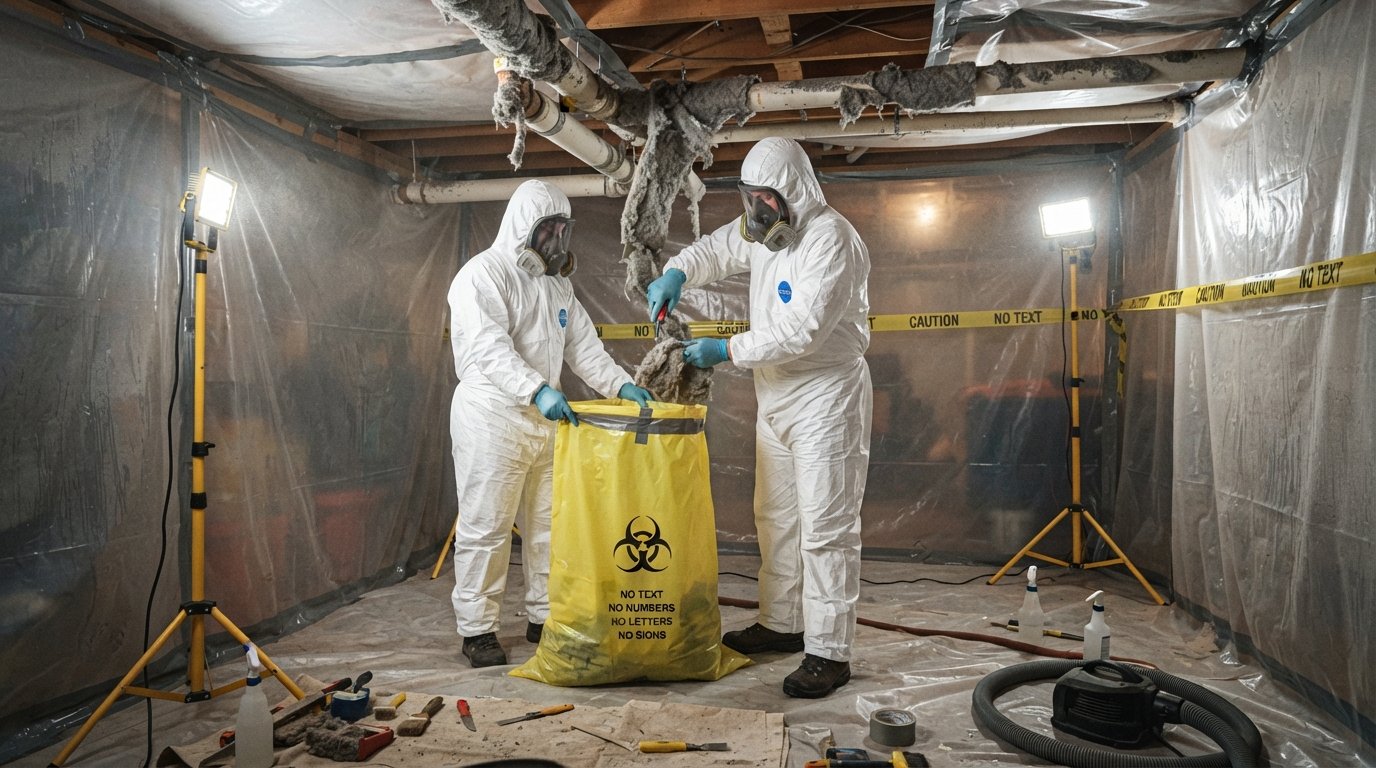
Asbestos Removal Contractor Vetting and Abatement Guide
Use this asbestos removal contractor vetting and abatement guide to hire safely and avoid costly mistakes. Call (833)-365-8755 for trusted local quotes.

Learn more about Asbestos Removal for guides, costs, and what to expect.
Compare Asbestos Removal Pros Near You

Enter your ZIP code to compare top-rated local professionals and request free quotes.
If your home was built before the mid-1980s, there is a realistic chance that asbestos lurks in its insulation, floor tiles, pipe wrap, or ceiling texture. Disturbing those materials during a remodel or repair can release microscopic fibers that cause serious long-term illness. The good news is that a careful, well-informed approach to hiring help dramatically reduces your risk. This asbestos removal contractor vetting and abatement guide walks you through how to verify credentials, understand the difference between removal and encapsulation, and review the paperwork that proves a job was done safely. You will also learn what drives costs and how insurance fits into the picture, so you can sign a contract with confidence rather than guesswork.
Why Vet an Asbestos Abatement Contractor Carefully
Asbestos abatement is not a standard remodeling task. It is a regulated environmental service with strict worker-protection, containment, and disposal rules. A crew that cuts corners can leave invisible fibers in the air and on surfaces long after the truck pulls away. Because symptoms of asbestos-related disease can take decades to appear, the quality of the abatement work matters for everyone who lives in or visits the home.
Vetting also protects your wallet. Unlicensed operators often quote low, then add charges for containment materials, air testing, or disposal that a legitimate contractor includes from the start. Some abandon a job halfway through, leaving you with an open containment zone and a hazardous-waste problem. Checking licenses, insurance, and documentation up front is the single most effective way to avoid both health and financial headaches.
Finally, many mortgage lenders, insurers, and future buyers ask for proof of proper abatement. A paper trail from a qualified contractor can be the difference between a smooth home sale and a stalled transaction. Treat contractor vetting as part of your project planning, not an afterthought.
Licensing, Certifications, and Notification Requirements
Asbestos regulation in the United States is split between federal and state authorities. At the federal level, the Environmental Protection Agency (EPA) and the Occupational Safety and Health Administration (OSHA) set baseline standards for inspections, work practices, and worker training. Most states then add their own licensing programs, and some cities or counties layer on additional rules. This means the exact requirements vary depending on where your home is located.
When you interview a contractor, ask for the license or certification number and verify it directly with the state agency that issues it. Do not rely on a photocopy alone, because documents can be altered. A legitimate abatement firm will also carry specific insurance, including general liability and pollution or environmental liability coverage. Request a certificate of insurance and confirm it is current.
Notification is another key checkpoint. Many states require the contractor to notify the state environmental or health department before beginning certain abatement projects, especially larger ones. Some jurisdictions also require notification for smaller residential jobs. Ask the contractor whether notification is required for your project and request a copy of the filing. If they cannot produce it, that is a warning sign.
Here is a practical checklist you can use during the vetting conversation:
- License verification: Confirm the contractor holds a current asbestos abatement license in your state, and check for any disciplinary actions.
- Worker certifications: Ask whether all on-site workers hold current asbestos worker certifications and whether supervisors have completed additional training.
- Insurance documents: Request certificates for general liability and pollution or environmental liability, and verify the policy limits are adequate for the project.
- Notification filings: Ask for proof that the required state or local notification has been submitted before work begins.
- References: Ask for recent residential references and follow up with at least two of them.
Beyond the checklist, pay attention to how the contractor answers questions. A professional firm will explain the process clearly, provide documents without hesitation, and welcome a second opinion. Evasive answers or pressure to sign quickly are reasons to keep looking. For homeowners who want to compare multiple qualified professionals without endless phone calls, a service like SolarEnergy.ai is not the right fit for abatement, but the same principle applies: gather several written estimates and compare them line by line before committing.
Abatement vs. Encapsulation: Which Approach Fits Your Project
Not every asbestos problem requires removal. Contractors generally choose between three strategies: removal (abatement), encapsulation, and enclosure. Understanding the difference helps you evaluate whether a bid makes sense for your situation.
Removal means physically taking out the asbestos-containing material and disposing of it according to hazardous-waste rules. It is the most thorough option and is often required when the material is damaged, friable (easily crumbled), or likely to be disturbed by a renovation. Removal also eliminates the need to track the material in the future, which can simplify a home sale.
Encapsulation involves coating the material with a sealant that binds the fibers and prevents release. It is less disruptive and sometimes less expensive, but it only works on materials that are in good condition and not likely to be disturbed. Encapsulated material must be monitored and cannot be sanded, cut, or drilled without new precautions.
Enclosure means building a physical barrier around the material, such as a rigid casing around pipe insulation. Like encapsulation, it leaves the asbestos in place and requires ongoing awareness. Enclosure may be appropriate in tight spaces where removal is impractical, but it is not a permanent solution for damaged material.
Here is how the three approaches compare for common homeowner scenarios:
- Removal: Best for damaged or friable material, renovation projects that will disturb the material, and homeowners who want a clean record for future sales.
- Encapsulation: Suitable for intact, non-friable material in low-traffic areas, with the understanding that it must be monitored and cannot be disturbed.
- Enclosure: A practical choice for pipes or structural elements in hard-to-reach spaces, provided the barrier is labeled and maintained.
Ask each contractor to explain why they recommend one approach over another. A bid that simply says "remove asbestos" without addressing condition, friability, and future plans is incomplete. The best contractors will walk you through the trade-offs, including how each option affects cost, timeline, and future maintenance.
Air Clearance Testing and Disposal Documentation
Once the work is finished, you need proof that the area is safe to reoccupy. Air clearance testing is the standard way to confirm that fiber levels are below the required threshold. In many states, the contractor must arrange for an independent third-party inspector to perform this test after the containment is dismantled and the area is cleaned. The inspector collects air samples and sends them to a laboratory for analysis.
Make sure the testing is truly independent. Some firms offer in-house clearance testing, which creates a conflict of interest. Ask who will perform the test, whether they are accredited, and when you will receive the results. A passing clearance report should be included in your project file, along with the laboratory analysis.
Disposal documentation is equally important. Asbestos waste must be bagged, labeled, transported, and disposed of at an approved facility. The contractor should provide waste shipment records or disposal receipts that show the material was handled properly. Without these records, you have no way to prove the material did not end up in an unapproved landfill or, worse, on the side of a road.
Here is a short list of documents to collect before final payment:
- Pre-abatement inspection report identifying the materials and their condition.
- Copy of the state or local notification filing.
- Daily work logs or a project summary describing containment and work practices.
- Independent air clearance report with laboratory results.
- Waste disposal receipts or shipment records from an approved facility.
- Final invoice that matches the signed contract and any approved change orders.
Keep these documents with your home records. If you ever sell the property, they demonstrate that the abatement was done correctly. They also protect you if a future contractor or inspector raises questions about the area.
Cost Factors and Insurance Considerations Before You Sign
Asbestos abatement costs vary widely based on the type and amount of material, accessibility, and local labor rates. Small jobs, such as removing a few square feet of floor tile, may cost a few hundred to a couple of thousand dollars. Larger projects involving pipe insulation, attic insulation, or textured ceilings can run into the thousands or tens of thousands. Below is a general framework for what drives the price:
- Material type and condition: Friable materials like loose insulation are more expensive to handle than non-friable materials like floor tiles.
- Square footage and accessibility: Crawl spaces, attics, and tight mechanical rooms require more labor and containment materials.
- Containment and negative air: Proper containment with negative air machines and HEPA filtration adds cost but is essential for safety.
- Disposal fees: Hazardous-waste disposal is priced by weight and location, and fees vary by facility.
- Clearance testing: Independent air testing adds a line item but provides critical proof of safety.
- Permits and notifications: Some jurisdictions charge fees for notification or permits.
Insurance deserves its own conversation. Standard homeowner policies often exclude pollution and asbestos-related claims, so do not assume your policy will cover a problem. Ask the contractor about their pollution liability coverage and confirm it is active for the project dates. Also ask whether the firm carries workers compensation, because an uninsured worker injured on your property can create liability for you.
Before signing, read the contract carefully. Look for a clear scope of work, a payment schedule tied to milestones rather than a large upfront deposit, and a clause that addresses what happens if additional asbestos is discovered. Reputable contractors build contingencies into the process rather than surprising you with change orders later. If a bid seems unusually low, ask what is excluded: disposal, testing, containment, or permits are common omissions.
Comparing multiple written estimates remains the most reliable way to understand fair pricing in your area. A transparent contractor will itemize labor, materials, disposal, and testing so you can compare apples to apples. If you need help planning the broader project budget around abatement, resources that explain cost estimation and contractor selection can keep the process organized. The goal is not the cheapest bid but the most complete and verifiable one.
Final Steps for a Safe, Well-Documented Abatement
Vetting an asbestos abatement contractor comes down to verification and documentation. Confirm the license, the insurance, and the notification filing. Ask how the contractor will handle containment, air testing, and disposal, and insist on independent clearance testing. Collect every report and receipt before final payment, and store them with your home records. When you take these steps, you protect your family's health, your property value, and your peace of mind. A careful selection process today prevents costly surprises tomorrow.