
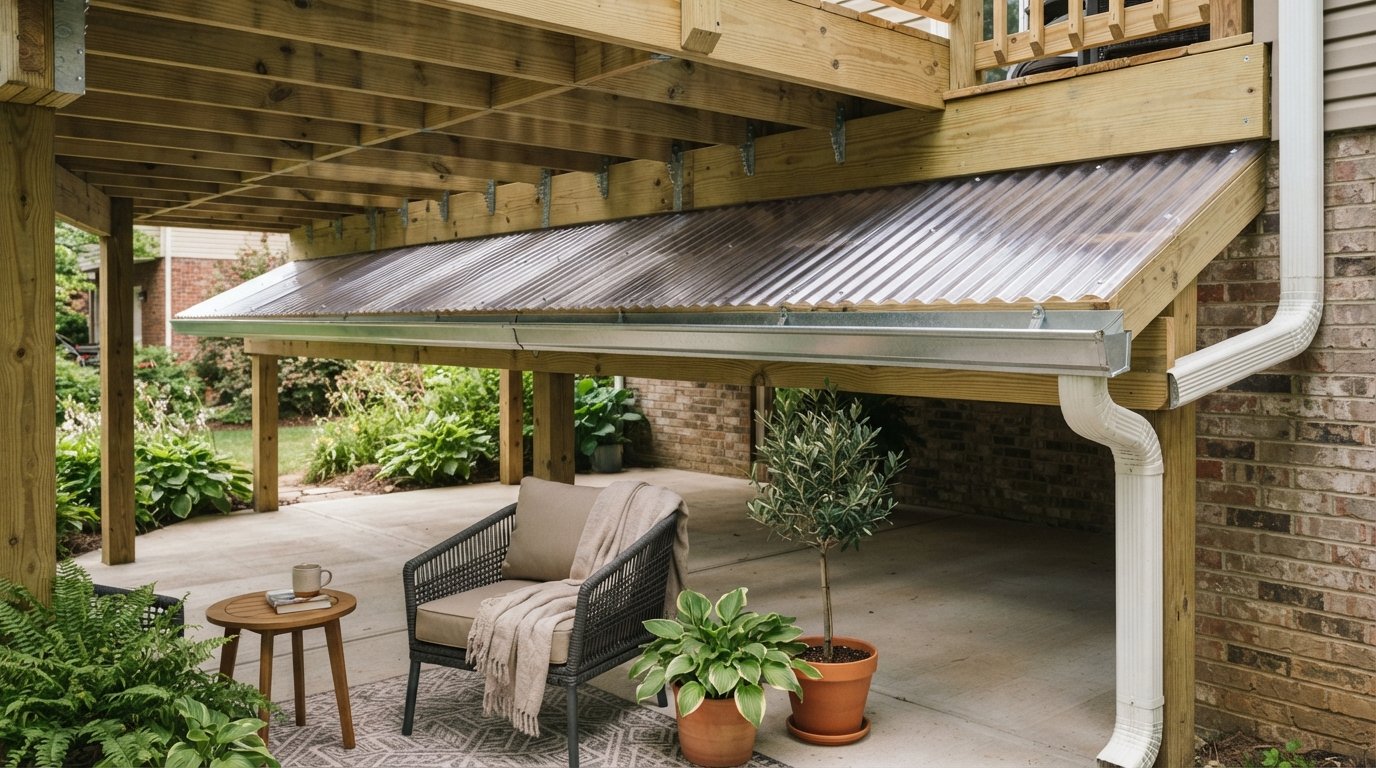
Under Deck Drainage System Cost Per Square Foot in 2026
Under deck drainage system cost per square foot runs $3 to $15 installed. Get a dry space below your deck. Call (833)-365-8755 for expert guidance.

By Chelsea Kris
Learn more about Deck or Porch Remodel or Addition for guides, costs, and what to expect.
Compare Deck or Porch Remodel or Addition Pros Near You

Enter your ZIP code to compare top-rated local professionals and request free quotes.
If you have ever walked onto a deck during a rainstorm, you know the mess that collects underneath: muddy splashback, slippery stairs, and a patio or basement entrance that stays perpetually damp. An under deck drainage system solves that by catching water as it slips between the boards and channeling it away, turning the space below into a dry, usable area for storage, a patio, or a finished room. But what does that transformation actually cost? The answer hinges on a single number: under deck drainage system cost per square foot. In this guide, we break down that figure, explain what drives it up or down, and show you how to budget with confidence.
What an Under Deck Drainage System Does and Why It Matters
An under deck drainage system is a set of panels, troughs, or membranes installed beneath the deck joists to collect rainwater and direct it to a gutter or downspout. Without one, water falls straight through the deck boards and lands on whatever is below, which could be a concrete patio, a basement stairwell, or a crawl space entrance. The constant moisture leads to mold, wood rot, erosion, and slippery surfaces. It also limits how you can use the space: no outdoor furniture, no dry storage, and no chance of finishing the area as a room.
The system typically includes several components: ceiling panels or a flexible membrane, a collection channel at the low end, a downspout connection, and sometimes a gutter extension. Some systems are installed during new deck construction, while others are retrofitted onto existing decks. The cost per square foot varies widely based on the material, the complexity of the deck framing, and whether you hire a professional or tackle it as a DIY project. Most homeowners pay between $3 and $15 per square foot for the materials and installation, but that range narrows once you consider the specific type of system.
Understanding the cost starts with recognizing that this is not a single product. It is a category of solutions, each with its own price profile. Below, we break down the most common types and their typical cost per square foot, then explore the factors that can push your project toward the high or low end of the range.
Average Under Deck Drainage System Cost Per Square Foot
Nationally, the cost for a professionally installed under deck drainage system falls between $3 and $15 per square foot. That figure includes materials and labor but excludes any structural repairs, gutter modifications, or finishing work on the space below. For a typical 300 square foot deck, the total project cost lands somewhere between $900 and $4,500. The wide range reflects the diversity of systems available, from simple corrugated plastic panels to sophisticated aluminum track systems with integrated gutters.
To give you a clearer picture, here is a breakdown of common system types and their typical cost per square foot. These figures are national averages and assume professional installation; DIY material costs are lower but require significant time and skill.
- Corrugated plastic panels: $3 to $6 per square foot. These are the most budget-friendly option, often sold in kits. They work well for basic water diversion but may sag or become brittle over time.
- Aluminum panel systems: $6 to $10 per square foot. More durable and rigid, these panels often come with a factory-applied finish and a longer warranty. They handle heavy rain better and resist corrosion.
- Vinyl or PVC systems: $5 to $9 per square foot. These offer a good balance of cost and durability, and they are resistant to rot and insects. Some systems snap together for easier installation.
- Fabric or membrane systems: $4 to $8 per square foot. These are flexible sheets that attach to the joists and slope toward a collection point. They are lightweight and good for irregular deck shapes, but they may require more careful installation to avoid pooling.
- Integrated track and gutter systems: $10 to $15 per square foot. These premium systems include built-in gutters and are designed for a clean, finished look. They are often used when the space below will be finished as a room.
Keep in mind that these are ballpark figures. The actual cost per square foot for your project will depend on the size and shape of your deck, the height above grade, local labor rates, and whether any prep work is needed. For a more precise estimate tailored to your home, you can request free quotes from licensed contractors in your area. Many homeowners find that comparing multiple bids is the best way to understand the real cost in their market.
Factors That Influence the Cost Per Square Foot
Several variables can push your under deck drainage system cost per square foot above or below the national average. Understanding these factors helps you anticipate where your project will land and avoid surprises.
Deck size and height. Larger decks benefit from economies of scale, so the cost per square foot often decreases as square footage increases. Height also matters: a second-story deck requires more elaborate staging and safety measures, which adds labor cost. A low deck close to the ground is easier to access and may not need as much slope for drainage.
Deck framing and obstructions. If your deck has complex framing, diagonal bracing, or many obstructions like posts and stairs, installation becomes more time-consuming. Contractors may charge more per square foot to work around these challenges. Simple rectangular decks with clear joist bays are the easiest and least expensive to outfit.
Material choice. As the list above shows, material is the single biggest driver of cost. Plastic panels are at the low end, while aluminum and integrated track systems are at the high end. Your choice should balance budget with longevity and appearance. If you plan to use the space below frequently, investing in a more durable system often pays off.
Labor rates and location. Labor costs vary significantly by region. Urban areas and regions with a high cost of living will have higher labor rates. Seasonal demand can also affect pricing; installing a drainage system in the off-season may yield better rates. Always get local quotes to understand the going rate in your area.
Additional features. Some systems include extras like gutters, downspout extensions, leaf guards, or integrated lighting. Each add-on increases the cost per square foot. Decide which features are essential for your goals and which can be added later.
When you combine these factors, you can see why two homeowners with similar-sized decks might pay very different amounts. The key is to get detailed quotes that break down materials, labor, and any extras so you can compare apples to apples. For tips on evaluating contractor bids, see our guide on understanding deck construction contractor quotes.
DIY vs. Professional Installation: Cost and Trade-Offs
If you are handy with tools, you might be tempted to install an under deck drainage system yourself. The material cost for a DIY project can be significantly lower, often 40 to 60 percent less than a professionally installed system. For a 300 square foot deck, you might spend $600 to $1,500 on materials alone, depending on the system. However, DIY installation comes with risks: improper slope can cause water to pool and overflow, fasteners may not be rated for the application, and mistakes can lead to leaks or premature failure.
Professional installation ensures the system is installed correctly, which is critical for performance and warranty coverage. Many manufacturers require professional installation to validate their warranty. A professional will also assess your deck's structure, identify any issues that could affect drainage, and recommend the right system for your climate and usage. The labor cost typically adds $2 to $6 per square foot to the project, but it buys peace of mind and often better long-term results.
To decide which route is right for you, consider your comfort with heights, your experience with roofing or gutter work, and the complexity of your deck. If your deck is simple and you have construction experience, DIY might be viable. For most homeowners, however, professional installation is the safer and more reliable choice. You can use a platform like Repairmen to find vetted local professionals for deck drainage and other home repair projects.
How to Budget for Your Under Deck Drainage Project
Budgeting for an under deck drainage system involves more than multiplying the square footage by a per-square-foot rate. You need to account for the specific system, any prep work, and the potential for additional improvements. Here is a step-by-step approach to building a realistic budget.
- Measure your deck's square footage. Multiply the length by the width of the area you want to cover. If your deck has multiple levels or irregular shapes, break it into rectangles and add them together.
- Choose your system type. Decide whether you want a basic plastic panel system, a mid-range vinyl or aluminum system, or a premium integrated track system. This choice sets your baseline cost per square foot.
- Get at least three quotes. Contact local contractors and ask for itemized estimates that include materials, labor, and any additional work. Compare the quotes not just on price but on the scope of work and warranty terms.
- Factor in prep work and repairs. If your deck has loose boards, damaged joists, or poor grading, you may need to address those issues first. Ask your contractor to include any necessary repairs in the quote.
- Add a contingency fund. Set aside 10 to 15 percent of the project cost for unexpected issues. Older decks often reveal hidden problems once work begins.
After you have a budget range, you can decide whether to phase the project or proceed all at once. Some homeowners start with a basic system and upgrade later, while others invest in a premium system from the start to avoid future labor costs. Either way, having a clear budget helps you evaluate quotes and avoid overspending.
It is also worth considering the long-term value. A dry space below your deck can be used for storage, a workshop, or even a finished room, which can increase your home's usable square footage. While the upfront cost per square foot is important, the return on investment can be substantial if you plan to use the space regularly. For more guidance on deck-related projects and costs, explore our resources on deck construction and contractor selection.
Choosing the Right Contractor for the Job
Selecting a qualified contractor is just as important as choosing the right system. A skilled installer will ensure proper slope, secure fastening, and a clean finish that performs well for years. Start by asking for referrals from friends and neighbors, or use a reputable contractor matching service to connect with licensed professionals in your area. Verify that each contractor has the proper licenses, insurance, and experience with under deck drainage systems.
When you meet with contractors, ask specific questions: How will you handle the slope to ensure water flows to the collection point? What type of fasteners will you use? What is the warranty on both materials and labor? A good contractor will welcome these questions and provide clear answers. Also ask for references from similar projects and, if possible, visit a completed job to see the workmanship firsthand.
Price should not be the only deciding factor. The lowest bid may cut corners or use inferior materials. Look for a contractor who offers a detailed proposal, transparent pricing, and a reasonable timeline. A slightly higher quote from a reputable contractor often delivers better value in the long run. Remember that the goal is a durable, leak-free system that protects your deck and the space below, so invest in quality installation.
Once you have selected a contractor, get everything in writing. The contract should specify the system type, square footage, materials, labor, cleanup, and warranty terms. Never pay the full amount upfront; a deposit of 10 to 30 percent is typical, with the balance due upon completion and your satisfaction. By following these steps, you can ensure a smooth project and a dry space below your deck for years to come.
In summary, the under deck drainage system cost per square foot typically ranges from $3 to $15, depending on the system, deck complexity, and local labor rates. By understanding the factors that influence pricing and getting multiple quotes, you can make an informed decision that fits your budget and your goals. Whether you choose a simple DIY kit or a premium professionally installed system, the investment pays off in a drier, more usable outdoor space.