
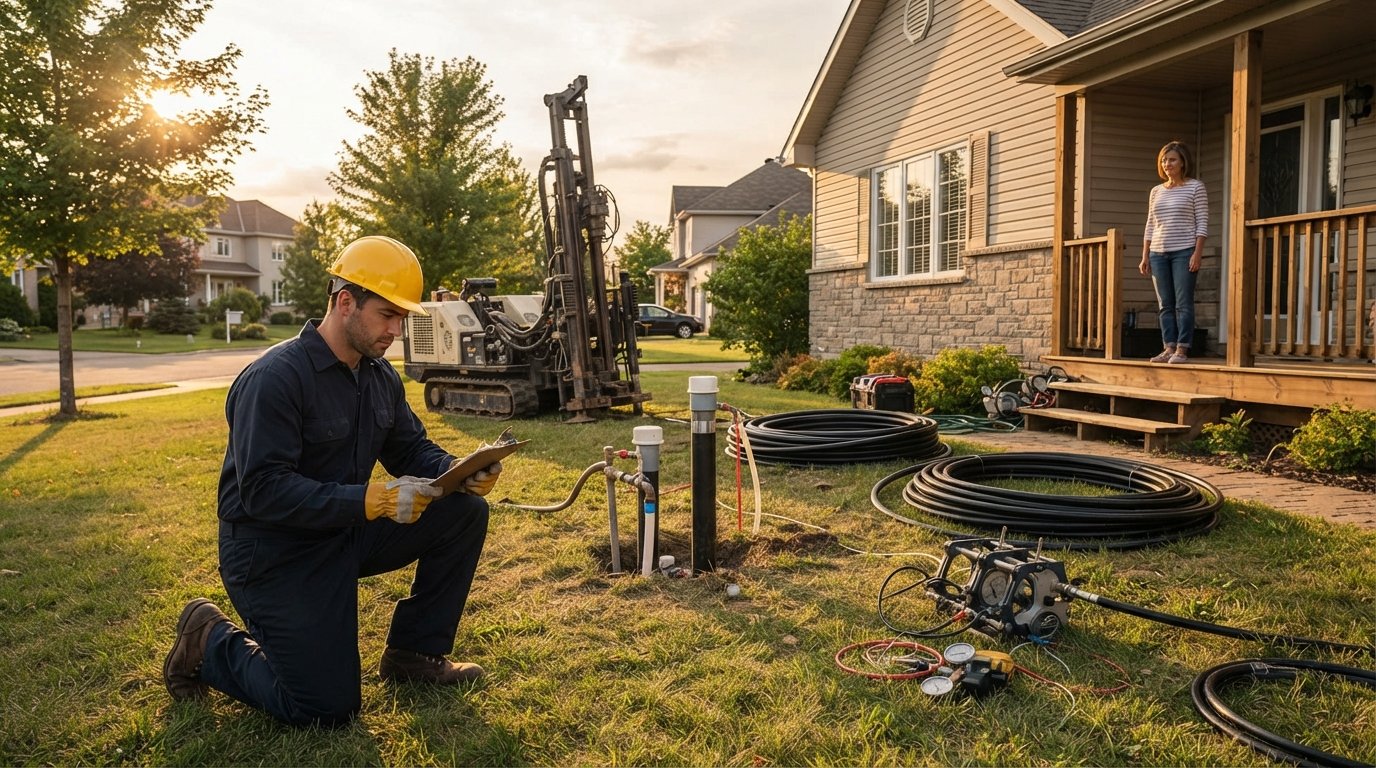
How to Vet a Geothermal Heat Pump Installer
Geothermal savings depend on a qualified installer. Learn how to vet a geothermal heat pump installer and call (833)-365-8755 for trusted local quotes.

Learn more about Heating System Installation or Replacement for guides, costs, and what to expect.
Compare Heating System Installation or Replacement Pros Near You

Enter your ZIP code to compare top-rated local professionals and request free quotes.
Geothermal heat pumps can cut heating and cooling bills by 30 to 60 percent, but those savings depend entirely on one thing: the quality of the installation. Unlike a standard furnace swap, a geothermal system involves drilling boreholes, designing a ground loop, and sizing equipment to your home's exact load. One mistake in any of those steps can turn a money-saving upgrade into a decade of headaches. That is why learning how to vet a geothermal heat pump installer is just as important as choosing the system itself.
Most homeowners never hire a geothermal contractor twice, so you do not get a learning curve. You get one shot. This guide walks you through the certifications that matter, the drilling experience you should confirm, the design questions that separate pros from pretenders, and the red flags that should end the conversation. By the end, you will know exactly what to ask, what to verify, and how to compare quotes without getting lost in jargon.
Start With Certifications and Drilling Experience
Geothermal installation sits at the intersection of HVAC and drilling, and very few contractors are excellent at both. A company that installs air-source heat pumps may have never drilled a vertical loop. A well-drilling outfit may not understand load calculations or refrigerant circuits. Your job is to find a contractor who covers the full scope, either with in-house crews or with a documented partnership.
Begin with the certifications that signal real geothermal training. The International Ground Source Heat Pump Association (IGSHPA) offers accredited installer and designer designations, and those credentials require coursework and testing beyond a standard HVAC license. North American Technician Excellence (NATE) certification in heat pumps is another useful marker. Ask for the certificate numbers and verify them directly with the issuing organization, because badges on a website are easy to copy.
Licensing and insurance come next. Geothermal work often requires both an HVAC license and a well-drilling or water-well permit, depending on your state. Ask the contractor to list every license that applies to your project, then confirm each one with your state licensing board. Insurance should include general liability and workers compensation, and you should request a certificate of insurance sent directly from the insurer, not a PDF the contractor could have edited.
Drilling experience deserves its own conversation. A vertical loop for a typical home means one to three boreholes, each 150 to 400 feet deep, grouted and sealed to protect groundwater. Ask how many vertical loop fields the company has completed in the last two years and request two or three addresses you can visit. If the contractor mostly installs horizontal loops in rural acreage, that experience does not transfer cleanly to a tight suburban lot. For a broader framework on verifying credentials before any hire, see our guide on how to vet contractor credibility before hiring.
Why Loop Field Design and Soil Testing Matter
The ground loop is the heart of a geothermal system, and its design depends on data you cannot guess. Soil and rock type determine how efficiently heat transfers to and from the ground. A loop sized for sandy soil will underperform in solid granite, and vice versa. Professional designers use thermal conductivity testing, sometimes called a thermal response test, to measure how quickly heat moves through your specific ground conditions.
Not every residential project requires a full thermal response test, but a serious contractor will at least review local geology, nearby loop installations, and drilling logs from the area. Ask how the company plans to size your loop field. If the answer is a rule of thumb like "one borehole per ton" with no discussion of soil, depth, or groundwater, you are talking to an installer, not a designer.
Loop field design also interacts with your lot. Vertical loops need space for drilling rigs and a clear path for trenching to the house. Horizontal loops need far more land and deeper excavation. A contractor who walks your property, notes utility lines, and discusses drill access before quoting is doing the job right. One who quotes over the phone without a site visit is guessing, and you will pay for those guesses.
Grouting and sealing are quiet details with big consequences. Improperly grouted boreholes can allow surface water to contaminate groundwater or cause the loop to lose efficiency over time. Ask what grout material the contractor uses and whether the company follows state or local groundwater protection rules. This is also a good moment to confirm permits: drilling permits, electrical permits, and mechanical permits should all be pulled in the contractor's name, not yours.
Demand Real Load Calculations and System Sizing
Geothermal equipment is expensive, and oversizing it wastes money while undersizing it leaves rooms uncomfortable. The only way to get sizing right is a proper load calculation, typically a Manual J calculation for residential projects. This calculation considers your home's insulation, window performance, air leakage, ductwork, and local climate data to determine exactly how much heating and cooling capacity you need.
Ask every contractor whether they perform a room-by-room Manual J calculation and whether you will receive a copy. If the answer is a quick square-footage estimate or a comparison to a neighbor's system, walk away. Geothermal heat pumps also require careful selection of the ground loop and pump configuration, and the contractor should explain how the loop size matches the equipment capacity.
Ductwork deserves equal scrutiny. Many geothermal retrofits reuse existing ducts, and leaky or undersized ducts can erase efficiency gains. A thorough contractor will inspect and test ductwork, recommend sealing or modifications, and include those costs in the quote. If ductwork changes are missing from a proposal, ask why. Sometimes the answer is legitimate, but you deserve to hear it.
Here are the design questions to put in writing before you sign anything:
- Will you provide a room-by-room Manual J load calculation and a copy for my records?
- How did you determine the loop field size, and what soil or geological data informed that decision?
- What equipment brand and model numbers are specified, and what efficiency ratings do they carry?
- Will you test and seal my existing ductwork, and is that included in the price?
- Who handles permits, and will the final inspection documentation be provided to me?
Contractors who answer these questions clearly and in writing are the ones worth your time. Vague answers or pressure to skip the details are a sign that the proposal is built on assumptions rather than engineering.
Compare Geothermal Quotes Line by Line
Geothermal quotes are notoriously hard to compare because contractors bundle drilling, loop materials, equipment, labor, electrical work, and permitting differently. A single lump-sum number tells you almost nothing. Ask each contractor to break the quote into categories so you can see where the money goes.
A useful comparison separates drilling and loop field costs from equipment costs, and separates labor from materials. It should also list the specific equipment models, loop pipe specifications, grout type, and any ductwork or electrical allowances. If one quote is dramatically lower than the others, look for what is missing: a smaller loop field, lower-efficiency equipment, no ductwork testing, or permits excluded.
Payment terms matter as much as price. A reasonable schedule ties payments to milestones like drilling completion, loop pressure testing, and system startup. Large upfront deposits, especially before any permits are pulled, are a red flag. So is a contractor who cannot provide a written warranty covering both labor and the loop field, which should last 50 years or more.
Finally, confirm the startup and commissioning process. A proper handover includes pressure testing the loop, flushing and purging the system, verifying refrigerant charge, and walking you through the thermostat and emergency heat settings. Ask who performs the startup and whether you receive a commissioning report. If the contractor cannot describe this process, the installation may be technically complete but functionally compromised.
Red Flags That Should End the Conversation
Some warning signs are universal in contracting, and they apply doubly to geothermal work. Be cautious of any contractor who pressures you to sign the same day, offers a price that expires in 24 hours, or refuses to put scope details in writing. High-pressure tactics are a poor fit for a project that requires engineering and drilling permits.
Other red flags are specific to geothermal. A contractor who cannot explain how the loop field was sized, who skips the site visit, or who dismisses load calculations as unnecessary is not qualified for this work. So is anyone who cannot name the drilling subcontractor or refuses to share insurance certificates. If the company has no verifiable geothermal references, treat that as a stop sign rather than a minor gap.
Watch for quotes that exclude permits, electrical work, or duct modifications without saying so. Surprise costs during drilling are common in geothermal, and a contractor who hides allowances is likely to pass those surprises to you. A trustworthy installer explains the risks upfront, including the possibility of encountering rock or water that changes drilling costs, and puts a clear change-order process in writing.
Finally, trust your instincts on communication. Geothermal systems need occasional service, and you want a contractor who answers questions now, because you will need them later. If calls go unreturned during the sales process, service after installation will be worse. For homeowners planning a move or coordinating a system upgrade with a relocation, resources like Moving.Homes relocation guides can help you plan timelines and avoid scheduling conflicts with drilling crews.
Use a Structured Vetting Process
Vetting a geothermal installer is easier when you follow the same sequence for every candidate. Start by collecting license and certification numbers, then verify them independently. Move to references and site visits, then to design questions, and only then to pricing. This order keeps you from being anchored by a low bid before you know whether the contractor is qualified.
A simple five-step process works well:
- Verify licenses, insurance, and geothermal certifications with the issuing bodies.
- Request two or three recent geothermal references and ask about drilling conditions, timeline, and follow-up service.
- Ask for the load calculation, loop design rationale, and equipment specifications in writing.
- Compare itemized quotes side by side, including permits, electrical, and ductwork.
- Review the contract for payment milestones, warranties, and change-order terms before signing.
This process takes a few hours per contractor, but it protects a five-figure investment. It also gives you leverage: contractors know an informed homeowner will catch shortcuts, so the best companies respond with better documentation and clearer answers.
When you are ready to gather quotes, request them from multiple vetted geothermal contractors rather than settling for the first company that calls back. Three competing proposals give you a pricing benchmark and a sense of which contractor communicates clearly. You can start by requesting free, no-obligation quotes from licensed local professionals in your area.
Geothermal heat pumps are one of the few home upgrades that can pay you back every month for decades, but only when the design and installation are done right. Vet the installer with the same care you would apply to a structural engineer, and the system will reward you with quiet, efficient comfort for years to come.