
Contractor Went Out of Business Mid Project? Act Now
When a contractor goes out of business mid project, quick action protects your money. Call (833)-365-8755 for expert guidance on recovery and re-bidding.

By Chelsea Kris
Learn more about General Contracting for guides, costs, and what to expect.
Compare General Contracting Pros Near You

Enter your ZIP code to compare top-rated local professionals and request free quotes.
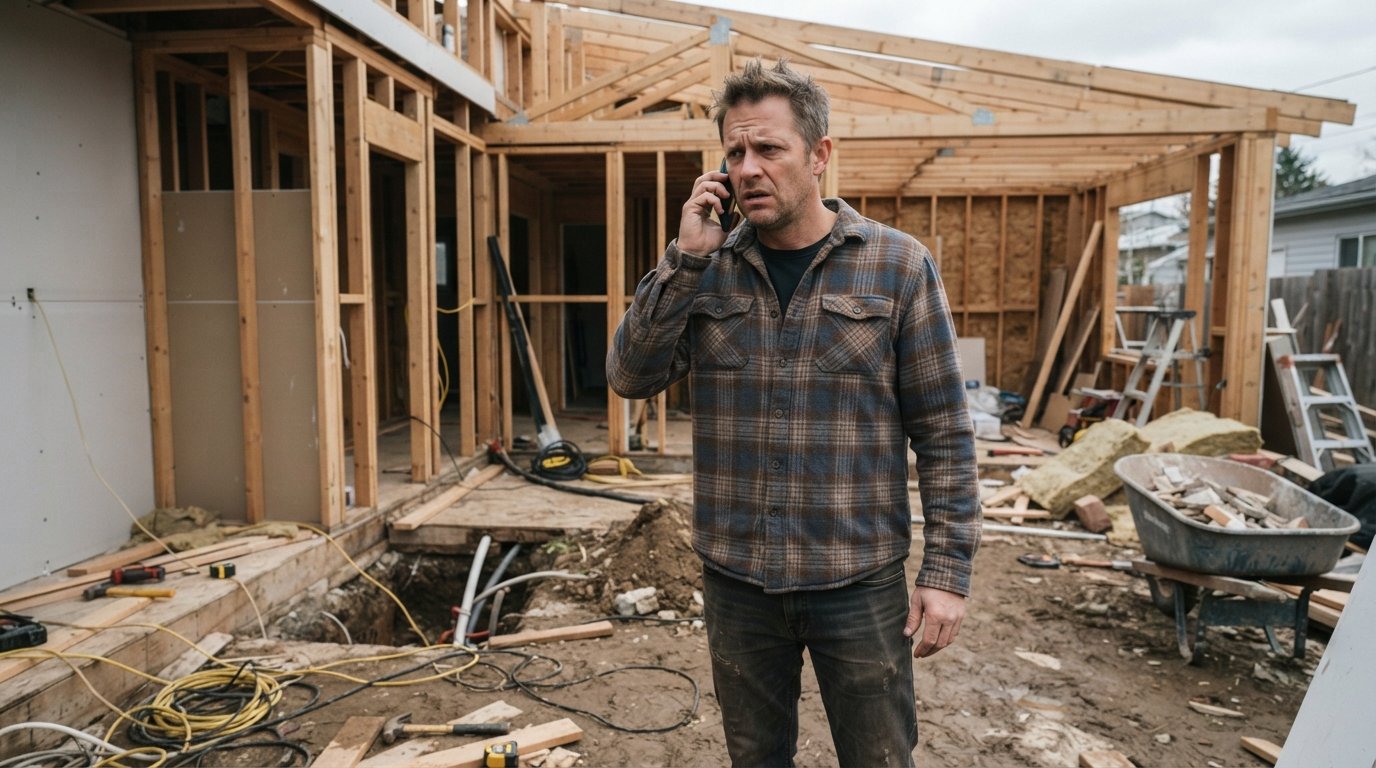
The half-finished addition sits exposed to the weather, the contractor's phone goes straight to voicemail, and you have already paid thousands of dollars for work that will never be completed. When a contractor goes out of business mid project, it is a deeply stressful situation that can feel like a financial and emotional freefall. But panic is your enemy here. The steps you take in the first 48 hours can mean the difference between recovering a portion of your funds and losing them entirely, and between finishing your project smoothly and facing a web of mechanics liens and legal headaches.
This guide walks you through exactly what to do if a contractor goes out of business mid project. You will learn how to secure your property, document everything, pursue financial recovery, and re-bid the remaining work with confidence. The process is not easy, but it is manageable when you approach it systematically. From understanding your contract's insolvency clause to navigating surety bonds and small claims court, each phase below builds on the last to help you regain control and get your renovation back on track.
Immediate Steps: Secure the Site and Stop Payments
Before you make any calls or send any emails, your first priority is physical safety and financial containment. An abandoned job site can be dangerous, especially if electrical work, plumbing, or structural framing is incomplete. Secure any open trenches, cap exposed wiring if you can do so safely, and lock up materials and tools that could be stolen or damaged. If the project involves a roof or exterior wall that is now open to the elements, take photos and consider temporary weatherproofing, such as tarps or boarded-up openings, to prevent further damage. Your homeowners insurance may cover some of this emergency mitigation, so call your insurer early to ask about your policy's provisions for sudden and accidental damage during a renovation.
Next, stop all payments immediately. If you have a check outstanding or an automatic payment scheduled, cancel it. Do not pay any additional invoices, even if the contractor's office requests a final payment to "close out" the job. Every dollar you release after you learn of the closure reduces your leverage and the pool of money you might recover. If you paid by credit card, contact your card issuer to dispute charges for work that was never performed. Many credit card companies offer purchase protection that can reimburse you for services paid for but not received, and this is often the fastest route to recovering a portion of your funds. For payments made by check, you may be able to place a stop-payment order if the check has not yet cleared.
Finally, change the locks if the contractor or any subcontractors still have keys or access codes to your home or garage. You do not want anyone entering the property without your explicit permission while the situation is unresolved. Send a written notice (email is fine, but a certified letter is better) to the contractor's last known address stating that you are terminating the contract due to their failure to perform and that you are securing the premises. This creates a paper trail that will be valuable later.
Document Everything: The Paper Trail That Protects You
Your ability to recover funds, defend against liens, and win a legal dispute depends almost entirely on the quality of your documentation. Start a dedicated folder, either physical or digital, and begin collecting every piece of evidence related to the project. This includes the original contract and any change orders, all payment records (canceled checks, bank statements, credit card receipts), photographs and videos of the work site at every stage, and all communications with the contractor (texts, emails, voicemails). If you had verbal agreements, write down a summary of what was discussed and when, and note the names of anyone who was present.
Create a detailed inventory of the work that was completed versus what remains. Walk through the project with a clipboard or a notes app and record the state of each phase. For example, if the framing is up but the electrical rough-in is incomplete, note that. If materials were delivered but not installed, list them and take photos of the labels and quantities. This inventory serves two purposes: it helps you communicate clearly with a new contractor during the re-bidding process, and it provides concrete evidence of the value you have already received (or not received) for the money you paid.
You should also request a copy of the contractor's payment bond and license bond information if you do not already have it. In many states, licensed contractors are required to carry a surety bond, and these bonds may be claimed against if the contractor fails to perform or abandons the project. The bond information is often listed on the contractor's license or on the state licensing board's website. If you cannot find it, call the licensing board and ask how to obtain it. Having this information ready will accelerate any claim you file.
Understand Your Contract's Insolvency and Termination Clauses
Your contract is the first place to look for guidance on what happens when the contractor goes out of business. Many well-written construction contracts include a termination for convenience or termination for cause clause that outlines the process for ending the agreement and settling accounts. Look for language that addresses contractor insolvency, abandonment, or failure to perform. If your contract has such a clause, follow its notice requirements precisely. For example, it may require you to send a written notice of default and give the contractor a certain number of days to cure the problem before you can terminate. Even if the contractor is out of business, sending the required notice protects your legal position and preserves your right to pursue damages.
If your contract does not address insolvency, you still have common law rights. In most jurisdictions, a contractor's abandonment of the project or inability to perform constitutes a material breach, which allows you to terminate the contract and seek damages. However, the specific steps you must take can vary by state. For instance, some states require you to provide written notice and an opportunity to cure before terminating, while others allow immediate termination for abandonment. A brief consultation with a construction attorney in your area can clarify your rights and obligations, and many attorneys offer a free or low-cost initial consultation.
It is also worth checking whether your contract includes an arbitration clause. If it does, you may be required to resolve disputes through arbitration rather than court. Arbitration can be faster and less expensive than litigation, but it also limits your appeal rights. Understanding this before you file a claim or lawsuit will save you time and frustration.
Recovering Funds: Surety Bonds, License Bonds, and Small Claims
When a contractor goes out of business, your best chance at recovering money often lies in the bonds and legal remedies available to homeowners. Here are the primary avenues to pursue, roughly in order of speed and cost-effectiveness:
- Credit card chargeback: If you paid by credit card, file a dispute within the time limit (usually 60 to 120 days from the transaction date). Provide the card issuer with your contract, payment records, photos of incomplete work, and any communication showing the contractor's failure to perform. This is often the fastest way to get your money back.
- Surety bond claim: If the contractor carried a payment bond or a license bond (required in many states), you can file a claim against the bond. The bond is a form of insurance that protects consumers from contractor misconduct, including abandonment. Contact the bonding company listed on the bond and ask for a claim form. You will need to provide documentation of the contract, payments, and the unfinished work.
- Small claims court: If the amount in dispute is within your state's small claims limit (often $5,000 to $10,000), you can file a case without an attorney. The process is relatively quick and inexpensive, but collecting a judgment can be challenging if the contractor has no assets. Still, a judgment is enforceable for years and can be renewed.
- State licensing board complaint: Filing a complaint with your state's contractor licensing board will not directly recover your money, but it can trigger an investigation and disciplinary action. In some cases, the board may order restitution. It also creates an official record that can support your other claims.
Each of these options has deadlines and documentation requirements, so do not delay. For example, bond claims often must be filed within a specific period after the work was last performed, and credit card disputes have strict time limits. If you are unsure which route to take, start with the credit card dispute (if applicable) and file a bond claim simultaneously. You can also contact your state's consumer protection agency for guidance on local resources. Remember that recovering funds is rarely a quick process, but persistence pays off. Keep copies of everything you submit, and follow up regularly.
Releasing and Re-bidding the Project
Once you have secured the site and initiated recovery efforts, you need to get your project moving again. The first step is to formally release the original contractor from the project. Even if the contractor is out of business, sending a written notice of termination (via certified mail and email) creates a clear record that you have ended the relationship. This notice should state the date of termination, the reason (abandonment or insolvency), and a demand for a final accounting of all funds paid and work performed. Keep a copy for your records.
Next, prepare a re-bid package for prospective new contractors. This package should include the original plans and specifications (if available), a detailed scope of work for the remaining tasks, your documentation of the work completed so far, and any permits that have been pulled. If the original contractor pulled permits, you may need to transfer them to the new contractor or apply for new ones. Contact your local building department to understand the process. A clear, well-organized re-bid package will attract serious bids and help you compare proposals accurately.
When you solicit new bids, be transparent about the situation. Explain that the previous contractor went out of business and that you are seeking a contractor to complete the remaining work. Ask each bidder to provide a detailed breakdown of costs for labor, materials, and any necessary permits or inspections. Also ask for proof of current licensing, insurance, and bonding. You can use a service like Repairmen to find vetted, licensed professionals in your area who can handle the remaining work. Compare at least three bids, and check references carefully. A new contractor who understands the history of the project will be better equipped to avoid pitfalls and deliver quality work.
If you are considering whether to hire a new contractor or take over the project yourself, our guide on changing contractors mid project explains the pros and cons and how to manage the transition smoothly. In many cases, hiring a new professional is the fastest path to completion, especially for complex trades like electrical or plumbing.
Preventing Mechanics Liens from Subcontractors and Suppliers
One of the most overlooked risks when a contractor goes out of business is the threat of mechanics liens from unpaid subcontractors and material suppliers. Even though you paid the general contractor, if that contractor failed to pay the subcontractors or suppliers, those parties can file a lien against your property. A mechanics lien is a legal claim that can cloud your title, prevent you from selling or refinancing, and potentially force a foreclosure sale. The good news is that you can take steps to prevent liens and protect your property.
First, find out who the subcontractors and suppliers were on your project. Check your contract, invoices, and any correspondence for names. Then, send each of them a written notice stating that the general contractor has gone out of business and that you want to ensure they are paid for work performed. Ask them to provide a lien waiver or a statement of account showing what they are owed. In many states, you can also record a "notice of non-responsibility" or similar document with the county recorder's office, which puts the world on notice that you are not responsible for the contractor's debts. The exact procedure varies by state, so consult a local attorney or your county recorder's office for guidance.
Another protective measure is to require lien waivers from all subcontractors and suppliers as a condition of final payment. Even though the original contractor is gone, you can make any new contractor provide conditional lien waivers for work as it progresses. This ensures that everyone gets paid and that no liens are filed. If a subcontractor does file a lien, do not ignore it. Respond promptly, dispute it if it is invalid, and consider paying the subcontractor directly in exchange for a lien release. Paying twice is painful, but it is often cheaper than a legal battle and a clouded title.
Contract Clauses That Protect You from Future Insolvency
If you are planning a future renovation, you can protect yourself from the nightmare of a contractor going out of business by insisting on certain contract clauses. These provisions shift risk away from you and create clear remedies if the contractor fails. Here are the key clauses to include:
- Performance bond or payment bond requirement: Require the contractor to provide a surety bond that guarantees completion and payment to subcontractors. This is especially important for large projects.
- Progress payment schedule tied to milestones: Never pay a large upfront deposit. Instead, tie payments to specific, verifiable milestones (e.g., framing complete, rough-in inspections passed). This limits your financial exposure if the contractor walks away.
- Termination for cause clause: Include a clause that allows you to terminate the contract if the contractor fails to perform, becomes insolvent, or abandons the project. Specify the notice requirements and the contractor's obligation to provide a final accounting.
- Lien waiver requirement: Require the contractor to provide lien waivers from all subcontractors and suppliers with each payment application. This prevents surprise liens later.
- Dispute resolution clause: Specify whether disputes will be resolved through arbitration or litigation, and in which jurisdiction. This can save you time and money if things go wrong.
Even with these protections, no contract can completely eliminate the risk of a contractor going out of business. That is why it is also wise to vet contractors thoroughly before hiring. Check their licensing, insurance, bonding, and references, and look for warning signs such as requests for large upfront payments, lack of a physical address, or a history of complaints. A little due diligence upfront can save you enormous headaches later. For more tips on selecting reliable professionals, see our contractor selection resources.
Finally, consider requiring the contractor to carry a completion bond for large projects. A completion bond guarantees that the project will be finished according to the plans and specifications, even if the contractor defaults. The bond issuer will either find a replacement contractor or pay you the cost of completion. Completion bonds are not common for residential projects, but they can be arranged for high-value renovations.
When a contractor goes out of business mid project, the path forward is challenging but clear: secure the site, document everything, pursue recovery through bonds and credit card disputes, release the old contractor, re-bid the work, and protect against liens. By acting quickly and methodically, you can minimize your losses and get your project back on track. Remember that you are not alone; resources like your state licensing board, consumer protection agency, and professional contractor matching services are available to help. Stay organized, keep communicating in writing, and don't be afraid to seek legal advice if the stakes are high. With patience and persistence, you can turn a setback into a successful completion.