
Best Siding for Coastal Homes: Salt Air Picks
Discover the best siding materials for coastal homes salt air humidity, and learn which options resist corrosion, rot, and fading for long-term durability.

By Eric Andrew
Learn more about Siding Installation for guides, costs, and what to expect.
Compare Siding Installation Pros Near You

Enter your ZIP code to compare top-rated local professionals and request free quotes.
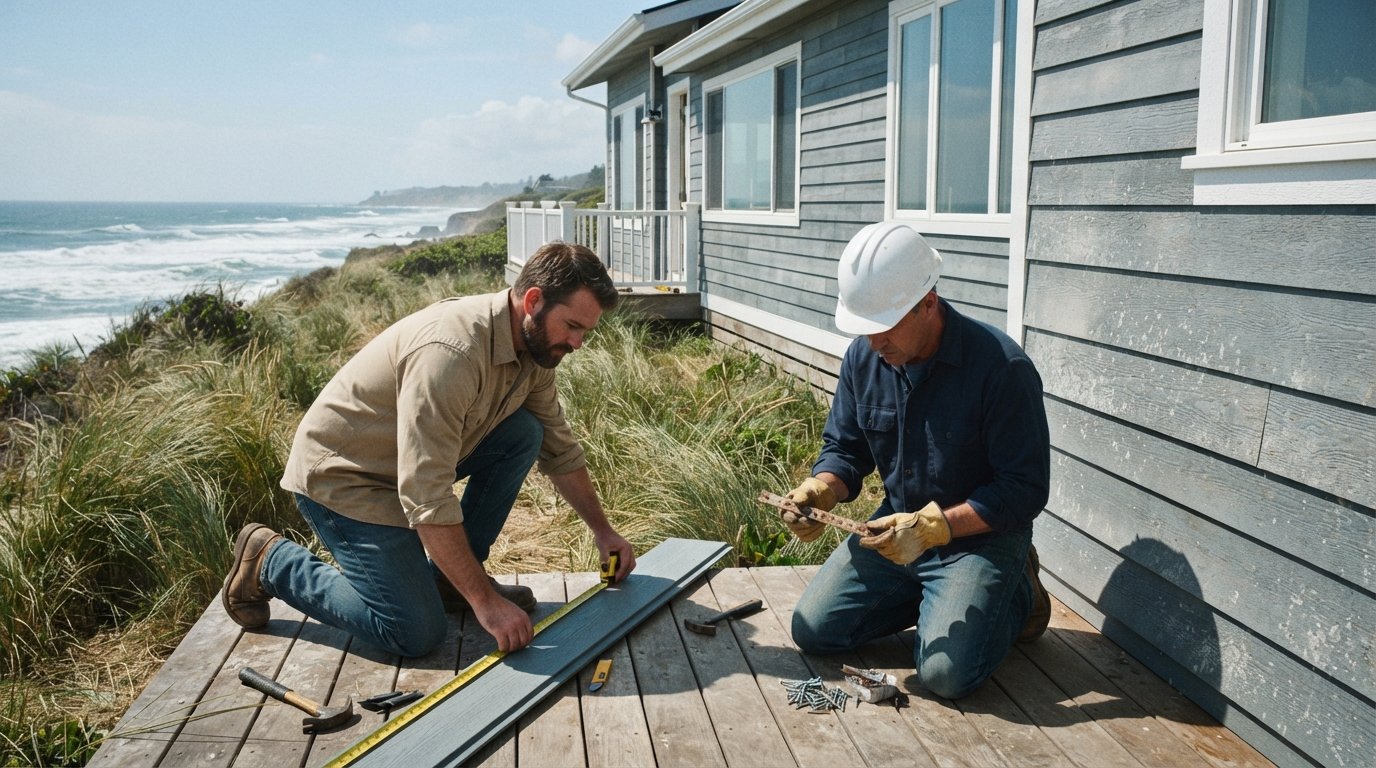
Choosing siding for a coastal home is not the same as picking materials for an inland property. The combination of salt air, high humidity, and relentless sun creates a uniquely harsh environment that can punish ordinary materials within just a few seasons. Salt crystals settle on surfaces and, when mixed with moisture, accelerate corrosion and rot. Humidity promotes mold, mildew, and warping, while UV rays fade and degrade even the toughest finishes. Many homeowners discover too late that their beautiful cedar shingles or standard vinyl panels were never designed for this assault. To avoid costly replacements and protect your investment, you need to understand which products genuinely stand up to the coast. This guide compares the best siding materials for coastal homes salt air humidity, so you can make an informed decision before you commit to a contractor and a budget.
What Makes Coastal Siding So Demanding?
The coastal climate is a perfect storm for building materials. Salt air is hygroscopic, meaning it draws moisture from the atmosphere and keeps surfaces damp. When that salt-laden moisture meets metal fasteners, flashing, or even the edges of siding panels, it sets off electrochemical reactions that cause corrosion. Wood is especially vulnerable because salt and moisture create ideal conditions for fungal decay and insect infestation. Humidity alone can cause wood to swell, crack, and cup, while UV radiation breaks down the binders in paint and the plasticizers in vinyl, leading to fading and brittleness.
Another factor is wind-driven rain. Coastal storms push water horizontally, forcing it behind lapped joints and under trim. If the siding system is not designed with proper flashing and ventilation, water can become trapped between the siding and the weather-resistant barrier, leading to hidden rot and structural damage. This means the best siding materials for coastal homes salt air humidity must not only resist the elements themselves, but also be part of a wall assembly that allows drainage and drying. A material that looks good on paper might fail if the installation details are wrong, which is why professional expertise matters as much as product choice.
Top Siding Materials That Survive the Coast
Below is a ranked list of the most reliable siding options for coastal environments, based on durability, maintenance needs, and real-world performance. Each has its strengths and trade-offs, so consider your priorities before making a final decision.
- Fiber cement: A composite of cement, sand, and cellulose fibers, offering exceptional resistance to fire, insects, and rot.
- Engineered wood: Treated wood strands and resins that resist moisture and warping better than natural wood.
- Vinyl (premium grade): A plastic cladding that does not rot or corrode, though it can crack in extreme cold and fade over time.
- Metal (aluminum or steel): Highly durable and recyclable, with modern coatings that resist salt corrosion.
- Stucco (with proper flashing): A cement-based finish that stands up to salt air when applied over a rain screen or drainage system.
Fiber cement is widely regarded as the gold standard for coastal homes because it combines inorganic materials that are inherently immune to salt damage. Brands like James Hardie even offer specific product lines with enhanced moisture resistance. Engineered wood, such as LP SmartSide, uses zinc borate to deter fungal growth and is a strong contender if you prefer the look of wood without the constant upkeep. Premium vinyl, while not as aesthetically upscale, is an affordable option that will not rot or corrode, but you must choose a thick-gauge product with a deep pigment to avoid fading. Metal siding has come a long way with modern PVDF coatings, but it still requires careful detailing at cut edges to prevent rust from developing where the coating is breached.
Fiber Cement: The Coastal Workhorse
Fiber cement siding is a composite material made from Portland cement, sand, and cellulose fibers. It is non-combustible, termite-proof, and does not rot, which gives it a significant edge in humid coastal climates. The material is available in a range of styles, including lap boards, shingles, and vertical panels, so it can mimic the look of wood, masonry, or stucco. One of the key advantages is its dimensional stability; it will not warp or buckle when exposed to moisture, and it holds paint much longer than wood, typically 10 to 15 years with proper preparation.
Installation is more involved than vinyl because the boards are heavy and require specialized cutting tools, often producing silica dust. This is why it is critical to hire a contractor who has experience with fiber cement. Proper installation includes sealing all cut ends with touch-up paint or caulk, using corrosion-resistant fasteners, and leaving a small gap at joints to allow for thermal expansion. In coastal areas, a rain screen system is recommended: a layer of furring strips or a drainage mat that creates a space between the siding and the weather barrier, allowing any water that penetrates to escape. This extra step is worth the cost because it dramatically extends the life of the siding and the structure behind it.
Engineered Wood: A Balanced Alternative
Engineered wood siding, such as LP SmartSide, is made from wood strands that are bonded with resins and treated with zinc borate to resist moisture and insects. This product is more stable than natural wood because the strands are oriented and compressed, reducing the tendency to warp and split. It is also lighter than fiber cement, making it easier to handle and install, which can lower labor costs. The aesthetic is convincingly wood-like, and it can be painted or stained to achieve a custom look.
However, engineered wood is not as impervious to moisture as fiber cement. While it resists rot far better than natural wood, it is not completely waterproof. If water is allowed to sit against the bottom edges or behind the panels for extended periods, swelling and delamination can occur. Therefore, the same rain screen principle applies: you need a drainage plane and careful detailing around windows, doors, and corners. When installed correctly, engineered wood can last 30 years or more in coastal settings, but it demands a vigilant contractor who understands the nuances of flashing and sealing.
Premium Vinyl: Budget-Friendly and Resilient
Vinyl siding is the most popular siding material in the US because it is inexpensive, low-maintenance, and easy to install. For coastal homes, the key is to choose a premium grade with a minimum thickness of 0.044 inches, as thinner panels can sag in heat and become brittle in cold weather. High-end vinyl often includes a foam insulation backing, which improves energy efficiency and adds impact resistance. Modern manufacturing techniques have also improved color retention; some products now use a co-extruded capstock layer that resists fading, a common complaint in sunny coastal regions.
Vinyl's biggest weakness is its negative temperatures, but coastal climates rarely see extreme cold. The material expands and contracts significantly with temperature changes, so it must be installed with loose fasteners and overlapping joints that allow movement. If you live in a hurricane-prone area, check that the siding has a high wind-load rating; some premium lines are rated for winds up to 180 mph. Vinyl does not rot or corrode, which makes it a practical choice for salt air, but it can crack if struck by debris, and repairs can be tricky if you need to match a discontinued color. If you want an authentic wood grain look, you may need to step up to fiber cement or engineered wood.
Metal Siding: Modern and Tough
Aluminum and steel siding have been used for decades, but they have evolved significantly. Modern metal siding is coated with PVDF or SMP paints that resist chalking and fading, and the underlying metal is typically galvanized or painted on both sides to prevent corrosion. Aluminum is naturally resistant to rust, but it is soft and can dent easily; steel is stronger but heavier and more prone to rust if the coating is scratched. For coastal applications, the best choice is a thick-gauge steel with a robust finish, or an aluminum product with a heavy temper.
Installation requires careful attention to cut edges, which must be primed and painted to seal the exposed metal. Fasteners should be stainless steel to avoid galvanic corrosion when they contact the aluminum or steel. Metal siding can be installed vertically or horizontally, and it can imitate wood grain or smooth panels. It is fire-resistant, termite-proof, and virtually maintenance-free beyond periodic washing. The main downside is cost: metal siding is often more expensive than vinyl and even comparable to fiber cement. It can also be noisy during heavy rain, though insulation behind the panels usually mitigates that. If you want a modern, industrial aesthetic and are willing to invest in quality materials and installation, metal is a strong contender for coastal homes.
Stucco: Classic Coastal Finish
Stucco has been used in coastal regions for centuries, especially in Mediterranean and Spanish-style architecture. It is a cement-based plaster that is applied over a lath and scratch coat, and it can be tinted to a wide range of colors. When properly applied, stucco is remarkably durable in salt air because it is inorganic and does not rust or rot. It also provides a seamless, monolithic surface that resists wind-driven rain, provided there are no cracks.
The challenge with stucco is moisture management. Traditional stucco is a hard, impermeable layer that can trap water behind it if the flashing is faulty or if cracks develop. In coastal climates, it is now recommended to use a modern stucco system that includes a drainage plane, such as a rain screen or a cement board backing with a water-resistant barrier. These systems allow any trapped moisture to escape, preventing rot and mold in the wall cavity. Stucco also requires skilled application; if the mix ratio is off or the curing is rushed, it can crack and allow salt water to penetrate. If you love the look of stucco, invest in a contractor who specializes in coastal applications and use a high-quality elastomeric paint or finish coat to seal hairline cracks.
Installation Details That Make or Break Coastal Siding
Even the best siding materials for coastal homes salt air humidity will fail prematurely if the installation is not suited to the environment. The most critical is the weather-resistant barrier, which is a layer of house wrap or felt that goes behind the siding. This barrier must be properly overlapped and sealed at all seams, especially around windows and doors. In coastal areas, you should also use a self-adhered membrane (like peel-and-stick) at sill plates and corners, because wind-driven rain can push water behind the siding and into the wall assembly.
Flashing details are equally important. Every window, door, and roof-to-wall intersection needs to have continuous flashing that directs water outward. The siding should never be butted directly against a roof or a deck, as that creates a capillary path for moisture. A gap of at least two inches is recommended, and that gap should be covered with a metal or plastic flashing that is sloped away from the wall. Additionally, all fasteners should be corrosion-resistant; stainless steel or hot-dipped galvanized nails are best, but be sure they are compatible with the siding material to avoid galvanic reactions. Finally, allow for ventilation and drainage behind the siding. An air gap of at least 3/8 inch is ideal, because it lets the backside of the siding dry and prevents the buildup of salt-laden moisture.
Maintenance and Longevity: What to Expect
Your choice of siding will determine how often you need to wash, repaint, or repair. Fiber cement and metal require the least maintenance, usually just an occasional rinse with a garden hose to remove salt spray and dust. You may need to repaint fiber cement every 10 to 15 years, but the paint adheres well and does not peel easily if the surface is cleaned and primed. Engineered wood is also low maintenance, but it should be inspected annually for any signs of moisture intrusion, especially around the bottom edges. Vinyl can be cleaned with a soft brush and soapy water; avoid using a pressure washer, which can force water behind the panels. Stucco may need to be repainted every 5 to 10 years, and you should fill any cracks promptly to keep out moisture.
In terms of lifespan, a properly installed fiber cement or metal siding can last 50 years or more. Engineered wood is typically rated for 30 years, but many installations last longer if the coating is maintained. Premium vinyl can last 30 to 40 years, though it may fade or become brittle after 20 years in intense sun. Stucco can last the life of the house if it is protected from cracking and moisture, but traditional stucco systems in wet climates have a higher risk of hidden rot. When you factor in the cost of repairs and repainting, fiber cement often provides the best long-term value for coastal homes.
Cost Considerations and Getting Accurate Quotes
Coastal siding is not just about the price of the material; you also need to budget for premium installation techniques and possibly a rain screen system. Fiber cement typically costs between $3 and $7 per square foot for materials, plus another $4 to $8 per square foot for labor. Engineered wood is slightly cheaper, around $2 to $5 per square foot for materials, with similar labor costs. Premium vinyl is the most budget-friendly, at $1 to $4 per square foot for materials, but you may need to add $1 to $2 per square foot for foam insulation. Metal siding ranges from $4 to $10 per square foot, and stucco can be $6 to $12 per square foot, depending on the system and the complexity of the application.
Because these estimates vary so much by region and installer, the only reliable way to get a true number is to request multiple quotes from qualified local contractors. When you receive bids, ask each contractor how they plan to handle drainage, flashing, and corrosion-resistant fasteners. A low bid that omits these details will cost you more in the long run. Be sure to verify that the contractor is licensed and insured, and ask for references from previous coastal projects. To simplify this process, you can use our network at ContractorHomeQuotes to connect with pre-screened siding professionals in your area who can provide detailed, no-obligation estimates.
Making the Right Choice for Your Home
There is no single correct answer when it comes to selecting the best siding material for your coastal home; it depends on your budget, your architectural style, and your tolerance for maintenance. If you want a durable, low-maintenance option that mimics wood and has a proven track record, fiber cement is the safest bet. If you are on a tighter budget and prefer a classic look, premium vinyl is a reasonable choice, but be prepared to accept a shorter lifespan. For a modern aesthetic, metal offers excellent durability and a distinctive appearance. Engineered wood is a good compromise if you want a warmer look but want to avoid the cost of fiber cement. And if you are building in a Mediterranean style, a modern stucco system with a rain screen can be both beautiful and lasting.
Before you finalize your decision, take the time to walk around your neighborhood and observe what materials have aged well in your specific coastal microclimate. Look for signs of fading, rust, or rot on existing homes, and ask homeowners about their experiences. Also, check your local building codes and homeowner association rules, as some areas have restrictions on siding materials or colors. Finally, always hire a contractor who has specific experience with coastal installations, and do not be afraid to ask questions about how they will manage moisture and corrosion. The right material, installed correctly, will protect your home for decades and give you peace of mind against the relentless coastal elements.
For homeowners who are also planning other exterior projects, such as replacing windows or roofing in a coastal environment, you can benefit from understanding how these systems interact. Our guide on siding materials for harsh winters offers additional comparative insights that are useful when considering temperature extremes, though coastal humidity and salt air remain the primary challenges you will face. By combining the right siding choice with proper installation and regular maintenance, you can ensure that your home remains beautiful and structurally sound, no matter what the ocean throws at it.
As you move forward, remember that the best siding material is only as good as the people who install it. Take the time to vet contractors thoroughly, request written warranties, and confirm that they use corrosion-resistant accessories. With a thoughtful approach, you will enjoy your coastal home for years to come, without the constant worry of siding failure. If you are ready to get started, consider using a free quote service like Homes.Contractors to compare vetted siding professionals in your area, ensuring you get a fair price and high-quality workmanship for this critical investment. Homes.Contractors