
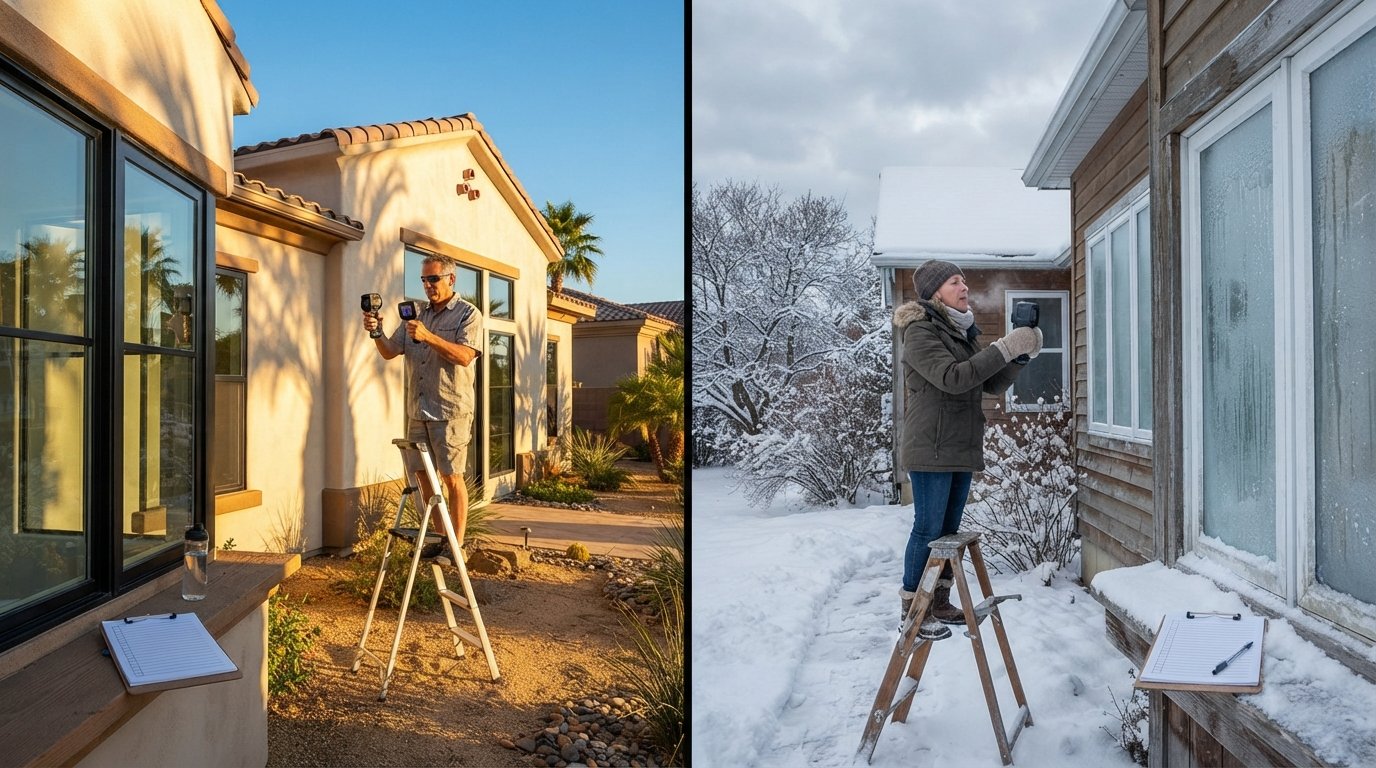
Window Replacement Energy Savings Reality Check by Climate
A window replacement energy savings reality check by climate shows payback varies widely by region. Call 8333658755 for local quotes.

By Joshua Benson
Learn more about Window Installation for guides, costs, and what to expect.
Compare Window Installation Pros Near You

Enter your ZIP code to compare top-rated local professionals and request free quotes.
New windows are one of the most heavily marketed home upgrades in North America, and the pitch is always the same: replace your old windows and watch your energy bills plummet. The reality is far more nuanced. How much you actually save depends on where you live, how old your current windows are, how your home is built, and how you heat and cool it. A homeowner in Phoenix chasing cooling savings has a completely different equation than a homeowner in Minneapolis chasing heating savings. This window replacement energy savings reality check by climate breaks down what the data and building science actually say, so you can decide whether new windows are a smart investment for your specific situation, or whether your money is better spent elsewhere first.
What Energy Savings From New Windows Actually Look Like
Window replacement rarely delivers the 30 to 40 percent utility bill reductions that some sales pitches imply. According to the U.S. Department of Energy and independent building science research, replacing single-pane windows with modern ENERGY STAR certified double-pane units typically reduces whole-home energy consumption by roughly 7 to 15 percent. That range widens or narrows dramatically depending on climate zone, the condition of your existing windows, and whether air sealing and insulation upgrades happen at the same time.
It helps to understand the three ways windows move energy. First, conduction: heat flows directly through the glass and frame. Second, radiation: sunlight heats the interior through solar gain in summer and heat escapes outward in winter. Third, air leakage: gaps around frames and sashes let conditioned air escape and outdoor air sneak in. A new window addresses all three, but the dominant problem in most older homes is air leakage and single-pane conduction, not the glass itself. That is why a $15 tube of caulk around an existing window can sometimes capture a meaningful share of the savings people expect from a $15,000 replacement project.
There is also a hard ceiling on savings. Your windows are only one part of the building envelope. If your attic is under-insulated, your ductwork leaks, or your HVAC system is 20 years old, windows can only do so much. Energy auditors consistently find that insulation and air sealing deliver more savings per dollar than window replacement in most climate zones, which is why a reality check matters before you sign a contract.
How Climate Zone Changes the Math
Climate is the single biggest variable in window replacement payback. The DOE divides the country into climate zones, and each zone rewards different window features. In cold northern zones, you want low U-factor (excellent insulation) and you can accept higher solar heat gain because winter sun is free heat. In hot southern zones, you want low solar heat gain coefficient (SHGC) to block the sun, and U-factor matters less because cooling loads dominate. In mixed zones like the Mid-Atlantic, you need a balanced window that performs reasonably well in both directions.
This is why a window that is a smart investment in Buffalo may be a mediocre one in Miami. A triple-pane, low-SHGC window in Miami costs more and may actually increase winter heating slightly while adding little cooling benefit beyond what a good double-pane unit provides. Meanwhile, the same triple-pane unit in Minnesota can meaningfully cut heating demand during long, harsh winters. The window replacement energy savings reality check by climate is not about whether windows save energy at all; it is about whether the specific window you are buying saves energy in your specific climate.
Here is a quick reference for how the priorities shift by region:
- Cold climates (Northeast, Upper Midwest, Mountain West): Prioritize low U-factor (0.25 or lower), consider triple pane, and accept moderate SHGC for passive solar gain.
- Hot climates (Southwest, Southeast, Texas, Florida): Prioritize low SHGC (0.25 or lower), double pane is usually sufficient, and U-factor matters less than shading and air sealing.
- Mixed climates (Mid-Atlantic, Pacific Northwest, Central Plains): Balance U-factor and SHGC, double pane with low-E coatings is the sweet spot, and payback periods are typically longest here.
- Marine climates (coastal California, Pacific Northwest coast): Moderate U-factor needs, low SHGC for west-facing glass, and condensation control matters more than raw insulation value.
Notice that in mixed climates, payback periods stretch the longest, often 15 to 25 years or more, because neither heating nor cooling loads are extreme enough to generate dramatic savings. That does not mean windows are a bad idea there; it means you should justify the project on comfort, noise reduction, aesthetics, and resale value rather than energy savings alone.
Real Payback Numbers by Scenario
Let us walk through realistic scenarios. These are illustrative, but they reflect the ranges energy analysts commonly report.
Scenario 1: 1970s single-pane aluminum windows in Minneapolis. A homeowner replaces 12 windows with double-pane, low-E, argon-filled vinyl units at a cost of about $14,000. Annual heating savings land around $250 to $400, and summer cooling savings add $50 to $100. Total annual savings: roughly $300 to $500. Simple payback: 28 to 46 years. The energy case is weak; the comfort case (no more frost on the inside of the glass, no more drafts) is strong.
Scenario 2: Same windows in Phoenix. Cooling dominates. New low-SHGC windows cut solar heat gain significantly. Annual cooling savings might run $200 to $350, with negligible heating impact. Payback: 40 years or more on energy alone. Again, comfort and aesthetics drive the decision.
Scenario 3: 1990s double-pane windows with failed seals and fogging in Chicago. Here the existing windows are not terrible insulators, but they leak air and have lost their argon fill. Upgrading to modern double-pane low-E units might save $150 to $300 per year. Payback is long, but the homeowner gains clarity, reduced maintenance, and better resale appeal.
The pattern is consistent: window replacement is rarely a pure energy investment. It is a comfort, aesthetics, and property value investment that happens to deliver modest energy savings on the side. Homeowners who understand this before getting quotes are far less likely to feel disappointed after the project.
When Windows Are Actually the Right First Move
There are situations where window replacement genuinely is the highest-value energy upgrade. If your windows are single-pane with rotting frames, broken seals, or visible daylight around the edges, they are dragging down comfort and possibly causing moisture damage. In those cases, replacement solves multiple problems at once.
Windows also make sense as a first move when air sealing and insulation are already handled. If your attic is well insulated, your ducts are sealed, and your HVAC is modern, then windows become the next logical envelope improvement. The mistake is doing windows first and discovering later that the attic was the real culprit.
Finally, windows are worth prioritizing when non-energy benefits matter to you: noise reduction near a busy road, UV fading protection for furniture and floors, easier cleaning with tilt-in sashes, and improved curb appeal before a sale. In these cases, the energy savings are a bonus, not the justification.
How to Run Your Own Reality Check Before You Buy
Before you commit to a window replacement project, work through a structured evaluation. This prevents you from overpaying for efficiency you will never recoup and helps you compare contractor bids on equal terms.
- Get a home energy audit. A professional audit with a blower door test shows exactly where your home loses energy. It often reveals that air sealing and insulation offer faster payback than windows.
- Identify your climate zone and target values. Look up your DOE climate zone and the corresponding ENERGY STAR U-factor and SHGC recommendations for your region.
- Inspect your existing windows honestly. Are they single pane? Fogged? Drafty? Rotting? The worse their condition, the stronger the case for replacement.
- Model the savings. Use online energy calculators or ask contractors for documented savings estimates, not verbal promises. Treat any claim above 20 percent whole-home savings with skepticism.
- Compare at least three quotes. Pricing for the same window specification can vary by 30 percent or more between contractors. Comparing multiple bids is the single easiest way to avoid overpaying.
If you want a shortcut, you can use a free quote request service to gather bids from pre-vetted local contractors in one place. That lets you compare specifications, warranties, and pricing side by side without spending weeks chasing individual companies. For homeowners in the Southeast, our guide to window replacement in Columbia SC walks through a real regional example of how climate shapes window choices and pricing.
Choosing Windows That Match Your Climate
Once you have decided replacement is worth it, the next step is specifying the right window for your climate rather than accepting whatever the salesperson recommends. The two metrics that matter most are U-factor and SHGC, both listed on the NFRC label on every rated window.
U-factor measures how well the window insulates. Lower is better. In cold climates, aim for 0.25 or lower; in moderate climates, 0.30 is often acceptable. SHGC measures how much solar heat passes through. Lower numbers block more heat. In hot climates, aim for 0.25 or lower; in cold climates, you can go higher to capture winter sun.
Frame material also matters. Vinyl is affordable and insulates well but can expand and contract in extreme heat. Fiberglass is dimensionally stable and strong, making it a good choice for harsh climates. Wood offers the best insulation but requires maintenance. Aluminum is durable but conducts heat unless it has a thermal break. For most homeowners, vinyl or fiberglass with double-pane low-E glass hits the best balance of performance and price.
Installation quality matters as much as the window itself. A premium window installed poorly will underperform a mid-grade window installed correctly. Make sure your contractor addresses flashing, air sealing, and proper shimming. Ask about warranty terms on both the product and the labor, and confirm the installer follows manufacturer guidelines so the warranty stays valid.
Financing and Incentives That Improve the Math
Energy savings alone rarely justify window replacement, but incentives and financing can shift the equation. The federal Energy Efficient Home Improvement Credit offers a tax credit of up to $600 for qualifying windows, capped at $1,200 annually across certain efficiency categories. Many utilities add rebates on top of that. Some states and provinces offer additional programs.
Financing options also matter. If you can finance windows at a low rate and the monthly payment is close to your monthly energy savings, the project becomes cash-flow neutral. That does not make it free, but it makes it easier to justify alongside the comfort and aesthetic benefits. Just avoid high-interest financing that turns a $12,000 project into an $18,000 one.
If you want to explore vetted contractors and compare financing-friendly bids in one place, a platform like FreeQuotes.Contractors can connect you with local pros who offer transparent pricing and no-obligation estimates.
Common Myths and What the Data Says
Several myths persist around window replacement and energy savings. The most common is that new windows pay for themselves in a few years. In reality, payback periods typically run 15 to 40 years depending on climate, which is longer than most homeowners stay in a home. Another myth is that triple pane is always better. In hot climates, triple pane adds cost with minimal benefit unless noise reduction is a priority.
A third myth is that window replacement alone will fix a cold or drafty house. Often the real problem is air leakage through the attic, rim joists, or ductwork. Fixing those first can deliver more comfort per dollar. Finally, some homeowners believe that any ENERGY STAR window qualifies for the full tax credit. In fact, only windows meeting specific U-factor and SHGC thresholds for your climate zone qualify, and the credit is capped.
The honest takeaway is this: window replacement is a legitimate home improvement with real benefits, but energy savings are usually the smallest of those benefits. Go in with realistic expectations, and you will be far happier with the result.
If you are ready to see what replacement would actually cost in your area, start by gathering multiple quotes and comparing specifications side by side. The right windows for your climate, installed well, will deliver comfort, quiet, and curb appeal for decades, even if the utility bill savings are more modest than the brochure promised.