
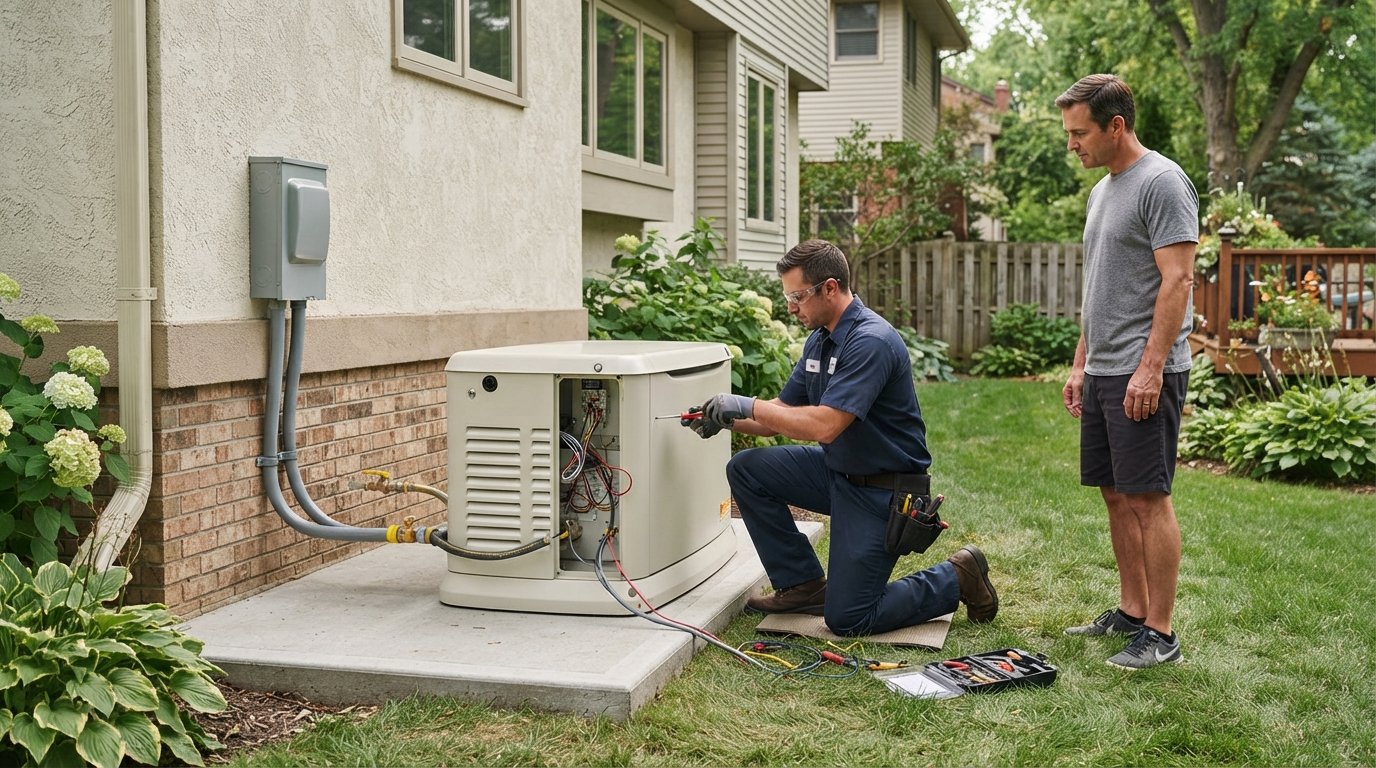
Whole House Generator Cost and Sizing Guide for 2026
Get real numbers for whole house generator installation cost and sizing, from air-cooled to liquid-cooled units. Call (833)-365-8755 for expert guidance.

By Chelsea Kris
Learn more about Generator Installation for guides, costs, and what to expect.
Compare Generator Installation Pros Near You

Enter your ZIP code to compare top-rated local professionals and request free quotes.
When the power goes out, most homeowners discover just how dependent they are on a steady supply of electricity. A whole house generator, also called a standby generator, restores normal life within seconds of an outage, but the price tag and the planning involved can feel overwhelming. This whole house generator installation cost and sizing guide breaks down what you will actually spend, how to choose the right capacity for your home, and the permits, fuel, and maintenance details that often surprise first-time buyers. By the end, you will have a clear framework for budgeting and comparing contractor bids with confidence.
Installed Cost Ranges: Air-Cooled vs. Liquid-Cooled Standby Units
The single biggest variable in your budget is the type of generator you choose. Air-cooled units are the most common choice for residential use because they cost less upfront and are simpler to install. Liquid-cooled models cost more but handle larger homes, longer runtimes, and hotter climates with greater reliability. The installed cost includes the unit itself, the automatic transfer switch, gas line work, electrical wiring, a concrete pad, permits, and labor. For a typical 20 kW to 24 kW air-cooled system, homeowners can expect to pay between $8,000 and $15,000 installed, depending on local labor rates and the complexity of the hookup. Liquid-cooled systems in the 30 kW to 48 kW range often land between $15,000 and $30,000 or more.
These figures are national averages, and your actual quote will vary based on where you live, how far the generator sits from the gas meter and electrical panel, and whether your property needs a new gas line or an upgraded meter. Homes with underground utilities or strict noise ordinances may also require additional site work. Always obtain multiple itemized estimates so you can compare the equipment cost, labor, and permit fees line by line. For a broader look at how solar and backup power projects compare, see our guide to solar energy installation and costs, which explains how renewable systems can complement a generator plan.
Here is a quick breakdown of what drives the installed price:
- Generator unit: $3,000 to $8,000 for air-cooled, $8,000 to $20,000 for liquid-cooled.
- Automatic transfer switch: $500 to $1,500, with smart switches costing more.
- Gas line and meter upgrade: $500 to $3,000 depending on distance and utility requirements.
- Electrical wiring and conduit: $800 to $2,500.
- Concrete pad and permits: $300 to $1,200 combined.
Keep in mind that these are guideline ranges, not fixed prices. A straightforward installation on a slab near the meter may come in at the low end, while a long gas run or a required HOA review can push costs higher. The key is to request a detailed proposal that separates equipment, labor, and permit costs so you can spot inflated line items.
Sizing a Generator to Your Home Load: HVAC, Well Pump, and Appliances
Sizing is the most misunderstood part of the process. A generator that is too small will trip breakers and fail to start your air conditioner, while an oversized unit wastes money and fuel. The goal is to match capacity to your actual load, not just square footage. Start by listing the appliances and systems you need during an outage: refrigerator, freezer, lights, internet router, sump pump, well pump, furnace blower, and central air conditioning. Then note the starting watts and running watts for each. Motor-driven loads like HVAC compressors and well pumps draw two to three times their running wattage at startup, which is why surge capacity matters.
A practical rule of thumb is to add up the running watts of everything you want to power simultaneously, then add the largest starting surge. For a typical 2,000 square foot home with central air, a 20 kW to 22 kW air-cooled generator usually provides enough power for essential circuits plus one air conditioner. Homes with two AC units, electric water heating, or a large well pump often need 26 kW to 30 kW or a liquid-cooled model. If you want true whole-house coverage, meaning every circuit including electric ranges and dryers, you may need 30 kW or more. An electrician can perform a load calculation based on the National Electrical Code to confirm the right size.
Here is a simple framework to estimate your needs:
- List critical loads: fridge, freezer, lights, router, sump pump, well pump, and medical equipment.
- Add comfort loads: furnace fan, AC compressor, and any window units.
- Identify the largest motor startup surge (usually the AC or well pump).
- Total the running watts and add the surge to get your minimum generator rating.
Remember that generator ratings are often listed in standby watts and surge watts. A unit rated at 22 kW running and 24 kW surge can handle a 4-ton AC startup if other loads are managed. Smart transfer switches and load-shedding devices can help by temporarily shutting off non-essential circuits when the generator is near capacity. This approach lets you use a smaller, less expensive generator without sacrificing comfort during an outage.
Permits, Gas Line Work, and Transfer Switch Requirements
Installing a standby generator is a permitted project in most jurisdictions. You will typically need an electrical permit and a mechanical or gas permit, and some areas require a zoning or noise variance. The permit process ensures the installation meets code for electrical connections, fuel supply, and clearances from windows, doors, and property lines. Your contractor should handle the paperwork, but you should confirm who is responsible and whether the fee is included in the bid. Unpermitted work can complicate home sales and insurance claims, so never skip this step.
Gas line work is another critical component. Natural gas is the most common fuel for standby generators because it provides an unlimited supply, but the existing meter and service line must be sized to handle the added demand. In many cases, the utility will need to upgrade the meter or regulator, which adds time and cost. Propane is a good alternative for homes without natural gas, but you will need a large tank (usually 250 to 500 gallons) and a delivery contract. The fuel choice affects both installation cost and long-term operating expenses, so compare local propane prices against natural gas rates before deciding.
The automatic transfer switch (ATS) is the safety device that disconnects your home from the utility grid and connects it to the generator. It must be rated for your service panel and installed by a licensed electrician. Whole-house transfer switches are more expensive than essential-circuit switches but provide seamless backup for every circuit. Some utilities also require a visible disconnect or an emergency stop, so check local requirements early. A qualified installer will know the local code and utility coordination steps, which is why vetting your contractor is as important as choosing the generator itself.
Noise, Placement, and HOA or Zoning Setbacks
Standby generators are not silent. Air-cooled units typically produce 60 to 70 decibels at 23 feet, which is roughly the sound of a normal conversation or a running lawn mower. Liquid-cooled models are often quieter and better suited to close-quarter neighborhoods. Noise levels matter because many municipalities enforce decibel limits at the property line, and HOAs may have their own rules about equipment visibility and placement. Before you buy, check your local zoning code for required setbacks from windows, doors, and property lines, and review your HOA covenants for any restrictions on generator location or screening.
Placement also affects performance and safety. Generators need adequate airflow for cooling and exhaust clearance, so they cannot be boxed in by fences or landscaping. A concrete or composite pad keeps the unit level and reduces vibration. Keep the exhaust away from windows, doors, and fresh-air intakes to prevent carbon monoxide from entering the home. If your lot is tight, a liquid-cooled unit or a smaller air-cooled model may fit better. Always follow the manufacturer's clearance requirements and local code, and have your contractor show you how the placement meets those rules.
Homeowners in historic districts or communities with architectural review boards may need approval for the unit's appearance. Screening with landscaping or a decorative enclosure can help, but it must not block airflow. Discuss these constraints with your contractor during the site visit so the final plan avoids costly revisions. If you are also planning a move or renovation, resources like Moving.Homes offer practical checklists that can help you coordinate major home projects and relocation logistics without missing critical steps.
Maintenance Contracts and Fuel Type Comparisons
A standby generator is a mechanical system that needs regular exercise and service to start reliably when you need it. Most manufacturers recommend an annual maintenance visit that includes oil and filter changes, spark plug replacement, battery inspection, and a load test. Many homeowners choose a service contract that bundles the annual tune-up with priority repairs, which typically costs $150 to $400 per year depending on the unit and region. Skipping maintenance is the most common reason generators fail during an outage, so budget for it from the start and set a calendar reminder.
Fuel type affects both upfront cost and long-term convenience. Natural gas is clean, continuous, and requires no tank, but you need an available gas line and sufficient pressure. Propane requires a tank and periodic refills, but it is reliable during widespread outages and often available where natural gas is not. Diesel is common for larger liquid-cooled units but requires fuel storage and more frequent maintenance. Compare the installed cost of a gas line upgrade against the cost of a propane tank and delivery contract, and factor in local fuel prices. In cold climates, propane and natural gas both perform well, but you should confirm the generator is rated for your expected temperatures.
Finally, consider the warranty and dealer network. A longer warranty and a local service technician can save you money and frustration over the life of the unit. Ask your contractor about warranty terms, response times for service calls, and whether they stock common parts. A well-maintained generator with a clear service plan will provide dependable backup power for 15 to 20 years, making the annual maintenance cost a smart investment. When comparing bids, look beyond the sticker price to the total cost of ownership, including fuel, service, and any utility upgrades.
With the right sizing, a clear budget, and a vetted contractor, a whole house generator can protect your home and family through the next storm season. Start by gathering multiple itemized quotes, confirm the load calculation, and verify permits and maintenance terms before you sign. That preparation is the difference between a smooth installation and a costly surprise.