
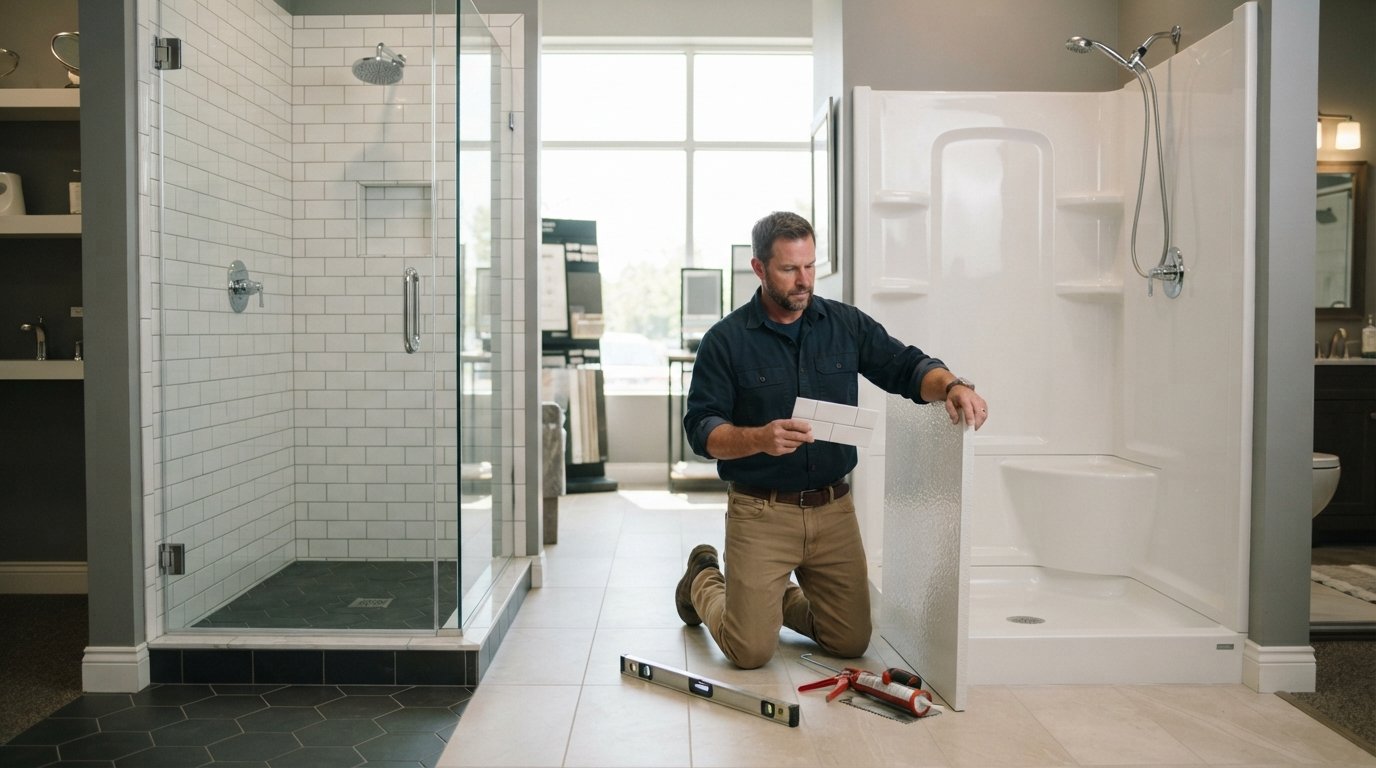
Tile Shower vs Prefab Shower: Cost and Durability
Compare tile shower vs prefab shower cost and durability to see which option saves money upfront and which adds long-term value.

By Justin Blake
Learn more about Shower and Bathtub Installation or Replacement for guides, costs, and what to expect.
Compare Shower and Bathtub Installation or Replacement Pros Near You

Enter your ZIP code to compare top-rated local professionals and request free quotes.
When you are planning a bathroom remodel, the shower is often the centerpiece of the project. It is also one of the biggest line items in your budget. Homeowners frequently face a tough decision: should you invest in a custom tile shower that reflects your personal style, or opt for a prefabricated unit that promises speed and simplicity? The answer depends on a delicate balance between your wallet and your long-term maintenance expectations. Understanding the true tile shower vs prefab shower cost and durability is essential before you commit to a design, as the upfront price tag rarely tells the whole story.
In this guide, we will break down the financial and practical differences between these two popular options. We will look at material costs, labor intensity, lifespan, and the hidden expenses that can arise years down the road. By the end, you will have a clear framework for deciding which shower type fits your home, your budget, and your tolerance for upkeep.
Understanding the Prefab Shower: Convenience and Predictability
Prefabricated showers, often called shower surrounds or shower kits, are factory-made units designed to be installed as a single piece or in a few large panels. They are typically made from acrylic, fiberglass, or a composite material. These units are engineered for efficiency. They arrive at your home ready to be fitted into a prepared alcove, usually requiring only minor assembly and sealing.
The primary appeal of a prefab shower is speed. Because the walls and pan are already manufactured, the installation process is significantly faster than tiling. A professional can often install a prefab unit in a single day, whereas a tiled shower can take a week or more. This speed translates directly into lower labor costs. If you are remodeling a rental property or simply need a functional bathroom quickly, a prefab unit is hard to beat.
However, prefab showers have limitations in terms of aesthetics and customization. They come in standard sizes, typically 30 to 36 inches wide, and a limited selection of colors and patterns. While modern manufacturers have improved the look of these units, they still lack the high-end, custom feel of tile. If you have an irregular bathroom layout or want a specific design, a prefab unit may not fit your space or your vision.
The Custom Tile Shower: Design Freedom and Long-Term Value
A tiled shower is constructed on-site. It involves building a waterproof substrate (like cement board or a foam board system), applying a waterproof membrane, and then setting individual tiles. This process is labor-intensive and requires a high level of skill. The result, however, is a completely custom surface that can be tailored to any dimension and aesthetic.
Tile offers an almost infinite array of design possibilities. You can choose from ceramic, porcelain, natural stone, or glass. You can create patterns, niches, benches, and curbless entries. A well-built tiled shower can become the focal point of a luxury bathroom and can significantly increase the resale value of a home. It is often seen as a premium feature that buyers are willing to pay more for.
Durability is another strong point for tile, but it comes with a caveat. The tile itself is incredibly durable; it will not crack or fade like some plastics can. However, the longevity of a tile shower depends entirely on the quality of the installation. If the waterproofing layer fails, or if the grout is not properly sealed, water can penetrate the walls, leading to mold and structural damage. When done correctly, a tile shower can last 50 years or more.
Cost Comparison: Upfront Investment vs. Long-Term Savings
When comparing the tile shower vs prefab shower cost and durability, the initial price difference is stark. A prefab shower is almost always cheaper upfront. The materials for a standard acrylic unit might cost between $300 and $800. Add in professional installation, and you might pay a total of $1,000 to $2,500.
A tiled shower, by contrast, is a major investment. The materials alone, including tile, grout, waterproofing membrane, and backer board, can range from $800 to $3,000 depending on the tile selection. However, the real cost driver is labor. Tiling is a skilled trade, and the labor can account for 60% to 70% of the total project cost. A custom tiled shower can easily cost between $3,000 and $10,000 or more.
To help you visualize these expenses, here is a breakdown of the typical cost components:
- Materials: Prefab units are a single purchase, while tile requires buying tile, grout, thinset, and waterproofing separately.
- Labor: Prefab installation is fast and straightforward. Tile setting is slow, meticulous work.
- Preparation: Tile often requires extensive wall prep and plumbing adjustments. Prefab units often fit standard rough-in dimensions.
- Maintenance: Tile requires periodic sealing and cleaning. Prefab requires gentle cleaning to avoid scratches.
While the upfront cost of tile is higher, it is important to consider the return on investment. A beautifully tiled bathroom is a major selling point. According to remodeling data, bathroom remodels can recoup a significant portion of their cost at resale. A prefab unit, while functional, is often viewed as a builder-grade feature and may not add the same value. If you plan to stay in your home for decades, the durability of a tile shower may justify the higher initial cost.
For those looking to manage these costs effectively, using a project cost estimation platform can help you break down material and labor expenses before you commit to a design.
Durability and Maintenance: The Long Haul
Durability is not just about how long the product lasts; it is also about how much work you have to put in to keep it looking new. This is where the tile shower vs prefab shower cost and durability debate often shifts.
Prefab showers are generally very low maintenance. Acrylic and fiberglass are non-porous, meaning they resist mold and mildew. You can clean them with a non-abrasive cleaner and a soft cloth. However, they are not indestructible. They can scratch, crack, or become brittle over time. If a prefab pan cracks, it can leak, and repairing it is often difficult. In many cases, a cracked pan requires a full replacement of the unit.
Tiled showers are more demanding. The grout lines are porous and can stain or harbor mold if not cleaned regularly. Most tile showers require resealing the grout every year or two to maintain their water resistance. If a tile cracks, it can be replaced individually, which is a plus. However, if the waterproofing behind the tile fails, the repair is extensive and expensive. You may have to tear out the entire wall to fix the issue.
Here is a quick look at the durability factors:
- Lifespan: Prefab (10 to 20 years) vs. Tile (30 to 50+ years with proper maintenance).
- Repairability: Tile allows for spot repairs. Prefab often requires full replacement.
- Resistance to Damage: Tile is harder to scratch but can chip. Prefab is flexible but can crack under impact.
Ultimately, the durability of a tile shower hinges on the quality of the installation. A cheap tile job will fail much faster than a well-installed prefab unit. This is why hiring a qualified professional is critical, regardless of which option you choose. When vetting contractors, look for those who specialize in bathroom remodeling and have a portfolio of similar projects.
If you are unsure where to start your search, resources like FreeQuotes.Contractors can connect you with local professionals who can provide quotes for both tile and prefab installations.
Making the Right Choice for Your Home
So, how do you decide between a tile shower and a prefab shower? The answer depends on your priorities. If your primary goal is to save money upfront and minimize disruption, a prefab shower is the logical choice. It is perfect for rental properties, quick flips, or guest bathrooms where function outweighs form.
If you are looking for a luxurious, custom look and plan to stay in your home for the long term, a tiled shower is worth the investment. It offers superior design flexibility and, when properly maintained, exceptional longevity. It can transform a mundane bathroom into a spa-like retreat.
Consider your budget not just for the installation, but for the ongoing maintenance. Are you willing to spend a few hours a year sealing grout? If not, a prefab unit might be a better fit for your lifestyle. Conversely, if you value the aesthetic and are prepared for the upkeep, tile is a rewarding choice.
Whichever path you choose, getting multiple quotes is essential. Costs can vary widely based on your location, the condition of your existing plumbing, and the specific materials you select. By understanding the trade-offs between cost and durability, you can make a confident decision that enhances your home for years to come.