
Sustainable Landscaping Ideas and Installation Cost Guide
Sustainable landscaping ideas and installation cost explained, from native beds to drip irrigation. Call (833)-365-8755 for free local quotes.

By Jackson Sawyer
Learn more about Outdoor Landscaping and Design for guides, costs, and what to expect.
Compare Outdoor Landscaping and Design Pros Near You

Enter your ZIP code to compare top-rated local professionals and request free quotes.
Every year, millions of homeowners pour water, fertilizer, and cash into lawns that fight the local climate instead of working with it. Sustainable landscaping flips that equation. By choosing native plants, smarter irrigation, and permeable hardscapes, you can cut outdoor water use by 30 to 60 percent, slash maintenance bills, and still end up with a yard that looks intentional rather than wild. The catch most homeowners run into is cost: it is hard to budget for a project when quotes for the same design swing by thousands of dollars. This guide breaks down the best sustainable landscaping ideas and installation cost ranges so you can plan with real numbers instead of guesswork.
What Makes a Landscape Sustainable
Sustainable landscaping is not a single product you buy. It is a design philosophy built on four principles: work with the local climate, conserve water and energy, support soil health and wildlife, and minimize ongoing inputs like mowing, fertilizing, and chemical pest control. A truly sustainable yard should get cheaper and easier to maintain every year, not more expensive.
That shift in thinking matters for your budget. A conventional lawn installation might cost less on day one, but over a decade it demands irrigation water, seasonal fertilizer, mowing, and periodic reseeding. A xeriscape or native plant design often costs more upfront for soil prep and plant material, then drops to a fraction of the annual upkeep. When you compare bids, ask contractors to show you both the installation cost and a rough five-year maintenance estimate. That total number is the one that should drive your decision.
Climate also dictates what sustainable means in your region. A homeowner in Denver is dealing with semi-arid conditions, clay soils, and watering restrictions, while someone in Atlanta is managing heavy rainfall, humidity, and erosion. The same design principles apply, but the plant lists, mulch types, and drainage strategies are completely different. Any contractor who proposes the same package in both cities is not designing sustainably.
Sustainable Landscaping Ideas That Pay Off
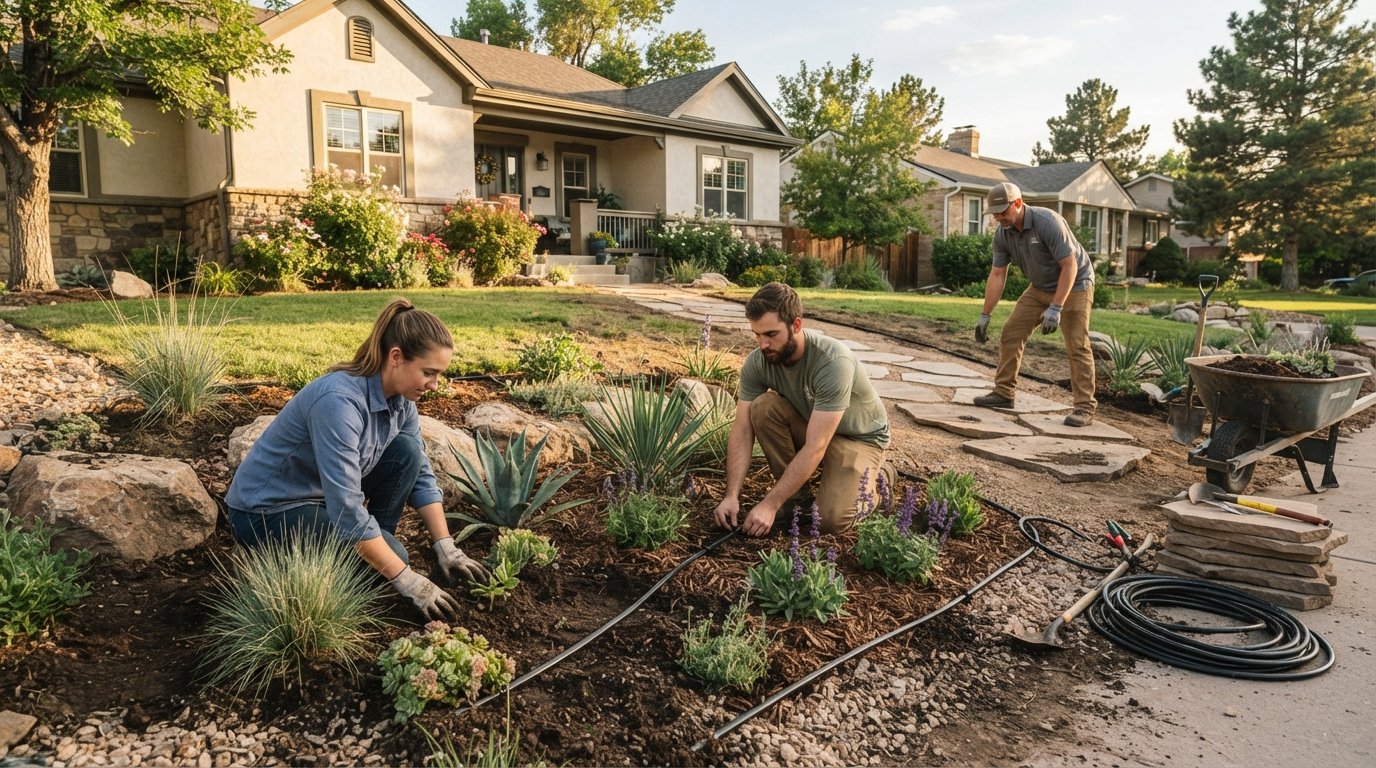
The most successful sustainable yards layer several strategies together rather than betting everything on one feature. A native plant bed alone is good. A native plant bed paired with drip irrigation, rain capture, and a permeable path is a system, and systems save far more money over time. Here are the approaches that deliver the strongest combination of curb appeal, environmental benefit, and cost recovery.
- Native and drought-tolerant plantings: Species adapted to your region need little to no supplemental water once established, and they resist local pests without chemicals.
- Rain gardens and bioswales: Shallow planted depressions capture stormwater from roofs and driveways, reducing runoff and irrigation needs at the same time.
- Drip irrigation and smart controllers: Delivering water straight to root zones cuts consumption dramatically compared to spray heads, and smart controllers adjust schedules based on weather.
- Permeable hardscaping: Porous pavers, gravel, and flagstone on sand allow water to soak in, which protects your foundation and reduces drainage problems.
- Rain barrels and cisterns: Simple roof-fed capture systems give you free water for dry spells and take pressure off municipal supplies.
Mulch deserves its own mention because it is the cheapest sustainability upgrade available. A three-inch layer of wood chips or compost over planting beds suppresses weeds, holds moisture, and slowly feeds the soil. It costs a fraction of what irrigation hardware does and reduces water demand immediately. If your budget only stretches to one improvement this season, start there.
For homeowners who want the look of a traditional lawn without the water bill, consider a low-input groundcover such as clover, buffalo grass, or a fescue blend suited to your zone. These options stay green with far less irrigation and no fertilizer regimen. They will not match the uniform carpet look of bluegrass, but they photograph well, feel soft underfoot, and cost significantly less to keep alive.
Installation Cost Breakdown by Feature
Landscaping prices vary enormously by region, site conditions, and plant size, so treat every number below as a national planning range rather than a quote. A sloped yard, rocky soil, or a required permit can push costs above these figures, while a flat lot with easy access can land below them. Always collect at least three itemized bids before committing, and compare line items rather than just the bottom line.
Here is what the major sustainable features typically cost installed, including materials and labor:
- Native plant bed (per 100 square feet): $400 to $1,200, depending on plant size and density.
- Xeriscape conversion (full front yard): $3,000 to $12,000, including removal of existing lawn.
- Drip irrigation system: $1,500 to $4,000 for a typical residential yard.
- Rain garden: $3,000 to $8,000, with engineered drainage at the higher end.
- Permeable paver patio or path: $12 to $30 per square foot.
- Rain barrel installation: $200 to $600 per barrel, or $2,000 to $8,000 for a whole-house cistern system.
Two cost drivers surprise homeowners most often. First, lawn removal: stripping and disposing of an existing turf lawn can add $1 to $3 per square foot before a single new plant goes in, and some jurisdictions require permits for the work. Second, soil amendment: sustainable plants thrive in healthy soil, so contractors frequently need to till in compost or install new topsoil, which adds $500 to $2,500 on a typical project. Skipping soil prep to save money is the single most common reason native plantings fail in year one.
Labor typically represents 40 to 60 percent of a landscaping invoice, which is why doing part of the work yourself changes the math so dramatically. Homeowners who handle demolition and planting while hiring out irrigation and hardscape installation often cut total project costs by 25 to 40 percent. If you are weighing that tradeoff, our guide on chic and functional designs shows how thoughtful planning and material choices keep custom projects on budget, and the same discipline applies outdoors.
How to Budget for a Sustainable Landscape Project
The smartest way to budget is to separate your project into phases and price each one independently. Sustainable landscapes improve over time, so there is no rule that says everything must be installed in a single season. A phased approach spreads the cost, lets you learn what thrives in your specific microclimate, and reduces the risk of an expensive mistake.
A practical sequence looks like this:
- Fix drainage and soil first, since plants and hardscape depend on both.
- Install irrigation and water capture next, before beds are planted.
- Plant trees and large shrubs early so they have time to establish.
- Add perennials, groundcover, and mulch in a later phase.
- Finish with hardscape features such as paths, patios, and lighting.
When you request quotes, ask each contractor for a phased proposal with per-phase pricing. This makes bids comparable, shows you where the money actually goes, and gives you the option to pause between phases if funds run short. It also exposes lowball bids, because a contractor who cannot itemize drainage and soil prep is likely planning to skip them.
Also check for rebates before you sign anything. Many water districts and municipalities offer cash incentives for turf removal, smart irrigation controllers, and rain barrels, and these programs can offset $500 to $3,000 of your project. Your contractor should know the local programs, but it is worth verifying on your utility website yourself. Combine rebates with the long-term savings on water and maintenance, and a well-designed sustainable landscape frequently pays for its premium within five to seven years.
Finally, if your project is part of a larger move or renovation, planning the logistics early saves real money. Reliable resources like Moving.Homes offer checklists and practical guidance that help homeowners coordinate landscaping, repairs, and relocation without paying for rushed or duplicated work. Timing your install to line up with other projects on the property almost always reduces mobilization costs.
Choosing the Right Contractor for the Job
Sustainable landscaping requires skills that general lawn crews often lack: plant selection for your hardiness zone, grading and drainage calculations, and irrigation design. Ask every bidder how many native or xeriscape projects they have completed in the last two years, and request photos of installations that are at least three years old. Anyone can make fresh mulch look good; established plantings reveal whether the design actually works.
Verify licensing, insurance, and any required local certifications before work begins, and insist on a written contract that specifies plant species, sizes, quantities, and irrigation components by brand and model. Vague scopes are where budgets fall apart. For a deeper walkthrough of vetting professionals and comparing itemized bids, the cost and contractor resources at ContractorHomeQuotes can help you request free, no-obligation quotes from qualified local landscapers and evaluate them side by side.
One last piece of advice: build a maintenance plan into the contract. Even low-water landscapes need occasional pruning, mulching, and irrigation checks, especially in the first two years while plants establish. Knowing who handles that work, and what it costs, prevents the slow decline that turns a sustainable yard back into an expensive renovation project.
Sustainable landscaping is one of the few home improvements that reduces your bills while raising your property value. Start with a realistic budget based on the ranges above, phase the work to match your cash flow, and hire a contractor who can prove they have done it before. Your yard, your water bill, and your weekends will all be better for it.