
Seasonal Home Maintenance Checklist by Climate Zone
Use this seasonal home maintenance checklist by climate zone to prevent costly damage. Call (833)-365-8755 to compare local provider quotes.

Learn more about Home Inspection for guides, costs, and what to expect.
Compare Home Inspection Pros Near You

Enter your ZIP code to compare independent local professionals and request free quotes.
Your home faces a different set of stresses in Phoenix than it does in Portland, and the maintenance calendar that works for a Minnesota winter will not protect a Florida home from hurricane season. A seasonal home maintenance checklist by climate zone helps you prioritize the tasks that actually matter where you live, so you spend time and money on the inspections and repairs that prevent the most expensive damage. Whether you are dealing with freeze-thaw cycles, salt air, or months of triple-digit heat, the right schedule keeps small issues from becoming structural problems. And when a task turns out to be bigger than a weekend project, comparing quotes from independent local providers through ContractorHomeQuotes can help you plan the repair without guessing at costs.
Why Your Climate Zone Should Drive Your Maintenance Calendar
National maintenance checklists tend to be generic, and generic advice wastes effort. Cleaning gutters matters everywhere, but the timing and the consequences differ dramatically: in a cold climate, clogged gutters contribute to ice dams, while in a hot-humid climate they feed mosquito populations and trap moisture against the fascia. A seasonal home maintenance checklist by climate zone reframes the same tasks around the weather patterns that cause the most damage in your region.
Climate also determines which systems age fastest. In hot-dry zones, UV exposure degrades roofing, paint, and caulk years earlier than in milder regions. In cold zones, the repeated freeze-thaw cycle opens cracks in concrete, masonry, and driveways. Coastal homes contend with salt corrosion and wind-driven rain, while hot-humid homes battle mold, mildew, and pest pressure. Understanding your zone helps you inspect the right components at the right time rather than following a one-size-fits-all schedule.
The financial logic is straightforward. Preventive maintenance is almost always cheaper than emergency repair, and many homeowners discover this the hard way when a neglected task turns into an insurance claim or a four-figure bill. A climate-specific checklist also helps you build a realistic phased repair budget, because you can anticipate which items will need attention each season instead of reacting to surprises.
Cold Climate Zones: Freeze-Thaw Defense
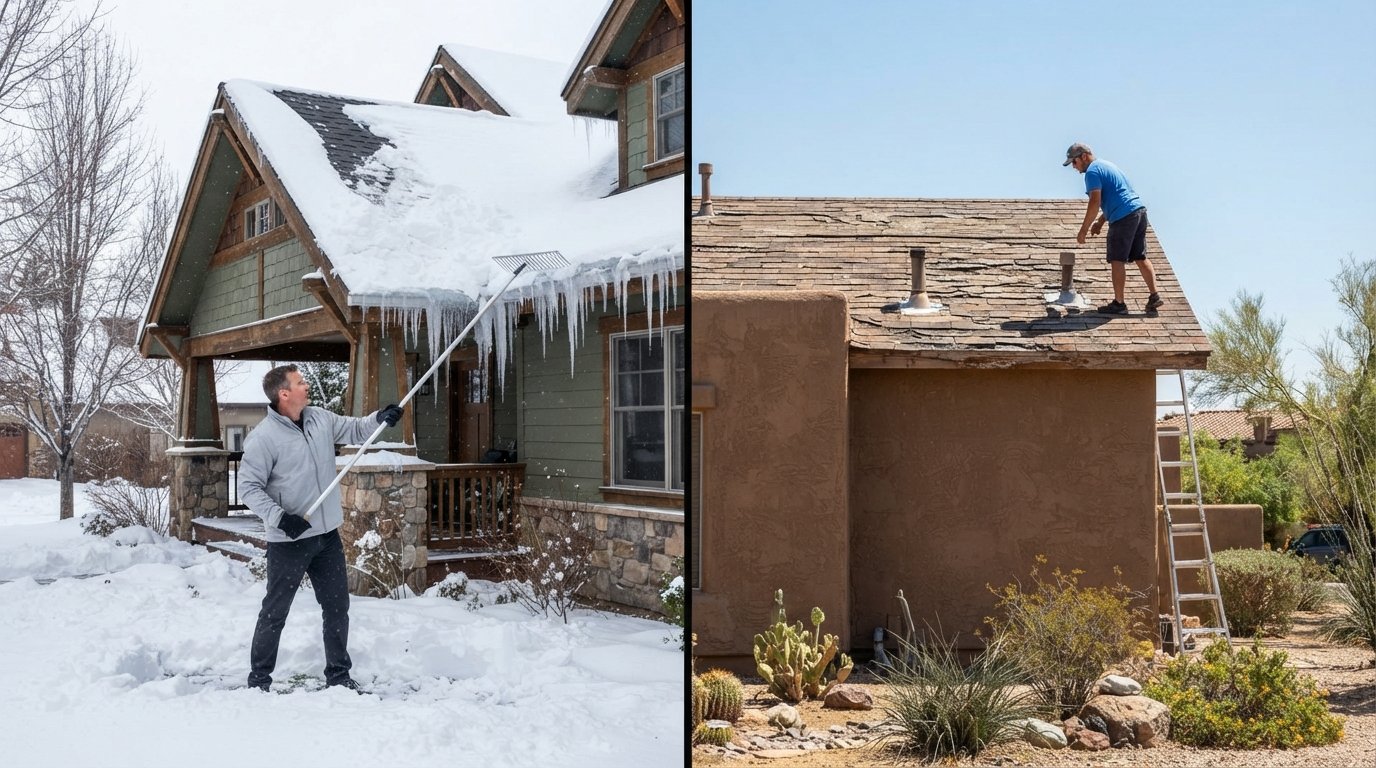
In cold climates, the freeze-thaw cycle is the single most destructive force acting on a home. Water seeps into small cracks, expands when it freezes, and widens those cracks with every cycle. Over a few winters, hairline fractures in driveways, walkways, and foundation walls become serious problems. Your maintenance calendar should revolve around preparing for winter and inspecting for damage after the thaw.
Fall is the critical season. Before the first hard freeze, you need to winterize exterior water systems, seal the building envelope, and prepare the roof for snow load. Here are the priorities that matter most in cold zones:
- Drain and shut off exterior hose bibs, sprinkler systems, and pool lines before temperatures drop below freezing.
- Clean gutters and downspouts thoroughly, and confirm that downspouts discharge well away from the foundation.
- Inspect the roof for loose or missing shingles, and check flashings around chimneys and skylights.
- Seal cracks in concrete driveways and walkways with a flexible patching compound rated for freeze-thaw movement.
- Have the heating system serviced and replace furnace filters before the heating season begins.
Spring tasks focus on undoing winter's damage. Walk the perimeter of the foundation looking for new cracks, check the attic for signs of ice dam leakage, and inspect siding and trim for paint failure caused by moisture. If you find damage that requires professional repair, gather written estimates from multiple independent local providers before committing, and verify that each provider holds the necessary licenses and insurance for your project.
Hot-Humid Zones: Moisture and Pest Control
Hot-humid climates present a maintenance paradox: the same conditions that make the region comfortable for much of the year also accelerate moisture damage, mold growth, and pest activity. The seasonal home maintenance checklist by climate zone approach is especially valuable here because humidity control is a year-round discipline with seasonal peaks.
Spring and early summer are the highest-risk periods. As temperatures rise and afternoon thunderstorms become routine, any water intrusion point becomes a mold risk within days. Your spring checklist should include inspecting the attic and crawl space for condensation, checking that bathroom and kitchen exhaust fans vent properly to the exterior, and confirming that the air conditioning condensate drain is clear. A clogged condensate line can cause water damage that rivals a roof leak.
Pest exclusion deserves equal attention. In humid climates, termites, carpenter ants, and rodents are persistent threats. Trim vegetation back from the siding, seal gaps around utility penetrations, and keep mulch below the siding line. Fall is the time to prepare for the cooler, drier season by sealing exterior gaps, cleaning gutters before the rainy season, and having the HVAC system inspected after a summer of heavy use. Dehumidification matters even in winter, so check that your strategy for controlling interior moisture is working.
Hot-Dry Zones: Heat and UV Protection
In hot-dry climates, the sun is the primary adversary. Ultraviolet radiation breaks down roofing materials, fades and cracks paint, and deteriorates caulk and sealants faster than in any other zone. The maintenance calendar in these regions should emphasize sun exposure and water management, because when rain does arrive, dry soils and hardened surfaces shed it quickly.
Spring is the ideal time to address exterior surfaces before the summer sun intensifies. Inspect the roof for cracked or brittle shingles, reapply elastomeric coatings on flat roofs if applicable, and check that caulk around windows and doors is still flexible. Paint failure on south- and west-facing walls is common, and touching up failing paint early prevents wood rot. Irrigation systems also need attention: check for leaks, adjust spray heads away from the foundation, and confirm that the system is delivering water efficiently.
Fall brings relief from the heat but also the first winds and occasional heavy rain. Clean gutters, inspect the roof after the first storm, and check the foundation for cracks that may have opened during the dry season. In hot-dry regions, soil movement from expansive clay can damage foundations, so watch for new cracks in interior drywall and exterior masonry. If you notice structural signs, bring in independent local providers for written estimates before the problem grows.
Coastal Zones: Wind, Salt, and Storm Prep
Coastal homes face a combination of hazards that no other zone matches: salt-laden air that corrodes metal, wind-driven rain that forces water into every gap, and the annual threat of tropical storms or hurricanes. The seasonal home maintenance checklist by climate zone for coastal areas should be built around storm preparation and corrosion control.
Before storm season, inspect and secure the roof, windows, and doors. Check that hurricane straps or clips are intact if your home has them, and confirm that shutters or impact panels are accessible and in good condition. Trim trees away from the house, and clear gutters and downspouts so heavy rain can drain freely. Salt corrosion attacks fasteners, railings, and HVAC equipment, so rinse exterior metal surfaces periodically and check for rust at connection points.
After any extreme weather event, inspect the exterior systematically: roof, siding, windows, doors, and foundation. Document any damage with photos before making temporary repairs, and contact your insurer promptly. When permanent repairs are needed, compare quotes from multiple independent local providers, and confirm licensing and insurance before work begins. ContractorHomeQuotes is a referral and matching service that connects homeowners with independent local providers; it does not perform the work itself, and pricing and service terms are set by those providers.
For homeowners considering solar panels as part of a coastal retrofit, understanding installation options and incentives can inform the decision. Resources such as FreeSolarPowerQuotes provide educational information on solar energy solutions and connect homeowners with independent third-party providers for comparison quotes at no obligation.
Fall and Spring: The Two Anchor Seasons
Regardless of climate zone, fall and spring are the anchor seasons for maintenance because they bracket the most extreme weather. Fall tasks focus on preparation: sealing the envelope, servicing heating systems, clearing drainage, and addressing exterior vulnerabilities before winter or storm season. Spring tasks focus on inspection and repair: finding damage that occurred during the harshest months and correcting it before the next cycle begins.
A practical way to organize this is to treat fall as a defensive season and spring as an offensive one. In fall, you are closing gaps, draining lines, and securing components. In spring, you are probing for water intrusion, testing systems, and repairing surfaces. Our guide on a spring home maintenance checklist covers fifteen vital tasks that apply across most climate zones and can be adapted to your regional priorities.
Between these anchors, monthly walkthroughs keep you ahead of problems. A fifteen-minute inspection of the attic, crawl space, and exterior perimeter each month can catch leaks, pest activity, and deterioration before they escalate. Keep a simple log of what you find and when, because that record becomes the basis for your repair budget.
Post-Weather-Event Inspections
Extreme weather events, whether a deep freeze, a heat wave, a hailstorm, or a hurricane, create specific inspection needs. After a freeze, check for burst pipes, ice dam damage, and cracked masonry. After a hailstorm, inspect the roof for bruised shingles and the siding for dents or cracks. After heavy rain, look for water stains on ceilings, pooling near the foundation, and saturated ground around the septic system.
Document everything with dated photos and notes. If damage is significant, contact your insurer before making permanent repairs, and keep receipts for any temporary measures. When you request estimates from independent local providers, ask each one to itemize materials, labor, and disposal costs so you can compare bids fairly. Be cautious of any provider who offers to handle the insurance claim for you or who pressures you to sign before you have had time to review the estimate.
Turning Maintenance Findings into a Phased Repair Budget
Maintenance inspections generate a list of findings, and that list can feel overwhelming if you try to address everything at once. A phased approach makes it manageable. Start by categorizing each finding by urgency and cost: safety issues and active water intrusion come first, followed by items that will worsen quickly, followed by cosmetic and long-term improvements.
A simple framework helps. First, separate must-do-now items (roof leaks, failed HVAC, structural cracks) from should-do-soon items (failing caulk, worn weatherstripping, clogged gutters) and long-term projects (repainting, replacing aging appliances). Second, assign a rough cost range to each item using published cost guides and contractor estimates. Third, sequence the work across two or three budget cycles so that you are not financing everything at once.
For larger repairs, gather at least three written estimates from independent local providers. Compare not just the total price but the scope of work, materials specified, and timeline. A lower bid that excludes disposal or permit costs is not actually lower. ContractorHomeQuotes can match you with providers in its network at no obligation, giving you a starting point for comparison. Always verify licensing and insurance for your specific project before signing a contract.
Build Your Climate-Specific Calendar
The most effective maintenance plan is the one you actually follow, and that means keeping it simple. Choose two anchor seasons (fall and spring for most zones), add monthly walkthroughs, and note the post-storm inspections that apply to your region. Keep a running list of findings and update your repair budget each season. Over time, this rhythm becomes second nature, and the payoff shows up in fewer emergencies, lower repair costs, and a home that holds its value through every season your climate can deliver.