
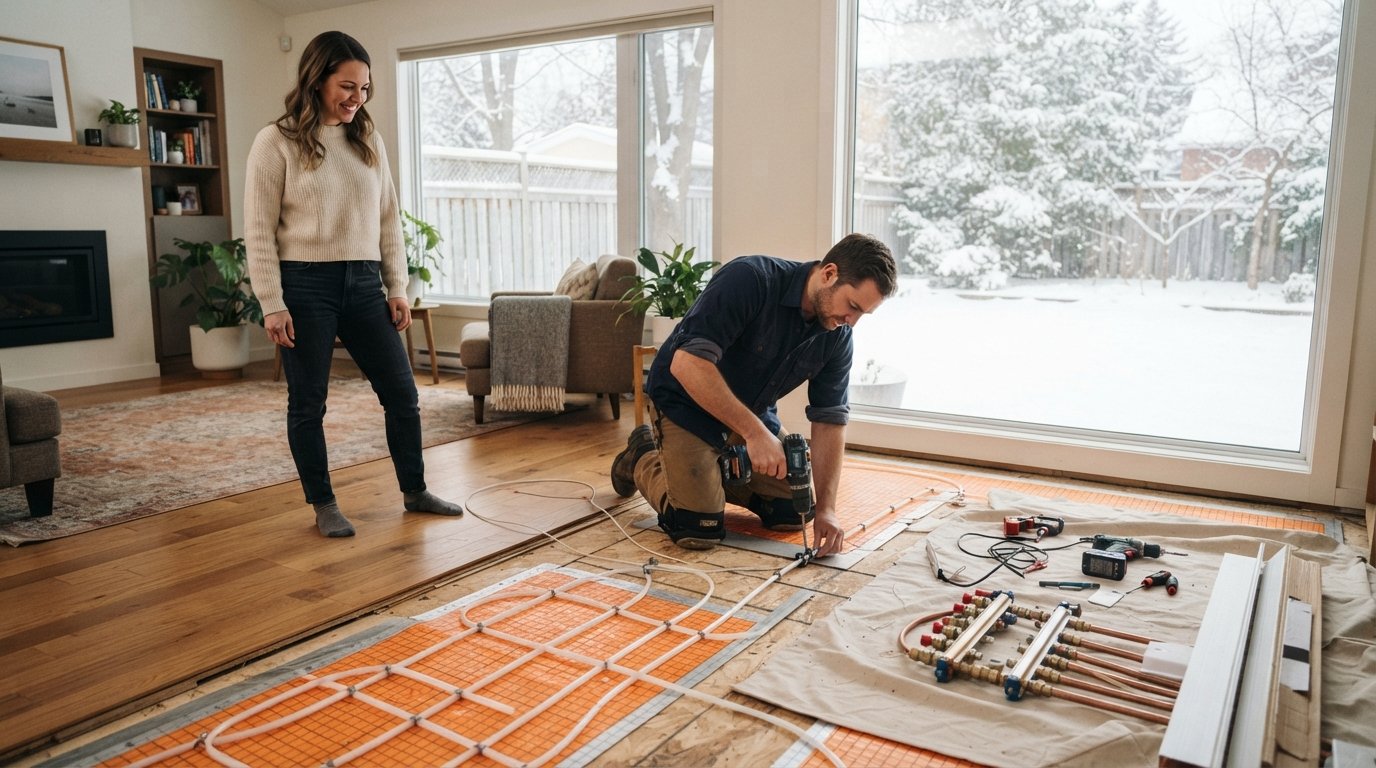
Radiant Floor Heating Installation Cost and Benefits Guide
Radiant floor heating installation cost and benefits explained: real pricing, system comparisons, and long-term savings for homeowners.

By Jessica Reis
Learn more about Heating System Installation or Replacement for guides, costs, and what to expect.
Compare Heating System Installation or Replacement Pros Near You

Enter your ZIP code to compare top-rated local professionals and request free quotes.
Imagine stepping out of bed on a freezing January morning and feeling warmth rise gently through your bare feet instead of the shock of cold tile. That is the daily reality for homeowners who install radiant floor heating, a system that has moved from luxury niche to mainstream upgrade in North American homes. But before you tear up your floors or call a contractor, you need a clear picture of what radiant floor heating installation cost and benefits actually look like in practice. This guide breaks down real pricing ranges, the variables that move those numbers, and the long-term value that makes hydronic and electric systems worth considering for your next remodel.
How Radiant Floor Heating Works and Why It Matters
Radiant floor heating distributes warmth through the floor itself, either via electric heating cables or mats, or through hydronic tubing filled with warm water. Instead of blowing hot air from a vent, the system turns the entire floor surface into a low-temperature radiator. That means heat rises evenly across the room, eliminating the cold spots and dust circulation that forced-air systems often create. For homeowners with allergies or those who simply hate the feeling of cold hardwood in winter, this difference is immediately noticeable.
The technology is not new. Hydronic radiant systems have warmed European homes for decades, and electric versions gained popularity in North America as tile floors became standard in kitchens and bathrooms. What has changed is affordability and control. Modern thermostats, zone valves, and smart controls let you heat only the rooms you use, which makes radiant systems far more efficient than older whole-home installations. If you are comparing this upgrade against other comfort investments, it helps to understand how different trades price their work. Our guide to solar energy installation and costs follows a similar logic: upfront numbers matter, but long-term savings often tell the real story.
Understanding the two main system types is the first step toward an accurate budget. Electric systems use resistance heating and are simpler to install, especially in small spaces. Hydronic systems use a boiler or water heater to circulate warm water through tubing, and they cost more upfront but deliver lower operating costs over time. Your choice depends on climate, floor type, square footage, and whether you are building new or retrofitting an existing home.
Radiant Floor Heating Installation Cost Breakdown
Most homeowners want a single number, but radiant heating costs vary widely based on system type, floor area, and regional labor rates. As a general guideline, electric radiant floor heating installation ranges from $8 to $15 per square foot, while hydronic systems run $12 to $25 per square foot. For a 500-square-foot kitchen and living area, that translates to roughly $4,000 to $7,500 for electric and $6,000 to $12,500 for hydronic, before any floor removal or subfloor prep.
These figures include materials, labor, and basic controls, but they assume a relatively straightforward installation. Complex layouts, multiple zones, or high-end thermostats push costs higher. It is also important to separate the heating system cost from the flooring cost itself. If you are installing radiant heat under new tile, the tile and installation labor are separate line items. If you are retrofitting under existing hardwood, you may need to remove and reinstall the floor, which adds significant expense.
Here is how the major cost components typically break down for a mid-range hydronic project:
- Heating equipment: Boiler, manifold, pumps, and controls, $2,500 to $6,000 depending on capacity and efficiency.
- Tubing and insulation: PEX tubing, reflective panels, and subfloor insulation, $1.50 to $4.00 per square foot.
- Labor: Installation, zoning, and system commissioning, $3 to $8 per square foot in most U.S. markets.
- Flooring removal and prep: $2 to $6 per square foot if existing floors must come up.
- Thermostats and zoning: $150 to $500 per zone, with smart controls at the higher end.
Electric systems simplify the equipment side considerably. You skip the boiler, manifold, and most plumbing labor, which is why they are popular for bathrooms and small additions. However, electricity rates vary dramatically by region, so operating costs can be higher than hydronic in cold climates. Always ask your contractor for a line-item estimate that separates equipment, labor, and any subfloor preparation. That transparency makes it easier to compare bids and spot outliers.
The Real Benefits Beyond Warm Floors
The most obvious benefit is comfort, but radiant floor heating delivers several others that affect home value, indoor air quality, and long-term energy use. Because the system heats objects and surfaces rather than air, you can set the thermostat two to four degrees lower than with forced air and still feel comfortable. That translates to measurable energy savings over a heating season, especially in homes with high ceilings or large windows where warm air escapes quickly.
Indoor air quality improves because there are no ducts to circulate dust, pollen, and allergens. For families with asthma or seasonal allergies, this is a meaningful health benefit that often justifies the investment. Radiant floors also free up wall space. You no longer need baseboard heaters or floor vents, which gives you more flexibility for furniture placement and design. In bathrooms, the difference is transformative: no more cold tile underfoot, and no more fighting over the thermostat.
From a resale perspective, radiant heating is increasingly viewed as a premium feature. Real estate agents in cold-climate markets report that homes with radiant floors appeal to buyers who value comfort and efficiency. While you may not recoup the entire installation cost at sale, the feature can shorten time on market and support a higher asking price. It also pairs well with other efficiency upgrades, such as improved insulation and high-performance windows, which together reduce overall heating demand.
Hydronic vs. Electric: Which System Fits Your Project
Choosing between hydronic and electric radiant heating is not about which is universally better. It is about matching the system to your home, budget, and usage patterns. Electric systems shine in small, contained spaces: bathrooms, mudrooms, and kitchen additions where you want quick warmth without major plumbing work. They heat up fast, install relatively quickly, and require minimal maintenance. The trade-off is higher operating costs in regions with expensive electricity.
Hydronic systems make more sense for whole-home retrofits, new construction, and large open floor plans. They cost more upfront, but the operating costs are lower, especially if you already have a boiler or water heater that can handle the load. Hydronic systems also integrate well with solar thermal and other renewable energy sources, which can further reduce long-term costs. The downside is complexity: installation requires skilled labor, and repairs can be more involved if a leak develops.
If you are planning a major remodel, consider installing radiant tubing even if you are not ready to connect the boiler yet. This approach, often called a dry loop installation, lets you future-proof your floors without committing to the full system cost immediately. You can add the boiler and controls later when your budget allows. It is a smart compromise for homeowners who want the benefits of radiant heat but need to phase the investment.
Installation Process and Timeline
Understanding the installation sequence helps you plan around disruptions and set realistic expectations. Most radiant floor projects follow a predictable pattern, though timelines vary based on system type and the scope of floor work. A single-room electric installation might take two to three days, while a whole-home hydronic retrofit can stretch to two or three weeks when you factor in flooring removal and boiler connections.
Here is a typical sequence for a hydronic installation in a remodel:
- Assessment and design: A contractor evaluates your home's heat load, insulation, and floor structure, then designs zoning and layout.
- Subfloor preparation: Existing flooring is removed, and the subfloor is leveled and insulated to prevent heat loss downward.
- Tubing or mat installation: PEX tubing or electric mats are laid out according to the design, secured, and connected to manifolds or power supplies.
- Pressure testing and controls: The system is tested for leaks, and thermostats and zone valves are installed and wired.
- Flooring installation and commissioning: New flooring goes down, and the system is gradually brought up to temperature and balanced for even heat.
Each step affects the next, so delays in subfloor prep or flooring delivery can push the entire schedule. If you are working with a general contractor, make sure radiant heating is included in the main project timeline rather than treated as an afterthought. Coordination between the heating installer and the flooring crew is essential, especially for tile and stone, which require specific curing times before the heat is turned on.
Factors That Change Your Final Price
Two homeowners can install the same square footage of radiant heat and pay very different prices. That is because several variables influence the final invoice, and understanding them helps you anticipate costs and ask better questions. Geographic location is one of the biggest: labor rates in major metropolitan areas are significantly higher than in rural markets, and material availability can vary by region.
Home age and construction type also matter. New construction is the cheapest scenario because the system can be installed before floors and walls are finished. Retrofits in older homes often require subfloor repairs, asbestos abatement, or structural modifications that add cost. Flooring type plays a role too: tile and stone conduct heat well and are ideal for radiant systems, while thick carpet acts as an insulator and reduces efficiency. If you have carpet, you may need to switch to a different flooring material to get the full benefit.
Other cost factors include the number of zones you want, the efficiency rating of your boiler, and whether you need electrical panel upgrades for electric systems. Smart thermostats and mobile controls add convenience but also add cost. Finally, permit fees and inspection requirements vary by municipality. Your contractor should include these in the estimate, but it is worth confirming so there are no surprises later. For a broader look at how different home service projects are priced, FreeQuotes.Contractors connects homeowners with local professionals and provides educational resources across roofing, HVAC, flooring, and remodeling categories.
Is Radiant Floor Heating Worth the Investment?
Whether radiant floor heating pays off depends on how you define value. If you plan to stay in your home for many years and you live in a cold climate, the comfort and efficiency gains often justify the cost. If you are flipping a house or plan to move soon, the math is less clear, though the feature can still help your home stand out in a competitive market. The key is to run the numbers for your specific situation rather than relying on generic payback estimates.
Start by getting at least three quotes from licensed contractors who have experience with radiant systems. Ask each one for a detailed breakdown of equipment, labor, and flooring work, and request references from similar projects. Compare not just the total price but also the quality of components and the warranty terms. A cheaper bid that uses low-grade tubing or skips insulation may cost you more in the long run through higher energy bills and repairs.
Also consider how radiant heating fits into your overall home comfort strategy. It works best when paired with good insulation, air sealing, and efficient windows. If your home leaks heat through the attic or walls, even the best radiant system will struggle to keep up. Investing in envelope improvements first can reduce the size and cost of the radiant system you need, which improves your return on investment. With careful planning and transparent quotes, radiant floor heating can be one of the most satisfying upgrades you make, turning every step across your floors into a reminder of why you invested in comfort.