
Interior vs Exterior Foundation Waterproofing Cost Comparison
Compare interior vs exterior foundation waterproofing cost and effectiveness. Call (833)-365-8755 for expert help choosing the right solution.

By Alexia Mabel
Learn more about Home Waterproofing for guides, costs, and what to expect.
Compare Home Waterproofing Pros Near You

Enter your ZIP code to compare top-rated local professionals and request free quotes.
A damp basement is more than a nuisance. It can undermine your home's structural integrity, ruin stored belongings, and create a breeding ground for mold. When you discover water in your basement, the first question is often whether to waterproof from the inside or the outside. The answer depends on your specific problem, your budget, and how much disruption you can tolerate. This interior vs exterior foundation waterproofing cost comparison breaks down what each approach includes, what you can expect to pay, and how to decide which method (or combination) is right for your home.
What Interior and Exterior Waterproofing Actually Include
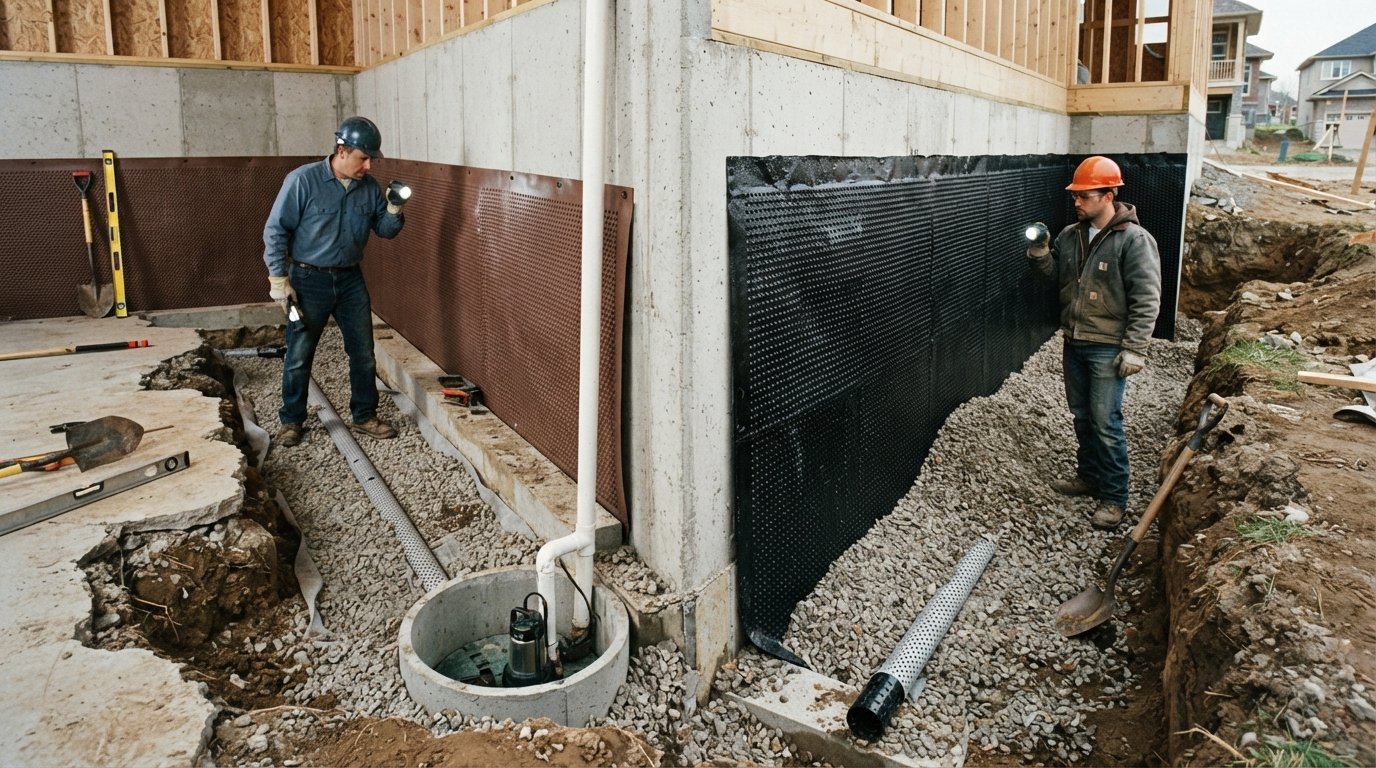
Interior waterproofing focuses on managing water that has already entered the basement. The most common system involves installing a perimeter drain (often called a French drain) along the inside of the footing, which collects water and directs it to a sump pit. A sump pump then discharges the water away from the foundation. Contractors may also apply a crystalline coating to the interior walls to seal small cracks and pores, and they often cover the walls with a dimpled plastic membrane that channels moisture down to the drain.
Exterior waterproofing, by contrast, aims to stop water before it reaches the foundation wall. This typically requires excavating the soil around the foundation down to the footing. Once exposed, the wall is cleaned and repaired, then coated with a waterproof membrane (either a spray-on asphalt or polyurethane product, or a sheet-applied rubberized membrane). A new exterior footing drain is installed, and the excavated area is backfilled with gravel and soil. In some cases, a drainage board or geotextile fabric is added to improve water flow.
Because exterior work involves heavy excavation, it is far more labor-intensive and disruptive than interior work. Interior systems can usually be installed without digging up your yard, but they do not address the source of the water; they simply manage it after it enters. Exterior systems stop water at the wall, but they come at a higher cost and require tearing up landscaping, decks, or patios that sit above the foundation line.
Cost Ranges: What Homeowners Typically Pay
For a typical home with a full basement, interior waterproofing costs generally range from $1,500 to $7,000, with most homeowners paying around $3,000 to $5,000. The price depends on the length of the perimeter, the type of drain system, whether a sump pump is included, and local labor rates. A basic interior drain and sump pump setup might start near $2,000, while a more comprehensive system with wall vapor barriers and a battery backup pump can exceed $6,000.
Exterior waterproofing is significantly more expensive due to excavation. Costs typically range from $4,000 to $15,000 or more, with the average falling between $8,000 and $12,000. Factors that drive up the price include the depth of the foundation, the presence of hardscape (concrete patios, driveways, decks) that must be removed and replaced, the type of membrane selected, and the need for additional drainage or soil amendments. For a simple ranch home with easy access, exterior waterproofing might cost $5,000 to $7,000, but a larger home with multiple sides to excavate and extensive landscaping can easily surpass $20,000.
It is important to note that these figures are national averages. Regional labor rates, permit costs, and the specific condition of your foundation can shift the numbers considerably. For a more detailed breakdown of how project costs are estimated in different regions, you can refer to our roofing cost estimation guide for West Virginia, which explains the variables that influence pricing in any home improvement project.
Disruption and Excavation: The Hidden Costs of Exterior Work
When comparing interior vs exterior foundation waterproofing cost, the sticker price is only part of the story. Exterior waterproofing requires digging a trench around the entire foundation, which means removing and later replacing anything in the way: shrubs, flower beds, fencing, patios, walkways, and even portions of a driveway. The cost to restore landscaping and hardscape can add thousands of dollars to the project and is often not included in the initial waterproofing quote. Homeowners should ask contractors explicitly whether restoration is included or if they will need to hire separate landscapers or concrete contractors.
Interior waterproofing, on the other hand, is performed entirely inside the basement. It requires moving stored items, but it does not disturb the yard. However, interior systems can be dusty and noisy during installation, and they may require cutting into the basement floor to install the drain, which means patching concrete afterward. The disruption is temporary and confined to the basement, making it a more practical choice for homeowners who cannot afford to lose the use of their yard or who have finished landscaping they want to preserve.
Another hidden cost of exterior waterproofing is the potential for discovering unexpected issues once the foundation is exposed. Cracked footings, deteriorated mortar joints, or hidden plumbing lines can require additional repairs, increasing the final bill. Interior work is less likely to uncover surprises because it does not involve excavation, but it also does not allow contractors to inspect the exterior of the foundation wall, which means existing structural problems may go unnoticed.
Effectiveness: Hydrostatic Pressure vs. Humidity and Condensation
The choice between interior and exterior waterproofing often comes down to the type of moisture problem you are facing. If your basement leaks after heavy rain, or if you see water seeping through the cove joint where the floor meets the wall, you likely have hydrostatic pressure. This occurs when saturated soil outside the foundation pushes water against the walls and floor. Exterior waterproofing is the most effective solution for hydrostatic pressure because it prevents water from ever reaching the foundation wall. A properly installed exterior membrane and footing drain will keep the soil around the foundation relatively dry, eliminating the pressure that forces water through cracks.
Interior waterproofing can also manage hydrostatic pressure, but it does so by relieving the pressure rather than preventing it. The interior drain captures water at the footing and directs it to a sump pump, so water never rises high enough to enter the basement. This approach is effective, but it relies on mechanical components (the sump pump) that can fail during a power outage. A battery backup system is essential for reliability.
If your basement feels damp or musty but does not have standing water or visible leaks, the problem may be humidity and condensation rather than hydrostatic pressure. Warm, moist air from outside can enter the basement and condense on cool foundation walls, leading to mold and mildew. In this case, interior waterproofing alone may not solve the problem. You may need to address air sealing, insulation, and dehumidification. Exterior waterproofing can help by reducing the amount of moisture that enters the wall, but it will not stop humid air from coming in through vents, windows, or gaps. A holistic approach that includes both waterproofing and humidity control is often the best strategy.
Combining Waterproofing with Foundation Crack Repair
Many basements have both waterproofing needs and structural cracks. Cracks in the foundation wall can be caused by settling, shrinkage, or hydrostatic pressure, and they are a common entry point for water. If you choose interior waterproofing, you should also address any cracks. Injecting cracks with epoxy or polyurethane foam from the inside is a common and cost-effective repair that can be done in conjunction with interior drainage. This combination stops water from entering through the cracks and manages any water that reaches the footing.
For exterior waterproofing, crack repair is typically done from the outside while the foundation is exposed. Contractors can clean and seal cracks with hydraulic cement or polyurethane, then apply the waterproof membrane over the repaired area. This is a more thorough approach because it addresses the crack at its source and prevents water from entering the wall in the first place. If you have significant structural cracks, you may need additional reinforcement, such as carbon fiber straps or steel piers, which can add to the cost.
When planning your project, ask your contractor whether crack repair is included in the quote. Some interior waterproofing packages include basic crack injection, while others charge extra. For exterior work, crack repair should always be part of the scope, as it is essential to the effectiveness of the waterproofing system. A comprehensive approach that combines waterproofing with crack repair will give you the best long-term protection.
Warranty Differences and Long-Term Maintenance
Warranties for waterproofing work vary widely by contractor and method. Interior waterproofing systems often come with warranties ranging from one year to a limited lifetime warranty on the drain system, sump pump, and labor. However, these warranties may be transferable only if you use the original contractor for any future repairs, and they may exclude damage caused by power outages or pump failure. Exterior waterproofing warranties are often longer, sometimes 10 to 25 years or more, because the materials are designed to last decades and the installation is less reliant on mechanical parts. However, the warranty may not cover damage to landscaping or hardscape, and it may be voided if you make changes to the grading or drainage around the foundation.
Long-term maintenance also differs. Interior systems require periodic testing of the sump pump (ideally every few months) and cleaning of the drain and pit to prevent clogging. The pump itself may need replacement every 5 to 10 years. Exterior systems have fewer mechanical components, but they require maintaining the grading around the foundation to ensure water flows away from the house. Gutters and downspouts must be kept clear and discharge water at least 6 to 10 feet from the foundation. If the exterior drain clogs (which is rare with proper installation), it can be difficult and expensive to repair because it requires excavation.
From a cost perspective, interior waterproofing has a lower upfront cost but potentially higher long-term maintenance costs due to pump replacement and electricity use. Exterior waterproofing has a higher upfront cost but lower maintenance costs over time. When comparing interior vs exterior foundation waterproofing cost, you should factor in the expected lifespan of each system and the ongoing maintenance requirements to get a true picture of the value.
Making the Decision: Which Option Fits Your Situation?
There is no one-size-fits-all answer to the interior vs exterior waterproofing question. The right choice depends on your budget, the severity and source of your water problem, and how much disruption you can handle. Here are some guidelines to help you decide:
- Choose interior waterproofing if: You have occasional seepage or dampness, your yard is fully landscaped and you want to avoid excavation, your budget is limited, or you need a fast solution. Interior systems are also a good choice if the water problem is minor and you are primarily concerned with managing hydrostatic pressure that occurs during heavy rains.
- Choose exterior waterproofing if: You have severe leaking, bowing walls, or signs of structural damage; you plan to live in the home for many years and want a permanent solution; your yard is accessible for excavation; or you are already doing major landscaping or foundation work. Exterior waterproofing is also the better choice if you want to address the problem at its source and reduce the risk of future issues.
- Consider a combination approach if: You have both hydrostatic pressure and humidity issues, or if you want the most comprehensive protection. Some contractors recommend exterior waterproofing combined with interior drainage as a belt-and-suspenders approach, especially in areas with high water tables.
Before making a final decision, get quotes from at least three reputable contractors. Ask them to explain their diagnostic process, what the quote includes, and what warranties they offer. A good contractor will inspect your basement, check the grading around your home, and possibly perform a water test to identify the source of the problem. They should also be willing to explain why they recommend one approach over another. You can use our free quote request tool to connect with pre-vetted local contractors who specialize in foundation waterproofing. For more information on finding qualified professionals, visit Contractor.Homes, a trusted platform that connects homeowners with licensed contractors across the United States.
Remember that the lowest price is not always the best value. A cheap interior system that fails after a few years will cost more in the long run than a properly installed exterior system that lasts for decades. Conversely, an expensive exterior job on a home with a minor humidity problem may be overkill. Weigh the upfront cost against the expected lifespan, effectiveness, and disruption to choose the solution that best fits your needs.
Waterproofing your foundation is an investment in your home's health and value. Whether you choose interior, exterior, or a combination of both, addressing the problem early can save you from costly structural repairs down the road. Take the time to understand your options, get multiple quotes, and choose a contractor who is transparent about costs and committed to quality workmanship. With the right approach, you can enjoy a dry, comfortable basement for years to come.