
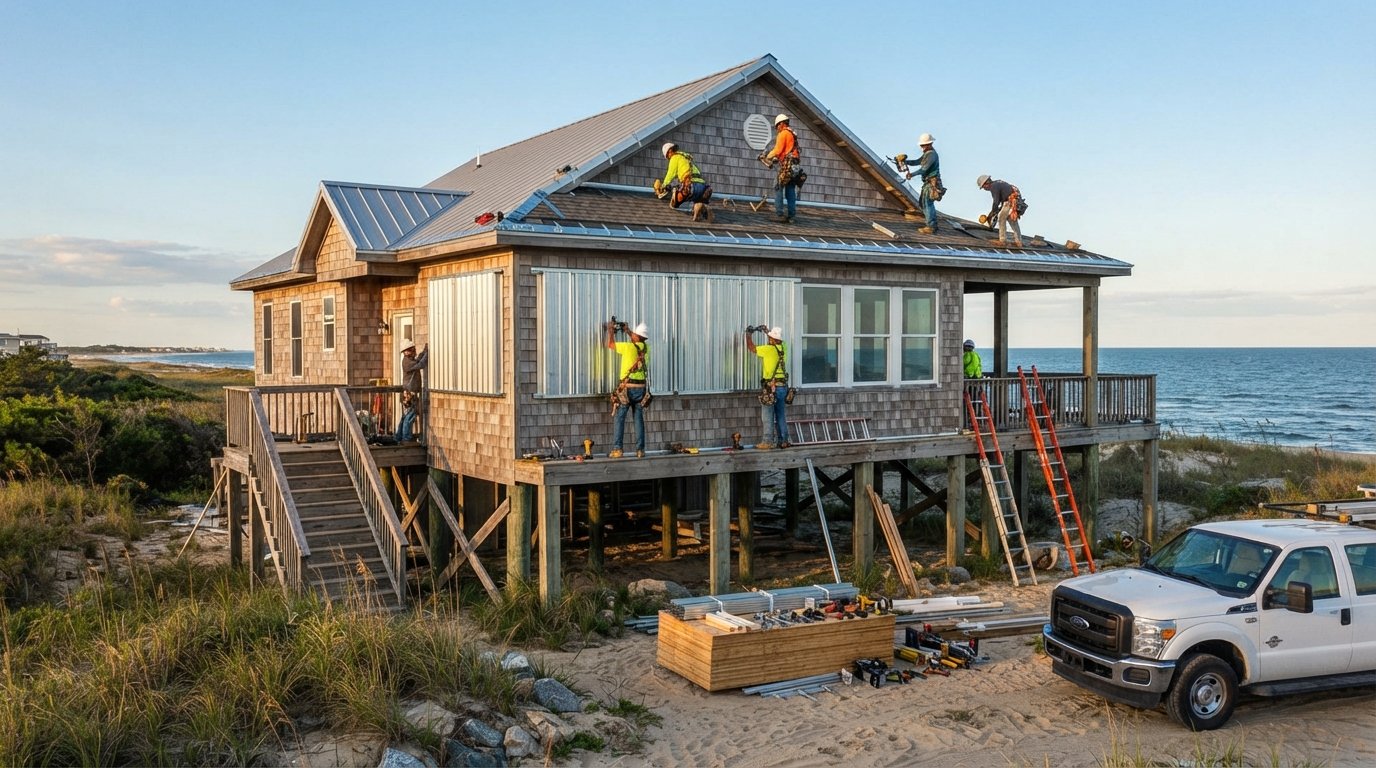
Hurricane Proofing Home Upgrades for Coastal Areas
Discover the most effective hurricane proofing home upgrades for coastal areas, from roof reinforcement to impact windows, and learn how to protect your property.

By Joshua Benson
Learn more about Home Remodeling for guides, costs, and what to expect.
Compare Home Remodeling Pros Near You

Enter your ZIP code to compare top-rated local professionals and request free quotes.
Living along the coast offers stunning views and a relaxing lifestyle, but it also comes with the constant threat of severe weather. Each hurricane season brings the potential for devastating winds, torrential rain, and storm surge, which can compromise even the most well-built homes. Many homeowners wait until a storm is in the forecast to start thinking about protection, but by then, it is often too late to make meaningful structural changes. The key to minimizing damage and ensuring your family's safety lies in proactive planning and strategic investment. This guide will walk you through the most effective hurricane proofing home upgrades for coastal areas, helping you prioritize projects that offer the best protection and return on investment.
Investing in these upgrades is not just about surviving the next storm; it is about preserving your property value and securing your peace of mind. From reinforcing your roof to protecting your windows and doors, each improvement works in concert to create a more resilient barrier against extreme weather. We will explore the science behind wind forces, the materials that stand up best to salt and moisture, and the practical steps you can take to fortify your home. By understanding your home's vulnerabilities and addressing them systematically, you can significantly reduce the risk of costly repairs and lengthy displacement after a hurricane.
Understanding the Threats: Wind, Rain, and Storm Surge
Before diving into specific upgrades, it is crucial to understand the three primary threats a hurricane poses to your home. High winds are often the most visible danger, but they are only part of the equation. The force of the wind creates pressure differences that can literally pull a roof off its frame or blow windows inward. Once the building envelope is breached, wind-driven rain can cause catastrophic interior flooding, ruining drywall, flooring, and personal belongings. In coastal areas, the added threat of storm surge, a wall of seawater pushed onshore by the storm, can flood homes with several feet of water, making elevation and waterproofing critical considerations.
Building codes in hurricane-prone regions have evolved significantly to address these forces. Modern standards, such as the Florida Building Code, focus on creating a continuous load path from the roof to the foundation. This means every component of your home, from the shingles to the anchor bolts, is designed to work together to resist uplift and lateral pressure. When planning your upgrades, you should look for products and methods that meet or exceed these stringent standards, as they represent the gold standard for storm resilience. Your local building department can provide specific requirements for your area, which is an excellent starting point for any project.
Fortifying the Roof: Your Home's First Line of Defense
The roof is the largest surface area exposed to hurricane-force winds, making it the most critical component to reinforce. A failure here often leads to catastrophic damage throughout the entire house. The first step is to assess your current roofing system. If your roof is near the end of its lifespan, replacing it with a hurricane-rated system is a wise investment. Asphalt shingles are common, but they need to be installed with six or eight nails per shingle and sealed with quality roofing cement to resist high winds. For even greater protection, consider metal roofing, which performs exceptionally well in high winds and is highly resistant to impact from flying debris.
Beyond the covering, the structural connections are what truly hold the roof down. Hurricane clips or straps, such as those made by Simpson Strong-Tie, are metal connectors that secure the roof trusses to the walls. These small but mighty devices play a huge role in preventing the roof from lifting off during a storm. They are relatively inexpensive to install during a re-roofing project and are one of the most cost-effective hurricane proofing home upgrades for coastal areas. If you are not re-roofing, a contractor can often retrofit these clips from the attic, significantly improving your home's resistance without the expense of a full replacement. For those considering a major overhaul, our detailed guide on 2026 roof replacement pricing can help you budget for this critical improvement.
Strengthening Gable Ends and Soffits
Gable ends, the triangular portion of the wall at the peak of the roof, are particularly vulnerable to high winds. They act like giant sails, catching wind and creating immense pressure on the structure. If an opening exists in the gable end, the wind can push the wall outward, causing the roof to collapse. To reinforce this area, you may need to have the gable end wall braced with steel or wood framing, connecting it securely to the roof and floor structures. This is a complex structural task that should only be performed by a licensed engineer or contractor.
Similarly, soffits (the underside of the roof overhang) and fascia (the edge of the roof) are common failure points. Ventilation openings in soffits can allow wind-driven rain to enter the attic, and they can be easily torn off by strong gusts. Look for soffit materials rated for high wind, often made from aluminum or vinyl with reinforced nailing. Sealing these areas with a high-quality exterior caulk can also prevent water infiltration. While these may seem like minor details, they are essential to maintaining the integrity of your roof system and preventing water damage during a storm.
Protecting Openings: Windows, Doors, and Garage Doors
Once the roof is secured, the next priority is protecting the openings in your home's envelope. Windows and doors are the most vulnerable points, and once broken, they allow wind and water to enter, pressurizing the home and causing severe internal damage. The most robust solution is to install impact-resistant windows and doors. These units feature laminated glass with a tough interlayer that can withstand the impact of a 2x4 piece of lumber traveling at high speed. They not only protect against debris but also provide better energy efficiency and UV protection year-round.
If replacing all your windows and doors is not within your budget, the next best option is to install storm shutters. There are several types available, including:
- Accordion shutters: Permanent fixtures that can be quickly closed over windows when a storm approaches.
- Roll-down shutters: Operated manually or with a motor, these provide excellent protection and are stored neatly above the window when not in use.
- Colonial shutters: Aesthetically pleasing, permanent shutters that swing closed and lock for storm protection.
- Plywood panels: A temporary, low-cost solution, but they require pre-drilling and are far less effective than engineered systems.
Each option has its pros and cons in terms of cost, aesthetics, and convenience. Accordion and roll-down shutters are highly effective and easy to deploy, making them a popular choice for coastal homeowners. While they represent a significant upfront cost, they are a fraction of the price of replacing all your windows with impact glass.
Garage doors are another massive opening that is often overlooked. A standard garage door can easily buckle or blow in under hurricane-force winds, allowing the wind to enter the garage and push against the interior walls, potentially causing the roof to fail. Reinforcing your garage door is a critical step. This involves installing a bracing kit, which consists of horizontal struts that are attached to the back of the door to provide rigidity. In many cases, you may need to replace the door entirely with a wind-rated model designed to withstand high pressures. Ensure any replacement door is properly anchored to the wall framing.
Securing the Structure: Walls, Foundations, and Elevation
While the roof and openings are the most obvious vulnerabilities, the overall structural connection of your home is what ultimately determines its survivability. This is especially true in coastal areas, where storm surge and flooding are major threats. One of the most critical upgrades is ensuring your home is properly anchored to its foundation. This involves installing anchor bolts or steel straps that connect the framed walls to the concrete foundation. This is a fundamental part of the continuous load path and prevents the house from sliding off its base during a flood or high-wind event.
For homes in low-lying coastal zones, elevating the entire structure may be the most effective way to protect against storm surge. This is a massive and expensive project, but it can be the only way to comply with FEMA regulations and obtain affordable flood insurance. Elevation involves lifting the house and building a new, taller foundation underneath it. This not only protects the living space from floodwaters but also reduces the risk of damage from wave action. While this is a major undertaking, it can drastically reduce your flood risk and is a long-term investment in your property's resilience.
For the walls themselves, consider using water-resistant materials in areas prone to flooding. This includes closed-cell spray foam insulation, which does not absorb water, and fiberglass-faced drywall or cement board, which will not grow mold if it gets wet. This is a proactive approach to minimize damage and speed up recovery if your home does take on water, making it a highly practical hurricane proofing home upgrade for coastal areas. Landscaping also plays a role in protecting your foundation; ensure your yard slopes away from the house to encourage water runoff.
Sealing Leaks and Managing Water
Water intrusion is the most common cause of damage during a hurricane, even for homes that survive the wind. Driving rain can find its way through tiny cracks and gaps in your home's exterior, so a thorough sealing strategy is essential. This is a relatively inexpensive DIY project that can save you thousands of dollars in water damage. You should inspect and seal around all window and door frames, where different building materials meet (such as brick and siding), and around any pipes or wires that penetrate the exterior walls. Use a high-quality polyurethane-based caulk for exterior applications, as it remains flexible and adheres well to a variety of surfaces.
Your roof's flashing, the thin metal strips that seal joints and valleys, are another common point of failure. Over time, flashing can corrode or pull away from the roof, allowing water to seep in. Have a professional inspect your flashing annually and replace any damaged sections. Also, ensure your gutters and downspouts are clean and securely attached. While they may not seem critical in a hurricane, they help manage the massive amount of rainfall and prevent water from pooling against your foundation, which can cause structural issues. If you have a basement or crawlspace, consider installing a sump pump with a battery backup to handle any water that does accumulate.
Beyond the Structure: Generators and Preparedness
After the storm passes, the recovery phase begins. Power outages can last for days or even weeks, making a home standby generator a valuable addition. A permanently installed generator, connected directly to your home's electrical system, can automatically turn on when the power goes out. This keeps your sump pump running, your refrigerator cold, and your lights on, providing a level of comfort and safety that is invaluable during the aftermath. While a portable generator can be a temporary solution, a standby unit is safer and more convenient, as it eliminates the need for running extension cords and manually fueling the machine in dangerous conditions.
Finally, no amount of structural hardening can replace a solid emergency plan. Your home improvements are designed to protect your property, but your family's safety is the top priority. Develop a plan that includes evacuation routes, a communication strategy, and a well-stocked emergency kit with food, water, and medications. Knowing how to turn off your gas and electricity is also crucial. By combining these physical upgrades with a comprehensive plan, you can face hurricane season with confidence, knowing you have done everything possible to protect your home and your loved ones. To find qualified professionals for these projects, you can also browse a comprehensive directory of vetted contractors at Homes.Contractors.
Making these resilience upgrades is a significant financial commitment, but it is one of the smartest investments you can make as a coastal homeowner. The costs associated with recovering from severe storm damage, including temporary housing, repairs, and emotional stress, far outweigh the price of prevention. By prioritizing the improvements outlined in this guide, you are not just protecting a building; you are protecting your financial future and securing a safer place for your family to weather any storm.