
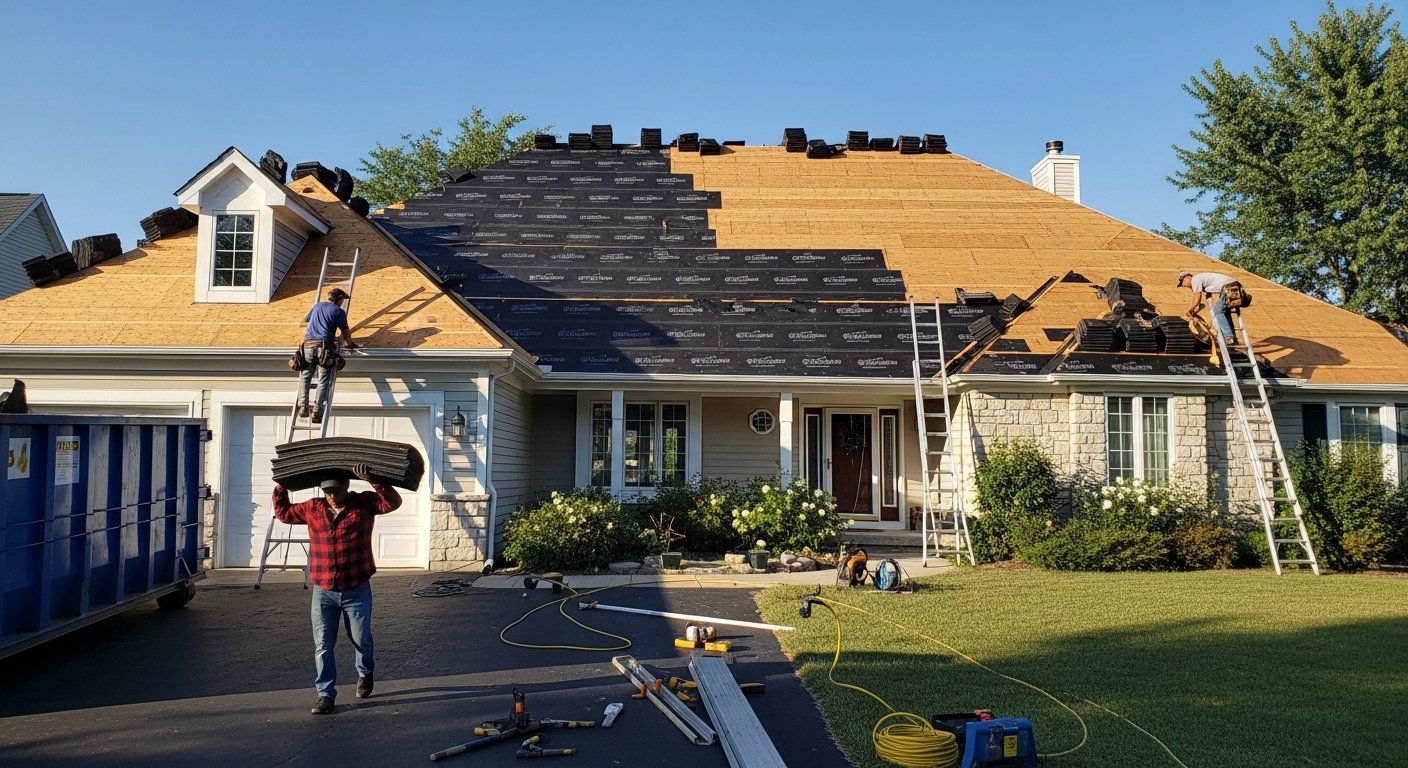
Roof Replacement Cost: 2026 Pricing Guide for Homeowners
Learn what drives roof replacement cost, from materials and labor to hidden expenses, and get practical tips to save money on your project.
By Adnan Nazir
Learn more about Roof Installation or Replacement for guides, costs, and what to expect.
Compare Roof Installation or Replacement Pros Near You

Enter your ZIP code to compare top-rated local professionals and request free quotes.
Replacing your roof is one of the most significant investments you will make as a homeowner. The national average for a standard asphalt shingle roof replacement typically falls between $8,000 and $22,000, but that range only tells part of the story. The final number depends on your home's size, the materials you choose, your region, and the contractor you hire. Understanding these variables before you request quotes can save you thousands and prevent unexpected surprises. In this guide, we break down the true roof replacement cost, what drives it, and how to plan your budget with confidence.
Average Roof Replacement Cost by Home Size
The most significant factor in your roof replacement cost is the size of your home, measured in roofing squares. A roofing square equals 100 square feet of roof surface. Most single-family homes range from 1,500 to 3,000 square feet, which translates to roughly 15 to 30 squares. The larger your roof, the more materials and labor you will need, which directly increases your total expense.
Here is a typical cost breakdown based on home size, assuming standard architectural asphalt shingles and a moderate-pitch roof:
- 1,200 to 1,600 square feet (12 to 16 squares): $7,000 to $12,000
- 1,800 to 2,400 square feet (18 to 24 squares): $10,000 to $16,000
- 2,600 to 3,200 square feet (26 to 32 squares): $14,000 to $22,000
These figures include tear-off of the old roof, disposal, underlayment, flashing, and basic installation. However, they do not account for structural repairs, which can add $1,000 to $3,000 or more if your decking is rotting or your rafters need reinforcement. Always ask contractors for a detailed line-item estimate so you can see exactly where your money goes.
Material Choices and Their Impact on Price
The material you choose is the second-largest cost driver. Asphalt shingles are the most affordable and popular option, but they come in two grades. Three-tab shingles are the budget choice at $3.50 to $5.50 per square foot installed, while architectural shingles, which offer better durability and curb appeal, cost $4.50 to $7.50 per square foot. If you want even more longevity, consider premium options like metal, tile, or slate, but be prepared for a significantly higher investment.
Here is a quick comparison of common roofing materials and their installed cost per square foot:
- Asphalt shingles (architectural): $4.50 to $7.50
- Metal standing seam: $9.00 to $16.00
- Concrete or clay tile: $10.00 to $18.00
- Slate: $15.00 to $30.00
While premium materials cost more upfront, they often last 40 to 100 years, versus 20 to 30 years for asphalt. This longevity can make them a better long-term value, especially if you plan to stay in your home for decades. However, if your budget is tight, architectural shingles offer an excellent balance of cost, durability, and aesthetic appeal.
Labor and Regional Variations
Labor typically accounts for 40% to 60% of your total roof replacement cost. Rates vary by region due to differences in cost of living, demand, and local building codes. For example, homeowners in the Northeast or West Coast often pay 20% to 30% more than those in the Midwest or South. Urban areas with higher overhead costs also tend to have higher labor rates than rural communities.
To get a realistic estimate for your area, request quotes from at least three local contractors. Compare not just the bottom line, but also the scope of work, materials specified, and warranty terms. A slightly higher quote that includes premium underlayment, proper ventilation, and a 10-year workmanship warranty may be a better deal than a cheaper bid that cuts corners.
Hidden Costs That Can Increase Your Total
Even with a thorough estimate, unexpected issues can arise once the old roof is removed. Here are common hidden costs that can inflate your roof replacement cost:
- Decking replacement: If your plywood or OSB sheathing is water-damaged or rotted, it needs replacement. Expect to pay $1.50 to $3.00 per square foot for new decking, plus labor.
- Flashing repairs: Metal flashing around chimneys, skylights, and valleys may need to be replaced, costing $200 to $800 depending on the complexity.
- Ventilation upgrades: Adequate attic ventilation is critical for roof longevity. Adding ridge vents or intake vents can cost $300 to $1,000.
- Permit fees: Most municipalities require a roofing permit, which costs $50 to $500 depending on your location and project scope.
To avoid surprises, ask your contractor to include a contingency clause in the contract, typically 10% of the total cost, for unforeseen repairs. This way, you will not be hit with a massive bill mid-project.
How to Save on Your Roof Replacement
Roof replacement is a major expense, but there are legitimate ways to reduce your out-of-pocket costs without compromising quality. First, consider scheduling your replacement during the off-season, typically late fall or winter in colder climates, when contractors are less busy and may offer discounts. Second, keep the same roofline and avoid structural changes, as moving vents or adding dormers significantly increases labor and material costs.
Third, check with your insurance company. If your roof was damaged by a storm, your policy may cover a significant portion of the replacement, minus your deductible. Be sure to document the damage thoroughly and file a claim promptly. Finally, explore financing options. Many reputable roofing companies offer payment plans or partnerships with lenders, allowing you to spread the cost over time. Some states and utility companies also offer rebates for energy-efficient roofing materials, such as cool roofs or metal roofs.
Choosing the Right Contractor for the Job
Selecting a qualified contractor is just as important as the materials you choose. A poor installation can void your warranty and lead to leaks, mold, and premature failure. Look for a contractor who is licensed, insured, and has a strong local reputation. Ask for references and check online reviews on platforms like the Better Business Bureau and Google. A professional should provide a detailed written estimate, explain the process clearly, and answer all your questions without pressure.
When comparing quotes, do not automatically choose the lowest bid. A very low price often means inferior materials, rushed work, or skipped steps like proper underlayment or ice and water shield. Instead, evaluate the value each contractor offers. A slightly higher quote may include a longer warranty, better materials, and more experienced crews, which can save you money over the life of your roof.
Financing and Payment Options
If you cannot pay for the entire replacement upfront, you have several financing options. Many contractors offer in-house financing or partner with third-party lenders that specialize in home improvement loans. These loans often have competitive interest rates and terms ranging from 12 to 60 months. Alternatively, you can use a home equity line of credit (HELOC) or a personal loan, but be sure to compare interest rates and fees.
Another option is to pay with a credit card that offers a 0% introductory APR, but make sure you can pay off the balance before the promotional period ends. Regardless of the method, never pay more than 10% upfront, and avoid contractors who demand full payment before work begins. A legitimate contractor will structure payments around project milestones, such as delivery of materials, completion of tear-off, and final inspection.
Regional Guides to Roof Replacement
Roofing costs and practices can vary significantly by state and climate. For example, in Louisiana, where hurricanes and high humidity are common, homeowners often prefer impact-resistant shingles and may need to comply with stricter building codes, which can affect the final price. Similarly, Indiana's mix of hot summers and cold winters requires materials that handle thermal expansion well, while Idaho's snowy winters demand roofs that can support heavy snow loads. To get a more localized perspective, check out our detailed guides on roof replacement in Louisiana, roof replacement in Indiana, and roof replacement in Idaho.
Getting Accurate Quotes and Using Cost Estimators
Before you commit to a contractor, you should have a clear picture of what your roof replacement should cost. Online cost estimators, like those on ContractorHomeQuotes, can give you a ballpark figure based on your location, home size, and material preferences. These tools use up-to-date regional pricing data, which helps you set realistic expectations and negotiate confidently with contractors.
Once you have a baseline, request detailed quotes from three to five local professionals. Each quote should include the scope of work, material specifications, labor costs, disposal fees, and warranty terms. Compare them side by side, and do not be afraid to ask contractors to explain any line item that seems unclear or inflated. This process not only helps you find the best price, but also ensures you understand exactly what you are paying for.
Planning for the Future: Maintenance and Lifespan
After your new roof is installed, proper maintenance can extend its lifespan and protect your investment. Schedule an annual inspection, especially after severe weather, to catch small issues before they become major repairs. Clean your gutters regularly, trim overhanging branches, and ensure your attic is well-ventilated to prevent moisture buildup and ice dams.
Most asphalt shingle roofs last 20 to 30 years, while metal and tile roofs can last 40 to 100 years. Knowing the age and condition of your roof helps you budget for future replacements. If your roof is approaching the end of its lifespan, start planning and saving now, so you are not caught off guard by an emergency replacement. Proactive planning gives you time to research materials, compare contractors, and take advantage of financing options.
Understanding roof replacement cost is the first step in a successful project. By considering your home's size, material choices, regional labor rates, and hidden costs, you can create a realistic budget and avoid financial stress. Use online cost estimators to get a baseline, gather multiple quotes, and choose a contractor who offers both quality and value. With careful planning, your new roof will protect your home for decades and add lasting value to your property.
Learn more about Roof Installation or Replacement for guides, costs, and what to expect.
Compare Roof Installation or Replacement Pros Near You
Enter your ZIP code to compare top-rated local professionals and request free quotes.