
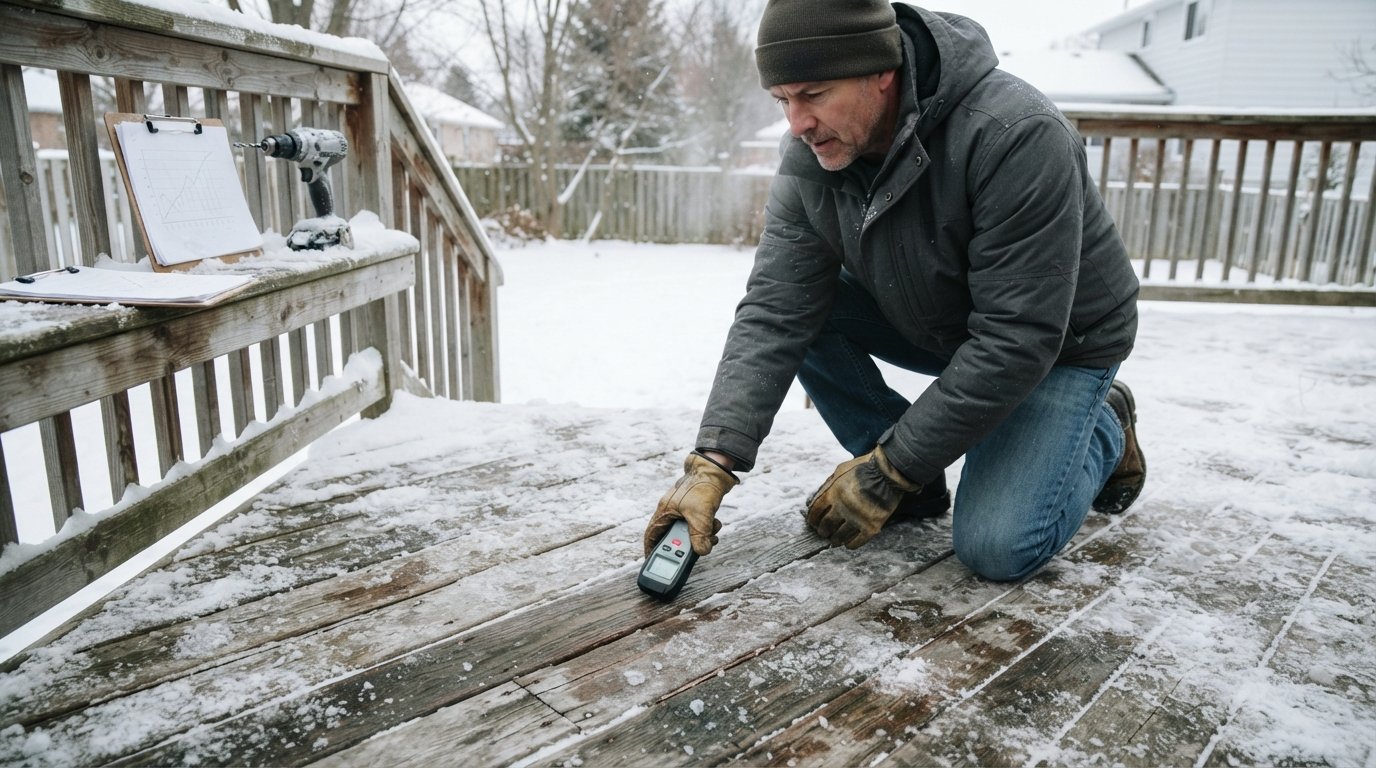
Deck Material Cost Comparison for Wet and Cold Climates
Compare deck material costs for wet and cold climates, including wood, composite, and PVC. Call 8333658755 to get local quotes and plan your budget.

By Joshua Benson
Learn more about Deck or Porch Remodel or Addition for guides, costs, and what to expect.
Compare Deck or Porch Remodel or Addition Pros Near You

Enter your ZIP code to compare top-rated local professionals and request free quotes.
A deck extends your living space, adds real property value, and gives your family a place to gather. But if you live in a region with heavy rain, snow, freeze-thaw cycles, or coastal moisture, the material you choose can mean the difference between a structure that lasts decades and one that needs major repairs in five years. The catch is that the cheapest option at the lumber yard is rarely the cheapest option over time. Moisture rots wood, ice splits composite, and salt air corrodes fasteners. A true deck material cost comparison for wet and cold climates has to look beyond the sticker price and factor in lifespan, maintenance, and replacement frequency.
This guide breaks down the real costs of the most common decking materials when they are exposed to rain, snow, and temperature swings. You will see how each option performs, what it costs up front, and what it costs to own. You will also learn how to budget for the hidden expenses that trip up homeowners in northern and coastal states, and how to get accurate quotes from local professionals who understand your climate zone.
Why Wet and Cold Climates Change the Math on Decking
In dry, mild regions, almost any deck material can perform reasonably well with minimal upkeep. In wet and cold climates, the rules change. Water is the enemy of most building materials, and when it freezes, it expands with enough force to crack concrete, split wood fibers, and pry apart composite boards. A deck in Minnesota or Maine might endure 100 or more freeze-thaw cycles in a single winter. A deck in Seattle or Portland faces months of persistent rain and high humidity. A deck in coastal New England or the Pacific Northwest also has to contend with salt spray, which accelerates corrosion of metal fasteners and hardware.
These conditions do not just affect appearance. They affect structural integrity. A wood deck that stays damp can develop rot in the joists and ledger board long before the surface boards show obvious damage. Composite decking that absorbs moisture can swell, crack, or grow mold. Even pressure-treated lumber, which is chemically protected against rot, will eventually fail in a persistently wet environment if it is not properly sealed and maintained. That is why a cost comparison for these climates must weigh durability and maintenance alongside initial price.
Another factor is seasonal installation. In cold climates, some materials become brittle and difficult to work with. Composite boards can be more prone to cracking when cut or fastened in freezing temperatures. Concrete footings cannot be poured when the ground is frozen. These practical constraints can push installation costs higher or limit the window in which you can build. Understanding these climate-specific challenges helps you interpret contractor quotes and avoid surprises.
Pressure-Treated Wood: The Traditional Baseline
Pressure-treated (PT) lumber is the most common decking material in North America, and for good reason. It is widely available, relatively inexpensive, and familiar to every contractor. The wood is infused with preservatives that resist rot, insects, and fungal decay. In wet and cold climates, however, PT wood requires consistent maintenance to perform well. Without regular sealing or staining, it will absorb moisture, crack, and eventually rot, especially in the end grain and around fasteners.
For a typical 12-foot by 16-foot deck (192 square feet), the material cost for pressure-treated decking boards alone might run $2 to $4 per square foot, or roughly $400 to $800. Add framing, joists, posts, and fasteners, and the total material package could land between $1,200 and $2,500. Professional installation in a cold or wet climate often adds $10 to $20 per square foot or more because of site preparation, footing depth requirements, and weather delays. That puts a fully installed PT deck in the range of $2,500 to $6,000 for a modest-sized project, though larger or more complex decks can easily exceed that.
The hidden cost is maintenance. In a wet climate, you should clean and seal a PT deck every one to two years. If you hire a professional, expect to pay $1 to $3 per square foot for cleaning and sealing, or $200 to $600 per treatment. Over a 15-year lifespan, that adds $2,000 to $6,000 or more to your total cost of ownership. If you skip maintenance, the deck may need board replacement or structural repairs within 10 years, erasing any upfront savings.
When Pressure-Treated Wood Makes Sense
PT wood can be a smart choice if you are on a tight budget, plan to sell the home within a few years, or are willing to commit to a regular maintenance schedule. It is also a good option for framing and structural components even when you choose a different surface material, because it is strong and cost-effective. In cold climates, be sure your contractor uses hot-dipped galvanized or stainless steel fasteners to resist corrosion, and insists on proper flashing and drainage details to keep water away from the ledger board and joists.
Composite Decking: Low Maintenance, Higher Upfront Cost
Composite decking is made from a blend of wood fibers and plastic. It resists rot, splintering, and insect damage, and it does not require staining or sealing. That makes it attractive in wet and cold climates where maintenance is a burden. The trade-off is a higher initial price. Composite boards typically cost $4 to $12 per square foot for materials alone, depending on the brand and quality tier. For a 192-square-foot deck, that is $768 to $2,304 just for the surface boards. Add framing and installation, and a professionally installed composite deck can range from $6,000 to $15,000 or more.
Not all composites are equal in cold climates. Early generations of composite decking were prone to expansion and contraction, which caused boards to gap, cup, or crack in freezing temperatures. Modern capstock composites (which have a protective polymer shell) perform much better, but they still expand and contract. Installation must account for this with proper spacing and fastening. In wet climates, some composites can grow mold or mildew on the surface if they stay damp, though most manufacturers now offer mold-resistant formulations.
Maintenance for composite is minimal: occasional cleaning with soap and water, and maybe a periodic power wash (at low pressure) to remove mildew. There is no need to seal or stain. Over a 25-year lifespan, that can save thousands of dollars compared to wood. However, composite can fade over time, and some brands have had issues with surface flaking or chalking in harsh UV environments. In cold climates, composite can become slippery when wet or icy, so consider textured or grooved boards for better traction.
Composite Cost vs. Long-Term Value
If you plan to stay in your home for more than 10 years and want to avoid the hassle of annual maintenance, composite often wins on total cost of ownership. The break-even point versus pressure-treated wood typically falls between 8 and 12 years, depending on how much you value your time and how much you would pay for professional sealing. In a wet climate where wood decks may need repairs sooner, composite can pay for itself even faster.
PVC Decking: The Premium Moisture Fighter
PVC (polyvinyl chloride) decking is a fully synthetic product that contains no wood fibers. It is 100 percent waterproof, resists mold, mildew, and insects, and never needs painting or staining. In extremely wet or humid climates, PVC is often the most durable option. It also handles freeze-thaw cycles well because it does not absorb water. The downside is cost. PVC decking typically runs $6 to $14 per square foot for materials, and installed costs can range from $8,000 to $20,000 for a mid-sized deck.
PVC is available in a range of colors and embossed wood-grain textures. Some brands offer enhanced slip resistance, which is important in cold climates where ice and wet leaves can make decks hazardous. Like composite, PVC expands and contracts with temperature changes, so proper installation is critical. It is also softer underfoot than wood and can feel warmer in summer and cooler in winter. In terms of maintenance, PVC is virtually upkeep-free beyond occasional cleaning. Over a 30-year lifespan, it can be the most cost-effective choice for homeowners who want a permanent, low-maintenance deck.
Hardwood Decking: Beauty and Durability at a Price
Hardwoods such as ipe, cumaru, and mahogany are naturally dense and rot-resistant. They are often used in high-end decks and perform well in wet climates because they do not absorb water as readily as softer woods. However, they are expensive. Material costs can range from $8 to $20 per square foot or more, and installation is labor-intensive because the wood is hard and requires pre-drilling. A professionally installed hardwood deck can easily cost $15,000 to $30,000 for a modest-sized project.
Hardwoods require periodic oiling to maintain their color and prevent surface cracking. In cold climates, they can become slippery when wet, and freeze-thaw cycles can cause surface checking (small cracks). They are also more prone to movement with humidity changes, so fastening systems must allow for expansion and contraction. For homeowners who prioritize natural beauty and are willing to pay for maintenance, hardwood can last 25 to 30 years or more. But for most budget-conscious homeowners in wet and cold regions, the cost is hard to justify compared to composite or PVC.
Aluminum and Steel Decking: The Industrial Option
Metal decking is less common for residential decks but is gaining popularity in coastal and snowy regions because it is impervious to rot, mold, and insects. Aluminum decking is lightweight, rust-resistant, and can be powder-coated in various colors. It does not absorb water, so it handles freeze-thaw cycles without cracking. However, it can be noisy, hot in direct sun, and slippery when wet. Steel decking is stronger but heavier and requires proper coating to prevent rust. Both options are relatively expensive, with materials often costing $10 to $25 per square foot, and installation is specialized. For most homeowners, metal is a niche choice, but it can be a good fit for elevated decks or areas with extreme moisture.
Comparing the Numbers: A Side-by-Side Look
To make a fair deck material cost comparison for wet and cold climates, you need to look at both upfront and long-term costs. The table below summarizes typical ranges for a 200-square-foot deck, including materials and professional installation. Actual prices vary by region, site conditions, and contractor rates.
- Pressure-treated wood: $2,500 to $6,000 installed; $200 to $600 every 1 to 2 years for sealing; lifespan 10 to 15 years with maintenance.
- Composite: $6,000 to $15,000 installed; minimal maintenance (occasional cleaning); lifespan 20 to 30 years.
- PVC: $8,000 to $20,000 installed; virtually no maintenance; lifespan 25 to 30+ years.
- Hardwood (ipe, cumaru): $15,000 to $30,000 installed; oiling every 1 to 2 years; lifespan 25 to 30 years.
- Aluminum: $12,000 to $25,000 installed; minimal maintenance; lifespan 30+ years.
These numbers show that while wood is cheapest upfront, the gap narrows over time when you factor in maintenance and replacement. Composite and PVC cost more initially but often deliver lower total cost of ownership over a 20-year horizon. The best choice depends on your budget, how long you plan to stay in the home, and how much time you want to spend on upkeep.
It is also important to consider the cost of footings and framing, which can be higher in cold climates because footings must be dug below the frost line. That can add $1,000 to $3,000 or more to any deck project, regardless of surface material. Proper flashing, drainage, and corrosion-resistant fasteners are also non-negotiable in wet climates, and these details should be spelled out in every contractor bid. For more on how weather affects exterior project costs, see our roof repair vs replace cost comparison guide.
Hidden Costs and Climate-Specific Considerations
Beyond the obvious material and labor line items, wet and cold climates introduce several hidden costs. In snowy regions, you may need to budget for snow removal tools that are safe for your deck surface (metal shovels can scratch composite and PVC). In coastal areas, you will need stainless steel fasteners, which cost more than galvanized but resist salt corrosion. In areas with heavy rain, you may need additional drainage or grading to prevent water from pooling under the deck. And in all cold climates, you should plan for periodic inspections to catch rot, loose fasteners, or ice damage early.
Another often-overlooked cost is permits and inspections. Many jurisdictions require building permits for decks, especially elevated ones, and inspections at multiple stages. Permit fees can range from $100 to $500 or more, and they add time to the project. Your contractor should handle the paperwork, but you should confirm that permits are included in the quote. If a contractor suggests skipping the permit, that is a red flag.
Finally, consider the cost of your time. If you choose wood, you will spend weekends cleaning and sealing. If you choose composite or PVC, you will spend that time enjoying your deck. For many homeowners, that convenience is worth the higher upfront price. To get a better sense of how contractors price exterior projects in your area, you can request free quotes from vetted local contractors and compare bids side by side.
How to Budget for a Deck in a Wet or Cold Climate
Start by setting a realistic budget that includes not just the deck surface but also framing, footings, railing, stairs, lighting, and permits. A common rule of thumb is that the deck surface accounts for only about 40 to 50 percent of the total project cost. The rest goes to structure and labor. In cold climates, add 10 to 20 percent for deeper footings and weather-related delays. In wet climates, add 5 to 10 percent for enhanced drainage and corrosion-resistant hardware.
Next, get at least three quotes from licensed contractors who have experience building decks in your climate. Ask them about their approach to footings, flashing, fasteners, and board spacing. A contractor who understands freeze-thaw cycles will have clear answers. Compare not just the bottom line but also the scope of work, warranty terms, and timeline. The cheapest bid is rarely the best value if it cuts corners on materials or installation details.
Finally, think about resale value. A well-built deck can return 60 to 80 percent of its cost at resale, depending on your market. Composite and PVC decks often have a slight edge because buyers appreciate low maintenance. But a beautiful hardwood deck can also be a selling point in upscale markets. Whatever you choose, document your maintenance and keep receipts for warranty purposes.
Choosing the right deck material for a wet and cold climate is a balancing act between upfront cost, long-term durability, and the amount of maintenance you are willing to take on. Pressure-treated wood remains the budget-friendly option, but it demands regular care. Composite and PVC cost more but deliver decades of low-maintenance performance. Hardwood and metal are premium choices for specific situations. By understanding the full cost picture and working with experienced local contractors, you can build a deck that stands up to whatever the weather throws at it and still looks great years from now.