
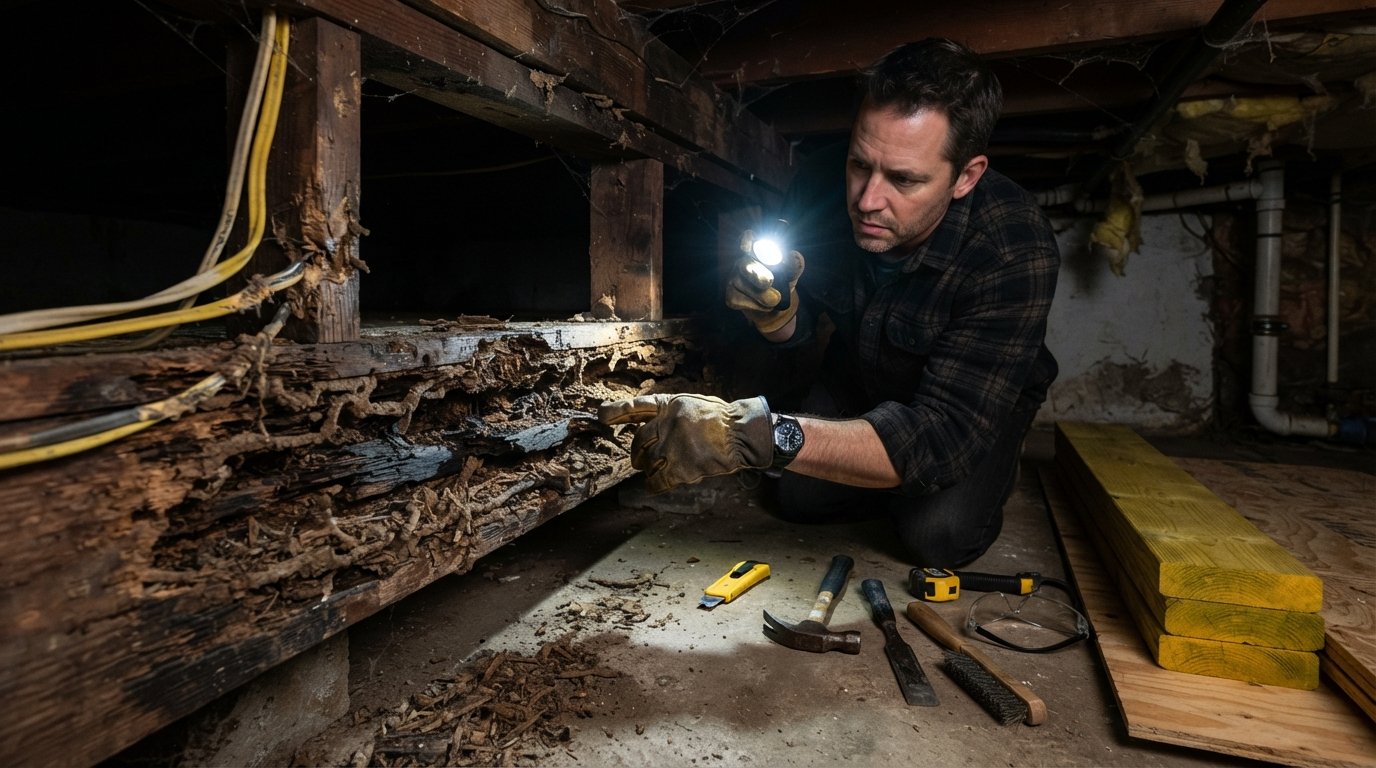
Cost of Structural Pest Damage Repair: Termites and Rodents
Understand the cost of structural pest damage repair termites and rodents. Call (833)-365-8755 to get free quotes from local experts and avoid surprise bills.

By Peter Hubert
Learn more about Pest Control Services for guides, costs, and what to expect.
Compare Pest Control Services Pros Near You

Enter your ZIP code to compare top-rated local professionals and request free quotes.
Termites and rodents are not just a nuisance; they are silent destroyers that can compromise the very structure of your home. The cost of structural pest damage repair for termites and rodents often catches homeowners off guard, with bills frequently running into thousands of dollars. Unlike a leaky faucet or a cracked window, pest damage is often hidden behind walls, under floors, or inside crawl spaces, meaning the true extent of the destruction is not discovered until the problem is severe. Understanding the financial scope of this damage is the first step toward protecting your investment and planning your next move. If you are facing a potential infestation, knowing what lies ahead financially can help you make informed decisions and avoid costly surprises.
Why Pests Cause Structural Damage and How It Adds Up
Termites feed on cellulose, which is found in wood and wood products. In a typical home, that means the framing, subflooring, joists, and even drywall paper are on the menu. Rodents, on the other hand, gnaw on wood, wires, and pipes to wear down their teeth, and they nest in insulation, tearing it apart to create warm, safe spaces. Both types of pests operate quietly, often for months or years, before homeowners notice the signs. By the time you see a termite swarm or hear scratching in the walls, the damage is usually well underway.
The cost of repair is not just about replacing damaged wood. It involves labor, materials, permits, and sometimes the expertise of multiple trades. For example, fixing termite damage might require a carpenter, a foundation specialist, and a pest control professional. Rodent damage might involve an electrician to replace chewed wiring and an HVAC technician to repair ductwork. Each specialist adds to the bottom line. Moreover, if the damage affects the structural integrity of your home, you may need engineering assessments and permits, which further escalate expenses.
Geographic location also plays a role. In regions with high termite activity, such as the Southeast or California, repair costs can be higher due to demand and stricter building codes. Similarly, urban areas with higher labor rates will see steeper repair bills. It is important to remember that these costs are estimates; actual quotes can vary based on the extent of the damage, your home's construction type, and local market conditions. For a broader look at how home repair costs fluctuate, see our guide on the average home repair project cost.
Termite Damage Repair Costs: What to Expect
Termites are responsible for billions of dollars in damage each year in the United States alone. The cost to repair termite damage depends on how long the infestation has been active and how far it has spread. Minor damage, such as a few damaged baseboards or a small section of subfloor, might cost a few hundred dollars to fix. However, if termites have compromised load-bearing beams or the foundation, repairs can easily exceed $10,000. In severe cases, where the structural integrity of the home is at risk, costs can reach $30,000 or more.
Common repairs associated with termite damage include replacing damaged wood, reinforcing floor joists, repairing drywall, and treating the infestation itself. It is crucial to address the termite problem first; otherwise, repairs will be a temporary fix. Professional termite treatment can cost anywhere from $500 to $2,500, depending on the treatment method and the size of the infestation. This cost is separate from the repair work. Homeowners should also consider that termite damage is rarely covered by standard homeowner's insurance policies, so out-of-pocket expenses are common.
To give you a clearer picture, here is a breakdown of typical termite repair costs:
- Minor repairs (baseboards, trim, small patches): $200 to $1,000.
- Moderate repairs (subfloor, joists, wall framing): $1,500 to $5,000.
- Major repairs (load-bearing beams, foundation, whole-room reconstruction): $5,000 to $30,000+.
- Termite treatment (additional): $500 to $2,500.
These figures are national averages, and your actual costs will depend on your location, the type of termite (subterranean vs. drywood), and the accessibility of the damaged areas. For instance, repairing damage in a crawl space is often more expensive than repairing damage in an open basement due to limited access. It is also worth noting that if you catch the infestation early, you can significantly reduce repair costs. Regular inspections are key.
Rodent Damage Repair Costs: More Than Just Chewed Wood
Rodents, including mice, rats, and squirrels, can cause extensive damage that goes beyond gnawed wood. They chew through electrical wires, which can lead to fires, and they tear up insulation, which reduces energy efficiency. Their droppings and urine can contaminate areas and pose health risks. The cost to repair rodent damage varies widely based on what they have destroyed. Replacing chewed electrical wiring might cost $500 to $2,000, while repairing damaged insulation in an attic can run $1,000 to $3,000. If rodents have nested in your HVAC ductwork, cleaning and repairing the ducts could cost $500 to $2,500.
Structural damage from rodents is often less severe than termite damage, but it can still be significant. They may gnaw through floor joists, wall studs, and even PVC pipes. Repairing these structural elements can cost anywhere from $500 to $5,000, depending on the extent. One of the most expensive aspects of rodent damage is the potential for fire. Chewed wires are a leading cause of house fires, and rewiring a home can cost $2,000 to $10,000. Additionally, rodents can damage your home's exterior by chewing through siding, vents, and even foundation materials, leading to water intrusion and further damage.
Rodent removal and exclusion services typically cost $300 to $1,500, but this does not include repair work. You will need to hire a separate contractor for repairs, or a handyman for smaller tasks. It is essential to address the rodent problem first to prevent re-infestation. Here is a list of common rodent repairs and their estimated costs:
- Chewed electrical wiring: $500 to $2,000.
- Insulation replacement (attic or walls): $1,000 to $3,000.
- Ductwork cleaning and repair: $500 to $2,500.
- Structural wood repair (joists, studs): $500 to $5,000.
- Exterior damage (siding, vents): $300 to $2,000.
As with termite damage, these are estimates. The actual cost will depend on your home's size, the severity of the infestation, and local labor rates. Homeowners should also be aware that rodent damage is often excluded from standard insurance policies, so you may need to pay out of pocket. Some policies may cover resulting damage, such as a fire, but not the rodent damage itself. Always check your policy details.
Factors That Influence Repair Costs
Several variables can drive the cost of structural pest damage repair up or down. The most obvious is the extent of the damage. A small, localized infestation will cost far less to repair than one that has spread through the entire house. The location of the damage also matters: repairs in crawl spaces, attics, or between walls are more labor-intensive and therefore more expensive. The type of pest plays a role, with termites generally causing more costly structural damage than rodents. However, rodents can cause expensive electrical damage that termites do not.
Your home's construction materials and age can also affect costs. Older homes may have unique framing or materials that are harder to replace, while newer homes might have engineered wood products that termites find less appealing but rodents still damage. Accessibility is another factor: if the damaged area is easily reachable, labor costs will be lower. If it requires removing drywall or flooring to access, costs will rise. Finally, your geographic location influences both material and labor costs. Areas with a high cost of living will have higher repair bills.
It is also important to consider the cost of preventative measures. After repairs, you may want to invest in pest control and exclusion services to prevent future infestations. This can include termite barriers, rodent-proofing, and regular inspections. While these add to your initial expenses, they can save you thousands in the long run. For a comprehensive overview of home repair costs, including preventative maintenance, refer to our guide on the average home repair project cost in 2026.
How to Get Accurate Estimates and Save Money
When facing pest damage, the first step is to get a professional inspection. A licensed pest control operator can identify the type of pest and the extent of the infestation. They can also provide a treatment plan. For the repair work, you will need to contact a general contractor or specialized tradespeople. It is wise to get multiple quotes to compare prices and services. ContractorHomeQuotes can connect you with up to three pre-screened, licensed local contractors for free, no-obligation quotes. This allows you to make an informed decision and avoid overpaying.
Before hiring a contractor, verify their license and insurance. Ask for references and check them. Get a written contract that details the scope of work, materials, timeline, and payment schedule. Avoid paying the full amount upfront; a deposit of 10-20% is typical. Also, consider whether the repair work requires permits. Structural repairs often do, and hiring a contractor who pulls the proper permits ensures the work meets building codes. This can protect you in the future if you sell your home.
To save money, you might consider tackling minor repairs yourself if you are handy and the damage is not structural. However, for anything involving load-bearing elements, electrical, or plumbing, it is best to hire a professional. DIY mistakes can be dangerous and costly. Additionally, some pest control companies offer repair services as part of a package, which can be convenient and potentially cheaper. Always ask for a breakdown of costs to understand what you are paying for.
Prevention: The Best Investment
Preventing pest infestations is far cheaper than repairing the damage they cause. Regular home maintenance and inspections are your first line of defense. Seal cracks and gaps around your home's exterior, including where utilities enter. Keep woodpiles and debris away from the foundation. Ensure proper drainage to avoid moisture buildup, which attracts termites. Install rodent-proof vents and screens. Schedule annual termite inspections, especially if you live in a high-risk area. Consider a termite baiting system or barrier treatment as a proactive measure.
For rodents, keep your home clean and food stored in sealed containers. Fix leaky pipes and eliminate clutter where they might nest. Trim trees and shrubs away from the house to prevent access to the roof. If you have pets, store their food in airtight containers and do not leave it out overnight. These simple steps can dramatically reduce your risk. Remember, the cost of prevention is minimal compared to the cost of structural pest damage repair for termites and rodents.
If you are planning a move or need to relocate during repairs, resources like Moving.Homes offer comprehensive guides and checklists to help reduce the stress of moving. They also provide advice on packing, storage, and handling specialized items, which can be invaluable if you need to temporarily vacate your home during major repairs.
In summary, the cost of structural pest damage repair for termites and rodents can range from a few hundred to tens of thousands of dollars, depending on the severity and location of the damage. Early detection and prevention are key to minimizing these costs. If you suspect an infestation, act quickly. Get professional inspections, obtain multiple quotes, and hire licensed contractors to ensure the work is done correctly. Your home is your biggest investment; protecting it from pests is essential for its long-term value and your peace of mind.