
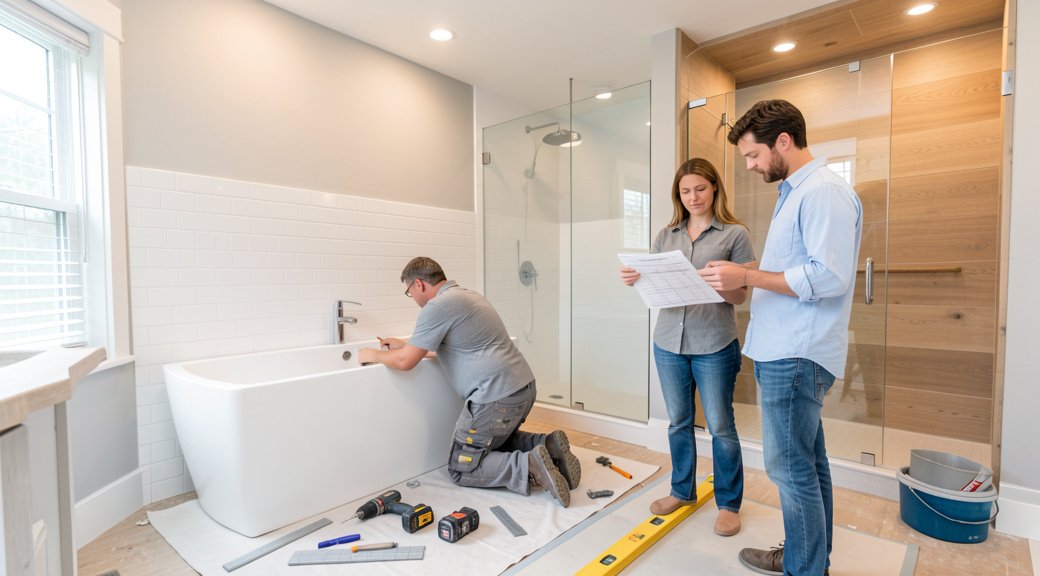
Bathroom Remodel Cost: 2026 Budget Guide for Homeowners
Bathroom remodel cost ranges from $15k to $30k, but savvy planning and smart material choices can keep your project on budget.
By Scott Thompson
Learn more about Bathroom Remodel for guides, costs, and what to expect.
Compare Bathroom Remodel Pros Near You

Enter your ZIP code to compare top-rated local professionals and request free quotes.
Planning a bathroom remodel can feel like stepping into a financial fog. You know you want a fresh, functional space, but the numbers floating around online range from a few thousand dollars to the price of a small car. The truth is that bathroom remodel cost depends on a complex mix of room size, material choices, labor rates in your area, and the scope of work you are willing to tackle. Before you request a single quote, you need a realistic framework to build your budget, avoid surprise bills, and make confident decisions.
This guide breaks down the real costs behind a bathroom renovation, from national averages to the hidden expenses that catch many homeowners off guard. We will walk through material price ranges, labor expectations, regional variations, and the critical choices that push your project to the high end or keep it comfortably within reach. By the end, you will have a clear action plan to price out your project and find the right professional for the job.
What Is the Average Bathroom Remodel Cost in 2026?
The national average for a midrange bathroom remodel in the United States typically falls between $15,000 and $30,000. A small guest bathroom with basic fixtures might come in at $8,000 to $12,000, while a large master suite with premium finishes can easily exceed $50,000. These figures include both materials and professional labor, but they do not account for structural changes, custom cabinetry, or high-end fixtures like freestanding soaking tubs and smart showers.
One of the most important factors is whether you are updating an existing bathroom or converting a closet or spare room into a new one. Expanding the footprint requires moving walls, rerouting plumbing, and possibly adding electrical circuits, which can add $5,000 to $15,000 to the total. In our guide on average bathroom remodel expectations, we explain how to align your vision with a realistic budget before you start shopping for fixtures.
It is also worth noting that the term "midrange" can mean different things in different markets. A midrange remodel in a major metropolitan area will naturally cost more than the same project in a rural town, simply because labor and material delivery costs are higher. To get a precise figure for your zip code, the best approach is to request multiple itemized quotes from local contractors. This is where ContractorHomeQuotes can help you connect with vetted professionals who provide free, no-obligation estimates.
Key Cost Drivers: What Moves the Price Needle?
Bathroom remodel cost is not a single number. It is the sum of many decisions, and understanding each one gives you control over the final bill. The largest cost drivers are labor, materials, plumbing and electrical work, and the overall scope of the renovation. Labor alone typically accounts for 40% to 60% of the total budget, so the more complex the project, the higher the labor share.
Here are the primary factors that will influence your total investment:
- Room size and layout: Larger bathrooms require more materials and more labor hours. Moving a toilet, sink, or shower means rerouting pipes, which adds significant cost.
- Quality of materials: Flooring, tile, countertops, and fixtures range from budget-friendly options to luxury brands. A porcelain tile floor might cost $5 per square foot, while natural stone can exceed $25.
- Plumbing and electrical updates: If your home has older pipes or wiring, you may need to bring everything up to code. This is non-negotiable for safety and can add $2,000 to $8,000.
- Custom versus stock fixtures: Custom cabinetry and unique fixtures are beautiful, but they come with a premium price tag and longer lead times.
- Demolition and disposal: Tearing out the old bathroom and hauling away debris adds a few hundred to a few thousand dollars, depending on the size and weight of the materials.
Understanding these drivers helps you prioritize where to spend and where to save. For example, you might choose a standard white subway tile for the shower to free up money for a high-quality vanity that anchors the room. The key is to make deliberate choices based on your budget, not to be surprised by the invoice later.
Material Costs: The Breakdown You Need to See
Materials are where you have the most control over your bathroom remodel cost. You can mix and match price points to create a space that feels custom without blowing your budget. Here is a general breakdown of what you can expect to pay for common bathroom materials in 2026, keeping in mind that prices vary by brand, region, and availability.
Flooring and wall tile are often the largest material expense. Ceramic and porcelain tiles are the most affordable, ranging from $2 to $10 per square foot. Natural stone, such as marble or travertine, starts around $10 and can go up to $30 or more per square foot. For a typical 40-square-foot shower surround, the tile choice alone can swing your budget by $1,500 or more.
Countertops and vanities also command a significant share. A stock vanity from a big-box store might cost $200 to $600, while a custom built-in unit can run $1,500 to $5,000. Countertop materials range from laminate at $20 per square foot to quartz or granite at $50 to $150 per square foot. Fixtures like faucets, showerheads, and toilets range from $100 to $1,000 each, depending on the brand and features. Lighting, mirrors, and accessories add another $300 to $1,200.
To keep costs in check, consider using a midrange material like ceramic tile for the main surfaces and splurge on one or two statement pieces, such as a high-end faucet or a designer mirror. This approach lets you achieve a high-end look without paying premium prices across the board. Our detailed guide on choosing the right fixtures and finishes offers practical tips for balancing style and budget.
Labor Costs and Hiring the Right Pro
Labor is the second half of the equation, and it is where many homeowners underestimate the true cost. A general contractor will charge a markup of 10% to 20% on top of the total project cost, while a handyman might charge an hourly rate of $50 to $150. For a full bathroom remodel, you are typically looking at $4,000 to $12,000 in labor, depending on the complexity and the professional you hire.
It is tempting to save money by doing the work yourself, but a bathroom remodel involves plumbing, electrical, and waterproofing, all of which require specialized skills. A mistake in any of these areas can lead to water damage, mold, or even electrical hazards, which will cost far more to fix than the money you saved on labor. For most homeowners, hiring a licensed and insured contractor is the safest and most cost-effective choice.
When you are ready to hire, it is critical to compare multiple quotes. Look for a contractor who provides a detailed, itemized bid that breaks down materials, labor, and any allowances. Be wary of quotes that are significantly lower than the others, as they may indicate corners being cut. A thorough vetting process, including checking references and verifying licenses, is essential. You can learn more about how to evaluate contractors in our guide on choosing the right contractor for your project.
Regional Variations: Why Location Matters
Your geographic location has a profound impact on bathroom remodel cost. Labor rates in coastal cities and major metropolitan areas are often 20% to 50% higher than in the Midwest or the South. Material costs also vary, especially for specialty items that need to be shipped long distances. For example, a bathroom remodel in San Francisco might average $35,000, while the same project in Omaha might be $20,000.
This is why national averages are only a starting point. To budget accurately, you need local data. The best way to get that is to request quotes from at least three local contractors who are familiar with the building codes and typical pricing in your area. They can also advise you on which materials are readily available and cost-effective in your region.
Keep in mind that permits and inspections are another regional variable. Some municipalities require permits for any bathroom renovation, while others only require them for structural changes. Permit fees typically range from $100 to $500, but the cost of bringing your work up to code can be much higher if you skip the permit and get caught. Always check local regulations before starting your project.
Budgeting for the Unexpected: Contingency Funds
No matter how carefully you plan, a bathroom remodel will almost always uncover surprises. Once the old tile is removed, you might find water damage in the subfloor, mold behind the vanity, or outdated wiring that needs replacement. The industry standard is to set aside a contingency fund of 10% to 20% of your total budget to cover these unexpected costs.
For a $20,000 remodel, that means having an extra $2,000 to $4,000 in reserve. This fund gives you peace of mind and prevents you from having to stop the project mid-way because of an unforeseen expense. It is also wise to have a clear agreement with your contractor about how change orders are handled. A change order is a written document that outlines any changes to the original scope, and it should include the cost impact before you approve the work.
Planning for the unexpected is not about being pessimistic; it is about being prepared. With a contingency fund in place, you can handle surprises without stress and keep your project on schedule. If the money remains unused at the end, you can treat it as a bonus to upgrade a fixture or save it for future home maintenance.
DIY vs. Hiring a Professional: What Saves Money?
The DIY route can save money on labor, but it is not always the best financial decision. Simple cosmetic updates, such as painting, changing cabinet hardware, or installing a new mirror, are well within the reach of most homeowners. These small projects can refresh the look of your bathroom for a few hundred dollars and take a weekend to complete.
However, the more complex tasks, like moving plumbing, installing a new shower pan, or rewiring the lighting, should be left to professionals. Not only do these tasks require specialized tools and knowledge, but they also carry significant liability. A small leak behind the wall can cause thousands of dollars in damage, and improper electrical work is a fire hazard. If you are not experienced with these trades, the cost of fixing your mistakes will likely exceed the cost of hiring a pro in the first place.
If you are set on a full remodel and want to save money, consider a hybrid approach. Hire a professional for the plumbing, electrical, and structural work, and handle the finishing touches like painting and installing accessories yourself. This way, you save on labor for the easy parts without risking the integrity of the most critical systems.
How to Get Accurate Quotes and Avoid Overpricing
The most reliable way to pin down your bathroom remodel cost is to collect multiple quotes from qualified contractors. Start by defining your project scope in writing, including the exact dimensions of the room, the fixtures you want, and the quality of materials you prefer. This ensures that every contractor is bidding on the same work, making it easier to compare apples to apples.
When you review quotes, look beyond the bottom line. A detailed bid should list the cost of materials, labor, permits, and any subcontractor fees. It should also specify the timeline and the payment schedule. Be cautious of contractors who ask for a large upfront deposit, as this is a common red flag. A typical deposit is 10% to 20% of the total, with the balance due upon completion.
ContractorHomeQuotes is an excellent resource for this step. The site connects you with local professionals who provide free, no-obligation quotes, saving you time and helping you compare pricing with confidence. You can review each contractor's profile, read reviews, and choose the one who best fits your project's needs and your budget. With multiple quotes in hand, you can negotiate confidently and avoid overpaying.
Financing Your Bathroom Remodel
Once you have a clear estimate of your bathroom remodel cost, you need to decide how to pay for it. Many homeowners use savings, but if you do not have enough cash on hand, there are several financing options available. A home equity loan or home equity line of credit (HELOC) often offers lower interest rates than personal loans or credit cards, but they require your home as collateral. Personal loans are unsecured and can be approved quickly, but the interest rates may be higher.
Another option is a cash-out refinance, where you take out a new mortgage for more than you owe and pocket the difference. This can be a good choice if you are already planning to refinance for a better rate, but it extends the life of your loan. Credit cards are the least recommended option for a large remodel, as the interest can quickly balloon your total cost. Whatever you choose, make sure the monthly payment fits comfortably within your budget.
Financing decisions are an important part of the planning process. Before you sign any agreement, calculate the total cost of the loan, including interest and fees, and compare it to the value that the remodel adds to your home. A well-planned remodel can increase your home's resale value, making the investment worthwhile in the long run.
Final Thoughts: Plan Smart, Remodel Confidently
Your bathroom remodel is a significant investment, but with the right information, it can also be a rewarding one. By understanding the true bathroom remodel cost drivers, setting a realistic budget, and hiring the right professional, you can create the bathroom of your dreams without financial stress. Remember to always request multiple quotes, build in a contingency fund, and prioritize the changes that will bring you the most daily enjoyment and long-term value.
The key is to start with accurate data and a clear plan. Use the resources on ContractorHomeQuotes to research costs, gather quotes, and connect with trusted local contractors. With a little preparation, you will be ready to transform your bathroom into a beautiful, functional space that you will enjoy for years to come.