
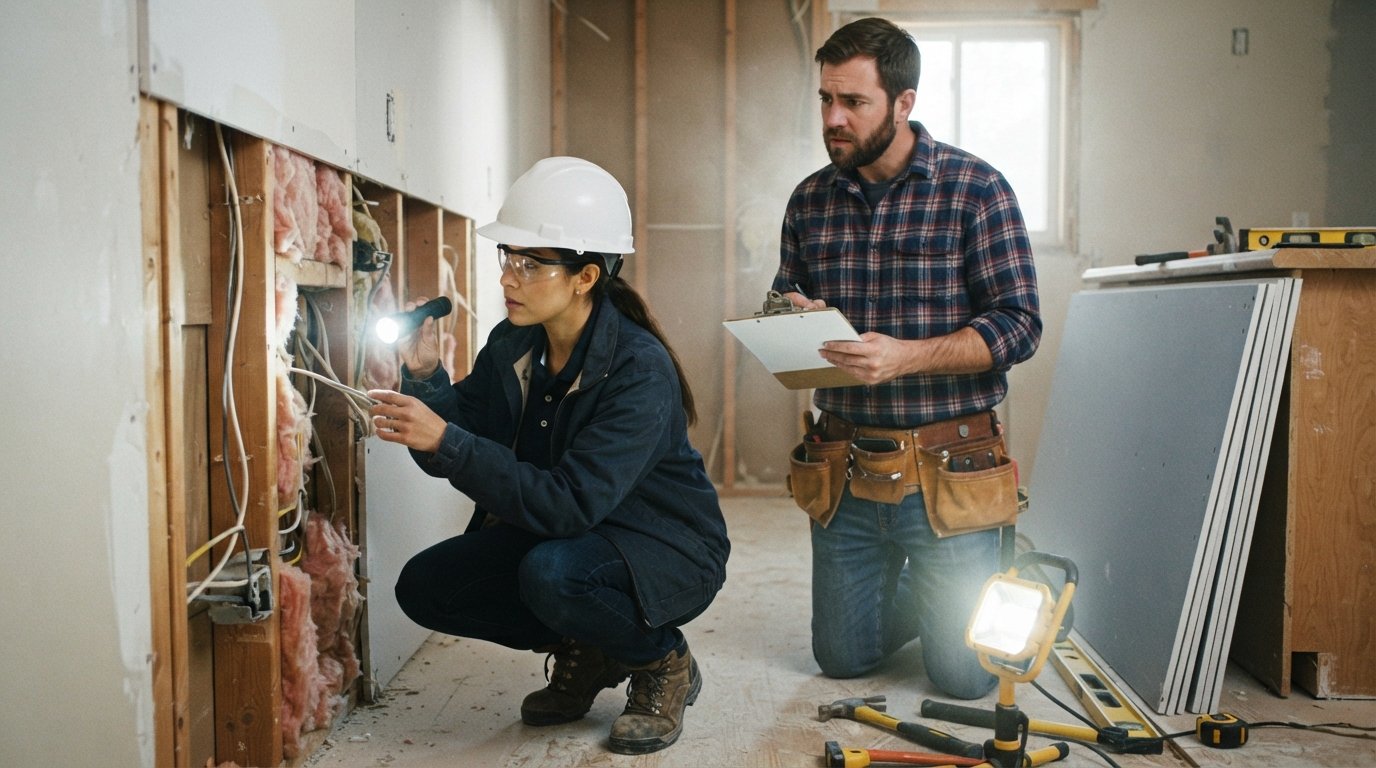
Why Hire a Home Inspector Before Renovation Work
Learn how to hire a home inspector before renovation to uncover hidden structural issues, avoid surprise costs, and get accurate contractor bids from day one.

By Justin Blake
Learn more about Home Inspection for guides, costs, and what to expect.
Compare Home Inspection Pros Near You

Enter your ZIP code to compare top-rated local professionals and request free quotes.
You have measured the kitchen twice, picked out the tile, and saved for months. The contractor's bid looks reasonable, and you are ready to sign the dotted line. But there is one step that many homeowners skip, often to their lasting regret: hiring a professional home inspector before the renovation begins. While it may feel like an unnecessary expense when you are already budgeting for demolition and new finishes, a pre-renovation inspection is your best defense against costly surprises hidden behind your walls, under your floors, and above your ceilings. It is not just about finding problems; it is about understanding the true condition of your home so you can plan a renovation that is safe, legal, and financially sound.
This guide explains exactly how to hire a home inspector before renovation, what to look for in a professional, and how to use their findings to negotiate better contracts and avoid scope creep. Whether you are planning a minor bathroom update or a full gut renovation, this pre-construction step can save you thousands of dollars and months of stress. By the end, you will know how to choose the right expert, what questions to ask, and how to turn a detailed report into a powerful planning tool.
The Difference Between a Pre-Purchase and Pre-Renovation Inspection
Most people associate home inspections with buying a house. A pre-purchase inspection is typically a general overview, focused on major systems like the roof, HVAC, foundation, and electrical panel. The goal is to identify deal-breakers that might cause a buyer to renegotiate or walk away. A pre-renovation inspection is different in both scope and purpose. You are not deciding whether to buy the house; you are deciding how to modify it. Therefore, the inspector needs to look at the property through the lens of your specific project.
For example, if you plan to open up a load-bearing wall between your kitchen and living room, a standard inspection might note cracks in the drywall but will not tell you if that wall is structural. A pre-renovation inspector, or a structural engineer brought in for a deeper review, will examine the framing, check for hidden plumbing or electrical lines in that wall, and assess whether the existing foundation can support the new opening. Similarly, if you are adding a bathroom in the basement, the inspector must verify that the existing sewer line has the capacity for a new toilet and that your water heater can handle the increased demand.
This distinction matters because it changes the questions you ask. You are not asking, "Is this house worth buying?" You are asking, "What will this project actually cost to complete safely and correctly?" A general inspector might miss issues that are critical for a remodel, such as knob-and-tube wiring hidden behind plaster, asbestos in old flooring, or a sewer line that has bellied and will back up under new usage. You need to hire a home inspector before renovation who has experience with remodeling projects, not just real estate transactions.
Why You Cannot Rely on the Contractor's Opinion
It can be tempting to rely on the general contractor you plan to hire. After all, they will be on site every day and they are licensed professionals. However, contractors have a vested interest in the project moving forward, and their bids are often based on assumptions. A contractor might say, "We will open up the wall and see what we find," which is a red flag that should send you straight to an inspector. When a contractor gives you a fixed bid without an inspection, they are either padding the estimate to cover potential unknowns (which means you are overpaying) or they are bidding low to win the job, planning to hit you with change orders later.
An independent home inspector works for you, not the contractor. Their only allegiance is to the truth of the physical condition of your home. When you hire a home inspector before renovation, you get an unbiased report that you can share with multiple contractors to get accurate, apples-to-apples bids. This process turns vague estimates into precise proposals. If the inspector finds that the subfloor in your bathroom is rotted, the contractor can price the floor replacement correctly from the start. If the inspector finds that your electrical panel is maxed out, the contractor knows they must include a panel upgrade in the bid.
Furthermore, an inspection report gives you leverage in contract negotiations. If a contractor tells you that a specific issue is "unforeseen" and demands extra money mid-project, you can point to the pre-renovation inspection report and show that the issue was documented before work began. This prevents disputes and keeps the project on budget. In our guide on how to hire a home contractor, we emphasize the importance of detailed contracts; a pre-renovation inspection is the tool that makes those contracts accurate and enforceable.
What a Pre-Renovation Inspection Covers
When you decide to hire a home inspector before renovation, you should understand what a thorough report includes. The scope of the inspection will vary based on your project, but a comprehensive review should cover the following areas:
- Structural Integrity: Foundation walls, floor joists, roof rafters, and load-bearing beams. The inspector checks for signs of movement, rot, or insect damage that could compromise your renovation.
- Electrical Systems: Panel capacity, wiring type (e.g., aluminum, knob-and-tube), grounding, and the condition of existing circuits. This determines if your new lighting or appliances can be supported.
- Plumbing Systems: Pipe material (galvanized, copper, PEX), water pressure, drainage flow, and the condition of the main sewer line. This is critical for any project that moves fixtures.
- HVAC and Insulation: Age and efficiency of the furnace and AC, ductwork condition, and the presence of insulation in walls and attics. This impacts load calculations for new additions.
- Moisture and Mold: Signs of past or present water intrusion, high humidity readings, and visible mold. This is essential before you seal up walls or install new flooring.
- Hazardous Materials: Suspected asbestos (in old flooring, drywall, or pipe insulation) and lead-based paint. These require specialized abatement and significantly affect cost and timeline.
While this list covers the basics, the inspector should also be willing to look at specific areas of concern. If you are removing a wall, ask them to spend extra time on the attic to trace the roof load. If you are finishing a basement, ask them to run a camera down the floor drain. A good inspector will tailor their approach to your renovation plan, not just walk through with a generic checklist.
After the physical inspection, you should expect a written report with photos, descriptions of deficiencies, and recommendations. This report is your roadmap. It should distinguish between urgent issues (like a gas leak or active leak) and minor maintenance items. It should also note which issues are "pre-existing" versus which are "safety hazards." This documentation is crucial for protecting yourself against liability if a contractor later claims they caused damage that actually existed before they started.
How to Vet and Select the Right Inspector
Choosing the right professional is just as important as deciding to get the inspection. Not all inspectors have the same training, and you need someone with specific experience in renovation projects. Here is a step-by-step process to hire a home inspector before renovation with confidence:
- Look for InterNACHI or ASHI Certification: The International Association of Certified Home Inspectors (InterNACHI) and the American Society of Home Inspectors (ASHI) have strict standards of practice and continuing education requirements. Certification does not guarantee perfection, but it sets a baseline for professionalism.
- Ask About Renovation Experience: Call the inspector and ask directly: "How many pre-renovation inspections have you done?" You want someone who understands construction methods, not just a real estate inspector. They should be comfortable discussing load paths, building codes, and phasing of work.
- Verify Insurance and Licensing: Ensure the inspector carries Errors and Omissions (E&O) insurance and general liability insurance. This protects you if they miss a critical defect that later causes damage. Check your state's licensing board to confirm their license is active.
- Read Recent Reviews: Look for reviews on Google and Angi, but focus on reviews from homeowners who mention renovation projects. A review that says "They caught issues our contractor missed" is worth more than a generic five-star rating.
- Request a Sample Report: A detailed report is your main deliverable. Ask to see a sample report from a previous pre-renovation job. Look for clear photos, specific language (not vague terms like "possible issue"), and prioritized recommendations.
- Check for Additional Certifications: For specific projects, you may need an inspector with extra credentials, such as a sewer scope certification, an infrared thermography license (for moisture detection), or a structural engineering background. These add cost but provide deeper analysis.
Once you have narrowed down your choices, schedule a phone call or video meeting. This is your chance to ask about their inspection process. Do they go on the roof? Do they run water in all fixtures? Do they use moisture meters? Do they spend time in the attic and crawlspace? A thorough inspection of a typical home takes 2 to 3 hours. If an inspector says they will be done in 45 minutes, that is a red flag.
Using the Inspection Report to Plan Your Budget
The true value of hiring a home inspector before renovation becomes clear when you use the report to refine your budget. Most homeowners budget based on the "look" of the finished product: the cabinets, the countertops, the light fixtures. They allocate money for finishes but often forget the infrastructure. An inspection report forces you to address the hidden costs that can derail a project.
For example, imagine you are renovating a 1950s bathroom. The quote from the contractor is $25,000, which seems high but includes new fixtures and tile. You decide to hire a home inspector before renovation, and they find that the original galvanized steel pipes are severely corroded, reducing water pressure to a trickle. They also find that the bathroom fan is not vented to the outside, which has caused a small patch of mold in the attic. Suddenly, your project scope expands. The plumber needs to replace the supply lines from the main stack, and the roofer needs to install a proper vent cap. This adds $3,000 to $5,000 to the project. Without the inspection, you would have signed the $25,000 contract, only to face a $5,000 change order after the walls were opened.
By identifying these issues early, you can do one of three things: adjust your budget to include the necessary repairs, reduce the scope of your renovation to stay within budget, or negotiate with the contractor. You might also discover that some issues are not urgent. If the inspector finds that the water heater is 12 years old and nearing the end of its life, you can decide to replace it proactively while the plumber is already on site, saving on future labor costs. Alternatively, you might choose to leave it and set aside a contingency fund for a replacement in the next year. The report gives you the data to make these strategic decisions.
Avoiding Code Violations and Permit Delays
One of the most overlooked benefits of a pre-renovation inspection is the identification of existing code violations. If you open up a wall and the inspector (from the city) finds that the previous owner installed electrical wiring without a permit, the city can issue a stop-work order. This halts your project until the issue is corrected, which can take weeks and cost thousands in delays. A private home inspector can identify these issues before the city ever steps in.
For instance, an inspector might find that the kitchen is wired on a 15-amp circuit instead of the required 20-amp circuit for a refrigerator. They might find that a load-bearing wall has a temporary jack post instead of a permanent support beam. They might find that the gas line for the stove is flexible tubing that is not rated for permanent installation. Each of these issues is a potential permit failure. When you hire a home inspector before renovation, you can address these issues during the renovation, when the walls are already open and the contractors are on site. This is far cheaper than doing a separate remediation project later.
Furthermore, the inspection report can be shared with your local building department to expedite the permit process. When you apply for a permit, you can include the inspector's report to show that you have a complete understanding of the existing conditions. This demonstrates diligence to the building official and can reduce the number of follow-up questions or inspections. It also ensures that your contractor's work will be checked against a known baseline, preventing disputes about what was "preexisting."
The Cost of the Inspection vs. The Cost of a Surprise
A pre-renovation inspection typically costs between $300 and $600 for a standard home, with additional fees for specialized tests like sewer scopes or radon testing. This is a small fraction of the total renovation budget, which often runs into the tens of thousands of dollars. Yet many homeowners hesitate to spend the money, viewing it as an unnecessary line item. This is a false economy. Consider the cost of the most common renovation surprise: discovering that the plumbing needs to be repiped. This single issue can cost $5,000 to $15,000, and it is almost always found after the drywall is removed.
If you are working with a tight budget, the inspection is even more critical. It helps you prioritize your spending. Maybe you cannot afford the marble countertops you wanted, but if the inspection reveals that the roof has only five years of life left, you know that you must allocate funds to a roof replacement instead. This is the kind of hard truth that a pre-renovation inspection provides. It helps you avoid the sunk cost of renovating a room that will be ruined by a leaking roof the following winter.
To put it simply: the inspection is an insurance policy. It does not guarantee that nothing will go wrong, but it drastically reduces the probability of a major surprise. And for those who want to compare costs and get a sense of regional pricing for their entire project, using a resource like FreeQuotes.Contractors can help you connect with local professionals who understand the specific conditions of your area. Pairing a thorough inspection with competitive quotes gives you a complete picture of your financial commitment.
Your Next Steps for a Successful Renovation
Hiring a home inspector before renovation is not a luxury; it is a necessity for any homeowner who wants to protect their investment and avoid unnecessary stress. Start your search today, not the week before your contractor is scheduled to start. Interview multiple candidates, check their credentials, and review their sample reports. When you receive the final report, read it thoroughly and ask questions about anything you do not understand. Then, share the report with every contractor who bids on your project and require them to address the findings in their proposals.
This process will take a week or two of your time, but it will save you months of headaches. You will go into your renovation with your eyes wide open, knowing exactly what is behind your walls and what it will take to make your vision a reality. You will have a detailed document that protects you from unscrupulous contractors and vague verbal agreements. Most importantly, you will have the peace of mind that comes from knowing that your dream renovation is built on a solid, well-understood foundation. Do not let the excitement of new finishes blind you to the reality of the structure that holds them up. Make the call, hire the inspector, and start your project with confidence.