
Well Water Testing and Treatment System Cost Guide
Understand well water testing and treatment system cost before you buy. Call 8333658755 for expert guidance on budgeting your project.

By Eric Andrew
Learn more about Water Treatment System Installation or Replacement for guides, costs, and what to expect.
Compare Water Treatment System Installation or Replacement Pros Near You

Enter your ZIP code to compare top-rated local professionals and request free quotes.
If your home draws from a private well, you are your own water utility. That means the safety and quality of every drop is your responsibility, and the costs involved catch many homeowners off guard. A basic water test might run $35, while a full treatment system can exceed $5,000. Understanding the real well water testing and treatment system cost before you buy anything helps you budget accurately, avoid predatory sales tactics, and choose equipment that actually solves your water problems instead of masking them.
This guide breaks down testing fees, treatment equipment prices, installation labor, and ongoing maintenance so you can plan with confidence. Whether you are buying a rural property, reacting to a failed inspection, or dealing with sudden discoloration or odor, the numbers below give you a realistic starting point. Actual quotes will vary by region, water chemistry, and project scope, so always confirm pricing with local professionals before committing.
Why Private Well Owners Cannot Skip Water Testing
Municipal water supplies fall under strict federal and state oversight, but private wells are largely unregulated. The EPA estimates that more than 23 million households in the United States rely on private wells, and many of those wells have never been tested beyond the day they were drilled. Contaminants such as coliform bacteria, nitrates from fertilizer, arsenic from bedrock, and lead from older plumbing can appear without any change in taste, smell, or clarity. That is why testing is not optional maintenance; it is the foundation of every treatment decision.
Testing also protects your wallet. If you install a $2,000 water softener to fix hard water, but the real problem is iron bacteria or hydrogen sulfide gas, you have spent money on the wrong solution. A laboratory test tells you exactly what is in the water, which lets you match treatment equipment to the actual contaminants. Skipping this step is the single most common and most expensive mistake well owners make.
There is also a resale consideration. Lenders and buyers frequently request a water test during a real estate transaction, especially for FHA and VA loans. A failed test can delay closing or force price negotiations. Keeping recent test results on hand demonstrates responsible ownership and can prevent last-minute surprises.
Well Water Testing Cost Breakdown
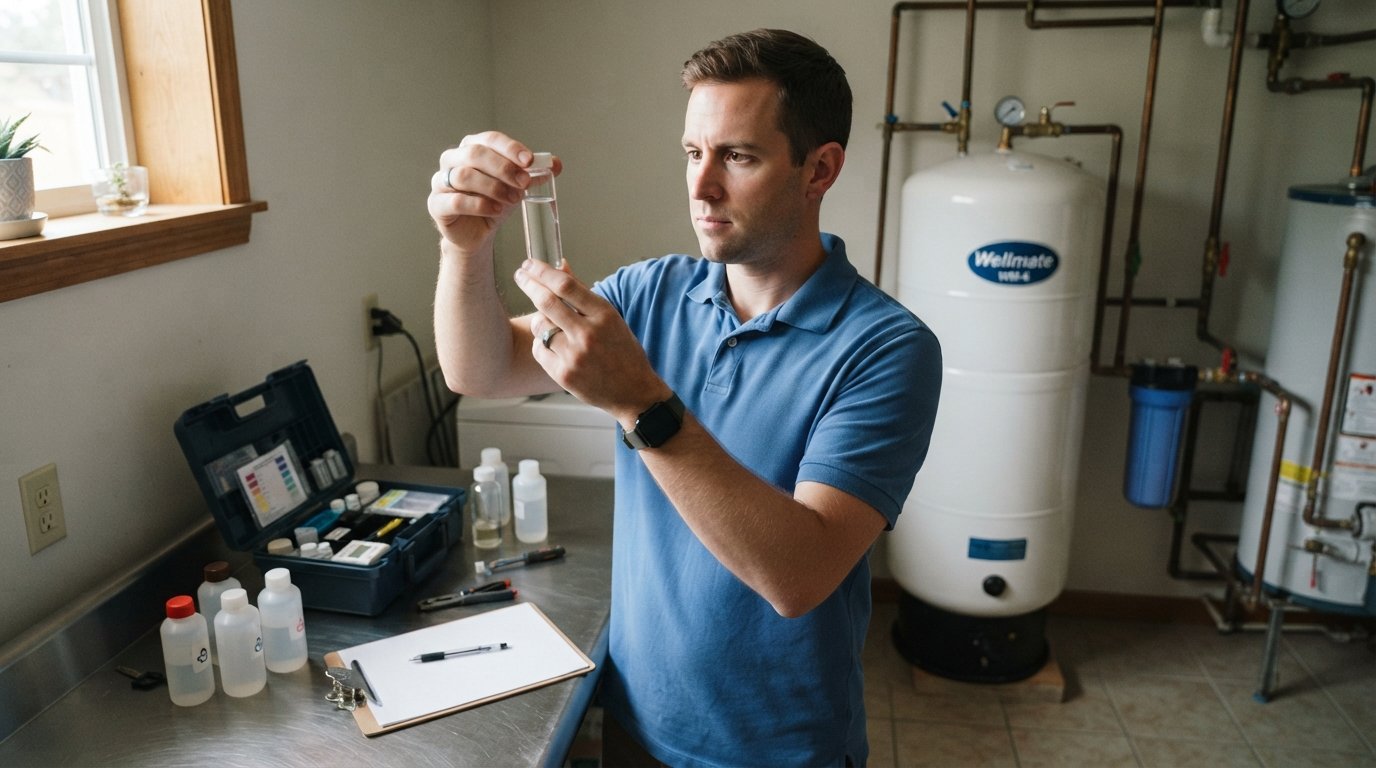
Water testing prices depend on how many contaminants you screen for and whether you use a DIY kit or a certified laboratory. DIY strip tests cost $10 to $30 and cover basics like pH, hardness, and nitrates, but they lack the accuracy of lab analysis. For real decision-making, certified lab testing is the standard, and most homeowners should budget accordingly.
Here is a general breakdown of common testing options and their typical price ranges:
- Basic potability test (bacteria and nitrates): $30 to $60. Often required for real estate transactions.
- Standard panel (bacteria, nitrates, pH, hardness, iron, manganese): $75 to $150. The most common choice for routine annual testing.
- Comprehensive panel (heavy metals, arsenic, radon, VOCs, pesticides): $200 to $500 or more. Recommended when you suspect industrial or agricultural contamination.
- Specialized single-contaminant tests (arsenic, lead, PFAS): $50 to $300 each, depending on the lab and method.
Many county health departments offer low-cost or subsidized test kits, sometimes as cheap as $20 for a basic panel. It is worth calling your local office before paying full price at a private lab. In some states, grants cover testing for low-income households or areas with known contamination issues.
Testing should happen at least once a year for bacteria and nitrates, and more often if you notice changes in taste, odor, or color. If you have a newborn, are pregnant, or have a compromised immune system, test more frequently and include additional contaminants. The cost of a $100 lab test is trivial compared to the health risks of untreated bacteria or arsenic exposure.
Well Water Treatment System Cost by Type
Treatment equipment is where budgets really diverge. A single sediment filter might cost $150 installed, while a whole-house arsenic removal system can run $3,000 to $6,000. The right choice depends entirely on your test results, your water usage, and how many contaminants you need to address. Below are typical price ranges for the most common systems, including equipment and basic installation.
- Sediment filters: $150 to $500 installed. Removes sand, silt, and rust particles; often used as pre-treatment.
- Carbon filters (whole-house): $400 to $1,500 installed. Targets chlorine, odors, and some organic chemicals.
- Water softeners: $800 to $3,000 installed. Removes hardness minerals (calcium and magnesium) that damage plumbing and appliances.
- Iron and manganese filters: $1,000 to $3,000 installed. Uses oxidation and filtration to remove metallic taste and staining.
- UV purification systems: $500 to $1,500 installed. Kills bacteria and viruses without chemicals; requires clear water to work effectively.
- Reverse osmosis (point-of-use): $300 to $1,500 installed. Typically installed at the kitchen sink for drinking water; removes a wide range of contaminants.
- Whole-house reverse osmosis: $3,000 to $10,000 installed. High-end option for severe contamination; higher water waste and maintenance.
- Arsenic removal systems: $1,500 to $6,000 installed. Uses adsorption media or reverse osmosis, depending on water chemistry.
- Radon in water aeration: $3,000 to $6,000 installed. Required when radon levels in well water exceed safety thresholds.
These ranges reflect national averages, but regional labor rates and equipment availability can push prices higher or lower. In areas with complex water chemistry, you may need a combination of systems, such as a sediment filter, softener, and UV purifier working together. Stacked systems add cost but are often necessary to fully protect your household.
It is also important to distinguish between point-of-use and whole-house treatment. A $300 under-sink reverse osmosis unit treats only drinking water, while a $3,000 whole-house system treats every tap. If bacteria or arsenic are present, point-of-use may not be enough, because showering and washing can still expose you to contaminants. Your test results and a qualified water treatment professional can help you decide which approach is appropriate.
For homeowners comparing multiple bids, using a platform that connects you with pre-vetted local contractors can simplify the process. Services like FreeQuotes.Contractors allow you to request quotes from multiple water treatment specialists at once, which helps you compare pricing and scope without endless phone calls.
Installation Labor and Hidden Costs
Equipment price is only part of the equation. Installation labor typically adds $200 to $1,500 depending on complexity, and certain situations drive costs higher. If your well pressure tank is failing, if the electrical panel needs a new circuit, or if plumbing must be rerouted, expect additional charges. Older homes with galvanized pipes or cramped mechanical spaces often require more labor hours.
Permits and inspections may also apply. Some jurisdictions require a plumbing permit for treatment system installation, especially if you are modifying supply lines or adding a drain for reverse osmosis. Permit fees generally range from $50 to $300. In rare cases, a septic system may not be able to handle the backwash from a softener or iron filter, which could trigger additional upgrades.
Another hidden cost is pre-treatment. Many treatment systems, especially UV purifiers and reverse osmosis membranes, require clear, sediment-free water to function properly. If your water contains iron, manganese, or turbidity, you may need a pre-filter or iron filter upstream, adding $500 to $2,000 to the project. Skipping pre-treatment leads to clogged filters, fouled membranes, and premature equipment failure, which costs far more over time.
Finally, consider the cost of water testing after installation. You should retest within 30 days to confirm the system is working, then annually thereafter. Budget $75 to $150 per year for ongoing testing, and factor in filter replacements, salt for softeners, and UV lamp changes. These recurring costs are modest but should be part of your long-term budget.
Ongoing Maintenance and Operating Costs
Treatment systems are not install-and-forget. Every system has consumables and service intervals that add to the total cost of ownership. Softeners need salt, carbon filters need media replacement every 1 to 3 years, UV lamps need annual replacement, and reverse osmosis membranes last 2 to 5 years depending on water quality. Ignoring maintenance shortens equipment life and allows contaminants to break through.
Typical annual maintenance costs break down as follows:
- Water softener: $50 to $150 per year for salt, plus occasional service.
- Carbon filter: $100 to $300 every 1 to 3 years for media replacement.
- UV purifier: $100 to $200 per year for lamp and quartz sleeve replacement.
- Reverse osmosis: $150 to $400 per year for filters and membrane replacement.
- Iron filter: $100 to $300 per year for media and cleaning supplies.
If you are not comfortable doing this maintenance yourself, add $200 to $500 per year for a service contract. Many water treatment companies offer annual service plans that include testing, filter changes, and system inspection. These plans are convenient but should be evaluated carefully; some are overpriced, while others provide genuine value.
Energy costs are generally minor. Most treatment systems run on standard household current and consume less than a refrigerator. The exception is whole-house reverse osmosis, which uses a pump and can waste several gallons of water for every gallon treated. If you are on a limited water supply or pay high electric rates, factor this into your decision.
How to Budget for Testing and Treatment
Start with testing, then treat only what you find. This sequence prevents overspending and ensures you are solving real problems. A reasonable first-year budget for a typical well owner might look like this:
- Initial comprehensive lab test: $150.
- Basic sediment and carbon pre-filtration: $600 installed.
- Water softener (if hardness is high): $1,500 installed.
- UV purifier (if bacteria present): $900 installed.
- Post-installation verification test: $100.
That total lands around $3,250 for a moderately equipped system. If your water only needs a softener, you might spend $1,500. If it needs arsenic removal plus pre-treatment plus UV, you could exceed $7,000. The key is to let test results drive the scope, not a salesperson's commission.
Always get at least three quotes for any treatment system over $1,000. Ask each contractor to explain why they recommend specific equipment, what contaminants it targets, and what maintenance it requires. A reputable professional will show you test results, explain the science in plain language, and provide a written estimate with no pressure. Be wary of anyone who claims you need a full system without testing your water first.
Financing is available for larger projects. Some water treatment companies offer payment plans, and homeowners can sometimes use home improvement loans or credit lines. If you are already planning other repairs, bundling projects may reduce overall labor costs. Just be sure the financing terms are reasonable and you understand the total repayment amount.
Choosing the Right Water Treatment Professional
Not all water treatment companies are equal. Some are excellent, with certified technicians and transparent pricing. Others use high-pressure sales tactics, scare homeowners with exaggerated health claims, and install overpriced equipment. Protecting yourself starts with verification. Check licensing, ask for references, and confirm the company has experience with your specific contaminants.
Questions worth asking include: Are you certified by the Water Quality Association or a similar body? Can you provide a copy of my lab results and explain each recommended treatment step? What is the expected lifespan of this equipment, and what does maintenance cost? Will you retest after installation to confirm performance? A good contractor will welcome these questions and answer them clearly.
It also helps to work with a company that specializes in private wells rather than municipal water. Well water chemistry is different, and treatment strategies that work for city water may fail in a well system. Experience matters, especially with iron, manganese, sulfur, and arsenic, which are common in groundwater but rare in municipal supplies.
If you are unsure where to start, consider using a contractor matching service to gather multiple quotes. This approach saves time and gives you a basis for comparison. You can also contact your local health department or cooperative extension office for a list of certified labs and recommended treatment professionals in your area.
Frequently Overlooked Costs and Considerations
Beyond equipment and installation, a few other expenses can surprise well owners. If your well pump or pressure tank is aging, adding treatment equipment may accelerate their failure. Replacing a pressure tank costs $300 to $800, and a new well pump can run $1,000 to $3,000 installed. Budget for these if your system is more than 10 to 15 years old.
Water quality can also change over time. Drought, heavy rain, nearby construction, or changes in land use can introduce new contaminants. Annual testing catches these shifts early, before they damage your treatment system or your health. If you notice sudden changes in taste, odor, or color, test immediately rather than waiting for your annual schedule.
Finally, document everything. Keep copies of lab results, equipment manuals, installation receipts, and maintenance records. This documentation helps with warranty claims, resale, and troubleshooting. If you ever sell your home, a well-documented water treatment history is a strong selling point and can prevent buyer objections.
Well water testing and treatment system cost is an investment in your household's health and your property's value. By testing first, treating only what is necessary, and maintaining your equipment properly, you can keep costs predictable and avoid the trap of ineffective or overpriced solutions. Take the time to gather quotes, ask questions, and choose a system that matches your water, your budget, and your long-term needs.