
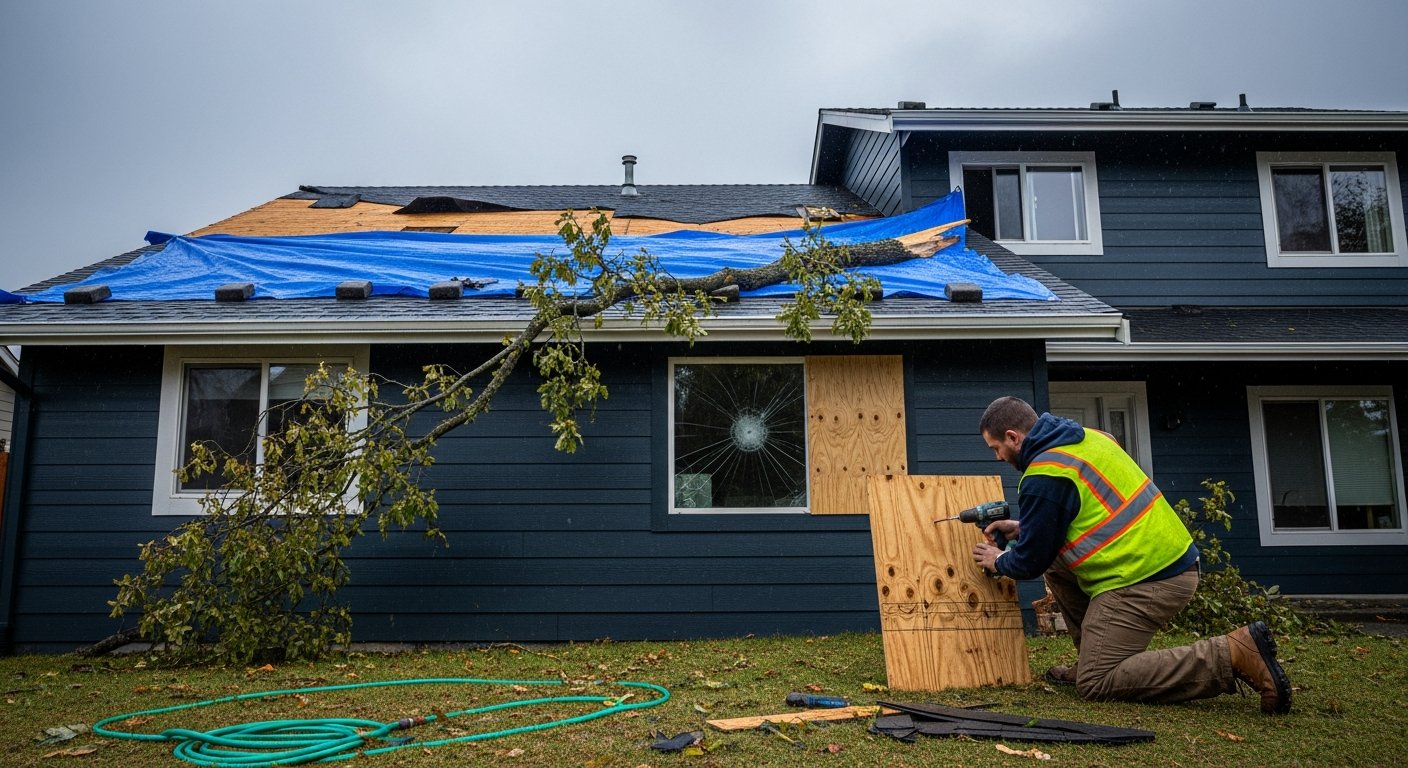
Storm Damage Repair: Steps to Restore Your Home Fast
Learn the essential steps for storm damage repair, from safety checks to insurance claims, and how to choose a contractor who will restore your home quickly.
By James Morgan
Learn more about Water Damage Cleanup and Restoration for guides, costs, and what to expect.
Compare Water Damage Cleanup and Restoration Pros Near You

Enter your ZIP code to compare top-rated local professionals and request free quotes.
When a severe storm rolls through, it can leave behind a trail of destruction that disrupts your life in an instant. High winds, hail, and heavy rain can tear shingles off your roof, send tree limbs crashing through windows, and flood your basement. In the aftermath, you might feel overwhelmed, but taking the right steps quickly can minimize further damage and help you get your home back to normal. This guide walks you through the entire storm damage repair process, from immediate safety checks to working with insurance and choosing the right contractor for the job.
Assessing the Damage Safely After a Storm
The first priority after any storm is safety. Before you even think about repairs, you need to make sure that your home and your family are out of immediate danger. Start by visually inspecting your property from the ground. Look for downed power lines, gas leaks, or structural issues like a sagging roof or cracks in the foundation. If you see any of these, do not approach them. Call your utility company or emergency services right away.
For the interior of your home, be cautious about entering rooms where water has pooled near electrical outlets or appliances. Turn off the main power switch if you suspect water has reached your electrical system, but only if you can do so without standing in water. If you have any doubt about your safety, wait for professional help to arrive. Once you have confirmed that the immediate area is stable, you can begin a more detailed assessment of the damage, documenting everything with photos and notes for your insurance claim.
Immediate Steps to Prevent Further Damage
Once you have assessed the situation, your next move is to prevent additional issues from developing. A small leak can quickly become a major problem if left unattended, especially if more rain is on the way. Quick, temporary fixes can save you thousands of dollars in long-term repair costs and make the eventual permanent repair process smoother.
Here are a few actions you can take right away to protect your home:
- Cover broken windows with plywood or heavy-duty plastic sheeting to keep rain and debris out.
- Place tarps over damaged roof sections to stop water from entering your attic or living spaces.
- Move furniture and valuables away from wet areas and use towels or a wet/dry vacuum to remove standing water.
- Document everything with photographs before you make any temporary repairs, as this will help your insurance claim.
While these temporary measures are essential, they are not a substitute for professional repair. They simply buy you time to file your claim and hire a qualified contractor. Remember to keep all receipts for materials you purchase for these temporary fixes, as your insurance company may reimburse you for them.
Navigating the Insurance Claim Process
Dealing with insurance after a storm can feel like a second full-time job. However, understanding how the process works can make it significantly less stressful. Your homeowner's policy typically covers storm damage, but the specifics depend on your coverage and the type of storm. Wind damage and hail are generally covered, while flood damage requires a separate policy. It is crucial to review your policy documents to know what is included.
Start by filing a claim as soon as possible. Most insurers have deadlines for reporting damage, and delays can complicate your case. When you call, have your policy number and a list of the damage ready. The insurance company will send an adjuster to inspect your property and estimate the cost of repairs. To ensure you get a fair settlement, be present during the adjuster's visit and point out all the damage you have found.
If you have significant damage, it is often wise to get your own independent contractor estimate before the adjuster arrives. This gives you a baseline to compare against the insurance company's offer. In our guide on carpet water damage repair, we explain how to handle specific interior issues that often arise after storms. If the adjuster's estimate seems too low, you have the right to challenge it, but you will need solid evidence and possibly a professional contractor's bid to back you up.
Choosing the Right Storm Damage Repair Contractor
Selecting the right contractor is the most critical decision you will make during the repair process. Storm damage attracts a wide range of contractors, including some who may be less than reputable. Your goal is to find a licensed, insured, and experienced professional who will do quality work and stand behind it. Do not rush this decision, even if you are anxious to get your home fixed.
Start by asking for recommendations from friends, family, and neighbors. You can also check with your local building department or the Better Business Bureau for a list of licensed contractors. Once you have a few names, do your research. Verify their license and insurance, read online reviews, and ask for references from recent storm repair jobs. A legitimate contractor will be happy to provide all of this information.
When you meet with potential contractors, ask for a detailed written estimate that breaks down the costs of materials and labor. Be wary of anyone who asks for a large upfront payment or pressures you to sign a contract immediately. A good contractor will take the time to explain the scope of work, answer your questions, and help you understand the timeline for completion. For more insights on what to look for, check out our guide on ceiling water damage repair, which covers similar considerations for interior restoration.
Questions to Ask Before Hiring
To make sure you are making an informed choice, here are a few key questions to ask any contractor you are considering:
- Are you licensed and insured in my state? Can you provide proof?
- Will you provide a detailed written estimate that includes all labor and materials?
- How will you handle unexpected issues that arise during the repair?
- Do you offer a workmanship warranty on your repairs?
- Can you provide references from past storm damage repair jobs?
The answers to these questions will give you a clear picture of the contractor's professionalism and reliability. Do not hesitate to walk away if something feels off. Trusting your instincts is just as important as checking credentials.
The Repair Process: What to Expect
Once you have chosen a contractor and signed the contract, the actual repair work can begin. The timeline for storm damage repair varies greatly depending on the extent of the damage, the materials involved, and the contractor's schedule. However, most projects follow a similar sequence of steps.
First, the contractor will secure the site and perform any necessary demolition, such as removing damaged drywall, flooring, or roofing materials. This is followed by drying and dehumidifying the affected areas to prevent mold growth. Then, the actual reconstruction begins. This might involve replacing roof shingles, repairing structural framing, installing new drywall, and finally, painting and finishing. Throughout the process, your contractor should keep you informed of progress and any unexpected delays.
It is important to have realistic expectations. Repair work can be disruptive, and you may need to make alternative living arrangements for part of the time. However, a professional contractor will work efficiently to minimize the impact on your daily life. Remember that quality work takes time, and it is better to have the job done right than to rush it and face problems later.
Cost Factors for Storm Damage Repair
The cost of storm damage repair can range from a few hundred dollars for minor fixes to tens of thousands for major structural work. It all depends on the severity and type of damage. For example, a small roof leak might cost $500 to fix, while a full roof replacement could set you back $10,000 or more. Similarly, repairing a broken window is much cheaper than rebuilding a collapsed wall.
Material costs also play a significant role. Asphalt shingles are more affordable than metal or tile roofing. Water-resistant drywall costs more than standard drywall but is essential in areas prone to moisture. Labor rates vary by region and the complexity of the job. To get a clear picture of what you might pay, it is wise to gather multiple estimates and compare them carefully, not just on price, but on the scope of work included.
Your insurance settlement will likely cover the cost of repairs minus your deductible. However, if the damage is extensive, you may find that the settlement is not enough to cover all the costs. This is where having a detailed contractor estimate becomes invaluable. It can help you negotiate a higher payout from your insurance company. Additionally, some contractors offer financing options to help you manage out-of-pocket expenses.
Preventing Future Storm Damage
After you have gone through the stress of storm damage repair, you will naturally want to prevent it from happening again. While you cannot control the weather, you can take proactive steps to make your home more resilient. Investing in prevention now can save you from the headache and expense of future repairs.
Start with your roof, which is your home's first line of defense. If you are replacing it after a storm, consider upgrading to impact-resistant shingles that can better withstand hail. Reinforce your garage door, as it is often the weakest point in a home's exterior. Trim trees and remove dead branches that could fall on your house during a storm. Also, ensure your gutters and downspouts are clear and directing water away from your foundation.
For interior protection, consider installing a sump pump if you have a basement, and make sure your windows are properly sealed. These improvements not only reduce the risk of damage but can also lower your insurance premiums. By taking a proactive approach, you are not just repairing your home; you are strengthening it for the future.
Dealing with the aftermath of a storm is never easy, but with the right knowledge and a trusted contractor, you can restore your home and your peace of mind. If you are facing significant damage, do not hesitate to seek professional help. For more complex situations, such as water damage that has soaked into your floors, you may need specialized services. Our article on carpet water damage repair offers practical advice on handling that specific issue. Remember, the key is to act quickly, document everything, and choose your repair team with care. Your home is one of your biggest investments, and it deserves the best protection you can give it.
Learn more about Water Damage Cleanup and Restoration for guides, costs, and what to expect.
Compare Water Damage Cleanup and Restoration Pros Near You
Enter your ZIP code to compare top-rated local professionals and request free quotes.