
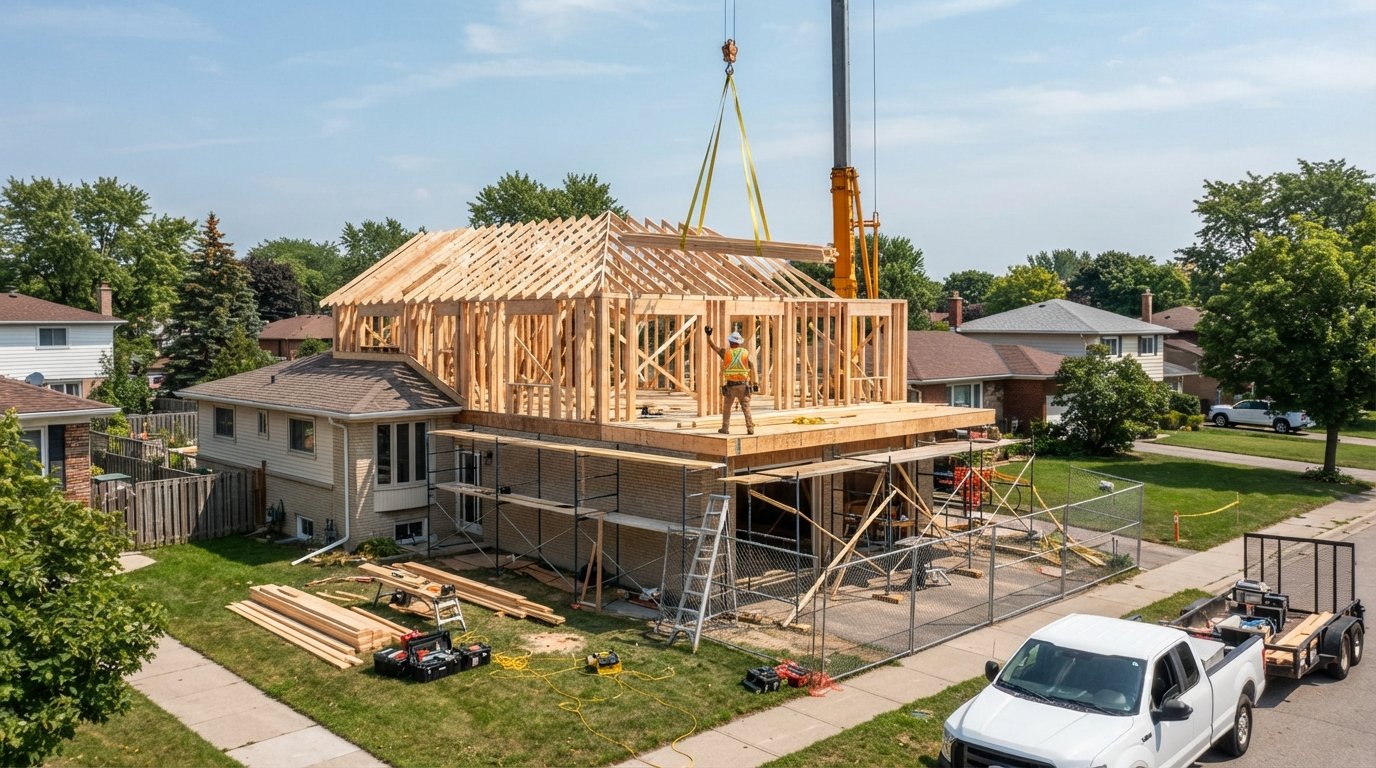
Second Story Addition Cost and ROI: What to Expect
Adding a second story to a house cost and ROI guide: get real numbers and expert advice. Call (833)-365-8755 for a free consultation.

By Jackson Sawyer
Learn more about Home Remodeling for guides, costs, and what to expect.
Compare Home Remodeling Pros Near You

Enter your ZIP code to compare top-rated local professionals and request free quotes.
Adding a second story to your home is a major decision that can dramatically increase your living space without expanding your home's footprint. But before you commit, you need a clear understanding of the costs involved and the potential return on investment. This guide breaks down the expenses, structural considerations, and resale impact so you can make an informed choice.
Understanding the Costs of a Second Story Addition
The cost of adding a second story varies widely based on location, size, design complexity, and structural requirements. On average, homeowners spend between $150 and $300 per square foot for a second-story addition. For a 1,000-square-foot addition, that translates to $150,000 to $300,000. This is often comparable to or slightly higher than a ground-level expansion, which typically ranges from $100 to $250 per square foot. The premium for going up comes from the need for structural reinforcement, roof removal, and the logistical challenges of building above an existing structure.
Several factors influence the final price. The condition of your foundation and framing, the complexity of the design, the materials you choose, and local labor rates all play a role. Additionally, you may need to upgrade your electrical panel, HVAC system, and plumbing to accommodate the new space. Permits and inspections add another layer of cost, typically ranging from $1,000 to $5,000 depending on your municipality.
Structural Reinforcement and Foundation Checks
Before construction begins, a structural engineer must assess your home's foundation and framing to ensure they can support an additional story. Many homes are not originally designed for the extra load, so reinforcement is often necessary. This can include adding steel beams, reinforcing joists, and underpinning the foundation. These structural upgrades can add $20,000 to $50,000 or more to your project, depending on the extent of the work required.
Foundation checks are critical. If your home sits on a crawl space or basement, the existing foundation may need to be strengthened. In some cases, helical piers or push piers are installed to provide additional support. Skipping this step can lead to serious structural issues down the line, so it's not an area to cut corners.
Roof Removal and Temporary Weatherproofing
Adding a second story requires removing your existing roof, which adds to the cost and complexity. You'll need to budget for roof removal and disposal, temporary weatherproofing to protect your home during construction, and a new roof for the addition. Roof removal and replacement can cost $10,000 to $30,000, depending on the size and pitch of your roof. Temporary weatherproofing, such as tarps and temporary framing, is essential to prevent water damage while the second story is being built.
It's also important to plan for the impact on your daily life. Construction will be noisy, dusty, and disruptive. You may need to temporarily relocate if the work involves major structural changes or if the weatherproofing is compromised.
Zoning, Height Limits, and HOA Rules
Before you get too far into planning, check with your local zoning department and homeowners association (HOA) to understand the regulations that apply to second-story additions. Many areas have height restrictions that limit how tall your home can be. Setbacks, lot coverage, and floor area ratio (FAR) requirements may also affect your project. HOAs often have their own architectural review processes and design guidelines.
Failing to secure the necessary approvals can result in fines, forced removal, or legal action. It's wise to consult with a local architect or contractor who is familiar with the permitting process in your area. They can help you navigate the requirements and avoid costly mistakes.
Resale Value and ROI
The return on investment for a second-story addition depends on your local real estate market. In supply-constrained neighborhoods where land is scarce and demand is high, a second-story addition can yield a strong ROI, often recouping 60% to 80% of the cost at resale. The added square footage increases your home's value, and the additional bedrooms and bathrooms make it more appealing to buyers.
However, ROI is not guaranteed. Over-improving for your neighborhood can lead to diminishing returns. If your home is already the largest on the block, adding a second story may not yield a proportional increase in value. It's essential to work with a real estate agent to understand the market dynamics in your area. They can provide insights into what buyers are willing to pay for extra space and whether a second-story addition is a sound investment.
For those planning other renovations, such as adding a bathroom, our guide on adding a bathroom cost and feasibility can help you compare options and prioritize projects.
Timeline and Living Arrangements During Construction
A second-story addition typically takes six to twelve months to complete, depending on the scope of work and weather conditions. The project involves multiple phases: design and permitting (2-3 months), foundation and structural work (1-2 months), framing and roofing (1-2 months), and interior finishes (2-3 months). Delays are common, so it's wise to build some buffer into your timeline.
Living arrangements during construction require careful planning. You may be able to stay in your home for part of the project, but there will be periods when the house is uninhabitable, especially during roof removal and structural work. Budget for temporary housing if needed, and communicate openly with your contractor about the schedule so you can plan accordingly.
Financing Your Second Story Addition
Most homeowners finance second-story additions through home equity loans, cash-out refinancing, or construction loans. Home equity loans and lines of credit (HELOCs) are common choices, as they allow you to borrow against your home's equity at competitive rates. Cash-out refinancing replaces your existing mortgage with a larger one and gives you the difference in cash. Construction loans are short-term, higher-interest loans that convert to a permanent mortgage after the project is complete.
When planning your budget, don't forget to include contingencies. A contingency fund of 10% to 20% of the project cost is recommended to cover unexpected issues, such as structural repairs or material delays. It's also wise to get multiple contractor quotes to ensure you're getting a fair price. For those considering a move instead of a renovation, resources like Moving.Homes offer comprehensive relocation guides and checklists to help you navigate the process.
Is a Second Story Addition Right for You?
Adding a second story can be a smart way to gain space without moving, especially if you love your neighborhood and lot. However, it's a complex and expensive project that requires careful planning. Consider your long-term plans, your budget, and the potential resale value. If you're unsure, consult with a real estate agent, architect, and contractor to evaluate the feasibility and potential ROI for your specific situation.
For many homeowners, the decision comes down to comparing the cost of adding on versus moving. If you have adequate equity and your neighborhood supports the investment, a second-story addition can be a rewarding way to transform your home. Just be sure to work with experienced professionals who can guide you through the process and help you avoid costly mistakes.