
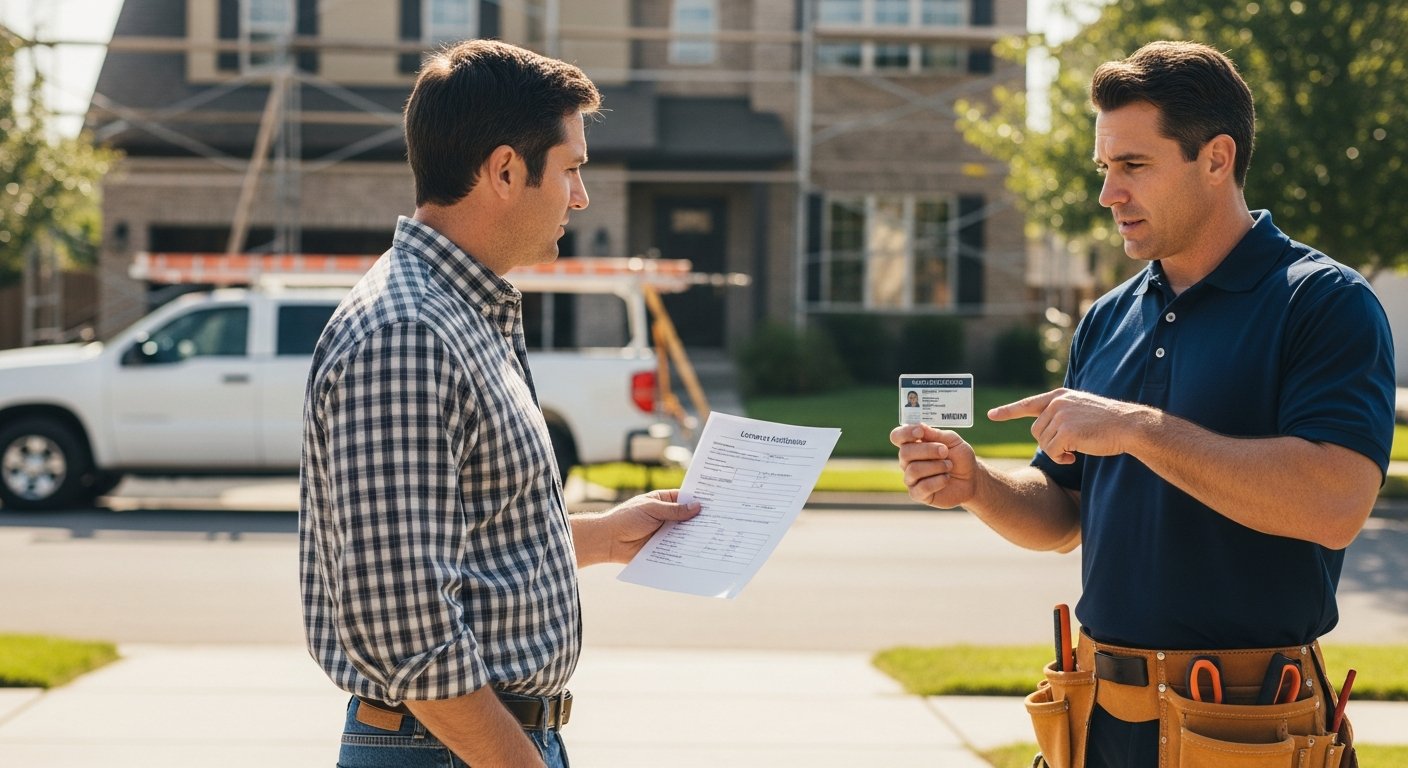
How to Verify Licensed Contractors Before Hiring
Learn how to verify licensed contractors before hiring to protect your home and budget, and discover how ContractorHomeQuotes can simplify the process.

By Alexia Mabel
Learn more about General Contracting for guides, costs, and what to expect.
Compare General Contracting Pros Near You

Enter your ZIP code to compare top-rated local professionals and request free quotes.
Hiring a contractor for a home improvement project can feel like a high-stakes decision. You are entrusting your property, your budget, and your peace of mind to someone who promises to deliver quality work. One of the most effective ways to protect yourself is to verify that the professional you hire is properly licensed. Licensed contractors have met specific state or local requirements, which often include passing exams, proving experience, and carrying the right insurance. This article will walk you through everything you need to know about checking credentials, understanding why licensing matters, and how to use this knowledge to avoid costly mistakes.
Why Licensing Matters for Your Home Project
When you hire a licensed contractor, you gain a layer of legal and financial protection that unlicensed workers simply cannot offer. A license means the contractor has been vetted by a governing body, usually at the state level. This process typically involves verifying the contractor's knowledge of building codes, safety practices, and business management. It also often requires proof of general liability insurance and workers' compensation, which are crucial if an accident happens on your property.
Without a license, a contractor may not be held to the same standards. They might cut corners on materials, skip necessary permits, or perform substandard work. If something goes wrong, you have little recourse because they may not be insured or bonded. This is why verifying licensing is not just a bureaucratic formality; it is a fundamental step in protecting your home and your finances. Always ask for the license number and confirm it with the issuing authority before signing any contract.
How to Check If a Contractor Is Licensed
The process of verifying a contractor's license is straightforward, but it requires a bit of diligence. Most states have an online database where you can search for a contractor's license status by name or license number. You should also contact your local building department or licensing board directly if you have any doubts. They can provide information about the license type, expiration date, and any complaints filed against the contractor.
Here are the key steps to follow when verifying a contractor's license:
- Ask for the contractor's full legal name and their license number. Do not accept a business card or a website as proof; get the actual number.
- Visit your state's licensing board website and use their search tool. Look for the license status (active, expired, or revoked) and the expiration date.
- Check for any disciplinary actions or complaints. Many boards list these records publicly, which can alert you to past issues.
- Confirm that the license covers the specific type of work you need. Some licenses are general, while others are trade-specific, like electrical or plumbing.
- Call the licensing board if the online information is unclear. A quick phone call can resolve any doubts.
Following these steps will give you confidence that you are dealing with a legitimate professional. Remember, a contractor who is hesitant to provide their license number is a red flag. You should never proceed with a project until you have verified their credentials to your satisfaction.
What If a Contractor Is Not Licensed?
Encountering a contractor who is not licensed is common, especially for smaller projects or in certain trades. However, hiring an unlicensed contractor can lead to significant problems. They may not have the necessary insurance, which means you could be liable for workplace injuries or property damage. Additionally, their work may not meet local building codes, leading to costly fines and safety hazards.
Even if an unlicensed contractor offers a lower bid, the long-term risks often outweigh the immediate savings. You might have to pay to have their work redone by a licensed professional, which can double your expenses. Moreover, without a license, they are not subject to the same consumer protections, such as warranty requirements or dispute resolution processes. For these reasons, it is wise to limit your candidate pool to licensed professionals, even if it means paying a bit more upfront.
If you are considering a project that seems too small for a licensed contractor, think again. Many licensed contractors handle small jobs, and some even offer a minimum service fee. You can also ask for a referral from a licensed professional you already trust, such as an electrician or plumber, who may know a reliable general contractor. The peace of mind that comes with a licensed pro is worth the extra effort.
Additional Credentials: Insurance and Bonds
Licensing is just one part of the equation. You also need to verify that the contractor carries adequate insurance and is bonded. General liability insurance protects you if the contractor damages your property during the project. Workers' compensation insurance covers injuries that occur on your property, so you are not held financially responsible for a worker's medical bills. A bond, on the other hand, is a guarantee that the contractor will fulfill their contractual obligations, or you can file a claim to recover losses.
Before hiring, ask for proof of insurance and bonding. A reputable contractor will provide certificates without hesitation. You can also verify these documents with the insurance company or bonding agency. The cost of these protections is built into the contractor's quote, so it is not an extra charge. However, the absence of such coverage is a deal-breaker. If a contractor is uninsured or unbonded, you are exposing yourself to substantial financial risk, and you should look elsewhere.
Many homeowners mistakenly assume that a license automatically means the contractor has insurance. This is not always the case. Some states require proof of insurance to obtain a license, but the levels and types vary. Therefore, you should always request separate documentation for insurance and bonding. This extra step ensures that you are fully covered, no matter what happens during the renovation.
The Role of Permits and Inspections
Licensed contractors are typically well-versed in local building codes and permit requirements. They will know when a permit is necessary for your project and will pull it on your behalf. This is important because permits protect you by ensuring that the work meets safety standards and is reviewed by an inspector. If you hire an unlicensed contractor, they may skip the permit process, leaving you with work that is not up to code and potentially dangerous.
When you discuss your project with a contractor, ask them about the permit process. A licensed pro will explain which permits are needed and how they will handle the paperwork. They should also schedule the required inspections at key stages of the work. This transparency is a sign of a trustworthy professional. If a contractor suggests that you skip the permit to save money, that is a major red flag, and you should not hire them.
Permits also provide a record of the work, which can be useful when you sell your home. Buyers often ask for documentation of recent renovations, and having proper permits can facilitate a smoother sale. Conversely, unpermitted work can become a liability, as it may not be covered by your home insurance and could be flagged during a home inspection. Therefore, working with a licensed contractor who respects the permit process is an investment in your property's future.
How ContractorHomeQuotes Can Help You Find Licensed Pros
Finding licensed contractors can be time-consuming, especially if you are juggling work and family. That is where ContractorHomeQuotes comes in. This platform simplifies the process by connecting you with pre-screened, licensed professionals in your area. You fill out a simple form describing your project, and you receive free, no-obligation quotes from local contractors. This service saves you hours of research and helps you compare multiple options side by side.
ContractorHomeQuotes also provides valuable resources, such as cost guides and project planning tips, to help you make informed decisions. The platform is designed for homeowners who want transparency and convenience. Instead of cold-calling contractors and hoping they are licensed, you can rely on ContractorHomeQuotes to filter for quality. This means you can focus on comparing estimates and reviewing credentials, rather than chasing down leads.
While ContractorHomeQuotes does not guarantee specific quotes or endorse individual contractors, it does provide a valuable starting point. You still need to verify each contractor's license and insurance, but the platform reduces the risk of encountering unlicensed operators. By using this service, you are taking a proactive step toward a successful project, backed by a network of vetted professionals.
Questions to Ask Before You Sign
Once you have a shortlist of licensed contractors, it is time to ask pointed questions before making a final decision. These questions will help you gauge their professionalism and suitability for your project. Here are some critical ones to include:
- Can you provide your license number and proof of insurance?
- How many projects similar to mine have you completed in the past year?
- Will you pull all necessary permits and schedule inspections?
- Can you provide references from recent clients, and may I contact them?
- What is your estimated timeline, and how do you handle delays?
Asking these questions gives you insight into the contractor's experience and work ethic. A confident, licensed contractor will answer them clearly and provide documentation without delay. If a contractor hesitates or gives vague answers, consider it a warning sign. You deserve a professional who is transparent and communicative from the start.
After you receive answers, take the time to verify the references. A quick call to a past client can reveal a lot about the contractor's reliability, quality of work, and ability to stay on budget. This due diligence is worth the effort, as it can prevent costly misunderstandings later. Remember, a licensed contractor is not just about the license; they should also demonstrate a track record of satisfied customers.
Red Flags to Watch For
Even among licensed contractors, there are some who may not be the best fit for your project. It is important to be aware of common red flags that indicate a potential problem. These include a contractor who demands a large upfront payment, a contractor who pressures you to make a quick decision, or a contractor who offers a significantly lower bid than others. These could be signs of financial instability or a plan to cut corners.
Another red flag is a contractor who asks you to pay in cash or who does not provide a written contract. A written contract is essential because it outlines the scope of work, payment schedule, and warranty details. Without it, you have no recourse if disputes arise. Additionally, avoid contractors who use a post office box as their only address or who do not have a physical business location. These practices often indicate a fly-by-night operation.
Your intuition is also a valuable tool. If something feels off during your interactions, do not ignore that feeling. You are under no obligation to hire anyone, and there are many other licensed contractors available. Take your time, do your research, and trust your gut. A good contractor will make you feel comfortable and confident in their abilities.
Final Thoughts on Protecting Your Investment
Verifying that your contractor is licensed is one of the most important steps in any home improvement project. It protects your finances, your safety, and the value of your property. By following the steps outlined in this article, you can confidently hire a professional who meets the highest standards. Remember to check the license, confirm insurance and bonding, and understand the permit process. These actions will give you peace of mind and help ensure that your renovation is a success.
When you are ready to start your project, consider using ContractorHomeQuotes to find licensed contractors in your area. Their free quote service can save you time and connect you with reputable professionals. With the right preparation and the right team, you can transform your home with confidence and enjoy the results for years to come.