
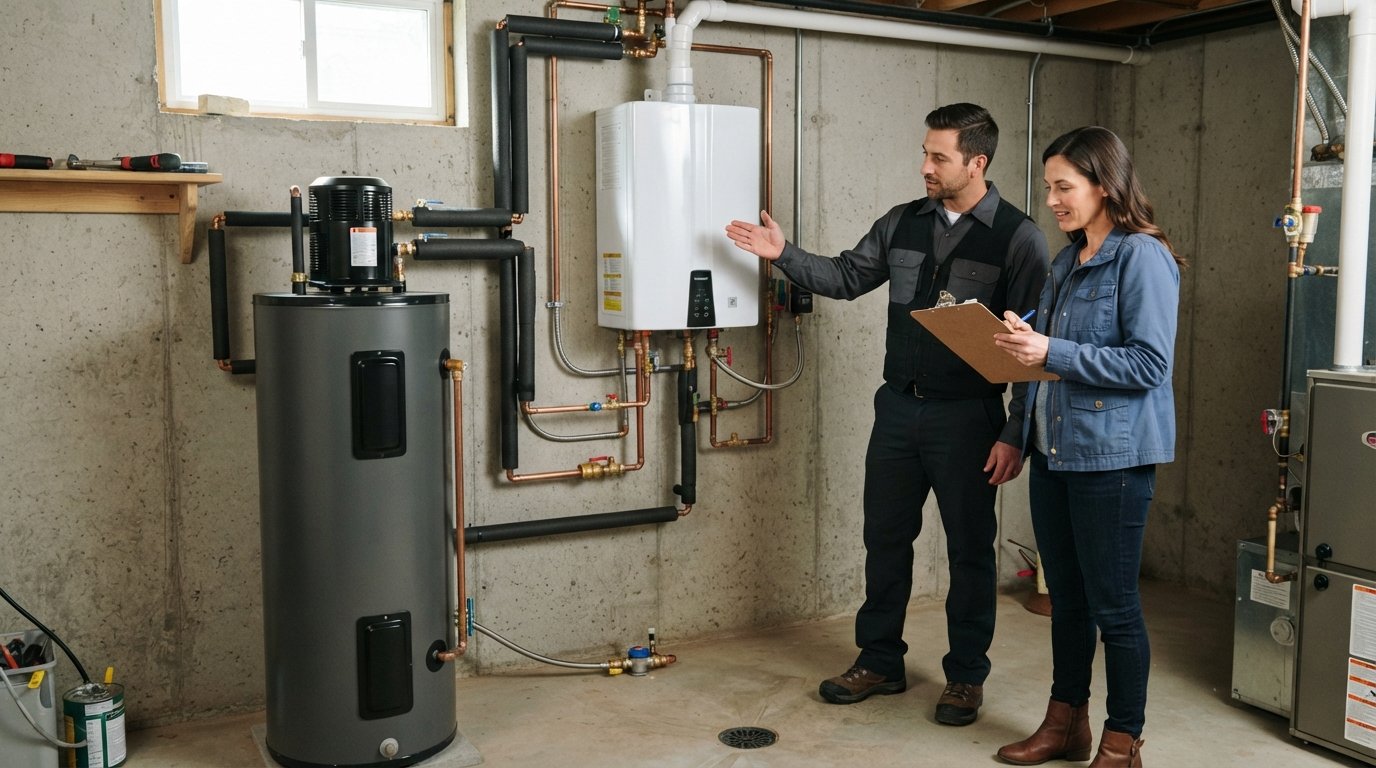
Heat Pump Water Heater vs Tankless Cost Comparison
Compare heat pump and tankless water heater costs, including installation, rebates, and long-term savings. Call 8333658755 for expert guidance.

By Jackson Sawyer
Learn more about Water Heater Installation or Replacement for guides, costs, and what to expect.
Compare Water Heater Installation or Replacement Pros Near You

Enter your ZIP code to compare top-rated local professionals and request free quotes.
Choosing a new water heater is one of those home improvement decisions that quietly shapes your monthly budget for the next decade or more. Homeowners often narrow the field to two high-efficiency options: heat pump water heaters and tankless units. Both promise lower energy bills and endless hot water potential, but their upfront prices, installation requirements, and long-term operating costs differ dramatically. A careful heat pump water heater vs tankless cost comparison reveals that the cheaper sticker price is not always the cheaper system overall, and the right answer depends on your household size, climate, electrical setup, and how long you plan to stay in the home.
This guide breaks down purchase prices, installation expenses, rebates, maintenance, and lifespan so you can see the true financial picture. Whether you are replacing a failing unit or planning a proactive upgrade, understanding these numbers now will help you avoid surprises later and negotiate confidently when you gather contractor quotes.
How Heat Pump and Tankless Water Heaters Work
A heat pump water heater (HPWH) does not generate heat directly. Instead, it moves heat from the surrounding air into a storage tank, much like a refrigerator running in reverse. Because it transfers rather than creates heat, it can be two to three times more efficient than a standard electric resistance tank. The trade-off is that it needs a conditioned space with adequate volume and moderate temperatures, such as a garage, basement, or utility room, and it produces cool, dehumidified air as a byproduct.
A tankless water heater heats water only when a faucet or appliance calls for it. Electric models use high-powered heating elements, while gas models burn fuel to raise the temperature as water flows through a heat exchanger. The result is an endless supply of hot water and a much smaller physical footprint, but the unit must be sized carefully to match the flow rate and temperature rise your household demands.
These mechanical differences drive every cost category that follows. A heat pump unit includes a compressor, fan, and tank, which makes it heavier and more expensive to buy. A tankless unit contains sophisticated electronics and a powerful burner or element array, which raises the purchase price and can require upgrades to gas lines, venting, or electrical service. Understanding the hardware helps explain why installation quotes vary so widely from one home to the next.
Upfront Purchase Prices: Heat Pump vs Tankless
The first number most homeowners see is the equipment price, and here the two technologies are closer than many people expect. A standard residential heat pump water heater typically costs between $1,200 and $2,000 for the unit alone, depending on tank size (usually 50 to 80 gallons) and features such as Wi-Fi controls or leak detection. Premium models with larger tanks or higher first-hour ratings can push past $2,200.
Tankless units span an even wider range. Electric tankless models often sell for $500 to $1,200, while gas tankless units run from $800 to $2,000 or more for high-capacity condensing models. However, the equipment price is only the beginning. Tankless systems frequently require stainless steel venting, larger gas lines, or upgraded electrical panels, and those components can add hundreds to thousands of dollars before installation labor even begins.
When you compare the raw purchase price, tankless electric units often look cheapest. Gas tankless and heat pump models land in a similar middle range. The real separation appears in the next section, where installation realities reshape the total project cost.
Installation Costs and Home Modifications
Installation is where a heat pump water heater vs tankless cost comparison becomes genuinely complicated. A heat pump water heater is tall and heavy, so it usually replaces an existing tank in the same location. If that location is a cold garage or a cramped closet, you may need to relocate the unit, add louvered doors, or install a duct kit to supply warm air. An electrical circuit upgrade to 240 volts is common if the old tank was gas. Typical installed costs range from $1,500 to $3,500, including labor, permits, and minor electrical work.
Tankless installation can be simpler or far more complex. Replacing an existing tankless unit is relatively straightforward, but converting from a tank to tankless often triggers a cascade of upgrades. Gas models may need a larger supply line, new venting that meets clearance rules, and a condensate drain if the unit is condensing. Electric models may require a 200-amp panel, dedicated circuits, and heavy-gauge wiring. Installed costs for tankless systems commonly fall between $1,800 and $4,500, with high-end gas conversions exceeding $6,000 in some markets.
Before committing, request at least three written estimates that separate equipment, labor, permits, and any electrical or plumbing modifications. Our guide on roof repair vs replace cost comparison follows a similar framework and shows how hidden line items can swing a project budget by thousands of dollars.
Operating Costs: The Long-Term Picture
Efficiency is where heat pump water heaters shine. Because they move heat instead of creating it, they typically use 50 to 70 percent less electricity than a standard electric tank and roughly 30 to 40 percent less than many tankless electric models. For a family of four, that can translate to annual savings of $300 to $500 compared with a conventional electric tank, depending on local utility rates.
Tankless gas units are also efficient, often achieving energy factor ratings above 0.90 for condensing models. However, they consume fuel only during demand, which benefits small households with low hot water use. Large families with simultaneous showers, laundry, and dishwashing may find that a tankless unit runs near its maximum capacity, eroding some of the efficiency advantage.
Climate matters too. Heat pump water heaters operate best in spaces between 40 and 90 degrees Fahrenheit. In a cold northern basement, efficiency drops and the unit may switch to backup resistance heating, raising operating costs. In warm southern states, the cooling and dehumidification effect can be a bonus in garages or unconditioned spaces. Always model operating costs using your local electricity and gas rates rather than national averages.
Rebates, Tax Credits, and Incentives
Incentives can dramatically change the math. Heat pump water heaters frequently qualify for federal tax credits, utility rebates, and state efficiency programs because they meet high energy efficiency standards. Combined incentives of $500 to $2,000 are common, and some utilities offer additional mail-in rebates or low-interest financing.
Tankless units qualify for fewer incentives. High-efficiency gas condensing models may earn modest rebates, and some utilities offer them for replacing older, less efficient tanks. Electric tankless models rarely qualify because their peak demand can strain the grid.
The table below summarizes typical cost ranges before incentives. Actual quotes vary by region, home layout, and contractor pricing.
- Heat pump water heater: equipment $1,200 to $2,000; installed $1,500 to $3,500; potential incentives $500 to $2,000.
- Tankless gas: equipment $800 to $2,000; installed $1,800 to $4,500; potential incentives $0 to $500.
- Tankless electric: equipment $500 to $1,200; installed $1,500 to $3,500; potential incentives $0 to $300.
Because incentives change annually, verify current offers with your utility and a qualified installer before signing a contract. A well-timed purchase can cut the effective cost of a heat pump water heater below that of a tankless unit.
Maintenance, Repairs, and Lifespan
Both systems require routine care, but the tasks differ. Heat pump water heaters need filter cleaning every few months, annual flushing to remove sediment, and occasional checks of the condensate drain. The compressor and fan are sealed components, so major repairs are less frequent but can be costly if they fail. With proper maintenance, a heat pump water heater lasts 13 to 15 years.
Tankless units require descaling every one to two years, especially in hard water areas, plus annual venting and gas pressure checks. Ignition components, flow sensors, and heat exchangers can fail over time, and replacement parts are often expensive. A well-maintained tankless unit can last 18 to 20 years, and some manufacturers offer 15-year heat exchanger warranties.
When comparing total cost of ownership, factor in one or two service visits per year at $100 to $250 each. Over a 15-year window, maintenance for either system can add $1,500 to $3,000 to the project. That said, the longer lifespan of tankless units can offset their higher repair costs if you plan to stay in the home long enough to benefit.
Which System Fits Your Home and Budget?
The right choice depends on your priorities. If your goal is the lowest monthly energy bill and you have a suitable location for a heat pump unit, the HPWH usually wins on operating cost, especially with incentives. If you need endless hot water, have limited floor space, or already have a gas line and venting in place, a tankless unit may deliver better value and convenience.
Consider these factors before deciding:
- Household size: Large families benefit from tankless endless supply, while smaller households may not justify the added installation cost.
- Available space: Heat pump units need 1,000 cubic feet of air volume and moderate temperatures; tankless units mount on a wall.
- Utility setup: Gas tankless requires venting and supply upgrades; heat pump requires 240-volt power and a drain for condensate.
- Climate: Cold basements reduce heat pump efficiency; warm climates enhance it.
- Time horizon: Longer ownership favors the lower operating costs of heat pumps; shorter ownership may favor tankless resale appeal.
Once you have a shortlist, gather at least three itemized quotes. Ask each contractor to include equipment model numbers, labor hours, permit fees, and any electrical or plumbing modifications. A transparent quote makes the cost comparison meaningful and protects you from change-order surprises.
Getting Accurate Quotes and Avoiding Costly Mistakes
Water heater replacement is not a project to rush. A poorly sized unit can leave you with lukewarm showers, while an undersized electrical panel can fail inspection. Start by documenting your current setup: fuel type, tank size, venting, electrical capacity, and available space. Then use that information to request comparable bids from licensed plumbers and HVAC contractors.
Platforms like FreeQuotes.Contractors connect homeowners with pre-vetted local professionals and provide free, no-obligation estimates, which makes it easier to compare heat pump and tankless options side by side. A reputable quote should include a manual J or sizing calculation, warranty terms, and a clear timeline.
Watch for red flags: quotes that omit permits, contractors who pressure you to decide on the spot, and bids that are dramatically lower than the rest. The lowest price often hides missing labor, substandard parts, or future change orders. A fair price reflects quality equipment, skilled labor, and proper permitting.
Finally, plan for the transition. If your old water heater is leaking, you may need emergency service, which can add after-hours fees. If you are upgrading proactively, schedule installation during mild weather and confirm rebate paperwork before the work begins. Small planning steps protect your budget and ensure the new system performs as promised.
Comparing a heat pump water heater vs tankless cost comparison is ultimately about matching technology to your lifestyle and financial goals. Heat pumps reward homeowners with low operating costs, available incentives, and suitable installation space. Tankless units reward households that value endless hot water, compact design, and long equipment life. Neither option is universally cheaper; the smartest choice is the one that fits your home, your usage patterns, and your budget for the next decade. Gather multiple quotes, verify incentives, and let the numbers guide your decision.