
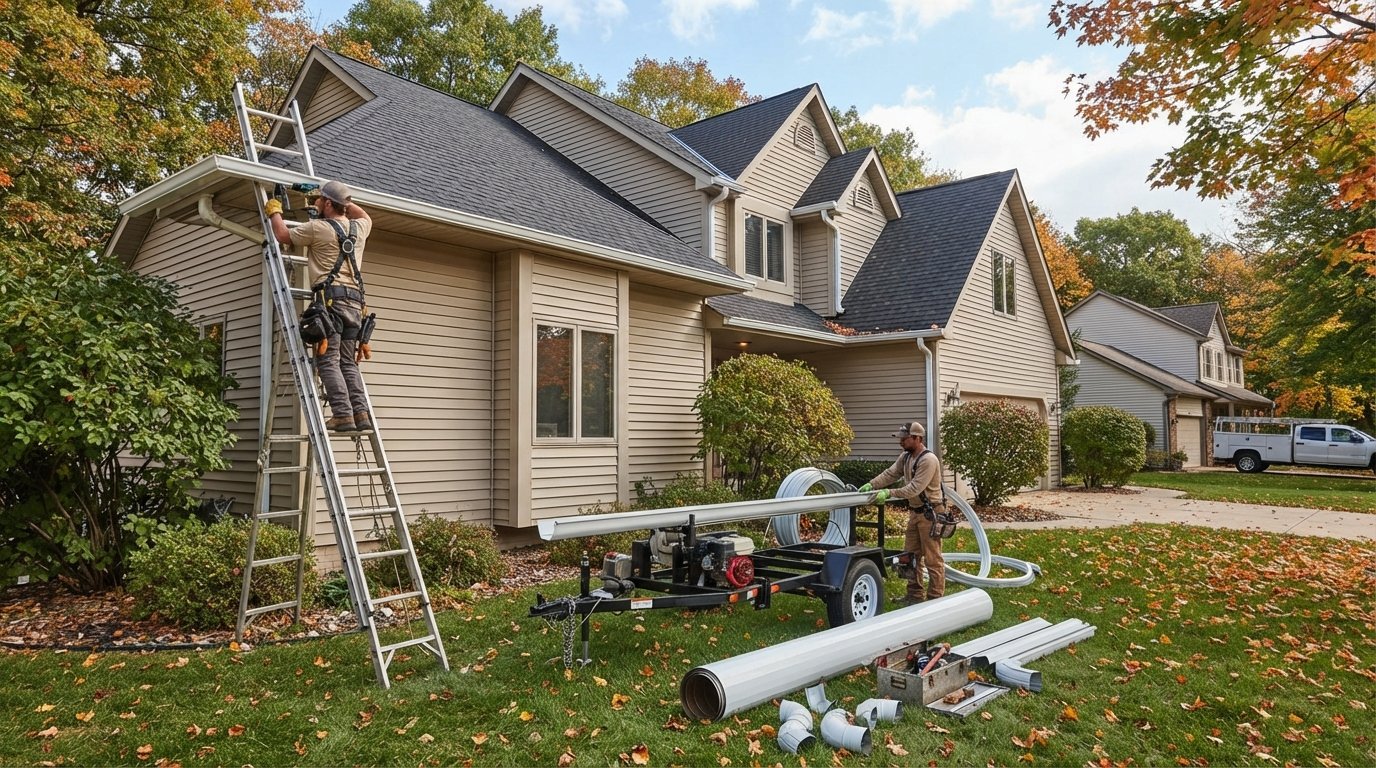
Gutter Replacement Cost by Material and Home Size
Explore gutter replacement cost by material and home size to budget confidently. Call (833)-365-8755 for expert guidance.

By Margaret Sheridan
Learn more about Gutter Installation or Replacement for guides, costs, and what to expect.
Compare Gutter Installation or Replacement Pros Near You

Enter your ZIP code to compare top-rated local professionals and request free quotes.
Your gutters quietly protect your home from thousands of gallons of water each year, but when they fail, the damage can be costly. If you are seeing streaks down your siding, pools near your foundation, or gutters pulling away from the fascia, replacement is likely on your mind. The first question most homeowners ask is simple: how much will it cost? The answer depends on two big factors: the material you choose and the size of your home. In this guide, we break down gutter replacement cost by material and home size, share sizing guidelines, and flag hidden expenses so you can budget with confidence.
Why Gutter Replacement Cost Varies So Much
Gutter pricing is not one-size-fits-all. Two homes of the same square footage can have very different gutter bills because of roofline complexity, stories, local labor rates, and material selection. Contractors typically price the job by linear foot, which is the total length of gutter run needed. A simple ranch with a straight roofline might need 150 linear feet, while a two-story colonial with multiple valleys and dormers could easily require 250 feet or more. That difference alone can swing the project cost by hundreds or thousands of dollars.
Material choice is the other major lever. Vinyl is the budget option, aluminum is the most popular middle ground, and steel or copper push into premium territory. Installation method (seamless vs. sectional) also affects price. Seamless gutters are custom-formed on site, reducing leak points but requiring specialized equipment and often costing more per foot. Understanding how labor and materials split your total bill helps you spot fair quotes and avoid overpaying. For a deeper dive, see our guide on labor cost vs material cost.
Finally, regional differences matter. Labor rates in dense urban areas or harsh climates run higher, and some materials are more available in certain regions. Always get multiple local quotes to ground your budget in reality.
Gutter Replacement Cost by Material
Material is the most visible cost driver. Below is a breakdown of common options, with typical installed cost per linear foot (including labor and basic fittings). Prices vary by region and project specifics, so treat these as ballpark figures to compare quotes.
- Vinyl: $3 to $7 per linear foot. Lightweight and DIY-friendly, but prone to cracking in extreme cold and fading over time. Best for budget-conscious homeowners in mild climates.
- Aluminum: $6 to $12 per linear foot. The most popular choice because it is rust-resistant, lightweight, and available in many colors. Seamless aluminum sits at the higher end.
- Steel (galvanized or galvalume): $9 to $15 per linear foot. Strong and durable, ideal for heavy snow loads, but heavier to install and can rust if the coating is damaged.
- Copper: $25 to $40 per linear foot or more. A premium, long-lasting option with a distinctive look that develops a patina. Best for high-end homes and historic properties.
- Zinc: $20 to $35 per linear foot. Another premium metal that resists corrosion and offers a classic appearance, though it requires specialized installation.
Keep in mind that these per-foot prices often include basic hangers and downspouts, but not necessarily guards, heat tape, or fascia repair. When comparing quotes, ask exactly what is included. A low bid that excludes downspouts or uses cheap fasteners may cost more in the long run. For a typical single-story home with 200 linear feet, aluminum gutters might land around $1,600 to $2,400 installed, while copper could exceed $5,000. The gap widens on larger homes, which is why material choice deserves careful thought.
How Home Size Affects Gutter Replacement Cost
Home size influences cost primarily through the total linear feet of gutter required. A general rule of thumb is that a home needs roughly 1 linear foot of gutter for every 1 foot of roofline edge. Contractors measure the perimeter of the roofline, including eaves, gables, and any sections that collect water. The table below estimates linear footage and total cost ranges for common home sizes, assuming aluminum gutters at $8 to $12 per linear foot installed. Use this as a planning tool, not a quote.
- Small home (1,000 to 1,500 sq ft, single story): 120 to 180 linear feet; estimated $960 to $2,160.
- Medium home (1,500 to 2,500 sq ft, one or two stories): 180 to 250 linear feet; estimated $1,440 to $3,000.
- Large home (2,500 to 3,500 sq ft, two stories): 250 to 350 linear feet; estimated $2,000 to $4,200.
- Very large home (3,500+ sq ft, complex roofline): 350 to 500+ linear feet; estimated $2,800 to $6,000+.
These ranges assume aluminum and a straightforward installation. Add 20 to 50 percent for premium metals like steel or copper, and factor in extra for two-story homes because labor is more difficult and safety equipment may be needed. Complex rooflines with many corners, valleys, and dormers increase both material waste and labor time, so expect higher per-foot pricing or additional fees. If your home has multiple roof levels, skylights, or tight landscaping access, get itemized quotes that reflect those challenges.
Size also affects downspout count. A larger roof area collects more water and needs more downspouts to channel it away. We will cover sizing next.
Sizing Gutters and Downspouts for Your Roof and Rainfall
Getting the size right is just as important as choosing the material. Undersized gutters overflow during heavy rain, while oversized systems waste money. The key variables are roof area, roof pitch, and local rainfall intensity. Contractors use the 1,000-square-foot rule as a starting point: a 5-inch K-style gutter handles about 1,000 square feet of roof area with one downspout, while a 6-inch gutter handles roughly 1,500 to 2,000 square feet depending on pitch and rainfall. In regions with intense storms, you may need larger gutters or more downspouts even on smaller roofs.
Downspout sizing follows a similar logic. A standard 2x3-inch downspout can drain about 600 square feet of roof, while a 3x4-inch downspout handles around 1,200 square feet. The goal is to have enough downspouts so water exits quickly without backing up. As a rule, place a downspout every 30 to 40 feet of gutter run, plus one at each end of long runs. For a 200-foot gutter system, that means roughly 6 to 8 downspouts. Each downspout adds $5 to $15 per linear foot installed, so this is a real cost factor.
Rainfall intensity matters too. If you live in a region that gets frequent heavy downpours, consider upgrading to 6-inch gutters and 3x4-inch downspouts even if your roof area is modest. The extra capacity reduces the risk of overflow and water damage. Your contractor should calculate the roof area draining to each gutter section, not just the total, because valleys and dormers concentrate flow. Ask for this calculation in the quote to ensure the system is properly sized for your home.
Hidden Costs: Downspouts, Fascia, and Repairs
The per-foot price rarely tells the whole story. Several add-ons and conditions can inflate your final bill. Downspouts are often quoted separately, especially if you need more than the standard two or three. Fascia board, the wood behind the gutter, frequently shows rot or damage once old gutters are removed. Replacing fascia can add $3 to $10 per linear foot, and if the damage extends to soffit or roof sheathing, costs climb higher. It is smart to have a contingency fund of 10 to 20 percent of your project budget for these surprises.
Other common add-ons include gutter guards, which range from $2 to $10 per linear foot installed depending on type, and heat tape for ice dams in cold climates, which costs $3 to $8 per linear foot plus electrical work. Hangers and brackets may be included or extra, and some contractors charge for hauling away old gutters. Disposal fees are usually modest but should be clarified. If your home has multiple stories, expect a labor surcharge for scaffolding or lifts. Always request an itemized quote that separates materials, labor, and add-ons so you can compare bids fairly and avoid surprise charges.
Add-Ons Worth Considering: Guards, Heat Tape, and More
Not every add-on is necessary, but some deliver real value depending on your situation. Gutter guards are the most common upgrade, reducing cleaning frequency and preventing clogs. They are especially worthwhile if your home is surrounded by trees or if you are uncomfortable climbing ladders. However, guards do not eliminate maintenance entirely; you still need occasional inspections. Micro-mesh guards tend to cost more but block finer debris like pine needles and shingle grit.
Heat tape, or heat cable, prevents ice dams by keeping water flowing in freezing weather. It is most relevant in northern climates with heavy snow. The upfront cost is moderate, but operating costs and potential electrical work should be considered. Other options include rain barrels for water collection, which can be a sustainable choice, and decorative downspout extensions to direct water away from the foundation. Splash blocks and underground drainage systems are also worth discussing with your contractor if you have grading or basement moisture issues.
Prioritize add-ons based on your specific pain points: if you are tired of cleaning gutters, invest in guards; if ice dams are a recurring problem, consider heat tape. Skip extras that do not address a real issue for your home.
Repair vs. Replace: How to Decide
Not every gutter problem requires a full replacement. Small holes, loose hangers, or isolated leaks can often be repaired for $150 to $500. But if your gutters are over 20 years old, sagging, separating at seams, or showing rust and peeling paint, replacement is usually more cost-effective. Repeated repairs add up quickly, and failing gutters can cause expensive water damage to your foundation, siding, and landscaping. A good rule of thumb: if repair costs exceed 50 percent of replacement cost, or if problems are widespread, replace.
Other signs it is time to replace include frequent clogs despite cleaning, water pooling near the foundation, and visible cracks or splits that keep returning. If you are planning to sell your home soon, new gutters can boost curb appeal and signal a well-maintained property. On the other hand, if your gutters are structurally sound and the issue is cosmetic, a good cleaning and minor repairs may suffice. A professional inspection can help you make the call. When you are ready to get quotes, our contractor matching service can connect you with local pros who can assess your system and provide no-obligation estimates.
For homeowners planning a move, whether across town or across the country, reliable resources can ease the transition. If you are relocating, consider exploring Moving.Homes for comprehensive moving guides and checklists that complement your home improvement planning.
Budgeting for Your Gutter Replacement
With the ranges above, you can start to build a realistic budget. First, measure or estimate your linear footage. Then choose a material tier that fits your home and climate. Add 10 to 20 percent for hidden repairs and 5 to 10 percent for add-ons you want. Finally, get at least three itemized quotes from licensed contractors. Local labor rates and competition will affect the final number, so quotes are essential. Do not choose the lowest bid without checking what is included; a slightly higher bid with clear inclusions and a solid warranty may be the better value.
Also consider timing. In some regions, gutter installation is cheaper in the off-season, and bundling with other exterior work like roof replacement or siding can save on labor. Ask contractors about any discounts for combining projects. Financing options may be available for larger jobs, but be sure to read the terms carefully. For most homeowners, gutter replacement is a manageable expense that protects a much larger investment. By understanding gutter replacement cost by material and home size, you can plan confidently and avoid surprises. When you are ready to move forward, request free quotes from qualified local contractors to compare pricing and scope.