
Foundation Crack Types and What They Mean for Repair
Identify foundation crack types and what they mean for repair before costs spiral. Call (833)-365-8755 for expert guidance and free quotes.
By Adnan Nazir
Learn more about Foundation Repair for guides, costs, and what to expect.
Compare Foundation Repair Pros Near You

Enter your ZIP code to compare top-rated local professionals and request free quotes.
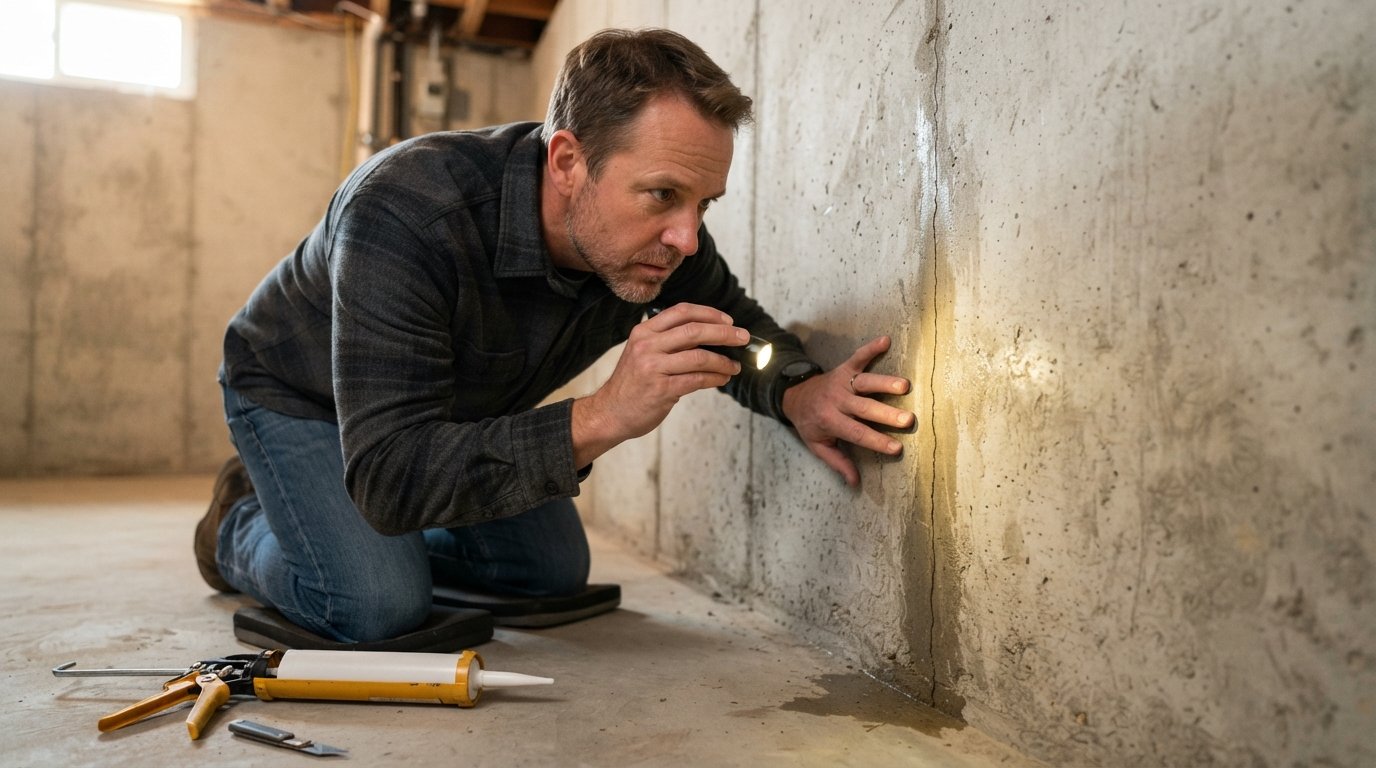
You walk past the basement wall and freeze. There it is: a crack that was not there last month. Is it a harmless shrinkage line or the first sign of a structural problem that could cost thousands? Your heart rate climbs as you imagine the worst. The good news is that not all foundation cracks are created equal. Some are cosmetic and easily sealed, while others signal serious soil movement or structural failure. Understanding foundation crack types and what they mean for repair is the first step toward making smart, cost-effective decisions. This guide breaks down every common crack pattern, explains what causes them, and shows you exactly how to evaluate and address each one before you call a contractor.
Hairline Shrinkage Cracks: The Mostly Harmless Majority
Hairline cracks are narrow (typically less than 1/16 inch wide), vertical or diagonal, and often appear on poured concrete walls or floors. They are usually the result of concrete curing and shrinking as it dries. As concrete loses moisture, it contracts slightly, and these small cracks relieve that tension. They are rarely a structural concern and often appear within the first year after construction.
While hairline cracks are generally benign, they can still allow moisture to seep in, leading to dampness or efflorescence (white powder deposits). Sealing them with a polyurethane or epoxy injection is a low-cost preventive measure. Expect to pay $250 to $800 for professional injection, or under $50 for a DIY hydraulic cement patch. If the crack is in a floor slab, it is almost always cosmetic and can be ignored unless water is present.
However, do not dismiss a hairline crack that is actively widening or accompanied by other symptoms. Monitor it with a simple crack gauge (available at hardware stores for under $20) and check it monthly. If it grows beyond 1/8 inch, it moves into a different category.
Vertical Cracks: When Shrinkage or Settlement Is the Culprit
Vertical cracks run straight up and down the foundation wall. They are often wider at the top or bottom, which indicates differential settlement (one part of the foundation settling more than another). Vertical cracks can also be caused by shrinkage, but if they are wider than 1/8 inch or show displacement (one side of the crack protruding past the other), they warrant attention.
Common causes include soil settling under the footing, poor drainage that softens the soil, or a foundation that was not properly compacted during construction. In some cases, vertical cracks are accompanied by sticking doors or windows above, which confirms that movement is affecting the structure. Repair options range from simple epoxy injection for non-structural cracks ($500 to $1,500) to underpinning with helical piers if settlement is ongoing ($2,000 to $8,000 per pier).
To determine whether a vertical crack is active, install a crack monitor (a small plastic gauge with a grid) across the crack and record the reading weekly for a month. If the movement exceeds 1/16 inch, call a structural engineer. For a detailed walkthrough of how to obtain and compare repair bids, see our guide on understanding foundation repair quotes.
Stair-Step Cracks: A Clear Sign of Soil Movement
Stair-step cracks follow the mortar joints in block or brick foundations, creating a zigzag pattern that looks like a staircase. They are almost always a sign of differential settlement or soil movement. When the soil beneath one corner of the foundation expands or contracts unevenly, the foundation shifts, and the rigid block wall cracks along its weakest points: the mortar joints.
These cracks are especially common in areas with expansive clay soils, which swell when wet and shrink when dry. They can also be triggered by poor drainage, such as gutters discharging water right next to the foundation, or by tree roots extracting moisture from the soil. Stair-step cracks wider than 1/4 inch or accompanied by wall bowing are serious and require professional evaluation.
Repair methods depend on the cause. If settlement is ongoing, underpinning with push piers or helical piers is often necessary to stabilize the foundation. For cracks that are not actively moving, crack injection and masonry patching may suffice. Costs for stair-step crack repair typically range from $1,000 to $4,000 for minor stabilization, but can exceed $10,000 if extensive underpinning is needed. Always address the underlying soil and drainage issues first, or the cracks will return.
Horizontal Cracks: The Most Serious Warning Sign
Horizontal cracks run parallel to the ground and are often accompanied by wall bowing or bulging. They are the most alarming type of foundation crack because they indicate that the wall is being pushed inward by hydrostatic pressure (water-saturated soil) or that the foundation is failing structurally. Horizontal cracks wider than 1/4 inch or any horizontal crack with inward displacement are red flags that demand immediate attention.
These cracks usually appear in block or poured concrete walls and are common in areas with poor drainage or high water tables. As water accumulates in the soil, it exerts immense pressure on the foundation wall. Over time, the wall cracks horizontally and may bow inward. If left unchecked, the wall can collapse, leading to catastrophic structural failure.
Repair for horizontal cracks is never a simple patch job. Options include carbon fiber reinforcement, wall anchors, or helical tiebacks, all of which are designed to stabilize the wall and prevent further movement. Costs range from $3,000 to $15,000 depending on the severity and the method used. If you see a horizontal crack, do not wait: contact a licensed structural engineer or foundation specialist immediately.
Diagonal Cracks: Settlement and Thermal Expansion
Diagonal cracks often appear at the corners of windows or doors and run at a 45-degree angle. They can be caused by differential settlement, thermal expansion and contraction, or poor construction. Diagonal cracks that are wider at one end than the other indicate movement, while uniform-width cracks may be shrinkage-related.
In many cases, diagonal cracks are accompanied by cracks in the drywall or brick veneer above. If the crack is in a brick wall and follows the mortar joints, it is essentially a stair-step crack. Repair approaches are similar to those for vertical and stair-step cracks: inject epoxy for non-structural cracks, or underpin if settlement is active. Costs range from $500 to $3,000 for injection, and $2,000 to $10,000 for underpinning.
How Soil, Drainage, and Trees Drive Cracking
Understanding the forces behind foundation cracks helps you address root causes, not just symptoms. Soil movement is the most common culprit. Expansive clay soils, common in many parts of the United States, swell when wet and shrink when dry, causing the foundation to heave and settle. Poor drainage exacerbates this: water pooling near the foundation saturates the soil, increasing pressure and softening the bearing capacity. Tree roots can also contribute by extracting moisture from the soil, causing it to shrink and the foundation to settle unevenly.
To mitigate these forces, ensure gutters and downspouts discharge water at least 6 feet away from the foundation. Grade the soil so it slopes away from the house at a rate of 1 inch per foot. Install a French drain or sump pump if needed. And keep trees at least 15 to 20 feet from the foundation, or install root barriers. These preventive measures can save you thousands in repair costs.
Diagnostic Steps: Crack Monitors, Levels, and Moisture Readings
Before you call a contractor, do some basic diagnostics to understand the severity of the problem. Here is a step-by-step approach:
- Install crack monitors. These inexpensive gauges (under $20) attach across the crack and show whether it is widening. Check weekly for a month.
- Use a level. Place a 4-foot level on the floor or wall to check for tilting or bowing. A gap under the level indicates movement.
- Measure moisture. A moisture meter (around $30) can detect elevated moisture levels in the foundation, indicating water intrusion.
- Document with photos. Take dated photos of the crack and any adjacent symptoms (sticking doors, uneven floors) to track changes.
- Check for efflorescence. White powdery deposits on the wall indicate water movement through the concrete.
These steps will help you communicate clearly with a professional and avoid unnecessary repairs. If you notice any of the red flags described below, skip the DIY diagnostics and call a structural engineer immediately.
Repair Options by Crack Type and Expected Cost Ranges
Repair methods vary by crack type, severity, and underlying cause. Here is a breakdown of common options and their typical costs:
- Epoxy or polyurethane injection: Best for hairline and non-structural vertical cracks. Cost: $250 to $1,500.
- Carbon fiber reinforcement: Used for bowing walls with horizontal cracks. Cost: $3,000 to $8,000.
- Wall anchors: Stabilize bowing walls by tying them to stable soil. Cost: $5,000 to $15,000.
- Underpinning (helical or push piers): For settlement-related cracks. Cost: $2,000 to $8,000 per pier, with multiple piers often needed.
- Mudjacking or polyjacking: Lifts settled concrete slabs. Cost: $500 to $3,000.
These are national average ranges; actual costs vary by region, accessibility, and the extent of damage. Always obtain at least three written estimates from licensed foundation contractors. For a directory of pre-vetted professionals and educational resources, visit Homes.Contractors.
Red Flags That Warrant Immediate Professional Evaluation
Some cracks are beyond DIY territory and require immediate professional attention. Watch for these warning signs:
- Horizontal cracks wider than 1/4 inch, especially with wall bowing.
- Cracks that are actively widening (monitor shows movement over 1/16 inch in a month).
- Stair-step cracks wider than 1/4 inch or accompanied by displacement.
- Doors and windows that suddenly stick or no longer latch.
- Uneven or sloping floors.
- Visible gaps between the foundation and the sill plate.
If you observe any of these, contact a licensed structural engineer or foundation repair specialist immediately. Delaying can lead to more extensive and costly repairs, or even structural failure.
Foundation cracks are not all equal. By understanding the different foundation crack types and what they mean for repair, you can distinguish between a minor cosmetic issue and a serious structural problem. Monitor, diagnose, and act promptly when red flags appear. And when you are ready to get quotes, gather multiple estimates and verify contractor credentials to ensure the job is done right. Your home's stability depends on it.