
Extreme Weather Prep Checklist for Homeowners by Region
Region-specific extreme weather prep checklist for homeowners by region. Call (833)-365-8755 to line up trusted local contractors before storm season.

By Danica Leslie
Learn more about Roof Inspection for guides, costs, and what to expect.
Compare Roof Inspection Pros Near You

Enter your ZIP code to compare top-rated local professionals and request free quotes.
When a severe storm warning flashes across your phone, the difference between a manageable inconvenience and a catastrophic loss often comes down to what you did weeks or months earlier. Homeowners in hurricane zones know the ritual of storm shutters, while families in wildfire country track red flag warnings with a different kind of dread. Yet the core principle is universal: extreme weather prep is not a single frantic shopping trip. It is a region-specific, seasonally timed plan that protects your property, your budget, and your family. This guide breaks down exactly what to do, region by region, so you can act before the first cloud forms.
Why Regional Customization Matters for Weather Prep
A generic checklist that tells everyone to buy sandbags and a snow shovel wastes money and creates false confidence. The threats you face depend on where you live. A homeowner in coastal Florida needs to prioritize wind-rated roofing and flood insurance, while a resident of the Colorado foothills should focus on defensible space and ember-resistant vents. The National Oceanic and Atmospheric Administration confirms that billion-dollar weather disasters now affect every region of the United States, from winter freezes in Texas to atmospheric rivers in California. Preparing for the wrong hazard leaves you exposed.
Regional prep also affects your wallet. Contractors in high-demand storm seasons raise prices and book out weeks in advance. By lining up trusted professionals and setting aside an emergency repair fund before the rush, you avoid premium pricing and desperate decisions. Your insurance carrier also rewards documented maintenance: a roof inspection report or cleared gutter photos can support a claim or even lower your premium. The goal is to match your checklist to your actual risk profile, then execute it on a schedule.
Cold Climate and Freeze Zone Checklist (Northeast, Midwest, Mountain States)
Freeze zones face a trifecta of threats: heavy snow load, ice dams, and burst pipes. The weight of snow can stress roof framing, while ice dams force meltwater under shingles and into ceilings. Meanwhile, a single prolonged power outage during a polar vortex can freeze pipes in hours. Preparation starts with the building envelope and moves inward. Before the first hard freeze, walk your property with a critical eye and address these priorities.
- Roof and attic: Inspect for missing shingles, cracked flashing, and inadequate ventilation. Clear gutters and downspouts completely; even a handful of leaves can create an ice dam. Add insulation and seal air leaks in the attic to keep warm air from melting snow on the roof.
- Pipes: Insulate exposed pipes in crawl spaces, garages, and exterior walls. Know the location of your main water shutoff and tag it clearly. If you leave for vacation, set the thermostat no lower than 55 degrees Fahrenheit.
- Heating system: Schedule a professional furnace tune-up in early fall. Replace filters monthly during heavy use. If you rely on a wood stove or space heater, maintain clearance zones and never run a generator indoors.
- Exterior: Trim tree branches that overhang the roof. Stock ice melt that is safe for pets and concrete. Verify that your snow blower starts and that you have a backup plan if the power fails.
After the storm, resist the urge to climb onto a snow-covered roof. Use binoculars from the ground to spot damage. If you suspect ice dams, call a roofing professional rather than hacking at the ice yourself, which can void warranties and cause leaks. For a deeper seasonal walkthrough, our winter home maintenance checklist covers the full cold-weather sequence.
Hurricane and Coastal Wind Zone Checklist (Gulf Coast, Atlantic Seaboard)
Wind and water are the twin engines of hurricane destruction. A Category 1 storm can tear off shingles, while a slow-moving tropical storm can dump a foot of rain and flood streets miles inland. Coastal homeowners must prepare for both, plus the extended power outages that follow. The time to install storm shutters is not the day before landfall, when hardware stores are sold out. Build your defenses now, then maintain them annually.
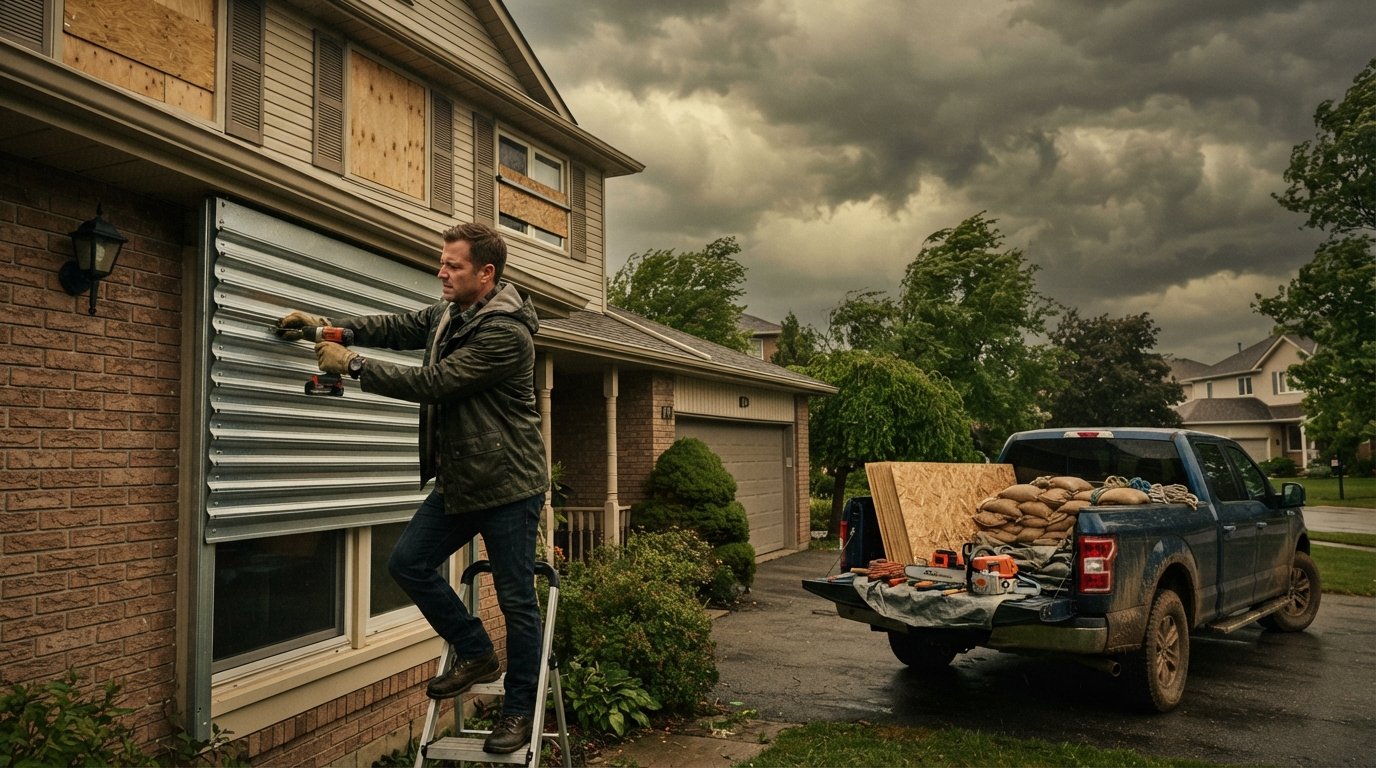
Start with the roof, which is your first line of defense. Verify that shingles are rated for high wind and that all fasteners are secure. Install a secondary water barrier if your roof deck is exposed during a replacement. For windows and doors, permanent accordion shutters or impact-rated glass eliminate the last-minute scramble. If you use plywood panels, pre-cut and label them, and store the correct anchors with each panel. Outside, anchor or store anything that can become a projectile: patio furniture, trash bins, grills, and decorative items. Trim trees well before the season and remove dead limbs.
Flooding causes more hurricane deaths and damage than wind, yet standard homeowners insurance rarely covers it. Review your policy now and consider separate flood coverage through the National Flood Insurance Program or a private carrier. Document your home with photos and a video walkthrough, and store copies in the cloud. Create a grab-and-go bag with medications, chargers, important documents, and cash. If you rely on a generator, have a licensed electrician install a transfer switch to prevent backfeeding. After the storm, do not return until authorities declare it safe, and photograph every bit of damage before making temporary repairs.
Wildfire Zone Checklist (West, Southwest, and Interface Areas)
Wildfire preparation is about creating defensible space and reducing ember ignition. Most homes lost to wildfire are ignited by embers that travel a mile or more ahead of the flame front. Those embers land in gutters, on decks, and in vents. Your checklist should focus on the first five feet around the house (the noncombustible zone), then extend outward. Clear pine needles, leaves, and debris from the roof and gutters regularly during fire season. Remove woodpiles and flammable plants from against the foundation. Replace combustible mulch with gravel or stone within five feet of the walls.
Harden the structure itself. Install ember-resistant vent screens with a mesh size of one-eighth inch or smaller. Enclose the undersides of decks and eaves to prevent ember accumulation. Use fire-resistant roofing and siding materials when replacing them. Keep a fire extinguisher in the kitchen and garage, and make sure every adult knows how to use it. Develop an evacuation plan with at least two routes out of your neighborhood, and practice it with your family. Keep vehicles fueled and parked facing outward during red flag warnings.
Document your home's interior and exterior with video before fire season. That record is invaluable for insurance claims. Maintain a defensible space of at least 100 feet if your property allows, and coordinate with neighbors to create community-wide fuel breaks. After a wildfire passes, beware of hot spots and structural instability; wait for officials to clear your area before returning.
Flood and Inland Waterway Checklist (River Valleys, Flash Flood Corridors)
Flood risk is not limited to the coast. Inland flooding from heavy rainfall, snowmelt, or dam release can inundate basements and first floors with little warning. Homeowners in river valleys and low-lying areas should treat flood prep as a year-round habit. Start by understanding your flood zone designation through FEMA maps, and note the elevation of your lowest floor relative to the base flood elevation. If you are in a high-risk zone, flood insurance is essential, and it typically has a 30-day waiting period, so do not wait for a storm forecast.
Protect your home's drainage. Clean gutters and downspouts, and extend downspouts at least six feet away from the foundation. Grade soil so water flows away from the house. Install a sump pump with a battery backup in the basement, and test it before the rainy season. Raise electrical panels, water heaters, and HVAC equipment above expected flood levels if you are remodeling. Keep sandbags, plastic sheeting, and a portable pump on hand. Store important documents and valuables on upper floors or in waterproof containers.
During a flood watch, move furniture and electronics upstairs, and turn off electricity at the breaker if water is rising. Never drive through flooded roads; six inches of moving water can knock you down, and a foot can float a car. After flooding, document damage with photos before cleanup, and contact your insurance agent immediately. Discard anything that absorbed floodwater, as mold can develop within 24 to 48 hours.
Roof, Gutter, and Drainage Priorities Before Storm Season
No matter your region, the roof and its drainage system are your home's primary shield. A missing shingle or clogged downspout can turn a moderate rain into a ceiling leak. Schedule a professional roof inspection annually, ideally in spring or early fall. The inspector should check flashing around chimneys and skylights, sealant condition, and the attic for signs of water intrusion. Fix small issues immediately; a hundred-dollar repair now prevents a thousand-dollar interior repair later. Clean gutters at least twice a year, and more often if you have overhanging trees.
Drainage extends beyond the gutter. Ensure that the ground slopes away from the foundation on all sides. If you have a crawl space, verify that vents are clear and that the vapor barrier is intact. Consider installing a French drain or a rain garden if you notice pooling water after storms. For homeowners planning larger projects such as roof replacement or drainage improvements, connecting with vetted local professionals early is critical. Our platform can help you compare quotes from licensed contractors in your area, and you can also find reliable repair specialists through Repairmen's nationwide directory for urgent fixes.
Emergency Repair Budget and Trusted Contractor Contacts
Storm season is the wrong time to discover you have no cash reserves or no contractor phone numbers. Financial advisors often recommend an emergency fund of three to six months of expenses, but for home repairs specifically, aim for at least 1 to 2 percent of your home's value set aside annually. A dedicated high-yield savings account labeled "home emergency" makes it easier to resist dipping into it. If a major repair exceeds your savings, research financing options before a crisis, not during one.
Build a contact list now. Identify at least two licensed contractors in each critical trade: roofing, plumbing, electrical, HVAC, and general remodeling. Ask them about emergency availability and response times. Save their numbers in your phone and on paper. When a storm hits, these relationships move you to the front of the line. Be wary of unsolicited door-to-door contractors after a disaster; verify licenses through your state's licensing board and never pay in full upfront. For non-emergency repairs, obtaining multiple quotes remains the best way to ensure fair pricing.
Your emergency kit should include basic tools, tarps, plywood, a fire extinguisher, and a first-aid kit. Keep a printed list of utility company numbers and your insurance agent's direct line. Review your policy annually with your agent to confirm that coverage limits match current rebuilding costs. Document pre-storm conditions with dated photos and video, and store them in the cloud. After a storm, assess damage safely, photograph everything, and file your claim promptly. Keep receipts for temporary repairs and any hotel stays, as many policies reimburse these costs.
Extreme weather is unpredictable, but your response does not have to be. By tailoring your checklist to your region and acting before the season turns, you protect your home, your finances, and your peace of mind.