
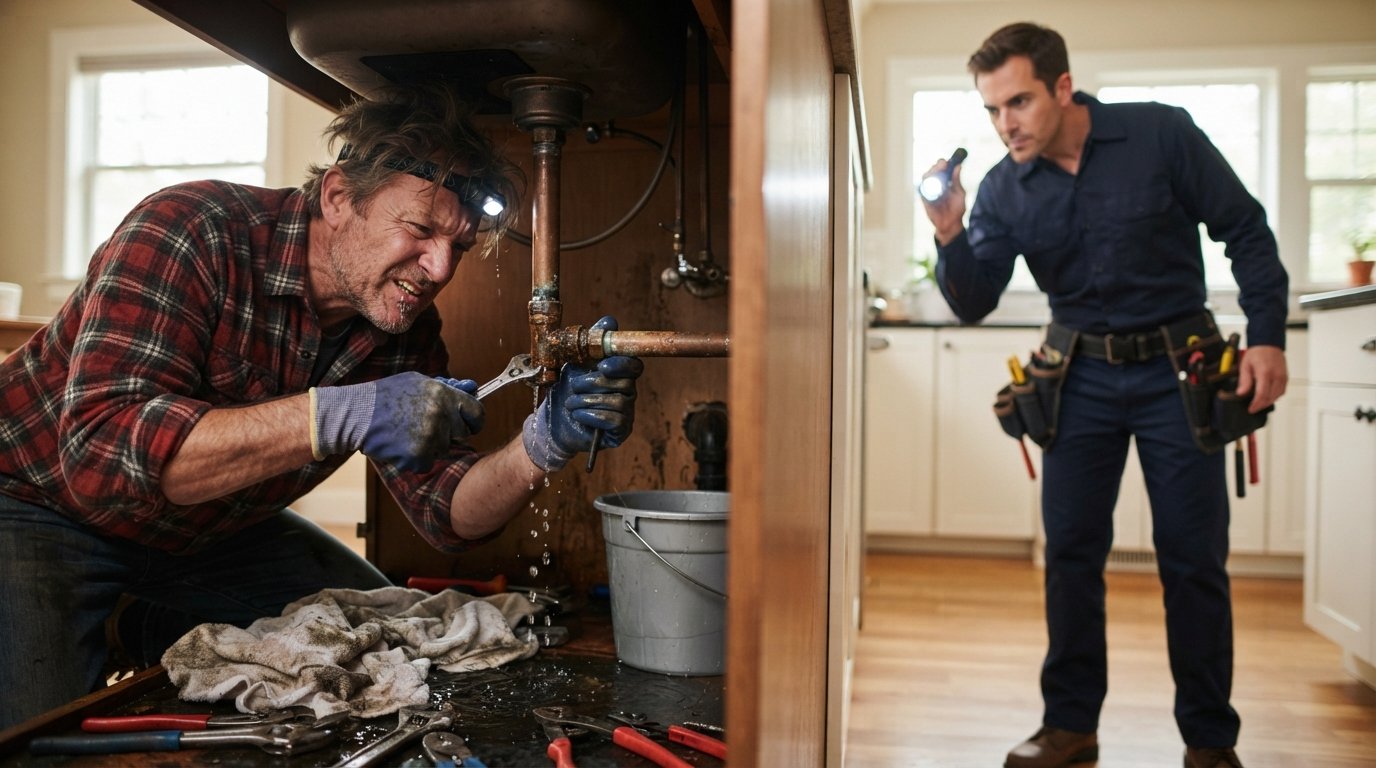
DIY vs Professional Home Repair: When to Hire a Contractor
Learn when to tackle home repairs yourself and when to hire a professional. Save money on small fixes and know the warning signs for big projects.

By Margaret Sheridan
Learn more about General Contracting for guides, costs, and what to expect.
Compare General Contracting Pros Near You

Enter your ZIP code to compare top-rated local professionals and request free quotes.
You have a leaky faucet, a cracked tile, or a roof that looks questionable after the last storm. The immediate thought is often, "I can fix this myself." It is a natural instinct, fueled by online tutorials and the desire to save money. However, the reality of home repair is far more complex. The decision between tackling a project yourself and hiring a professional is not just about skill; it is about time, cost, safety, and the long-term value of your home. This guide breaks down the critical factors to help you decide when to roll up your sleeves and when to call in the experts, ensuring you make the smartest choice for your specific situation.
Understanding the True Cost of DIY vs Professional Home Repair
The initial appeal of DIY is almost always financial. You look at the labor cost in a contractor's quote and think you can do it for a fraction of the price. While that is sometimes true, it is rarely the whole story. The true cost of a DIY project includes your time, the tools you may need to buy or rent, the materials (which you might buy at a higher retail price than a contractor's trade discount), and the potential cost of mistakes. A simple plumbing mistake can cause water damage that costs thousands to repair, far exceeding the cost of having a professional do it right the first time.
On the other hand, professional repairs come with a higher upfront price, but they often include a warranty on both materials and labor. This means if something fails within the warranty period, the contractor returns to fix it at no additional cost. This peace of mind is a significant value. When weighing DIY vs professional home repair, consider the total cost of ownership of the project. If a DIY mistake leads to a bigger problem, your savings can vanish quickly. For a detailed breakdown of what to expect in a professional quote, you might find our guide on comparing contractor quotes helpful.
To help you evaluate, consider this simple breakdown of where costs typically go:
- Materials: Contractors often get wholesale pricing, while you will pay retail.
- Tools: Buying a specialized tool for a one-time job can be more expensive than paying for labor.
- Time: Your time has value. A project that takes a professional two days might take you two weekends.
- Mistakes: The cost to fix an error can easily double the project's original budget.
This is not to say DIY never saves money. For small, cosmetic projects like painting a room or replacing a showerhead, doing it yourself is a smart way to save. The key is to accurately assess all potential costs, not just the obvious ones, before you decide.
Assessing Your Skill Level and the Project's Complexity
It is easy to overestimate our abilities, especially with the abundance of online tutorials. However, there is a massive difference between watching a video and having the hands-on experience to handle unexpected issues. A professional contractor has seen hundreds of variations of the same problem. They know how to handle a wall that is not square, a pipe that is corroded behind the drywall, or a wire that is not up to code. These are the situations where a DIY project can quickly go wrong.
For a true comparison of DIY vs professional home repair, be brutally honest about your own skill level. Are you comfortable with basic carpentry, electrical, and plumbing? Do you understand building codes and permit requirements? If you are not sure, it is a strong sign that you should hire a professional. Projects that involve structural changes, electrical wiring, or gas lines are almost always best left to the pros. Not only are they dangerous, but they are also heavily regulated. A mistake in these areas can pose a safety risk to your family and could void your home insurance.
Consider the complexity of the task. A simple, cosmetic update like installing a new light fixture is a common DIY win. However, adding a new electrical circuit or moving a load-bearing wall is a job for a licensed electrician or structural engineer. Similar logic applies to plumbing. Replacing a faucet is manageable, but repiping a section of your home is not. When in doubt, err on the side of caution. The cost of a professional is a small price to pay for safety and compliance.
When DIY Makes Sense: The Small Wins
There are many home maintenance tasks that are perfect for the average homeowner. These projects are typically low-risk, require minimal tools, and have a high tolerance for imperfection. They are the gateway to becoming a more confident and capable homeowner. Here are some examples where DIY is not only acceptable but recommended:
- Painting: Interior and exterior painting is a classic DIY project. It is labor-intensive but straightforward.
- Caulking and sealing: Refreshing the caulk around your bathtub, sinks, and windows is a cheap and easy way to prevent water damage.
- Replacing hardware: Swapping out doorknobs, cabinet handles, and drawer pulls is an instant, low-cost upgrade.
- Basic landscaping: Planting flowers, mulching, and trimming bushes are all great DIY tasks.
- Unclogging drains: A simple plunger or a drain snake can solve most minor clogs without calling a plumber.
These projects build your skills and save you money without significant risk. They are the perfect way to start learning about your home's inner workings. However, the moment a task becomes more involved, such as needing to cut into drywall or work with a saw, it is time to step back and ask if you are truly prepared. The line between a simple fix and a complex repair is often the line between DIY and professional help.
When to Hire a Contractor: The Red Flags
Certain projects come with inherent risks that make them unsuitable for even the most enthusiastic DIYer. Recognizing these red flags is crucial to protecting your home and your wallet. If a project involves any of the following, it is a clear signal to hire a professional contractor. The phrase "DIY vs professional home repair when to hire contractor" is most relevant in these situations.
- Structural work: Any project that involves load-bearing walls, joists, or the foundation.
- Major electrical work: Upgrading your panel, adding circuits, or wiring a new room.
- Plumbing that involves the main line or gas: Anything beyond a simple fixture replacement.
- Roofing and siding: These jobs are dangerous, require specialized skills, and protect your home from the elements.
- Large-scale remodeling: Kitchen and bathroom remodels involve multiple trades, permits, and complex coordination.
These projects are not just about skill; they are about liability and safety. A professional contractor is licensed, insured, and bonded. This means if an accident happens on your property, you are not held liable. They also pull the necessary permits, ensuring the work is inspected and up to code. This is a layer of protection that is impossible to replicate on your own. In these cases, the upfront cost of a professional is an investment in your safety and the structural integrity of your home.
The Hidden Benefits of Hiring a Professional
Beyond the obvious reasons of safety and expertise, there are several hidden benefits to hiring a professional that are often overlooked. One of the most significant is the network of sub-contractors and suppliers that a general contractor brings to the table. They have relationships with electricians, plumbers, and other specialists, and they can schedule them efficiently. This means your project is completed faster and with better coordination than you could achieve on your own.
Another hidden benefit is the warranty. A reputable contractor stands behind their work. If a problem arises after the job is done, they will come back and fix it. This is a promise you do not get with a DIY project. When you do it yourself and make a mistake, you own that problem, and it might be a costly one. This is why the phrase "DIY vs professional home repair when to hire contractor" is so important to consider. The value of a warranty and the assurance of quality workmanship can far outweigh the initial cost difference.
Furthermore, professionals bring a level of precision and finish that is difficult for a non-professional to achieve. They have the right tools for every job, which not only makes the work faster but also ensures a cleaner, more precise result. They also know the best materials to use for your specific situation, saving you from costly mistakes in material selection. For example, a professional painter knows which primer to use on a stained ceiling, while a homeowner might just apply paint and watch the stain bleed through.
How to Make the Final Decision: A Practical Framework
So, how do you decide between DIY vs professional home repair? The answer lies in a simple, practical framework that considers your skills, the project's requirements, and your budget. This framework can be applied to any project, from fixing a squeaky door to a full kitchen remodel. The goal is to make a decision based on logic, not just emotion or the desire to save money.
First, define the scope of work. Write down exactly what needs to be done. Second, assess your skills against that scope. Be honest about what you know how to do. Third, estimate the total cost of doing it yourself, including tools, materials, and your time. Fourth, get at least three quotes from licensed professionals. This will give you a baseline for comparison. Finally, weigh the risks. What are the potential consequences of a mistake? Is there a risk of injury or property damage?
If the project is small, the risk is low, and you have the skills, DIY is a great option. If the project is large, the risk is high, or you lack the necessary expertise, hire a professional. There is no shame in hiring a contractor; it is often the smartest financial and practical decision. In fact, a good contractor can save you money in the long run by preventing future problems and ensuring the job is done correctly. When you are ready to get professional quotes, using a platform like FreeQuotes.Contractors can connect you with pre-screened professionals in your area, simplifying the process. For more detailed guidance on getting the best estimates, check out our article on comparing contractor quotes for home repairs.
Ultimately, the decision is yours. By using this framework, you can approach it with confidence, knowing you have considered all the important factors. You will either save money with a successful DIY project or spend money wisely on a professional who delivers peace of mind and quality workmanship.
Making the Smart Investment in Your Home
Your home is likely your most valuable asset. Every repair or renovation you do should add value, not just in monetary terms, but in terms of safety, comfort, and enjoyment. The decision between DIY and professional help is not about being handy or not; it is about being a responsible homeowner. It is about understanding your limits and knowing when to invest in expertise. A failed DIY project can be more expensive and more stressful than a professionally done job from the start.
So, the next time you face a home repair, take a deep breath. Use the framework to make a logical decision. For the small wins, enjoy the satisfaction of doing it yourself. For the big, complex, or risky projects, embrace the value of hiring a professional. The peace of mind, the warranty, and the quality of work are worth the investment. Your home will thank you, and so will your future self.