
Basement ADU Conversion Cost: A 2026 Homeowner's Guide
How much does it cost to convert a basement into an ADU? Budgets range from $40k to $120k. Call (833)-365-8755 for expert guidance on your project.

By Alexia Mabel
Learn more about Basement Finishing or Remodeling for guides, costs, and what to expect.
Compare Basement Finishing or Remodeling Pros Near You

Enter your ZIP code to compare top-rated local professionals and request free quotes.
Converting a basement into an accessory dwelling unit (ADU) is one of the most cost-effective ways to add rental income and property value, but the price tag can vary dramatically depending on your home's existing conditions and local regulations. Homeowners often ask, "how much does it cost to convert a basement into an ADU?" The short answer is that most projects fall between $40,000 and $120,000, with national averages around $75,000 for a basic conversion. However, that range can swing higher if you need extensive structural work, new egress windows, or a full kitchen and bathroom. Understanding the line items and hidden requirements is essential to budgeting accurately and avoiding surprises.
Key Cost Drivers: Egress, Ceiling Height, and Separate Entry
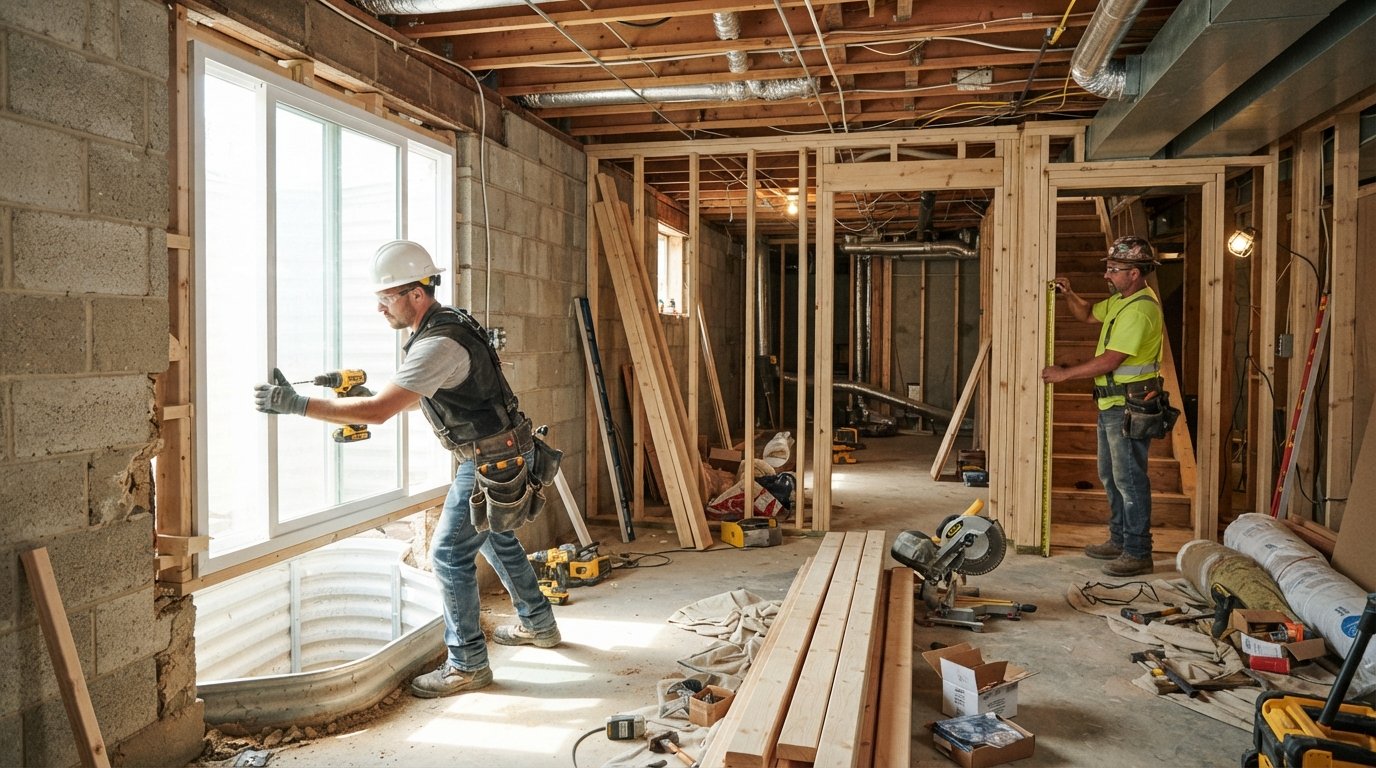
Three physical constraints often determine whether a basement ADU is feasible and how much it will cost. First, egress windows are non-negotiable for any habitable sleeping room. Building codes require at least one egress window per bedroom, and installing one in a below-grade wall typically costs $3,000 to $8,000 depending on foundation type and landscaping. Second, ceiling height must meet local minimums, usually 7 feet. If your basement has ductwork or beams that reduce headroom, you may need to reroute mechanicals or even raise the ceiling, adding $5,000 to $15,000. Third, a separate entry is often required for ADUs to be legally rentable. Creating a new exterior door and stairwell can cost $10,000 to $25,000, especially if you need to cut through the foundation and add a landing.
These three items alone can account for 30 to 50 percent of your total budget, so they should be assessed before you commit to a design. A professional contractor can help you evaluate these costs during a site visit. If you are also considering converting a garage, our guide on cost to convert a garage into living space provides a useful comparison of structural and permitting differences.
Line-Item Cost Breakdown for a Basement ADU
To understand how much does it cost to convert a basement into an ADU, it helps to break the project into major components. The following figures are national averages for a mid-range finish and a 600-square-foot unit. Your actual costs will vary by region and material choices.
- Framing and insulation: $8,000 to $15,000. This includes framing interior walls, adding a ceiling, and insulating exterior walls to meet energy codes.
- Plumbing rough-in and fixtures: $10,000 to $20,000. You will need a bathroom (toilet, sink, shower) and a kitchenette (sink, refrigerator, microwave). If the basement slab must be broken for drains, add $3,000 to $6,000.
- Electrical and lighting: $6,000 to $12,000. This covers new circuits, outlets, switches, and light fixtures, plus a dedicated panel if needed.
- HVAC: $4,000 to $8,000. You may need a separate zone, a ductless mini-split, or a dedicated exhaust system.
- Fire separation: $2,000 to $5,000. Building codes often require a fire-rated wall or ceiling assembly between the ADU and the main house, especially if the unit is rented.
- Kitchenette: $5,000 to $12,000. This includes cabinets, countertops, a small refrigerator, and a microwave or cooktop.
- Bathroom finishes: $7,000 to $15,000. This covers tile, vanity, toilet, shower, and fixtures.
- Flooring and paint: $3,000 to $7,000. Luxury vinyl plank or carpet, plus paint and trim.
- Egress windows and separate entry: $13,000 to $33,000 (as noted above).
- Permits and inspections: $1,500 to $5,000, depending on jurisdiction.
When you add these up, a 600-square-foot basement ADU with a separate entry and one bedroom typically lands between $60,000 and $120,000. A simpler studio layout without a full kitchen might cost $40,000 to $70,000. Keep in mind that these estimates do not include landscaping, exterior stairs, or designer fees, which can add another 10 to 20 percent.
Permit and Inspection Costs by Jurisdiction
Permit fees for an ADU conversion are typically based on the project's valuation and can vary widely. In many cities, you will need a building permit, an electrical permit, a plumbing permit, and a mechanical permit. Some jurisdictions also require a separate zoning permit or a conditional use permit for ADUs, which can add $500 to $2,000. For example, in Seattle, an ADU permit can cost $2,000 to $4,000, while in Los Angeles, fees might run $1,500 to $3,500. Rural areas often have lower fees but may require additional septic or well approvals. Always check with your local building department before finalizing your budget, and factor in the cost of inspections, which are usually included in the permit fee but may require multiple visits.
In addition to fees, you should budget for the time value of permits. The approval process can take two to six months, and delays can increase carrying costs if you are financing the project. Working with a contractor who is familiar with your local jurisdiction can help streamline the process. For a broader look at how conversion costs compare across different project types, our article on garage conversions offers a helpful benchmark.
Rental Income Payback vs. Full Addition or Garage Conversion
One of the biggest advantages of a basement ADU is the potential for rental income. Depending on your market, a basement ADU can rent for $1,000 to $2,500 per month. If your conversion costs $75,000 and you rent it for $1,500 per month, your simple payback period is about 50 months (just over four years), not accounting for vacancy, maintenance, or taxes. Compare that to a full home addition, which can cost $150,000 to $300,000 for a similar square footage and may not generate rental income unless it includes a separate unit. A garage conversion is often cheaper than a basement conversion because it requires less excavation and foundation work, but it may not provide the same square footage or privacy. For a detailed cost comparison, see our guide on garage conversion costs.
It is also important to consider the impact on your property value. Basement ADUs can increase resale value, but the ROI varies by market. In high-demand urban areas, you might recoup 60 to 80 percent of the cost through increased property value, while in rural areas the return may be lower. Rental income, however, provides ongoing cash flow that can offset the initial investment. Be sure to check local zoning rules on short-term rentals if you plan to list on platforms like Airbnb, as some jurisdictions restrict them.
When to Bring in a Structural Engineer vs. a Design-Build Firm
If your basement has existing structural issues, such as cracks, bowing walls, or insufficient support, you should hire a structural engineer before proceeding with any design. A structural engineer will assess the foundation and framing and provide stamped drawings for permit approval. This typically costs $500 to $1,500 for a residential evaluation. A design-build firm, on the other hand, can handle both design and construction, which simplifies the process but often comes at a premium of 10 to 20 percent over hiring separate professionals. For straightforward conversions where the basement is already finished or structurally sound, a design-build firm may be the most efficient choice. However, if you need major structural modifications, such as adding a separate entry or reinforcing the foundation, an independent engineer can provide unbiased recommendations and potentially save you money.
Regardless of which route you choose, get at least three bids and check references. You can find vetted professionals through platforms like Repairmen, which connects homeowners with licensed local contractors for remodeling and repairs. Always verify licenses, insurance, and permits before work begins.
Budgeting Tips and Financing Options
To keep your basement ADU project on budget, start with a detailed scope of work and a contingency fund of 10 to 15 percent. Unexpected costs often arise when opening walls or digging into the slab, so having a buffer is essential. Consider phasing the project if cash flow is tight: for example, complete the structural work and rough-ins first, then finish the interior later. Financing options include home equity loans, cash-out refinancing, and renovation loans such as FHA 203(k) or Fannie Mae HomeStyle. Each has different terms and eligibility requirements, so compare offers from multiple lenders. Also, check if your local municipality offers ADU incentives or reduced permit fees, as some cities do to encourage housing density.
Finally, remember that the cost to convert a basement into an ADU is an investment that can pay off through rental income and property appreciation. By understanding the key cost drivers and planning carefully, you can create a comfortable, legal, and profitable living space that adds value to your home.