
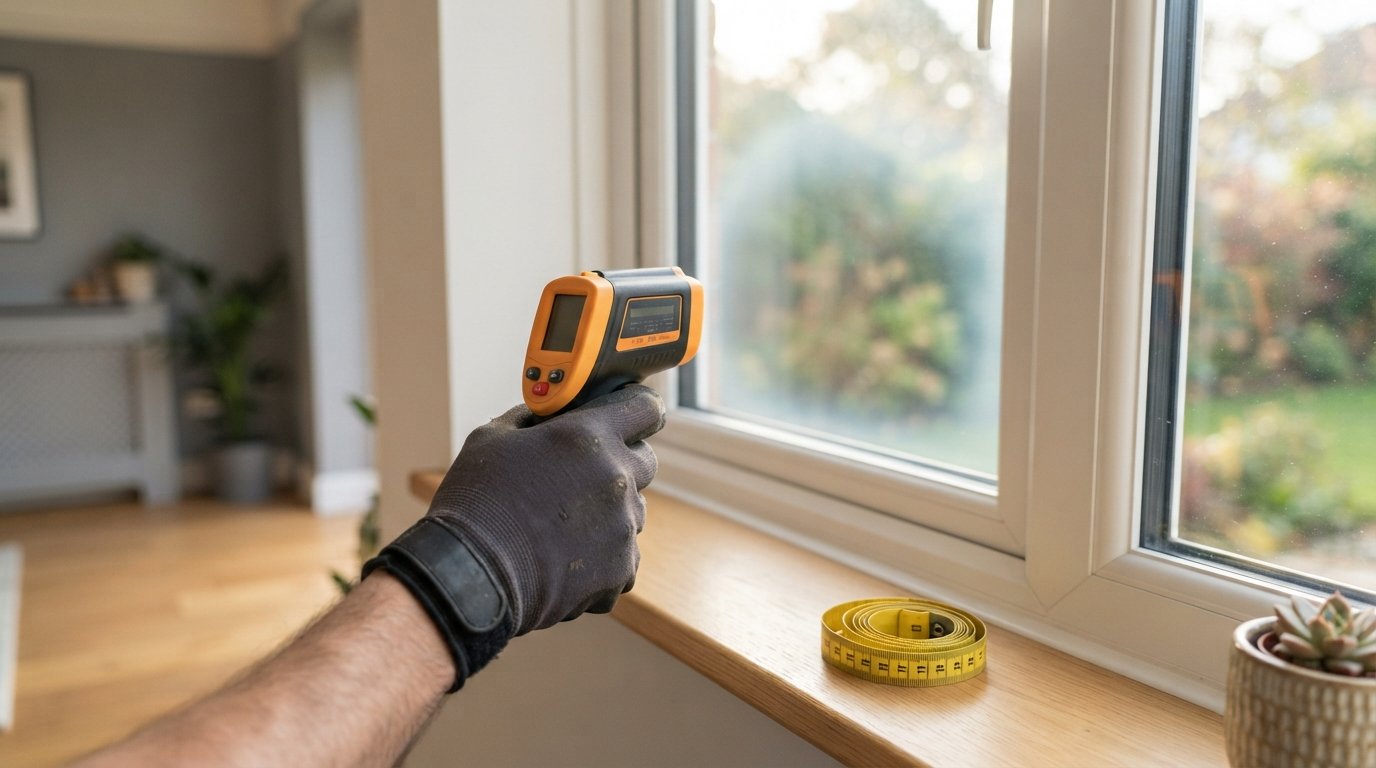
What Is U-Factor in Windows? A Homeowner Guide
Learn what U-factor in windows means, why it matters for energy efficiency, and how to choose the best rating for your climate.

By Joshua Benson
Learn more about Window Installation for guides, costs, and what to expect.
Compare Window Installation Pros Near You

Enter your ZIP code to compare top-rated local professionals and request free quotes.
When you start shopping for new windows, you will see a confusing set of numbers on the labels. Terms like U-factor, SHGC, and VT get thrown around, and it is easy to feel overwhelmed. But understanding these numbers is the key to choosing windows that save energy, lower your utility bills, and keep your home comfortable all year long. This guide focuses on the most important metric: the U-factor. We will explain what it measures, how to read it, what a good value looks like, and why it matters for your specific climate.
Defining U-Factor: The Basics of Heat Transfer
U-factor, also called U-value, is a measure of how well a window prevents heat from passing through it. In technical terms, it is the rate of heat transfer through a material. The lower the U-factor, the better the window is at insulating. A low U-factor means less heat escapes in the winter and less heat enters in the summer, which helps maintain a stable indoor temperature.
U-factor is the inverse of R-value, which is the measure commonly used for wall and attic insulation. While R-value measures resistance to heat flow, U-factor measures the actual rate of flow. A window with a U-factor of 0.30 has better insulating properties than one with a U-factor of 0.50. The number represents the amount of heat (in BTUs) that passes through one square foot of window per hour for every degree of temperature difference between the inside and outside.
This metric is crucial because windows are often the weakest link in a home's thermal envelope. Even a well-insulated wall can lose significant energy through poorly performing windows. By choosing windows with a low U-factor, you reduce that heat loss, leading to lower energy bills and improved comfort.
Understanding the U-Factor Scale: What Is a Good Number?
U-factor values for windows typically range from 0.20 to 1.20. The lower the number, the better the insulation. For most residential applications, the U-factor will fall between 0.20 and 0.60. A window with a U-factor of 0.20 is extremely energy efficient, while one with a U-factor of 1.20 is a poor insulator, often seen in old, single-pane windows.
To put this into perspective, here is a rough breakdown:
- Single-pane windows: U-factor around 1.0 to 1.2. These are the least efficient and common in older homes.
- Double-pane windows with clear glass: U-factor around 0.50 to 0.60. These are a standard upgrade but still have room for improvement.
- Double-pane with Low-E glass and argon gas: U-factor around 0.25 to 0.35. This is the modern standard for energy-efficient homes.
- Triple-pane with Low-E glass and argon or krypton gas: U-factor below 0.22. These are premium windows with exceptional insulation.
It is important to note that U-factor is tested under standardized conditions, so you can compare values across different manufacturers. Look for the National Fenestration Rating Council (NFRC) label, which provides certified U-factor, Solar Heat Gain Coefficient (SHGC), and visible transmittance (VT) ratings.
Why U-Factor Matters for Your Comfort and Energy Bills
The U-factor directly affects your home's energy efficiency. During winter, a high U-factor allows heat to escape, forcing your furnace to work harder. During summer, it allows heat to penetrate, making your air conditioner run longer. This translates into higher energy consumption and increased utility bills.
Beyond energy costs, U-factor also impacts your comfort. Windows with poor insulation can create cold drafts near the glass, making rooms feel chilly even when the thermostat is set high. They can also cause condensation and frost buildup in winter, which can lead to moisture damage and mold. By installing low U-factor windows, you reduce drafts and maintain a more consistent indoor temperature, enhancing overall comfort.
For those living in extreme climates, the U-factor is especially critical. In northern states, a low U-factor is essential to prevent heat loss. In southern states, it helps keep the heat out, reducing cooling loads. Choosing the right U-factor for your climate is the first step toward a more efficient home.
U-Factor vs. SHGC: Two Sides of the Energy Coin
While U-factor measures heat loss, the Solar Heat Gain Coefficient (SHGC) measures how much solar radiation passes through the window. SHGC is a number between 0 and 1; the lower the SHGC, the less solar heat is transmitted. In hot climates, you want a low SHGC to reduce cooling costs. In cold climates, a higher SHGC can be beneficial, as it allows free solar heat to warm your home during winter.
Balancing U-factor and SHGC is key to optimizing window performance. For example, a passive solar home in a cold climate might want a low U-factor and a moderate to high SHGC to capture free heat. Conversely, a home in Phoenix might want a low U-factor to keep heat out and a very low SHGC to block intense summer sun. The NFRC label provides both values, allowing you to make an informed decision based on your climate and heating/cooling needs.
In our guide on Replacement Windows Oklahoma City: Enhance Comfort & Value, we delve deeper into how these ratings apply to a specific region, but the principles are the same nationwide.
Factors That Determine a Window's U-Factor
Several components of a window assembly contribute to its overall U-factor. Understanding these can help you compare products and make a better choice.
Number of Glass Panes
Double-pane and triple-pane windows have insulating air or gas spaces between the panes, which significantly reduce heat transfer. The more panes, the lower the U-factor. Single-pane windows are the worst performers.
Low-E Coatings
Low-emissivity (Low-E) coatings are microscopic, nearly invisible layers of metal oxide applied to the glass. They reflect heat back toward its source, keeping heat inside during winter and outside during summer. Low-E coatings are a major factor in achieving a low U-factor.
Gas Fills
The space between panes is often filled with an inert gas like argon or krypton, which is denser than air and provides better insulation. These gases are non-toxic and clear, and they significantly improve the window's thermal performance.
Frame Materials
The frame material also affects the U-factor. Vinyl, fiberglass, and wood frames offer better insulation than aluminum, which conducts heat readily. Look for frames with thermal breaks or insulated cavities for improved performance.
Spacer Systems
The spacers that separate the glass panes also play a role. Warm-edge spacers reduce heat transfer at the edge of the window, improving the overall U-factor and reducing condensation.
How to Choose the Right U-Factor for Your Climate
Your climate is the biggest factor in determining the ideal U-factor for your home. The U.S. Department of Energy has established climate zone recommendations for window performance. For cold climates, a U-factor of 0.30 or lower is recommended. In mixed climates, a U-factor of 0.32 or lower is typical. For hot climates, a U-factor of 0.60 or lower is often sufficient, but a lower value is still better.
Here is a simple breakdown by climate zone:
- Northern (Cold) Climates: Look for a U-factor of 0.27 or lower to minimize heat loss.
- Central (Mixed) Climates: Aim for a U-factor of 0.30 or lower to balance heating and cooling needs.
- Southern (Hot) Climates: A U-factor of 0.40 or lower is acceptable, but prioritize a low SHGC to block solar heat.
If you live in an area with extreme temperatures, investing in triple-pane windows with low U-factors can be worthwhile. For milder climates, a high-quality double-pane window with a low U-factor may be sufficient. Always check the NFRC label to verify the actual performance numbers.
The Cost-Energy Tradeoff: Are Low U-Factor Windows Worth It?
Windows with very low U-factors are often more expensive. Triple-pane windows, for example, cost significantly more than double-pane options. However, they also provide greater energy savings, which can offset the upfront cost over time. To determine if the upgrade is worth it, calculate the payback period based on your energy bills and the local climate.
Consider the following factors when making your decision:
- Energy savings: Lower U-factor windows reduce heating and cooling costs, potentially saving hundreds of dollars per year.
- Comfort: Improved insulation reduces drafts and temperature fluctuations, enhancing comfort.
- Resale value: Energy-efficient windows are a desirable feature for home buyers, adding to your property's value.
- Environmental impact: Lower energy consumption reduces your carbon footprint.
For most homeowners, a double-pane window with a low-E coating and argon gas fill offers the best balance of cost and performance. This combination typically achieves a U-factor of 0.25 to 0.30, which is efficient enough for most climates without the premium price of triple-pane.
How to Read the NFRC Label
The National Fenestration Rating Council (NFRC) label is the industry standard for window performance. It provides three key ratings:
- U-Factor: The rate of heat loss (lower is better).
- Solar Heat Gain Coefficient (SHGC): The amount of solar heat transmitted (lower is better in hot climates, higher can be beneficial in cold climates).
- Visible Transmittance (VT): The amount of visible light transmitted (higher is better for daylighting).
When comparing windows, look for the NFRC label on the product or in the manufacturer's literature. This label ensures that the performance data is certified and comparable across brands. It is your most reliable tool for selecting windows that meet your energy efficiency goals.
Beyond U-Factor: Other Performance Metrics
While U-factor is critical, it is not the only metric to consider. Air leakage (AL) measures the amount of air that passes through the window assembly. Look for an AL rating of 0.3 or lower. Condensation Resistance (CR) measures the window's ability to resist condensation, which is important in humid climates. And the Visible Transmittance (VT) rating tells you how much natural light the window lets in.
Consider all these factors together to choose a window that performs well in your specific conditions. For example, a window with an excellent U-factor but poor air leakage may not be as efficient as a well-sealed window with a slightly higher U-factor. Always review the full NFRC label to make a comprehensive comparison.
Installation Matters: How Proper Installation Affects Performance
Even the best window will perform poorly if it is not installed correctly. Gaps around the frame can allow air leakage, undermining the window's thermal performance. Proper installation includes using insulation around the frame, sealing the exterior with flashing, and ensuring a tight fit. Always hire a qualified contractor for window installation to maximize your investment.
Before you finalize your window choice, use a platform like FreeQuotes.Contractors to get multiple quotes from local contractors. Comparing bids helps you understand the true cost of installation and ensures you are getting a fair price. This is a vital step in any home improvement project.
Final Thoughts on Choosing Windows with the Right U-Factor
Selecting the right windows for your home is a significant decision. The U-factor is a powerful indicator of a window's insulating ability, and it directly impacts your comfort and energy bills. By understanding the U-factor and considering your climate, you can choose windows that provide year-round efficiency.
Remember that the lowest U-factor is not always the best choice for every home. Balance performance with cost, and consider the other ratings on the NFRC label. With the right information, you can make a confident choice that enhances your home's value and efficiency for years to come.