
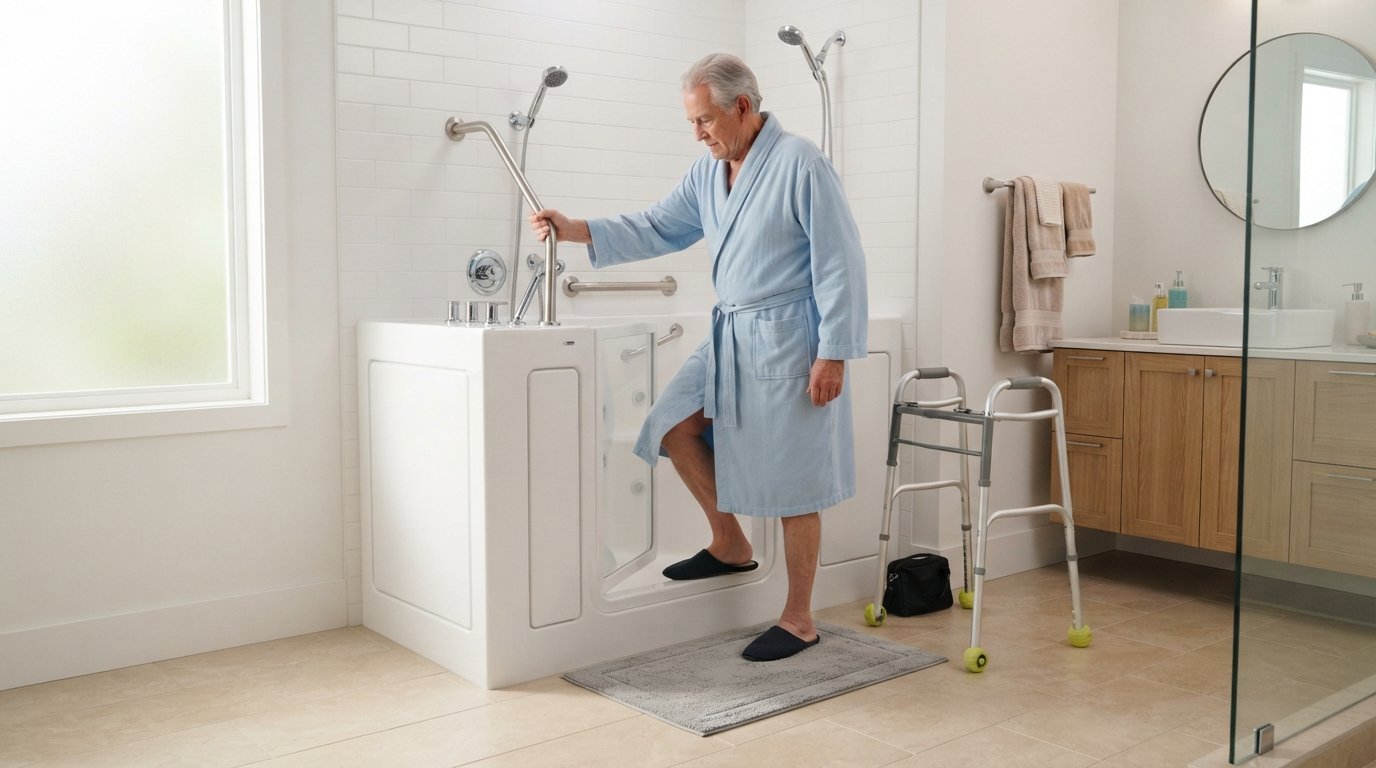
Walk In Tub Installation Cost and Accessibility Requirements
Walk in tub installation cost and accessibility requirements explained, from average prices to clear floor space, grab bars, and smart budgeting tips.

By Eric Andrew
Learn more about Shower and Bathtub Installation or Replacement for guides, costs, and what to expect.
Compare Shower and Bathtub Installation or Replacement Pros Near You

Enter your ZIP code to compare top-rated local professionals and request free quotes.
A walk in tub can transform a dangerous daily routine into a safe, independent experience for seniors, veterans, and anyone managing mobility challenges. But before you commit, you need two numbers: what the project actually costs and what your bathroom must satisfy to make it work. This guide breaks down walk in tub installation cost and accessibility requirements in plain language, so you can budget with confidence and avoid surprises during construction.
What Drives Walk In Tub Installation Cost
The national average for a walk in tub installation ranges from $5,000 to $15,000, with most homeowners landing between $7,000 and $10,000 for a standard acrylic model with a basic installation. That range is wide because the final price depends on the tub itself, the condition of your bathroom, and the labor market in your region. A straightforward swap in a bathroom that already has adequate space and plumbing will sit at the low end. A project that requires moving walls, upgrading the electrical panel, or reinforcing the floor can push past $20,000.
Material choice is the single biggest cost lever. Acrylic tubs are the most affordable and lightweight option, typically $1,500 to $4,000 for the unit alone. Fiberglass sits in a similar range. Gel-coated models offer a middle ground with better durability. Walk in tubs with therapeutic features such as whirlpool jets, air massage, or heated seats can cost $5,000 to $10,000 or more for the tub before installation even begins. Freestanding walk in tubs and models with outward-swinging doors tend to price higher than built-in designs with inward-swinging doors.
Labor and modification costs often surprise homeowners. A standard installation includes removing the old tub, setting the new one, connecting plumbing, sealing, and finishing the surround. That labor alone runs $1,500 to $4,000. Add-ons that frequently appear on estimates include:
- Floor reinforcement or subfloor repair: $500 to $2,500
- Electrical work for pumps, heaters, or lighting: $300 to $1,500
- Widening the doorway or reconfiguring the layout: $1,000 to $5,000
- Grab bar installation and non-slip flooring: $200 to $800
- Permit fees and disposal of the old tub: $100 to $500
Regional pricing matters as much as the product. In high-cost metros such as San Francisco, New York, or Boston, labor rates can be 40 to 60 percent higher than the national average. In Atlanta, Dallas, or Phoenix, you will often see more competitive pricing. Always request at least three itemized quotes so you can compare apples to apples. If you want a broader look at how project costs behave across categories, the complete guide to solar energy installation and costs illustrates the same principle of separating equipment, labor, and permits, which applies directly to bathroom projects.
Accessibility Requirements You Must Meet
Walk in tubs are designed for accessibility, but the tub alone does not guarantee a compliant or safe bathroom. You need to think about the entire room. The most common accessibility standards come from the Americans with Disabilities Act (ADA) and from universal design principles. While private homes are not legally required to meet ADA standards in most cases, following them is the smartest way to ensure the tub is genuinely usable and to protect resale value.
Clear floor space is the first requirement. You need at least 30 inches by 48 inches of unobstructed floor space in front of the tub for a wheelchair or walker to approach. The door swing also matters. An outward-swinging door needs enough room to open fully without blocking the user or trapping them inside. If your bathroom is tight, consider a model with an inward-swinging door or a transfer bench design.
Grab bars are non-negotiable. Install them at the entry, inside the tub, and near the controls. They should be mounted into blocking or studs, not just drywall, and they must support at least 250 pounds. A handheld showerhead with a long hose adds another layer of safety and convenience. Non-slip flooring both inside and outside the tub prevents falls on wet surfaces. For the tub itself, look for a low threshold, typically 3 to 6 inches, and a seat that is at least 17 to 19 inches high.
Door and hallway widths affect whether the tub is practical for your household. A standard bathroom door is 24 to 32 inches wide. If a wheelchair or walker must pass through, you may need a 36-inch door. If the bathroom is on an upper floor, confirm that the floor structure can handle the added weight of a filled tub, which can exceed 1,000 pounds. A licensed contractor or structural engineer can verify this during the estimate.
How to Budget and Compare Quotes
Budgeting for a walk in tub is not just about the sticker price. You should plan for the tub, labor, modifications, permits, and a contingency fund of 10 to 20 percent for unexpected issues. Older homes frequently hide water damage, outdated wiring, or undersized plumbing behind the walls. A contingency fund keeps the project moving when those problems surface.
When you compare quotes, ask each contractor to break down the estimate into categories: tub model and features, demolition and disposal, plumbing, electrical, flooring and surround, permits, and labor. This makes it easy to spot lowball bids that omit critical work. Be wary of any quote that is dramatically lower than the others, because it often means the contractor plans to cut corners or add change orders later.
Financing options can make the project more manageable. Some contractors offer payment plans, and specialty lenders provide home improvement loans. Medicare generally does not cover walk in tubs because they are considered a home modification rather than durable medical equipment, but some Medicare Advantage plans and veterans benefits may help. Check with your insurance provider and a tax advisor before assuming any coverage.
To streamline the process, use a reputable quote platform to gather multiple bids from pre-screened local contractors. FreeQuotes.Contractors connects homeowners with vetted professionals for bathroom remodeling and other projects, letting you compare free, no-obligation estimates side by side. That competition keeps pricing honest and helps you find a contractor who understands accessibility requirements.
Choosing the Right Tub and Contractor
Not all walk in tubs are created equal. Inward-swinging doors are generally safer because they cannot be blocked by a fallen user. Outward-swinging doors offer easier entry but require more clearance. Whirlpool and air massage features add comfort but also add cost and maintenance. Heated seats and built-in grab bars are worth the investment for many households. Think about who will use the tub most and prioritize the features that matter to them.
Your contractor should have specific experience with walk in tubs and accessibility modifications. Ask for references from similar projects and verify their license and insurance. A good contractor will walk you through the accessibility requirements, inspect your bathroom for hidden issues, and provide a detailed written estimate. They should also explain the warranty on both the tub and the installation.
Finally, consider the long-term value. A properly installed walk in tub can allow you to age in place, reduce the risk of falls, and increase your home's appeal to buyers who value accessibility. The upfront cost is real, but so is the peace of mind that comes from a safer bathroom. With careful planning, multiple quotes, and a clear understanding of walk in tub installation cost and accessibility requirements, you can make a decision that fits your budget and your life.