
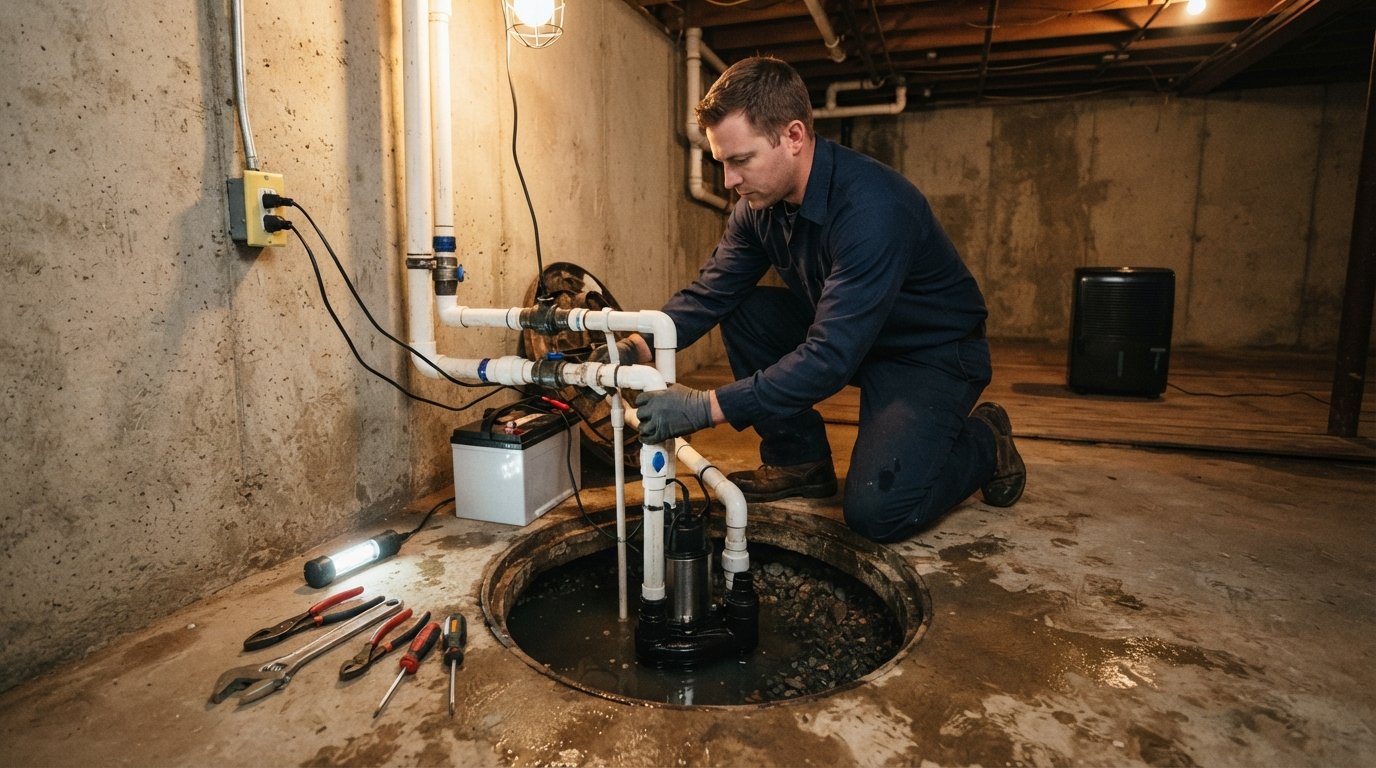
Sump Pump Installation and Battery Backup System Cost
Sump pump installation and battery backup system cost ranges from $1,000 to $2,500 installed. Call 8333658755 to compare local quotes and avoid surprise bills.

By Margaret Sheridan
Learn more about Sump Pump Installation or Replacement for guides, costs, and what to expect.
Compare Sump Pump Installation or Replacement Pros Near You

Enter your ZIP code to compare top-rated local professionals and request free quotes.
A failed sump pump during a heavy storm can turn a dry basement into a flooded disaster in minutes, destroying stored belongings, ruining drywall, and inviting mold growth that costs thousands to remediate. That single moment of failure is why the combination of a primary sump pump and a battery backup system has become the gold standard for basement protection. But what does sump pump installation and battery backup system cost actually look like in 2026? The answer depends on pump type, backup power choices, labor rates, and whether you need electrical or discharge line modifications. This guide breaks down real-world pricing, explains what drives the numbers up or down, and shows you how to budget confidently so you can protect your home without overpaying.
Sump Pump Installation and Battery Backup System Cost: The Numbers at a Glance
Most homeowners pay between $500 and $1,200 for a standard submersible sump pump installation, and adding a battery backup system typically pushes the total project cost to $1,000 to $2,500. The wide range exists because no two basements are identical. A simple swap of an existing pump in a dry pit costs far less than a first-time installation that requires cutting a new pit, running a dedicated GFCI circuit, and routing a discharge line through the rim joist.
Here is how the major components and labor break down for a typical residential project:
- Primary sump pump (submersible, 1/3 to 1/2 HP): $150 to $400 for the unit
- Battery backup system (pump, battery, charger, float): $300 to $900 for the kit
- Basin, liner, and lid: $50 to $250
- Discharge piping, check valve, and fittings: $40 to $150
- Labor (plumber or basement waterproofing specialist): $300 to $800
- Electrical work (new outlet or dedicated circuit): $150 to $500
Those figures reflect national averages. In high-cost metro areas like Boston, Seattle, or San Francisco, labor alone can double. In rural parts of the Midwest and South, you may find a licensed plumber who installs a full primary-plus-backup system for under $900. Always treat these numbers as planning guidelines rather than fixed quotes, because the actual price depends on your specific pit condition, water table, and local code requirements.
What Drives the Cost of a Sump Pump and Backup System
Four variables account for most of the price variation homeowners see when they collect bids. Understanding them helps you compare quotes fairly and spot when a contractor is padding the estimate.
Pump Type and Power Rating
Submersible pumps sit inside the basin and are quieter, while pedestal pumps stand above the water line and cost less but take up floor space. A 1/3 HP pump handles average residential inflow, but homes with high water tables or frequent storm surges often need a 1/2 HP or 3/4 HP unit. Each step up in power adds roughly $50 to $150 to the equipment cost. Cast iron or stainless steel housings last longer than thermoplastic but cost more upfront.
Battery Backup Configuration
Battery backup systems range from a basic 12V deep-cycle battery and charger to sophisticated dual-battery setups that run for 8 to 12 hours during an outage. A standard single-battery kit adds $300 to $500 installed. A premium system with a second battery, smart monitoring, and a high-output charger can add $700 to $1,200. If your area experiences multi-day power outages, the larger investment is usually justified. Some homeowners instead choose a water-powered backup that uses municipal water pressure, which costs $150 to $400 but only works when city water is available.
Labor and Site Conditions
An existing pit with a working discharge line makes for a quick one to two hour job. A first-time installation in a concrete floor requires breaking out the slab, excavating a basin-sized hole, setting the liner, and patching concrete, which can add $400 to $900 in labor alone. Tight crawl spaces, finished basements with limited access, and long discharge runs that must be trenched or routed through walls all increase the time and cost.
Electrical and Code Requirements
Sump pumps must be on a GFCI-protected circuit in most jurisdictions. If no outlet exists near the pit, an electrician will need to run a dedicated line, which costs $150 to $500 depending on the distance from the panel and whether the walls are finished. Some municipalities also require a permit for the electrical portion, adding $50 to $150 in fees. Skipping the permit may save money now but can create problems during a home sale or insurance claim later.
Primary Pump vs. Battery Backup: Why You Need Both
A primary sump pump runs on household electricity. When the power goes out during the exact storm that floods your basement, the primary pump stops working. That is not a rare coincidence; heavy rain and power outages often arrive together. A battery backup system sits idle until the primary pump fails or the power drops, then automatically takes over using a charged battery. The combination protects you against mechanical failure, power loss, and overwhelming inflow that exceeds a single pump's capacity.
Insurance companies increasingly recognize this distinction. Some basement flood endorsements and homeowner policies offer premium discounts when a battery backup is installed, and adjusters may question why a homeowner with a known water problem did not have one. From a pure risk-management standpoint, the backup system is often the cheapest part of the entire flood-prevention package. For broader context on how professional installation costs fit into a whole-home protection plan, our guide on solar energy installation and costs shows how homeowners evaluate major system investments with similar payback logic.
How to Budget for Your Sump Pump Project
Start by measuring your actual risk. If your basement has never taken on water and the water table is low, a quality primary pump with a basic battery backup is sufficient. If you have a history of flooding, a high water table, or a finished basement with electronics and furniture, invest in a higher-capacity primary pump and a dual-battery backup. The difference in cost between the minimum and maximum protection is usually $600 to $1,000, which is far less than a single flood cleanup and restoration bill.
When you request quotes, ask each contractor to itemize the pump brand and model, battery amp-hour rating, whether the price includes the basin and lid, and whether electrical work and permits are included. A low bid that excludes the battery or the electrical circuit is not a real comparison. Also confirm the warranty: quality submersible pumps carry a 3 to 5 year warranty, and battery backup units often carry 1 to 3 years on the charger and pump. Labor warranties vary from 90 days to 2 years.
If you want to compare multiple vetted local contractors without spending hours on the phone, FreeQuotes.Contractors lets you submit one request and receive competing bids from pre-screened professionals. That approach gives you a realistic local price range quickly and reduces the chance of overpaying.
Step-by-Step: What Happens During Installation
Understanding the installation sequence helps you evaluate whether a contractor is doing the job correctly and why some quotes are higher than others.
- Assessment and layout: The contractor inspects the pit, water table, discharge location, and electrical panel to determine the best pump placement and routing.
- Basin preparation: If no pit exists, the crew breaks concrete, excavates, sets the liner, and backfills around it. If a pit exists, they clean it and check for cracks.
- Primary pump installation: The pump is set on a solid base, the float is adjusted, and the discharge pipe is connected with a check valve to prevent backflow.
- Battery backup installation: The backup pump is mounted above the primary pump, the battery is placed on a shelf or floor stand, and the charger and alarm are wired.
- Discharge line and electrical: The discharge line is routed outdoors or to a dry well, and a GFCI outlet or dedicated circuit is installed and tested.
- Testing and handoff: The contractor fills the pit with water to confirm both pumps activate, then explains maintenance and alarm codes.
Most installations take three to six hours for a replacement and one to two days for a first-time installation that involves concrete cutting and new electrical work. Ask the contractor to leave the pit lid accessible so you can perform monthly tests without disassembling anything.
Maintenance Costs and Long-Term Value
Budget $100 to $200 per year for maintenance if you hire a professional to test the system, clean the intake screen, and check the battery. DIY maintenance costs almost nothing beyond replacing the battery every three to five years ($100 to $200) and occasionally replacing the float switch ($20 to $50). A neglected battery is the most common reason backup systems fail, so put a reminder on your calendar to test it before storm season.
Compared to the cost of basement flooding, which averages $3,000 to $10,000 for water extraction, drying, and repairs, a $1,000 to $2,500 installation is a strong return on investment. It also protects your home's resale value, because buyers and inspectors look for evidence of proper water management. If you are planning other basement improvements, such as finishing the space or adding storage, addressing sump pump and backup capacity first prevents future damage to those investments.
Getting Accurate Local Quotes
Online averages are useful for planning, but the only reliable number is a written quote from a licensed contractor who has seen your basement. When you request bids, provide the same information to each contractor: pit dimensions, water table observations, history of flooding, and whether an outlet exists near the pit. That consistency makes the quotes directly comparable and reduces the chance of surprise change orders.
Verify that each contractor holds a current license, carries liability and workers compensation insurance, and can provide references from similar installations in your area. A professional will welcome these questions. If a contractor pressures you to decide immediately or refuses to itemize the battery backup separately, treat that as a warning sign and get another bid.
With the right pump, a properly sized battery backup, and a fair installation price, you can protect your basement for years with minimal ongoing effort. Use the cost ranges in this guide to set your budget, then collect at least three local quotes before you commit.