
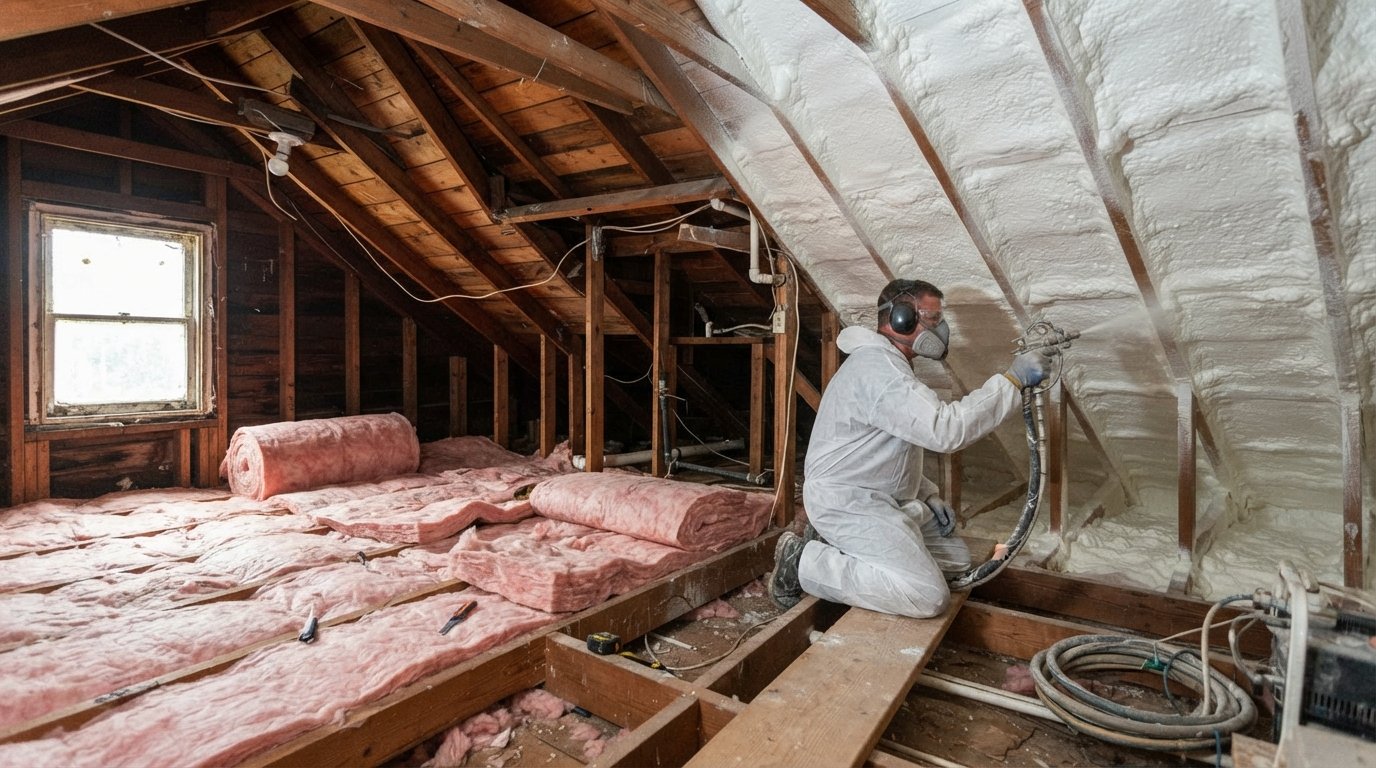
Spray Foam vs Fiberglass Insulation Cost and R-Value
Compare spray foam vs fiberglass insulation cost and r-value to find the best fit for your budget and energy goals.

By Roland Grier
Learn more about Insulation Installation or Upgrade for guides, costs, and what to expect.
Compare Insulation Installation or Upgrade Pros Near You

Enter your ZIP code to compare top-rated local professionals and request free quotes.
Choosing the right insulation for your home is one of the most impactful decisions you will make for energy efficiency, comfort, and long-term savings. Two of the most common options are spray foam and fiberglass, and the debate often centers on spray foam vs fiberglass insulation cost and r-value. While both materials can dramatically improve your home's thermal performance, they differ significantly in price, installation method, and performance characteristics. Understanding these differences will help you make an informed choice that aligns with your budget, climate, and renovation goals.
Understanding R-Value and Insulation Performance
R-value measures thermal resistance, or how well an insulation material prevents heat from flowing through it. The higher the R-value, the better the insulation performs. However, achieving the same R-value with different materials requires different thicknesses and installation techniques. Spray foam typically has a higher R-value per inch than fiberglass, meaning you can achieve greater insulation with less material thickness. This is especially important in areas with limited cavity space, such as walls in older homes.
Fiberglass insulation, whether in batts or loose-fill form, generally offers an R-value of around 2.2 to 2.7 per inch. Spray foam, on the other hand, ranges from approximately 3.5 to 6.5 per inch depending on whether it is open-cell or closed-cell. This means that for a given wall thickness, spray foam will deliver superior thermal performance. However, R-value alone does not tell the full story. Air sealing, moisture control, and installation quality also play critical roles in overall insulation effectiveness.
When comparing spray foam vs fiberglass insulation cost and r-value, it is essential to consider the total installed cost and the real-world performance. Fiberglass is generally less expensive upfront, but it may require more material and careful installation to achieve the same R-value as spray foam. Spray foam, while pricier, can often justify its cost through better air sealing and reduced energy bills over time.
Cost Comparison: Spray Foam vs Fiberglass Insulation
The cost of insulation varies based on factors such as your location, the size of the project, the type of insulation, and whether you hire a professional or do it yourself. On average, fiberglass insulation costs between $0.30 and $1.50 per square foot installed, depending on the R-value and whether it is batts or blown-in. Spray foam insulation typically ranges from $1.00 to $3.50 per square foot installed, with closed-cell foam at the higher end. These figures are national averages; actual quotes may vary based on regional labor rates and project complexity.
To illustrate, insulating a 1,000-square-foot attic to an R-value of 38 might cost $1,200 to $2,500 with fiberglass and $3,000 to $6,000 with spray foam. The difference is substantial, but so is the performance gap. Spray foam creates an airtight seal, reducing drafts and moisture infiltration, which can lead to lower heating and cooling costs. Fiberglass, while effective, does not seal air leaks as effectively unless paired with a separate air barrier.
It is also worth noting that spray foam insulation cost can be influenced by the type of foam. Open-cell foam is less dense and less expensive, while closed-cell foam offers higher R-value and acts as a vapor barrier. For homeowners planning a remodel, understanding these distinctions is crucial. You can use a project cost estimation platform to get a clearer picture of your total budget before committing to a specific insulation type.
Factors That Affect Insulation Costs
Several variables can swing the final price of your insulation project. The size and layout of the area to be insulated, the presence of obstructions, and the need for removal of old insulation all add to labor costs. Climate also plays a role: in colder regions, higher R-values are required, which means more material and higher costs. Additionally, if you are insulating a crawl space or a basement, moisture management may require additional materials or techniques, further impacting the budget.
For a more detailed breakdown of how to plan and budget for such projects, consider exploring resources that guide you through the financial aspects. A well-structured cost estimation approach can prevent surprises and help you compare contractor bids more effectively.
Performance and Longevity: Beyond the Numbers
Spray foam insulation excels in air sealing and moisture control. When applied, it expands to fill every crack and crevice, creating a monolithic barrier that reduces air leakage by up to 50 percent compared to fiberglass. This can translate to significant energy savings, especially in older homes with leaky envelopes. Fiberglass, particularly batts, can leave gaps around wires, pipes, and framing, allowing air to escape. Blown-in fiberglass performs better in irregular spaces but still does not seal like spray foam.
Moisture resistance is another key differentiator. Closed-cell spray foam is impermeable to water and acts as a vapor barrier, making it ideal for basements, crawl spaces, and areas prone to dampness. Fiberglass insulation, when exposed to moisture, can lose its R-value and become a breeding ground for mold. If you live in a humid climate or have a history of moisture issues, spray foam may be the safer bet.
Longevity is also a consideration. Spray foam can last the lifetime of the building, while fiberglass may settle or degrade over time, especially if it is disturbed during renovations. However, fiberglass is easier to remove and replace if needed. When weighing spray foam vs fiberglass insulation cost and r-value, think about how long you plan to stay in your home and whether the upfront investment in spray foam will pay off through durability and reduced maintenance.
Environmental and Health Considerations
Both insulation types have environmental impacts. Fiberglass is made from recycled glass and sand, and it is generally considered to have lower embodied energy than spray foam. However, fiberglass particles can irritate the skin, eyes, and lungs during installation, requiring protective gear. Spray foam, particularly closed-cell, is made from petrochemicals and has a higher global warming potential. Some newer spray foam products use more environmentally friendly blowing agents, but they are not universally available.
Indoor air quality is another factor. Once cured, spray foam is inert and does not emit harmful gases. Fiberglass, if improperly installed, can release fibers into the air. Proper installation and sealing are critical for both. If you have sensitivities or allergies, discuss options with your contractor to ensure the chosen material aligns with your health needs.
From a sustainability perspective, the energy savings from spray foam can offset its higher carbon footprint over time. But if you prioritize using recycled materials and minimizing chemical exposure, fiberglass might be more appealing. Ultimately, the choice depends on your personal values and project specifics.
Installation Process and DIY vs Professional
Fiberglass insulation is relatively DIY-friendly, especially batts, which can be cut to size and fitted into stud bays. However, achieving a perfect fit without gaps requires care. Blown-in fiberglass requires specialized equipment and is best left to professionals. Spray foam, on the other hand, almost always requires professional installation due to the equipment and safety precautions involved. DIY spray foam kits are available but are typically only suitable for small areas and can be messy and hazardous if not used correctly.
Hiring a professional ensures proper application and maximizes performance. When selecting a contractor, verify credentials, ask for references, and compare multiple bids. Websites like FreeQuotes.Contractors connect homeowners with pre-vetted local contractors for insulation and other home improvement projects, offering a convenient way to obtain free, no-obligation quotes. This can save you time and help you make a confident decision.
Before installation, ensure the area is properly prepared. Remove old insulation if necessary, seal any air leaks, and address moisture issues. Proper preparation enhances the performance of both insulation types and ensures a smoother installation process.
Making the Right Choice for Your Home
Deciding between spray foam and fiberglass insulation hinges on your budget, climate, and performance goals. If you prioritize upfront cost savings and have a dry, easily accessible space, fiberglass may suffice. If you want superior air sealing, moisture control, and are willing to invest more upfront, spray foam is likely the better option. In many cases, a hybrid approach works best: spray foam in critical areas like rim joists and attics, and fiberglass in interior walls.
Consider the long-term savings from reduced energy bills. Spray foam's higher R-value per inch and airtight seal can lower heating and cooling costs by 20 to 30 percent, potentially offsetting the initial price premium within a few years. Fiberglass, while cheaper, may require additional air sealing measures to achieve similar efficiency, which adds to the overall cost.
To make an informed decision, gather multiple quotes and ask contractors about their recommended approach for your specific home. They can assess your insulation needs, calculate required R-values, and provide a detailed cost breakdown. Remember that the cheapest option is not always the most cost-effective in the long run.
In summary, spray foam vs fiberglass insulation cost and r-value is a trade-off between upfront investment and long-term performance. By understanding the differences and evaluating your priorities, you can choose the insulation that delivers the best value for your home.