
Specialty Flooring for Basements: Pet Friendly, High Traffic
Find durable specialty flooring for basements in pet friendly, high traffic homes. Call 8333658755 to compare local installer quotes and save.

By Eric Andrew
Learn more about Floor Installation or Replacement for guides, costs, and what to expect.
Compare Floor Installation or Replacement Pros Near You

Enter your ZIP code to compare top-rated local professionals and request free quotes.
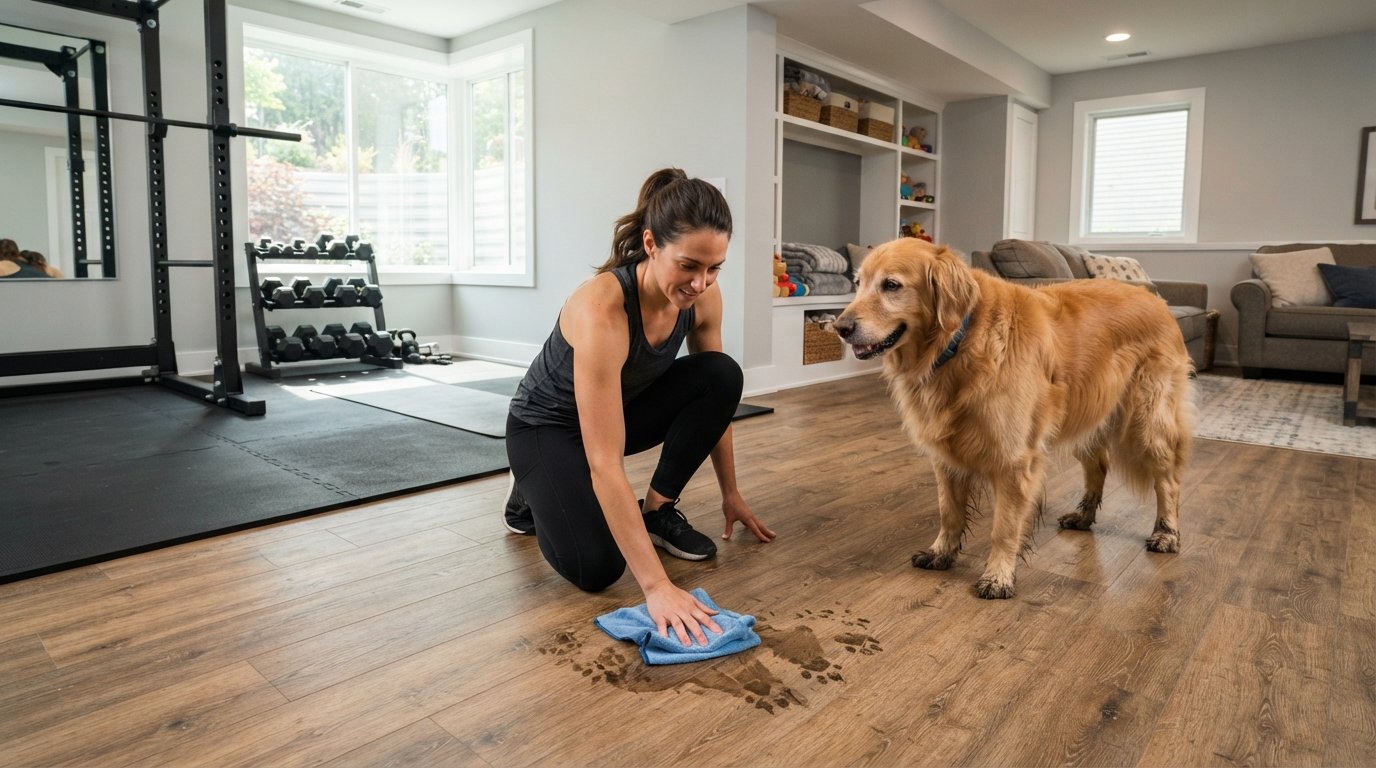
Your basement is no longer just a dark storage zone. In 2026, it is a family room, a home gym, a pet play area, and sometimes all three at once. That means the floor you choose has to survive muddy paws, water heater leaks, constant foot traffic, and the occasional dropped dumbbell. Standard carpet or cheap laminate will not last long under those conditions. Specialty flooring for basements in pet friendly, high traffic homes solves that problem, but only if you match the right material to the realities of below-grade spaces.
This guide breaks down what actually works, what fails, and how to budget for a floor that can handle everything your household throws at it. We will cover moisture barriers, scratch resistance, installation costs, and the specific products that hold up best when you have dogs, kids, and a busy schedule. You will also learn how to find qualified local installers through trusted resources like Homes.Contractors, so you can get the job done right the first time.
Why Basements Demand Specialty Flooring
Basements sit below grade, which means they face constant moisture pressure from the soil around them. Even a perfectly waterproofed basement can experience humidity spikes in summer or minor seepage during heavy rain. Traditional hardwood and standard carpet absorb that moisture, leading to warping, mold, and that unmistakable musty smell. High traffic makes it worse because every step pushes moisture deeper into the material.
Add pets to the equation and the stakes rise. Dog claws scratch, accidents happen, and water bowls spill. A floor that cannot handle these daily events will look worn within a year. Specialty flooring for basements in pet friendly, high traffic homes is engineered to resist moisture, scratches, and heavy use simultaneously. That combination does not exist in standard flooring products, which is why homeowners need to shop with specific criteria in mind.
The good news is that modern materials have caught up with real life. Luxury vinyl plank, epoxy coatings, and certain tile products now deliver the durability basement environments require without sacrificing style. The key is understanding which products offer the right balance of waterproofing, scratch resistance, comfort, and cost for your particular situation.
Top Specialty Flooring Options That Handle Pets and Traffic
Not all specialty flooring is created equal. Some products excel at moisture resistance but feel cold and hard underfoot. Others are comfortable but scratch easily. Below are the materials that consistently perform well in basements with pets and heavy foot traffic, along with the pros and cons you need to weigh before committing.
- Luxury Vinyl Plank (LVP): Fully waterproof, scratch resistant, and comfortable underfoot. LVP mimics wood or stone and handles pet accidents without staining. It is the top choice for most basement projects.
- Epoxy and Polyaspartic Coatings: Seamless, extremely durable, and easy to clean. These coatings bond directly to concrete and resist chemicals, scratches, and moisture. They can feel hard and cold, so area rugs help.
- Porcelain and Ceramic Tile: Waterproof and scratch proof, tile is excellent for basements. However, grout lines can trap dirt and pet hair, and tile feels cold without radiant heat.
- Engineered Vinyl Tile (EVT): Similar to LVP but in tile form. It offers the look of stone with the resilience of vinyl. Good for laundry rooms and pet washing stations.
- Rubber and Cork Specialty Flooring: Soft, warm, and quiet. These materials are pet friendly and comfortable for standing, but they require more maintenance and can be damaged by standing water.
Among these options, LVP and epoxy coatings dominate the market for good reason. LVP offers the best all-around package: it looks like hardwood, installs over most existing concrete, and can be replaced plank by plank if a section gets damaged. Epoxy coatings are ideal if you want an industrial, seamless look and do not mind a harder surface. Tile works well in specific zones, like a pet feeding area, but covering an entire basement in tile can be expensive and uncomfortable.
For homes with large dogs or multiple pets, scratch resistance should be your top priority. LVP with a thick wear layer (20 mil or higher) resists claws far better than thinner products. Epoxy coatings are virtually scratch proof. Tile is also highly scratch resistant but can crack if something heavy drops on it. Rubber and cork are the most forgiving underfoot but the least durable against determined chewers or heavy traffic.
Key Features to Compare Before You Buy
When you shop for specialty flooring for basements in pet friendly, high traffic homes, the marketing language can be confusing. Every product claims to be durable and waterproof. To cut through the noise, focus on the specific features that matter in a basement environment. The table below outlines what to look for and why it matters.
- Waterproof vs. Water Resistant: Waterproof means the material itself will not absorb water (LVP, tile, epoxy). Water resistant means it can handle spills but not standing water (engineered hardwood, some laminates). For basements, always choose waterproof.
- Wear Layer Thickness: Measured in mils, this determines how well the floor resists scratches and fading. For pet friendly homes, choose 20 mil or higher. Commercial-grade LVP often has 28 mil or more.
- Slip Resistance: Basements can be humid, and pets tracking in water makes slick floors dangerous. Look for products with a textured surface or an ASTM D2047 rating for slip resistance.
- Installation Method: Floating floors (click-lock LVP) are faster and cheaper to install. Glue-down or full-spread installations offer better moisture protection but cost more. Epoxy coatings require professional application.
- Underlayment and Vapor Barrier: Even waterproof flooring needs a vapor barrier over concrete to prevent moisture from wicking up through the slab. Some LVP products include attached underlayment, but a separate 6-mil poly barrier is often recommended.
Cost is another critical factor. Specialty flooring for basements ranges from $2 to $12 per square foot installed, depending on the material. LVP typically costs $3 to $7 per square foot installed. Epoxy coatings run $4 to $12 per square foot, depending on surface prep and finish. Porcelain tile costs $5 to $15 per square foot installed. Rubber and cork fall in the $4 to $10 range. These are national averages; your local market may be higher or lower.
Do not overlook the cost of subfloor preparation. Basement concrete slabs are often uneven, cracked, or damp. Leveling compounds, crack repair, and moisture mitigation can add $1 to $3 per square foot to your project. Skipping these steps will void most flooring warranties and lead to premature failure. Always have a professional assess your slab before choosing a material.
Installation Tips for High Traffic, Pet Friendly Basements
Even the best flooring will fail if it is installed incorrectly. Basements present unique challenges that require careful planning and execution. Whether you hire a pro or tackle the job yourself, follow these guidelines to ensure your new floor performs as expected.
- Test for moisture first. Tape a 2x2 foot square of plastic sheeting to the concrete and wait 24 hours. If condensation forms underneath, you have a moisture problem that must be addressed before installation. A calcium chloride test can quantify the moisture vapor emission rate.
- Level the subfloor. Grind down high spots and fill low areas with self-leveling compound. A flat surface prevents gaps, rocking planks, and premature wear.
- Install a vapor barrier. Even if your LVP has attached underlayment, a separate vapor barrier over concrete is cheap insurance. Overlap seams by 6 inches and tape them securely.
- Acclimate the flooring. Bring boxes into the basement and let them sit for 48 to 72 hours before installation. This allows the material to adjust to the room temperature and humidity.
- Leave expansion gaps. Floating floors need a 1/4 inch gap around the perimeter to allow for movement. Cover the gap with baseboards or quarter round.
If you are installing epoxy or polyaspartic coatings, professional application is strongly recommended. These products require precise mixing, strict timing, and specialized equipment. A botched epoxy job is expensive to remove and redo. For LVP and tile, confident DIYers can achieve professional results with careful preparation, but hiring a qualified installer often pays for itself in time saved and avoided mistakes.
After installation, protect your investment with felt pads on furniture legs, a doormat at the bottom of the stairs, and a pet nail trimming routine. These small habits dramatically extend the life of your floor. For high traffic zones, consider adding washable area rugs that can be cleaned or replaced without replacing the entire floor.
Cost Factors and Budgeting for Your Basement Floor
Budgeting for specialty flooring for basements in pet friendly, high traffic homes involves more than just the price per square foot of the material. Labor, subfloor prep, trim, transitions, and disposal all add up. Understanding these cost drivers helps you compare quotes accurately and avoid surprise charges.
Material costs vary widely. LVP ranges from $1.50 to $5 per square foot for the product alone. Epoxy kits cost $2 to $6 per square foot for materials. Porcelain tile runs $2 to $10 per square foot. Rubber and cork are $3 to $8 per square foot. Labor typically adds 50 to 100 percent to the material cost, depending on your region and the complexity of the job.
Additional costs to plan for include:
- Subfloor preparation: $1 to $3 per square foot for leveling and crack repair.
- Moisture mitigation: $1 to $4 per square foot for sealers or vapor barriers.
- Trim and transitions: $2 to $5 per linear foot for baseboards, quarter round, and threshold strips.
- Old floor removal and disposal: $1 to $3 per square foot, unless you remove it yourself.
- Furniture moving and room prep: $100 to $500, depending on the scope.
For a typical 500 square foot basement, expect to spend $3,000 to $7,000 for LVP installed, $4,000 to $10,000 for epoxy, and $5,000 to $12,000 for porcelain tile. These ranges assume moderate subfloor prep and standard trim work. Complex layouts, stairs, or significant moisture issues will push costs higher.
To get accurate numbers for your project, request multiple quotes from licensed contractors. ContractorHomeQuotes connects homeowners with up to three pre-screened local professionals for free, no-obligation estimates. Comparing bids side by side helps you spot outliers, negotiate better pricing, and choose the installer who best understands basement flooring challenges.
Hiring the Right Contractor for Basement Flooring
Specialty flooring installation is not a job for a general handyman. Basements require specific expertise in moisture control, subfloor preparation, and material selection. Hiring the wrong contractor can lead to bubbling LVP, cracked tile, or epoxy that peels within months. Vet your candidates carefully before signing a contract.
Start by verifying licensing and insurance. Most states require flooring contractors to carry a specialty license, and all reputable contractors carry general liability and workers compensation insurance. Ask for copies of these documents and confirm they are current. Next, check references from recent basement projects, especially ones involving pets or high traffic. Ask specific questions about moisture testing, vapor barriers, and warranty coverage.
Get at least three written estimates that break down materials, labor, and additional costs. Avoid contractors who quote a single lump sum without itemization. A detailed quote protects you from change orders and ensures you are comparing apples to apples. Finally, read the warranty carefully. Most flooring manufacturers require professional installation to validate their warranty, and some require specific underlayment or moisture barriers. Make sure your contractor follows those requirements.
For homeowners who want a streamlined way to find qualified installers, Homes.Contractors offers a directory of pre-vetted professionals across the United States. The site also provides educational resources on flooring, remodeling, and contractor selection, making it a useful starting point for any basement project.
Maintenance That Keeps Your Floor Looking New
Once your specialty flooring is installed, a simple maintenance routine will keep it looking fresh for years. Different materials require different care, but the principles are similar: keep it clean, keep it dry, and protect it from unnecessary wear.
For LVP, sweep or vacuum daily to remove grit that can scratch the surface. Damp mop with a pH-neutral cleaner once a week. Avoid steam mops, which can force moisture into the seams. For epoxy coatings, sweep and damp mop as needed; they are highly stain resistant but can dull over time if exposed to abrasive cleaners. Tile floors need regular sweeping and occasional mopping with a grout-safe cleaner. Seal grout annually to prevent staining and mildew.
Pet specific maintenance includes wiping paws at the door, cleaning up accidents immediately (even on waterproof floors), and keeping nails trimmed. Place water bowls on a mat to catch splashes. For high traffic areas, rearrange furniture occasionally to prevent uneven wear patterns. These small steps add years to your floor's lifespan and keep your basement looking inviting.
Choosing specialty flooring for basements in pet friendly, high traffic homes is an investment in your home's comfort and value. With the right material, proper installation, and a sensible maintenance plan, your basement can become the most used room in the house, no matter how many paws and feet cross it every day.