
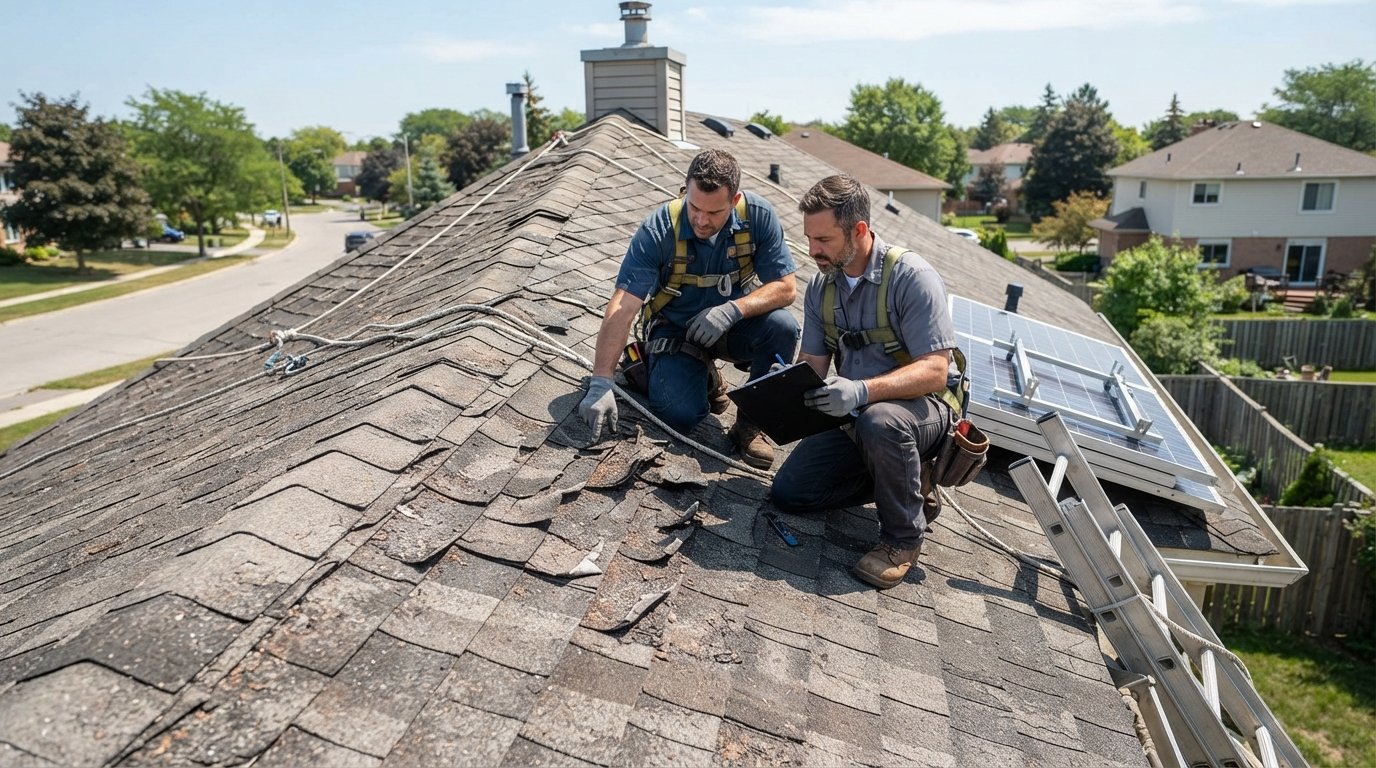
Solar Panel Installation: Roof Condition and Age Guide
Solar panel installation roof condition and age considerations decide whether you replace first or install now. Call 8333658755 for vetted local solar and roofing quotes.

By Alexia Mabel
Learn more about Solar Panel Installation and Repair for guides, costs, and what to expect.
Compare Solar Panel Installation and Repair Pros Near You

Enter your ZIP code to compare top-rated local professionals and request free quotes.
Your roof does two jobs that most homeowners never think about. It protects your house from rain, snow, and sun, and it may soon carry a solar array that stays in place for 25 years or more. Those two jobs interact in ways that catch people off guard, especially when the roof is already 15 or 20 years old. A solar installer can mount panels on almost any surface, but whether that surface can support the added load and outlast the warranty period is a separate question. Getting the answer right before signing a contract can save you thousands of dollars and a lot of frustration.
Why Roof Condition Matters Before You Go Solar
Solar panels are not lightweight decorations. A typical residential array adds between 2 and 5 pounds per square foot to your roof, and that load stays there permanently. The mounting hardware also requires dozens of penetration points, brackets, and flashing details that must seal correctly for decades. If the shingles underneath are brittle, curling, or near the end of their service life, the installation itself can accelerate the damage you were already ignoring.
The bigger risk is sequencing. Suppose you install solar on a 20 year old asphalt shingle roof that has 5 to 8 years of life left. When that roof finally fails, you will pay a solar contractor to remove the panels, a roofer to replace the roof, and the solar contractor again to reinstall the array. That double labor cost often runs $3,000 to $6,000 on top of the new roof itself. Most homeowners never factor this into their solar payback math, and it quietly erases years of energy savings.
Roof condition also affects performance and safety. A roof with soft decking, previous water intrusion, or poorly flashed chimneys can undermine the mounts. Ice dams and wind uplift behave differently around panels, so the underlying structure needs to be sound. Inspectors and installers look for sagging, moss growth, cracked flashing, exposed nail heads, and interior water stains during the site survey. Any of those findings can shift a project from simple to complicated.
How Old Is Too Old for Solar Panels?
There is no single cutoff age, but there is a practical rule that experienced installers use. If your roof has less than 10 years of remaining life, replace it before installing solar. If it has 15 or more years left, proceed with confidence. If it falls in the 10 to 15 year window, get a professional assessment and weigh the cost of doing both projects together against the risk of a future removal and reinstall.
Different roofing materials age at different rates, which changes the calculation. Asphalt shingles, the most common roof in North America, typically last 20 to 30 years depending on climate and ventilation. Metal roofs can last 40 to 70 years and are often the best pairing for solar because the mounting systems clamp onto standing seams without penetrating the surface. Tile roofs last 50 years or more but are fragile underfoot, so installers charge more and move carefully. Flat roofs with membrane systems usually last 15 to 25 years and may need ballasted mounts rather than penetrations.
Age alone is not the whole story. A 12 year old roof in Phoenix that has baked in 110 degree summers may be closer to failure than a 20 year old roof in a mild coastal climate. Similarly, a roof with poor attic ventilation ages from the inside out, with heat and moisture degrading the decking long before the shingles look worn. That is why a visual inspection and, in some cases, an attic check matter more than the installation date on your closing paperwork.
Roof Types and Their Solar Compatibility
Every roofing material brings its own strengths and complications to a solar project. Understanding where yours fits helps you ask better questions and compare contractor bids on equal terms.
- Asphalt shingle: Affordable and solar friendly, but penetrations must be flashed carefully and the roof must have enough remaining life to justify the array.
- Standing seam metal: Excellent for solar because clamps attach to the seams without drilling, preserving the roof warranty and simplifying future repairs.
- Clay and concrete tile: Durable and long lived, but fragile, heavier, and more expensive to work on, which raises installation labor.
- Flat membrane (TPO, EPDM, modified bitumen): Compatible with ballasted or adhered mounts, though ponding water and membrane age need close review.
- Wood shake and slate: Beautiful but difficult, often requiring specialized mounts and higher labor rates, and some installers decline these jobs entirely.
Beyond the surface material, the structural framing matters. Older homes sometimes have rafters spaced 24 inches apart rather than 16, and some have no structural sheathing under the roofing. Solar installers can engineer around these conditions, but it adds cost and may require a structural review. If your home was built before 1970 or has had additions of unknown quality, mention it during the site survey so the installer can plan accordingly.
What Inspectors Actually Check
A proper solar site survey is more than a glance at the roof from the driveway. Reputable installers walk the roof, check the attic when accessible, and document conditions with photos. Knowing what they look for helps you prepare and helps you evaluate whether a bid is thorough or rushed.
- Structural integrity: Sagging areas, spongy decking, and cracked rafters are red flags that require repair before mounting.
- Surface wear: Granule loss, curling shingles, cracked tiles, rust streaks, and open seams indicate a roof nearing replacement.
- Flashing and penetrations: Chimneys, vents, skylights, and prior repairs must be watertight and compatible with new mounts.
- Drainage and shading: Gutters, valleys, and nearby trees affect both water management and solar production.
- Attic ventilation and moisture: Poor airflow shortens roof life and can signal hidden decking problems.
If the inspection turns up issues, you have three paths. You can repair the specific problems and proceed, replace the roof first and then install solar, or pause the project and revisit it later. Each option has a different cost profile, and the right choice depends on your budget, your timeline, and how long you plan to stay in the home. A homeowner planning to sell in three years may reasonably choose a targeted repair, while someone planning to stay for 20 years should seriously consider a full roof replacement as part of the solar project.
The Financial Case for Doing Both Projects Together
Combining a roof replacement with solar installation is often cheaper than doing them separately, sometimes dramatically so. When the roof is new, the solar crew can mount panels immediately without removal or reinstallation charges later. You also avoid the awkward situation of a roofing warranty that excludes damage caused by panels installed over an aging surface.
Some contractors offer bundled pricing or financing that covers both projects under one loan, which simplifies your monthly payments and may improve the tax credit math. The federal residential clean energy credit has historically covered a percentage of solar equipment and installation costs, and in some cases a portion of necessary roof work when it is integral to the solar installation. Rules change, so confirm current eligibility with a tax professional rather than relying on a sales pitch.
If you are still comparing options, it helps to gather multiple bids and ask each contractor how they handle roof age. Our guide to Staten Island roof cleaning services shows how routine maintenance extends roof life, which in turn makes solar viable for more homeowners who thought their roof was too old. The same principle applies everywhere: a clean, well maintained roof buys you time and options.
For homeowners who want to compare vetted local professionals without spending weeks on research, FreeQuotes.Contractors offers a straightforward way to request multiple no obligation quotes for roofing and solar projects in one place. Seeing competing bids side by side makes it much easier to judge whether a contractor is pricing roof work fairly and whether the solar proposal accounts for your roof's actual condition.
Red Flags and Warranty Traps to Watch
Not every installer will be honest about your roof. Some crews are paid to sell panels, not to protect your home, and they may gloss over conditions that should pause the project. Watch for these warning signs during the bidding process.
- No roof inspection: A quote issued without anyone walking the roof or checking the attic is a guess, not an estimate.
- Vague flashing details: If the proposal does not specify how penetrations will be sealed, assume the cheapest method will be used.
- Warranty gaps: Ask whether the roof warranty remains valid after installation and who covers leaks around mounts.
- Pressure to skip repairs: A contractor who dismisses obvious damage to close the sale is not acting in your interest.
- No removal plan: If the roof is borderline, ask in writing what happens and what it costs if the roof needs replacement in 10 years.
Get the answers in writing before you sign. A reputable installer will welcome the questions and document the answers in the contract. That documentation protects you if a leak appears two winters later and the installer tries to blame the roof rather than the flashing.
Planning Your Timeline and Next Steps
Timing matters as much as condition. The best sequence for most homeowners is roof first, solar second, with both projects planned in the same season if possible. This avoids exposing a new roof to unnecessary foot traffic and lets the solar crew work on a clean, flat surface. It also means one set of permits, one inspection schedule, and one point of contact if something goes wrong.
Start by getting a professional roof assessment, ideally from a roofer who does not sell solar, so the advice is unbiased. Then collect solar quotes that include a roof condition statement and a written plan for flashing and mounting. Compare at least three bids, check licenses and insurance, and ask for references from projects on roofs similar to yours. If your roof has 10 to 15 years of life left and the numbers are close, lean toward replacing it now. The extra cost today is almost always less than the cost of removing and reinstalling panels later.
Solar is a long term investment, and your roof is the foundation it sits on. Treat the two as a single project, ask hard questions, and insist on documentation. Homeowners who do that end up with a system that produces for decades without turning their roof into a recurring expense.