
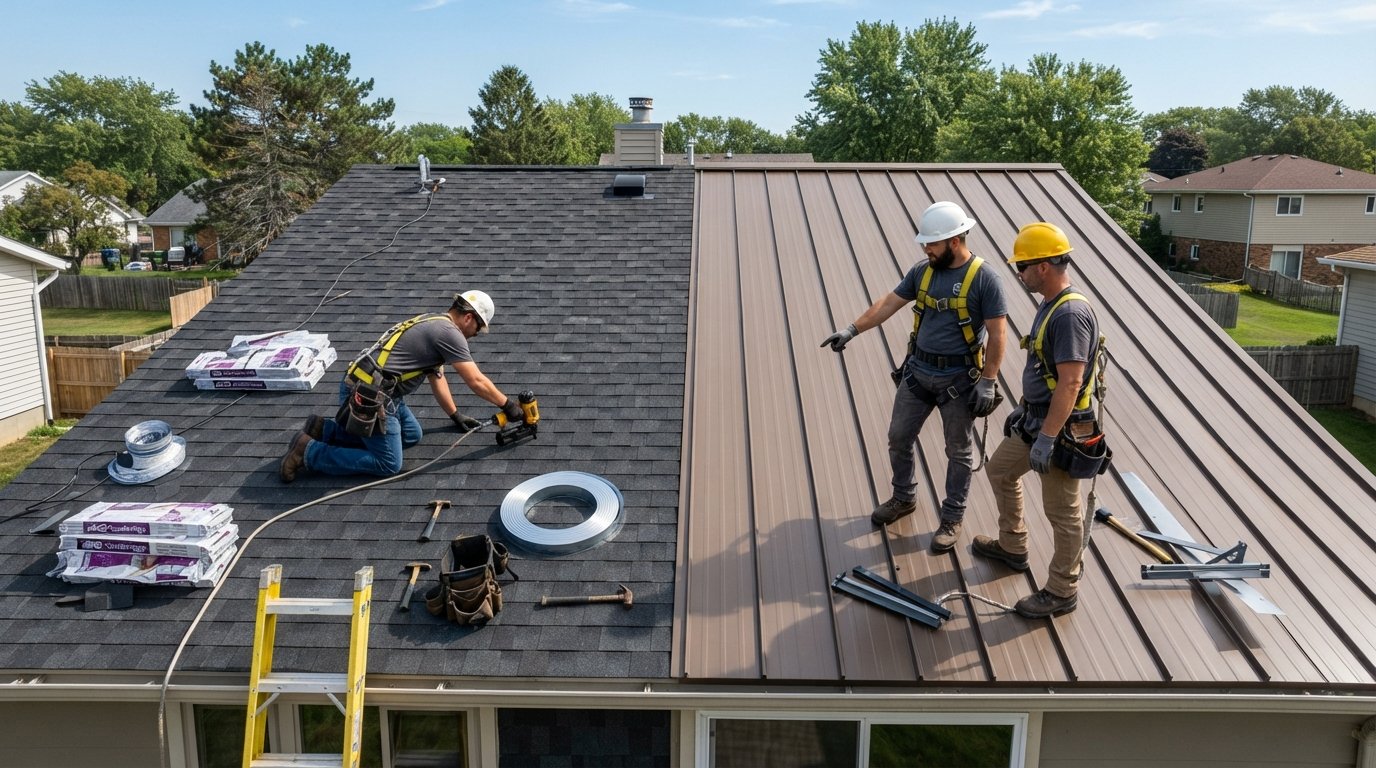
Metal Roof vs Asphalt Shingles: Long Term Cost Comparison
See how metal roof vs asphalt shingles long term cost comparison plays out over 50 years, with one clear winner. Call (833)-365-8755 for expert help.
By Scott Thompson
Learn more about Roof Installation or Replacement for guides, costs, and what to expect.
Compare Roof Installation or Replacement Pros Near You

Enter your ZIP code to compare top-rated local professionals and request free quotes.
When it is time to replace your roof, the decision often comes down to two main contenders: metal and asphalt shingles. While the upfront price tag is the first thing most homeowners see, the true financial impact unfolds over decades. A metal roof vs asphalt shingles long term cost comparison reveals that the cheaper option today may not be the most economical choice for your wallet tomorrow. This guide breaks down the real numbers, from installation costs to maintenance, energy savings, and resale value, so you can make an informed decision for your home.
The Upfront Price Tag: What You Pay Today
The initial cost is where asphalt shingles shine. Asphalt is the most affordable roofing material on the market, making it the default choice for budget-conscious homeowners. For a typical 1,600-square-foot roof, you can expect to pay between $4,000 and $8,000 for architectural asphalt shingles installed. This price includes materials, labor, and basic underlayment. The cost per square (a roofing square equals 100 square feet) generally ranges from $3.50 to $5.50 per square foot installed, depending on your region and the complexity of your roof.
Metal roofing, particularly standing seam metal, comes with a significantly higher upfront cost. The same roof size might cost between $12,000 and $24,000, or $8 to $15 per square foot installed. This sticker shock often causes homeowners to dismiss metal outright. However, it is crucial to view this expense as a long-term investment rather than a one-time purchase. The materials themselves are more expensive, and installation requires specialized labor, which drives up the price. But what you are buying is durability and longevity that asphalt simply cannot match.
To put this in perspective, if you plan to stay in your home for only a few years, asphalt may seem like the logical choice. But if you are looking at a 30- to 50-year horizon, the math starts to shift. The metal roof vs asphalt shingles long term cost comparison hinges on how many times you have to pay for a new roof. Asphalt shingles need replacement every 15 to 25 years, while a metal roof can last 40 to 70 years or more. That means over a 50-year period, you might install two or three asphalt roofs, whereas one metal roof could be the last roof you ever buy.
Service Life and Replacement Cycles
Understanding service life is the cornerstone of any long-term cost analysis. Architectural asphalt shingles, the premium version of asphalt, typically carry a manufacturer warranty of 25 to 30 years, but their actual lifespan in real-world conditions is often 15 to 20 years. Factors like sun exposure, ventilation, and harsh weather can shorten that further. Standard three-tab shingles may last only 12 to 15 years. When you factor in the cost of tear-off and disposal for each replacement, the cumulative expense adds up quickly.
Metal roofs, especially standing seam, are engineered to last. Steel and aluminum panels resist rot, insects, and fire, and they do not degrade from UV exposure like asphalt does. A properly installed metal roof can easily last 50 years, and many come with 30- to 50-year warranties. Some metal roofs, particularly copper, can last a century. This longevity means you avoid the cycle of repeated tear-offs and landfill waste. For homeowners planning to age in place, a metal roof eliminates the need for future roof replacements entirely.
Let us run a simple 50-year scenario. Suppose you install architectural shingles for $6,000. They last 20 years, so you replace them twice at $6,000 each (assuming no inflation, for simplicity). Total cost: $18,000. Now consider a standing seam metal roof at $18,000. It lasts 50 years with minimal maintenance. Total cost: $18,000. The upfront difference evaporates over time, and that is before factoring in maintenance and energy savings. This is why the metal roof vs asphalt shingles long term cost comparison often favors metal when you look beyond the first invoice.
Maintenance and Repair Costs
Asphalt shingles require more frequent attention. Granules wear away, shingles crack or blow off in high winds, and leaks can develop around penetrations. Routine maintenance includes inspecting for damage after storms, replacing missing shingles, and sealing flashings. Over 20 years, you might spend $1,000 to $3,000 on repairs and maintenance, depending on your climate and luck. If a leak goes unnoticed, it can lead to structural damage, mold, and costly interior repairs.
Metal roofs are virtually maintenance-free. They do not shed granules, and their interlocking panels resist wind uplift. Repairs are rare, but if a panel is damaged, it can often be replaced individually. The fasteners used in exposed-fastener metal roofs may need tightening or replacing every few decades, but standing seam roofs use concealed fasteners, eliminating that issue. Over the life of the roof, maintenance costs for metal are significantly lower, often just a few hundred dollars for occasional inspections. This disparity is a key factor in the metal roof vs asphalt shingles long term cost comparison, as asphalt's lower upfront price is offset by higher ongoing upkeep.
It is also worth noting that metal roofs can be installed over existing asphalt shingles in some cases, saving on tear-off costs. However, building codes vary, and it is essential to consult a professional. If you are considering a roof replacement, our guide on asphalt shingles in Indiana provides regional insights that may be helpful for understanding local conditions.
Energy Efficiency and Insurance Impacts
Metal roofs can reduce your energy bills, especially in hot climates. They reflect solar radiation, thanks to their reflective coatings, and they can be installed with a layer of insulation or a ventilated airspace. This can lower attic temperatures by 10 to 20 degrees, reducing air conditioning costs by 10 to 25 percent. Asphalt shingles absorb heat, making your attic hotter and your AC work harder. Over 20 years, those energy savings can add up to several thousand dollars, further narrowing the cost gap.
Insurance premiums also vary by roof material. Many insurers offer discounts for metal roofs because they are more resistant to hail, wind, and fire. In hail-prone states like Texas and Colorado, metal roofs can earn premium reductions of 5 to 15 percent. Asphalt shingles, while rated for impact, are more susceptible to damage. Over time, these savings contribute to the overall financial picture. When comparing metal roof vs asphalt shingles long term cost, energy and insurance benefits are often overlooked but can tip the scales in favor of metal.
Climate plays a role. In cold climates, metal roofs shed snow easily, preventing ice dams. In wildfire-prone areas, metal roofs are non-combustible, offering superior fire protection. Asphalt shingles are combustible and can be a liability in fire zones. These factors not only affect insurance but also safety and durability, reinforcing the long-term value of metal.
Hail, Wind, and Fire Ratings Compared
Durability against the elements is a major differentiator. Metal roofs carry a Class 4 impact rating (the highest) for hail resistance, and they can withstand winds up to 140 mph or more. They are also non-combustible with a Class A fire rating. Asphalt shingles vary: architectural shingles may achieve Class 4 impact ratings, but standard shingles often only meet Class 3 or lower. Wind resistance is typically up to 110 mph for asphalt, and fire ratings are generally Class A but with less inherent fire resistance than metal.
In areas prone to severe weather, the superior ratings of metal can translate into fewer repairs and lower insurance costs. After a hailstorm, asphalt shingles may need full replacement, while metal might only need cosmetic repairs. This resilience is a critical component of the long-term cost comparison, as it reduces the risk of unexpected expenses and extends the roof's service life.
If you are planning a move or renovation, consider that a durable roof adds value to your home. For resources on relocation, Moving.Homes offers comprehensive guides and checklists for homeowners.
When Does Metal Roofing Payback Make Sense?
Metal roofing payback makes sense if you plan to stay in your home for at least 15 to 20 years. The break-even point typically occurs when you factor in the cost of one asphalt replacement plus energy savings and maintenance. If you are in a climate with extreme weather, high cooling costs, or wildfire risk, the payback is even faster. Additionally, if you value sustainability, metal roofs are often made from recycled content and are fully recyclable at the end of their life, reducing landfill waste.
However, if you are selling your home within five years, you may not recoup the upfront investment, although metal roofs can increase resale value and curb appeal. It is essential to weigh your timeline, budget, and local market conditions. For a detailed cost comparison tailored to your specific situation, consider using our cost estimation tools and requesting quotes from local professionals. The metal roof vs asphalt shingles long term cost comparison is not a one-size-fits-all answer, but for many homeowners, the math clearly favors metal over the long haul.
To make the best decision, gather multiple quotes from licensed contractors. Our platform connects you with up to three pre-screened professionals for free, no-obligation estimates, helping you compare costs and options with confidence.