
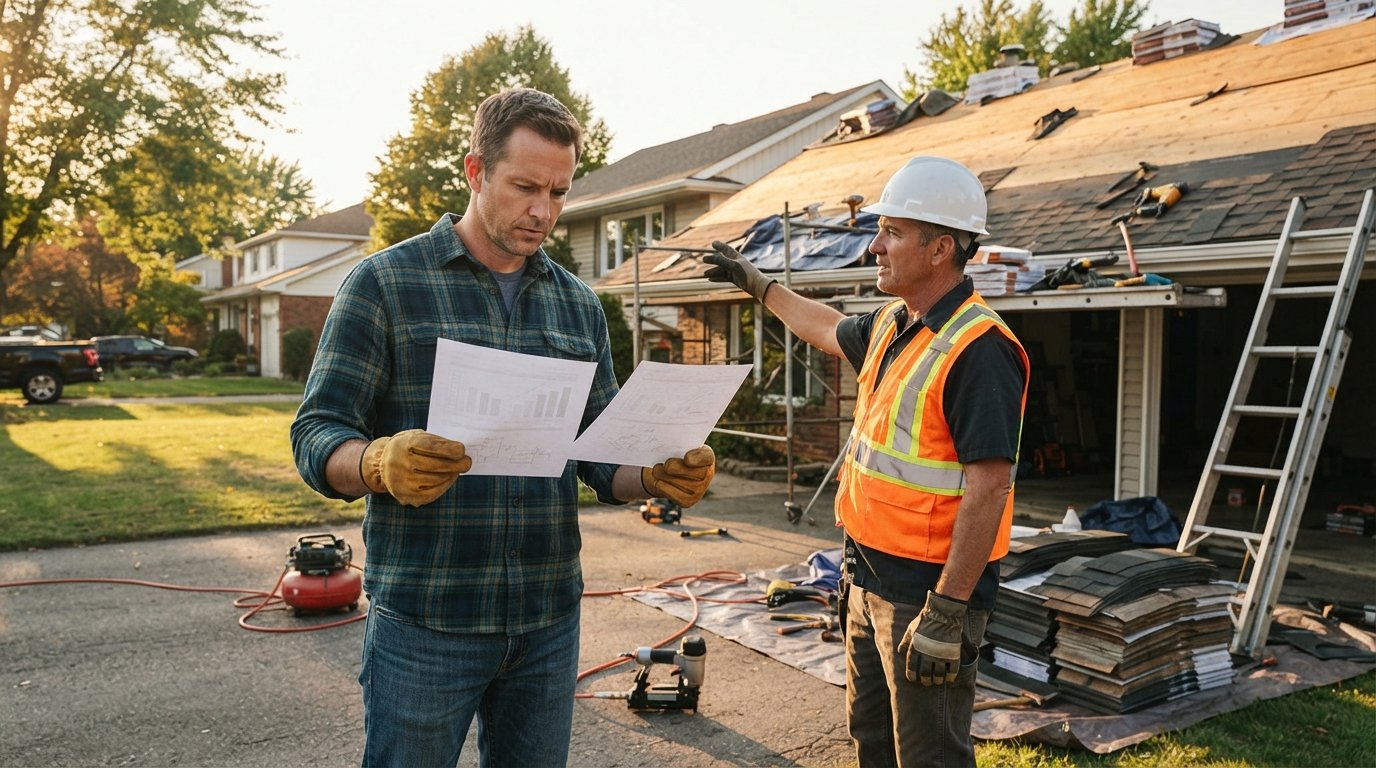
How to Compare Contractor Roof Replacement Quotes
Learn how to compare contractor quotes for roof replacement to save money and avoid costly mistakes with our expert guide.

By Chelsea Kris
Learn more about Roof Installation or Replacement for guides, costs, and what to expect.
Compare Roof Installation or Replacement Pros Near You

Enter your ZIP code to compare top-rated local professionals and request free quotes.
Your roof is one of the most critical components of your home, and when it needs replacement, the cost can be staggering. But the real challenge isn't just finding a contractor; it's knowing how to compare contractor quotes for roof replacement so you don't overpay or end up with subpar workmanship. Many homeowners make the mistake of choosing the lowest bid without understanding what's included, only to face surprise bills and headaches down the line. In this guide, we'll break down the exact steps to evaluate quotes effectively, ensuring you get the best value for your investment.
Why Comparing Roof Replacement Quotes Is More Than Just Price
When you receive multiple quotes for a roof replacement, the prices can vary by thousands of dollars. While it's tempting to go with the cheapest option, that can be a costly mistake. A low bid might mean lower-quality materials, rushed labor, or a contractor who cuts corners on important details like underlayment or ventilation. Conversely, the highest bid isn't always the best either. The key is to understand what each quote includes and how to compare them on an apples-to-apples basis.
In our guide on comparing home contractor quotes without overpaying, we emphasize that a thorough comparison goes beyond the bottom line. You need to look at the scope of work, materials specified, warranty terms, and the contractor's credentials. This approach ensures you're not just comparing prices but comparing value.
Step 1: Gather Multiple Quotes from Different Types of Contractors
The first step in comparing quotes is to collect at least three to four estimates from different roofing contractors. Don't just call the first name you find in a search engine; ask for recommendations from friends, family, and neighbors. Also, consider reaching out to local roofing associations or using a reputable platform like FreeQuotes.Contractors, which connects homeowners with pre-vetted local professionals. This gives you a solid pool of candidates to choose from.
When you request quotes, be consistent. Provide each contractor with the same information about your roof's size, pitch, and any specific issues you've noticed. This ensures that the quotes are based on the same scope, making comparison more accurate. Also, ask each contractor to visit your home for an inspection. A quote based on a phone call or satellite image is less reliable than one from an on-site evaluation.
Step 2: Break Down the Scope of Work in Each Quote
Once you have your quotes, the first thing to do is read them carefully. A high-quality quote should detail the work to be done, the materials to be used, and the timeline for completion. Look for specifics like the type of underlayment (felt vs. synthetic), the number of nails per shingle, and whether they'll replace flashing around chimneys and vents. If a quote is vague or uses generic terms like "roofing system," ask for clarification.
Here are some key elements to check in every quote:
- Material brands and quality levels (e.g., architectural vs. 3-tab shingles)
- Underlayment type and thickness
- Ventilation upgrades (ridge vents, soffit vents)
- Flashing replacement for valleys, pipes, and walls
- Cleanup and disposal of old roofing materials
- Number of layers being removed (tear-off vs. overlay)
After reviewing the lists, you should have a clear picture of what each contractor proposes. If one quote doesn't include a critical component like flashing replacement, that's a red flag. It might mean they plan to reuse old flashing, which could lead to leaks later, or they're simply cutting corners to lower the price.
Step 3: Compare Material Specifications and Quality
Not all roofing materials are created equal. The shingles, underlayment, and other components can vary significantly in quality and lifespan. A quote that specifies a high-end architectural shingle with a 50-year warranty will naturally cost more than one using a basic 3-tab shingle with a 25-year warranty. However, the long-term value could be better with the premium option, especially if you plan to stay in your home for many years.
Ask each contractor to list the exact brand and model of shingles they plan to use. For instance, GAF, Owens Corning, and CertainTeed are major manufacturers, but each has multiple product lines. Compare the wind ratings, impact resistance, and warranty terms. Also, note the difference in underlayment: synthetic underlayment is more durable and easier to install than felt, but it costs more. A quote that uses synthetic underlayment is often worth the extra expense.
Furthermore, check whether the quote includes ice and water shield in critical areas like eaves and valleys. This is a common upgrade that helps prevent ice dams in colder climates. If one quote includes it and another doesn't, the prices won't be directly comparable.
Step 4: Examine Warranty and Insurance Coverage
A roofing warranty can be broken down into two categories: the manufacturer's warranty on materials and the contractor's workmanship warranty. The manufacturer's warranty is typically 25 to 50 years, but it's often prorated. The workmanship warranty covers installation errors and can range from 1 to 10 years or more. A contractor who offers a 5-year workmanship warranty is more confident in their work than one offering only 1 year.
Also, verify that each contractor has liability insurance and worker's compensation coverage. Ask for certificates of insurance directly from their insurance provider, not just a copy from the contractor. This protects you from being liable for any accidents or damage that occur during the project. A contractor without proper insurance might offer a lower quote, but the risk is not worth it.
Step 5: Evaluate the Contractor's Reputation and Experience
Comparing quotes isn't just about the paperwork; it's also about the people behind it. Research each contractor's reputation by checking online reviews on platforms like Google, Yelp, and the Better Business Bureau. Look for patterns in complaints, such as poor communication, missed deadlines, or unresolved issues. However, don't dismiss a contractor because of a single negative review; consider the overall trend and how they respond to feedback.
Ask for references from past customers, especially those who had a roof replacement within the last two years. Call them and ask about their experience, the crew's professionalism, and whether the project was completed on time and within budget. Also, check how long the contractor has been in business. A company with 20 years of experience is more likely to be financially stable and able to honor warranties than a fly-by-night operation.
Step 6: Look Beyond the Quote: Communication and Professionalism
The way a contractor communicates during the quoting process is a strong indicator of how they'll handle the project. Did they return your calls promptly? Were they willing to answer all your questions in detail? Did they provide a written quote without extra pressure? A contractor who is responsive and transparent during the bidding phase is likely to maintain that level of service throughout the job.
Also, consider the professionalism of their presentation. A detailed, well-organized quote suggests that the contractor is thorough and takes pride in their work. On the other hand, a sloppy or incomplete quote might reflect a lack of attention to detail. Trust your instincts; if something feels off, it probably is.
Step 7: Calculate the True Cost of Ownership
When comparing roof replacement quotes, don't just look at the upfront cost. Consider the long-term value. A slightly more expensive quote that includes higher-quality materials and a longer workmanship warranty could save you money in the long run by avoiding premature failures and costly repairs. Additionally, a more energy-efficient roofing system can lower your heating and cooling bills, offsetting some of the initial investment.
To make this comparison easier, create a simple spreadsheet with columns for each contractor and rows for the key components: material quality, underlayment, flashing, ventilation, warranty, and total price. This visual breakdown helps you see where the differences lie and which quote offers the best overall package. You can also factor in the contractor's reputation and your confidence in their ability to deliver.
Step 8: Watch Out for Red Flags and Hidden Costs
There are several red flags that should make you reconsider a quote. For instance, a contractor who demands a large down payment before any work begins is a warning sign. Most reputable contractors ask for a small deposit, with the balance due upon completion. Similarly, be wary of quotes that are significantly lower than the others; this could be a sign of a bait-and-switch tactic, where the contractor adds unexpected charges once the job starts.
Also, check for hidden costs. Some quotes might not include permit fees, dumpster rental, or the cost of disposing old roofing materials. Ask each contractor to itemize these costs so you can compare fairly. If a quote is missing these items, it's not a true comparison.
Another red flag is a contractor who pressures you to sign a contract immediately or offers discounts for "acting now." Legitimate contractors understand that you need time to compare quotes and make an informed decision. If you feel rushed, walk away.
Step 9: Negotiate with Confidence
Once you've narrowed down your options, you can use the quotes as leverage to negotiate. Let the contractors know you're comparing bids and ask if they can match or beat a competitor's price, especially if you prefer their workmanship or materials. However, don't negotiate solely on price; instead, ask for added value, such as an extended warranty, a free gutter cleaning, or an upgrade to synthetic underlayment.
Be respectful in your negotiations. Contractors have to make a profit to stay in business, and a fair price benefits both parties. If a contractor can't meet your budget, consider whether you can adjust your expectations or if the higher price is justified by the quality of their work.
Step 10: Make Your Final Decision
After you've evaluated all the quotes, reviewed the contractors' credentials, and checked references, it's time to make your final decision. Choose the contractor who offers the best combination of price, quality, warranty, and professionalism. The cheapest quote might be tempting, but if it doesn't include essential components or comes from a contractor with a poor reputation, it's not a bargain. Conversely, the most expensive quote isn't always the best if it's overpriced for the market.
Once you've made your choice, ensure everything is in writing. The contract should include the full scope of work, materials, timeline, payment schedule, and warranty details. Review it carefully before signing, and don't hesitate to ask for changes. A well-documented contract protects both you and the contractor.
Comparing roof replacement quotes might seem like a daunting task, but with a systematic approach, you can make a confident decision that ensures a durable, quality roof for your home. Remember, the goal isn't to find the cheapest or the most expensive; it's to find the best value that provides peace of mind for years to come.
By following these steps, you'll not only avoid overpaying but also reduce the risk of future issues. Take your time, ask the right questions, and trust your research. Your roof is a long-term investment, and choosing the right contractor is just as important as choosing the right materials. With careful comparison, you'll be well on your way to a successful roof replacement project.