
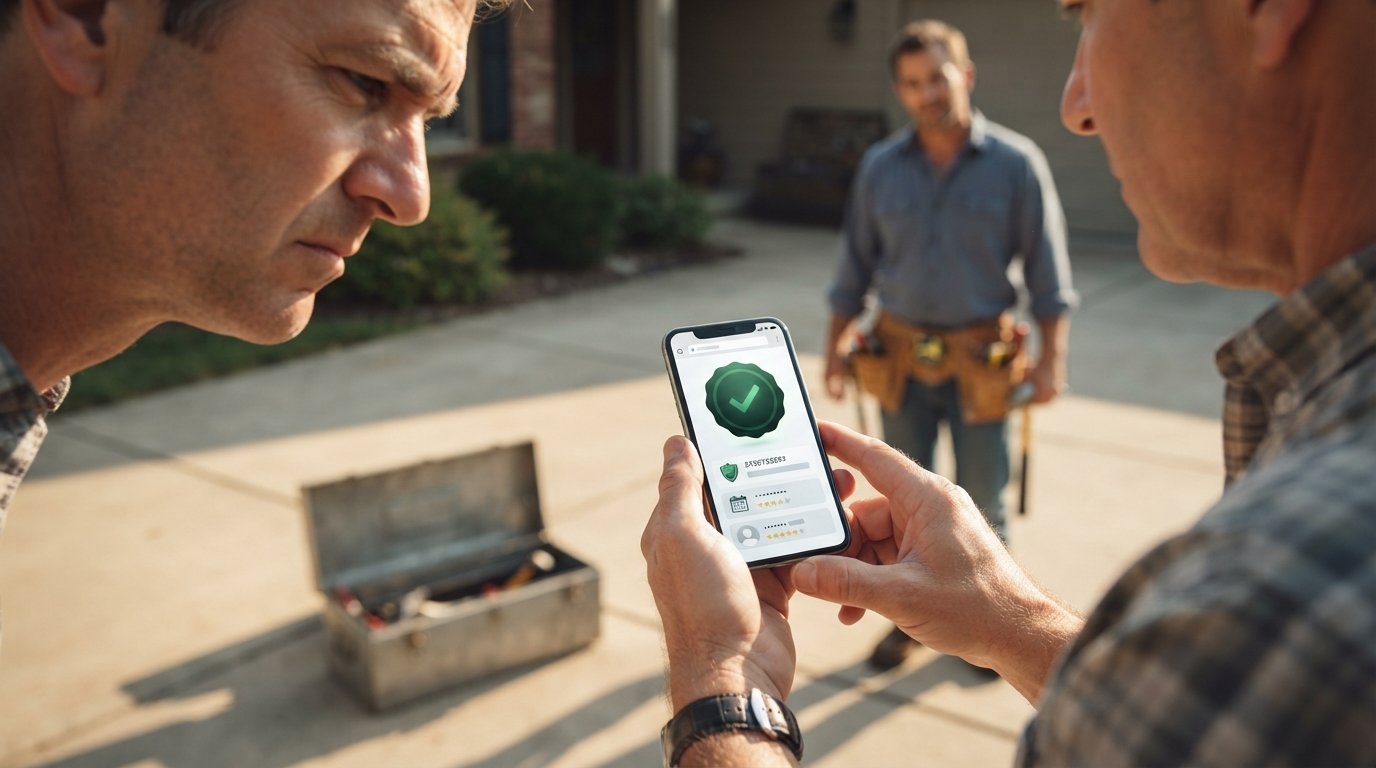
How to Check If a Contractor Is Licensed and Insured
Learn how to check if a contractor is licensed and insured in 7 simple steps, and protect your home from expensive mistakes and legal headaches.
By Scott Thompson
Learn more about Construction Services for guides, costs, and what to expect.
Compare Construction Services Pros Near You

Enter your ZIP code to compare top-rated local professionals and request free quotes.
You are about to hand over thousands of dollars to a stranger who will tear into your roof, rewire your kitchen, or dig up your foundation. The single biggest mistake homeowners make is skipping the verification step and trusting a contractor's word that they are properly licensed and insured. One bad hire can leave you with shoddy workmanship, unpaid subcontractors, or a lawsuit when someone gets injured on your property. Here is the exact process to verify credentials before you sign anything, along with the questions to ask and the documents to request.
Why Verification Is Non-Negotiable
Every state has its own licensing rules, but none of them protect you if you fail to do your homework. A contractor who shows up without a license might be skilled, but they are also operating outside the law. When something goes wrong, you have little recourse: the state licensing board cannot help you file a complaint against someone they do not regulate.
Insurance is even more critical. If a worker falls off your roof and the contractor lacks workers' compensation, that medical bill lands on your doorstep. If your kitchen catches fire due to faulty wiring and the contractor has no liability coverage, you pay for the repairs out of pocket. Verifying both protects your finances and your legal standing.
Step 1: Ask for the License Number and Verify It
Do not ask, "Are you licensed?" Anyone can say yes. Instead, ask for the specific license number and the name of the agency that issued it. In most states, this is the Contractors State License Board or the Department of Professional Regulation. Write down the number and look it up online.
Each state maintains a public database where you can confirm three things:
- The license is currently active and in good standing
- The license covers the exact type of work you need
- The business name matches the name on your contract
If you cannot find the license online, call the issuing agency directly. Some states also require local business licenses or permits for specific trades like electrical or plumbing. For example, a general contractor may hold a state license, but the electrician they bring in needs their own trade license. Ask to see those as well.
Be wary of contractors who give you a license number that belongs to a different company or a number that is expired. A quick search takes two minutes and can save you from a world of pain. If the license is not verifiable, walk away. There is no legitimate reason for a contractor to hide this information.
Step 2: Demand Proof of Insurance
Licensing proves the contractor passed a basic exam and paid a fee. Insurance proves they can cover your losses if something goes wrong. You need two types of coverage: general liability and workers' compensation. General liability pays for damage to your property, like a broken window or a dented gutter. Workers' comp pays for injuries to the crew while they are on your job site.
Ask for a certificate of insurance (COI) directly from the contractor. This one-page document lists the insurance company, the policy number, the coverage limits, and the effective dates. Do not accept a photocopy or a screenshot. A legitimate contractor will ask their insurer to send you a COI directly, or they will provide a copy you can verify with a phone call.
Verify the COI by calling the insurance company listed on the document. Confirm that the policy is active, the policyholder is the contractor's business, and the coverage limits meet your state's minimums. In many states, the minimum liability limit is $500,000, but for larger projects you should consider requiring $1 million or more. If the contractor is a single person with no employees, they may not carry workers' comp, but they should still have liability coverage.
Step 3: Understand the Difference Between Bonded and Insured
Homeowners often confuse being bonded with being insured, and contractors sometimes blur the lines to sound more official. A bond is a form of protection that covers you if the contractor fails to complete the job or violates the terms of the contract. It is not the same as insurance, which covers accidents and damage.
If a contractor says they are bonded, ask for the bond number and the surety company's name. A performance bond protects you financially if the contractor walks off the job halfway through. A license bond protects the state from unprofessional behavior. Neither covers injuries or property damage. For that, you still need general liability and workers' comp.
In practice, most residential contractors carry a license bond as a condition of getting their license, but that bond is not a replacement for insurance. Always ask for both the bond and the insurance certificate, and verify each one independently.
Step 4: Check for Red Flags in the Paperwork
Even with a valid license and COI in hand, you should read every document carefully. Look for expired dates, names that do not match, and coverage limits that seem too low. A COI with a policy that expires next week is a warning sign. A policy that lists the contractor's personal name instead of the business name may not cover the job site.
Ask the contractor to add you as an additional insured on their policy. This is a standard request for larger projects, and many contractors will do it for free. An additional insured endorsement means the insurance company must cover you as well if a claim arises from the work. It gives you an extra layer of protection that most homeowners never think to request.
If the contractor hesitates or refuses to provide proof of insurance, that is a dealbreaker. Do not let a charming personality or a low bid override your instincts. The cost of verifying credentials is nothing compared to the cost of a lawsuit.
Step 5: Verify with the State Licensing Board
Your state's licensing board is the final authority on whether a contractor is legitimate. Search the board's website for the contractor's name and license number. Check for any disciplinary actions, complaints, or suspensions on their record. In some states, you can also view the contractor's exam history and the scope of their license.
If you find complaints, do not automatically disqualify the contractor. Read the details. One complaint from an unreasonable client is not the same as a pattern of negligence. But if you see multiple complaints about unfinished work, property damage, or unsafe practices, move on to the next name on your list.
You can also check the Better Business Bureau (BBB) and online review platforms, but remember that reviews are not a substitute for official records. A contractor with a perfect BBB rating can still be unlicensed and uninsured. Always start with the state database, then use reviews as a secondary filter.
Step 6: Ask for References and Call Them
Licensing and insurance tell you the contractor is legal, not that they do good work. Before you commit, ask for a list of at least three references from the past year. Call those homeowners and ask specific questions:
- Did the contractor show up on time and stick to the schedule?
- Were there any surprise costs or change orders?
- Did the crew clean up the job site daily?
- Would you hire this contractor again?
Pay special attention to how the contractor handled problems. Every project has hiccups. The best contractors resolve issues quickly and fairly. The worst ones blame the homeowner and disappear. A reference who says, "They fixed the problem without extra charge" is worth more than a hundred five-star reviews.
If a contractor cannot provide references, that is a red flag. A legitimate business with a track record will have happy clients willing to vouch for them. Be wary of contractors who claim they are "too busy" to provide references or who only offer names of friends and family.
Step 7: Get Everything in Writing
Once you have verified the license and insurance, you need a written contract that spells out every detail of the project. This includes the scope of work, the timeline, the payment schedule, and the warranty terms. Do not rely on verbal promises or a handshake. If a contractor refuses to put something in writing, walk away.
Your contract should also include a clause that requires the contractor to provide proof of insurance at the start of each workday. Some contractors let their policies lapse mid-project, leaving you exposed. A simple clause in the contract protects you if they fail to renew their coverage.
Insist on a lien waiver before you make the final payment. This document proves that the contractor has paid their suppliers and subcontractors, so no one can put a lien on your house for unpaid materials. It is a common practice in the industry, and any reputable contractor will provide it.
What to Do If You Skipped the Verification
If you already hired a contractor without checking their credentials, it is not too late to protect yourself. Ask for their license number and COI immediately. If they cannot provide them, you may need to terminate the contract, even if it means losing a deposit. The cost of a lawyer is far less than the cost of defending a lawsuit.
You can also check your state's licensing board to see if the contractor has a history of violations. If you discover problems, document everything and file a complaint with the board. In some states, you can also report unlicensed activity to the local district attorney's office.
For future projects, make the verification process a habit. It takes less than fifteen minutes to check a license and call an insurance company, and it can save you thousands of dollars and months of stress.
Use a Pre-Screened Contractor Network
If the paperwork feels overwhelming, consider using a platform that pre-screens contractors for you. ContractorHomeQuotes connects homeowners with pre-screened, licensed local contractors for free, no-obligation quotes. Their vetting process includes license and insurance verification, so you can focus on comparing bids instead of chasing credentials. For a deeper look at how to evaluate a contractor's background and reputation before you commit, read our guide on how to vet foundation repair contractors. That guide walks through the specific checks for structural work, but the principles apply to any trade.
Another option is FreeQuotes.Contractors, a digital marketplace that also pre-vets contractors and provides educational resources. Both platforms are worthwhile starting points, but you should still ask for the license and COI yourself. No platform can guarantee that a contractor maintains their coverage throughout your project.
The bottom line: verifying a contractor's license and insurance is not a formality. It is the only way to protect your home, your bank account, and your peace of mind. Spend the fifteen minutes it takes to do the checks, and you will sleep better when the crew shows up at your door. FreeQuotes.Contractors