
Heat Pump Installation: Costs, Steps, and Pro Tips for 2026
Learn what heat pump installation really costs, the key steps involved, and how to choose a reliable installer for a smooth, efficient upgrade.

By Jackson Sawyer
Learn more about Heating System Installation or Replacement for guides, costs, and what to expect.
Compare Heating System Installation or Replacement Pros Near You

Enter your ZIP code to compare top-rated local professionals and request free quotes.
When your old furnace finally gives out or your summer cooling bills keep climbing, a heat pump can feel like the answer to both problems. But the phrase "heat pump installation" often brings up a mix of excitement and anxiety: excitement because these systems are efficient and versatile, anxiety because the upfront cost and the process itself seem complicated. If you are a homeowner staring down a quote from an HVAC contractor, you are not alone. The good news is that understanding what goes into a heat pump installation, from equipment selection to labor costs, puts you in a position to make a confident, informed choice. This guide walks you through the entire journey, so you know exactly what to expect before you sign anything.
Why a Heat Pump Makes Sense for Your Home
A heat pump is a single system that can both heat and cool your home. Instead of burning fuel like a furnace, it moves heat from one place to another. In the winter, it pulls heat from the outside air (even when it is cold) and brings it inside. In the summer, it reverses the process and acts like an air conditioner. This dual function is why many homeowners see it as a replacement for both their furnace and their AC unit. The efficiency is also a major draw: modern heat pumps can deliver three to four times more energy than they consume, which translates to lower monthly utility bills.
However, the performance of your heat pump depends heavily on how well it is installed. An undersized unit will struggle to keep you comfortable, while an oversized one will short-cycle and waste energy. That is why the installation process is just as important as the equipment itself. The right contractor will perform a load calculation, check your ductwork, and recommend a system that matches your home's specific needs. If you are still deciding between a heat pump and a traditional furnace, our guide on understanding water heater replacement quotes offers a similar cost-comparison perspective that can help you evaluate different HVAC investments.
Key Factors That Determine Heat Pump Installation Costs
The total cost of a heat pump installation is not a single number. It depends on a mix of equipment choices, labor rates, and site-specific conditions. On average, homeowners pay between $5,000 and $12,000 for a complete installation, but that range can shift higher or lower based on the following variables. Knowing these factors helps you interpret the quotes you receive and avoid surprises.
- System type: Ductless mini-splits are typically less invasive and cost less to install, while central ducted systems require existing ductwork to be in good shape.
- Efficiency rating: Higher SEER and HSPF ratings mean better performance and lower operating costs, but they also raise the upfront price.
- Brand and size: Premium brands and larger capacity units (measured in tons) cost more, but they may be necessary for larger homes.
- Ductwork condition: If your ducts are old, leaky, or undersized, you may need duct sealing or replacement, which adds to the total.
- Permits and labor: Local permit fees and the complexity of the installation (e.g., difficult access, electrical upgrades) affect labor costs.
These factors also influence how many quotes you should gather. A reputable contractor will always perform a site visit and a Manual J load calculation before giving you a firm price. If a contractor quotes you over the phone without inspecting your home, that is a red flag. You want a detailed, line-item estimate that separates equipment cost, labor, and any additional services like electrical panel upgrades or refrigerant line installation.
Step-by-Step: What a Typical Heat Pump Installation Looks Like
Understanding the installation process helps you know what to expect on the day of the job. A standard installation, whether it is a ducted central system or a ductless mini-split, follows a similar sequence. Here is what a professional crew will typically do:
- Pre-installation inspection: The technician verifies the existing electrical panel, checks the ductwork (if applicable), and confirms the location for the outdoor unit.
- Removing the old system: If you are replacing an existing furnace or AC, the crew will safely disconnect and haul away the old equipment, including refrigerant, which must be handled properly.
- Installing the indoor unit: For a ducted system, this means placing the air handler and connecting it to your ductwork. For a ductless system, it involves mounting the indoor wall units and running refrigerant lines.
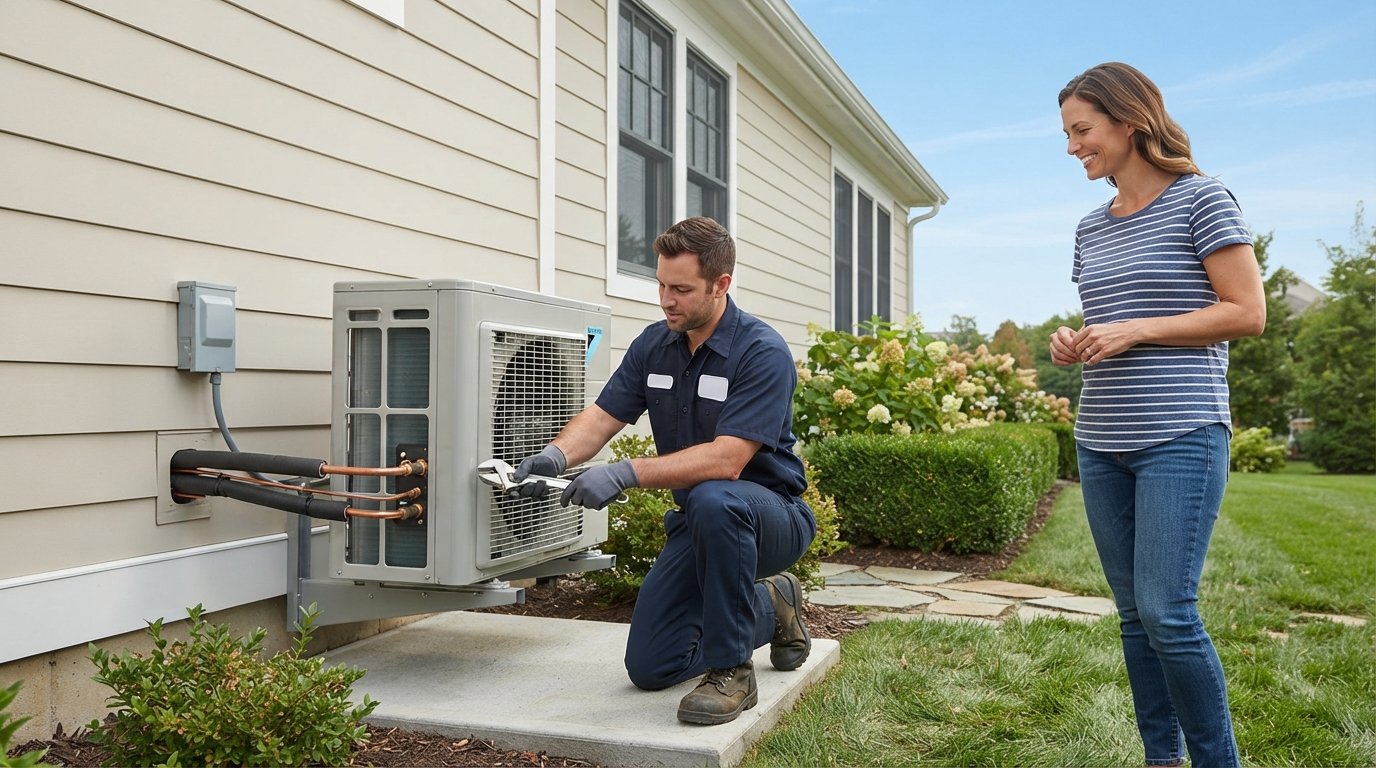
- Setting the outdoor unit: The condenser or heat pump outdoor unit is placed on a level pad, usually a concrete slab or plastic stand, to keep it elevated and stable.
- Connecting the line set and wiring: The refrigerant lines and electrical connections are run between the indoor and outdoor units, then the system is charged with refrigerant and tested.
- Final testing and cleanup: The crew checks for leaks, verifies airflow, tests the thermostat, and walks you through the new system's operation.
The entire process usually takes one to two days, depending on the complexity. Ductless mini-split installations can often be completed in a single day, while a full ducted replacement with ductwork modifications might stretch to two or three days. During the installation, you should expect some noise and temporary disruption, but a professional crew will protect your floors and clean up afterward. If you are planning a larger renovation, keep in mind that a heat pump installation can be coordinated with other projects, but it is often best to handle it separately to avoid conflicts with your contractor's schedule.
Ducted vs. Ductless: Which Heat Pump Installation Is Right for You?
One of the first decisions you will face is whether to go with a ducted central heat pump or a ductless mini-split system. Both have their advantages, and the right choice depends on your home's existing infrastructure and your comfort priorities.
A ducted system is ideal if you already have forced-air ductwork in good condition. It is often the most cost-effective option because it uses the same ducts as your old furnace or AC, keeping the installation simpler and less expensive. The main downside is that ductwork can lose energy through leaks or poor insulation, which reduces the system's efficiency. If your ducts are old or leaky, you may need to have them sealed or replaced, which adds to the project cost.
On the other hand, a ductless mini-split system does not require any ductwork at all. It uses small indoor units mounted on walls or ceilings, connected to an outdoor compressor by a slim refrigerant line. This makes it an excellent choice for homes without ductwork, additions, or spaces where installing ducts would be too invasive. Ductless systems also offer zoned heating and cooling, meaning you can set different temperatures in different rooms, which can save energy. The trade-off is that the upfront cost per unit is often higher, and the indoor units may not appeal to everyone aesthetically.
If you are unsure which type fits your home, a qualified contractor can assess your ductwork and recommend the best option. For homes with an existing ducted furnace, a ducted heat pump is usually the most straightforward replacement. For older homes without ducts, a ductless system is often the more practical and cost-effective route. This decision also impacts your long-term energy bills, so it is worth taking the time to get it right.
How to Choose a Heat Pump Installer You Can Trust
The quality of your heat pump installation is only as good as the contractor you hire. A poorly installed system can lead to air leaks, refrigerant issues, and premature breakdowns. To avoid these problems, take the time to vet your candidates carefully. Start by asking for recommendations from friends, family, or neighbors, and then check online reviews on platforms like Google, Yelp, and the Better Business Bureau. Look for contractors who are licensed, insured, and have experience specifically with heat pump installations.
When you interview potential contractors, ask for a detailed written estimate that includes the equipment model, installation labor, and any permit fees. A trustworthy contractor will also perform a load calculation to determine the correct size for your home. They should be willing to explain their process and answer your questions without pressure. If a contractor gives you a vague quote or tries to upsell you on features you do not need, consider that a warning sign. You should also verify that they are certified by the manufacturer of the heat pump you are considering, as this often comes with extended warranty benefits.
Once you have gathered two or three quotes, compare them not just on price but on the scope of work. The lowest bid may not include necessary services like duct sealing or electrical panel upgrades, which can lead to surprise costs later. For more guidance on evaluating contractor bids, you can refer to our essential guide to hiring a water heater contractor, which offers similar vetting principles that apply to any HVAC professional. Taking the time to choose the right installer will pay off in the form of a system that runs efficiently and reliably for years.
Permits, Rebates, and Financing: The Financial Side of Installation
Before your heat pump installation begins, you need to consider the paperwork and financial incentives that can offset the cost. Most municipalities require a permit for a new heat pump installation, especially if it involves electrical work or refrigerant lines. Your contractor should handle the permitting process, but you should confirm that they will pull the required permits as part of the job. The permit fee is usually included in the estimate, but it is worth asking to avoid an unexpected charge.
In addition to permits, there are often rebates and tax credits available for heat pump installations. The federal government and many states offer incentives for high-efficiency heat pumps, and some utility companies provide rebates as well. These incentives can reduce your upfront cost by hundreds or even thousands of dollars. Your contractor should be able to tell you about any programs you qualify for, or you can research them through the Database of State Incentives for Renewables and Efficiency (DSIRE).
If the upfront cost is a concern, many contractors offer financing options, such as installment plans or low-interest loans. Some manufacturers also provide financing with promotional rates. Be sure to read the terms carefully and understand the interest rate and repayment period before signing. Financing can make a heat pump installation more manageable, but you want to avoid high-interest debt. As you plan your budget, remember that the energy savings from a high-efficiency heat pump can offset the monthly payment over time, so consider the total cost of ownership rather than just the sticker price.
Why You Should Always Get Multiple Quotes
One of the biggest mistakes homeowners make is accepting the first quote they receive for a heat pump installation. Prices can vary by 20% or more between contractors for the same system, simply because of differences in labor rates, overhead, and how they calculate their margins. Getting multiple quotes is the best way to ensure you are paying a fair price and to give yourself negotiating leverage. It also helps you identify any outliers: a quote that is much lower than the others might indicate a contractor cutting corners, while a quote that is much higher might be inflated.
When you compare quotes, look beyond the bottom line. Check that each quote includes the same equipment model and efficiency rating, as well as the same scope of work. If one contractor includes a 10-year labor warranty and another does not, that difference is worth paying for. You should also ask about the manufacturer's warranty, which typically covers parts for 10 years, and whether the contractor offers a labor warranty for their workmanship. A reputable contractor will stand behind their installation with a warranty of at least one year, often longer.
To make the comparison process easier, use our free quote comparison tool to receive up to three no-obligation quotes from pre-screened local contractors. This not only saves you time but also gives you a clear picture of the range of prices in your area. With multiple quotes in hand, you can make a confident decision that balances cost, quality, and peace of mind.
Preparing Your Home for Installation Day
Once you have selected your contractor and confirmed the installation date, a little preparation on your part can make the process go smoothly. Clear the area around your indoor unit (if it is a ductless system) or your furnace and air handler, so the technicians have easy access. Move any furniture or valuables out of the way, and cover the floor with drop cloths if you are concerned about dust or debris. For the outdoor unit, make sure the location is clear of plants, debris, and any obstacles that could interfere with the installation.
On installation day, the crew will need access to your electrical panel, so make sure it is easy to find and not blocked. If you have pets, consider keeping them in a separate room or in a crate during the installation, as the noise and strangers can be stressful. You should also plan to be home for at least part of the installation to answer questions and make decisions, though a professional crew will handle most of the work independently.
After the installation is complete, the technician will walk you through the system's operation, including how to set the thermostat, change filters, and perform basic maintenance. Take notes or ask for a quick summary so you remember the key points. It is also a good idea to keep all documentation, including the warranty information and the contractor's contact details, in a safe place for future reference.
Maintenance and Long-Term Performance
A heat pump is a long-term investment, and regular maintenance is essential to keep it running at peak efficiency. Simple tasks like changing the air filter every one to three months can have a big impact on airflow and energy use. You should also keep the outdoor unit clear of leaves, snow, and debris, and check that the fins are not bent or damaged. An annual professional tune-up, usually performed by an HVAC contractor, will include checking refrigerant levels, inspecting electrical connections, and cleaning the coils. This can extend the life of your system and prevent costly breakdowns.
In terms of lifespan, a well-maintained heat pump can last 15 years or more, though the outdoor unit may need replacement sooner if it is exposed to harsh weather. The efficiency of your system will also decline over time, so if your energy bills start creeping up, it may be a sign that the system is due for a tune-up or replacement. By staying on top of maintenance, you can maximize your return on investment and enjoy comfortable temperatures year-round.
Getting a heat pump installed is a significant decision, but it is one that can lower your energy bills, improve comfort, and increase your home's value. The key is to approach it with knowledge and careful planning. Start by researching the type of system that fits your home, getting multiple quotes, and choosing a contractor you trust. If you are ready to take the next step, use our free quote service to connect with qualified local installers and get the ball rolling. With the right system and the right installer, you will enjoy efficient heating and cooling for years to come.