
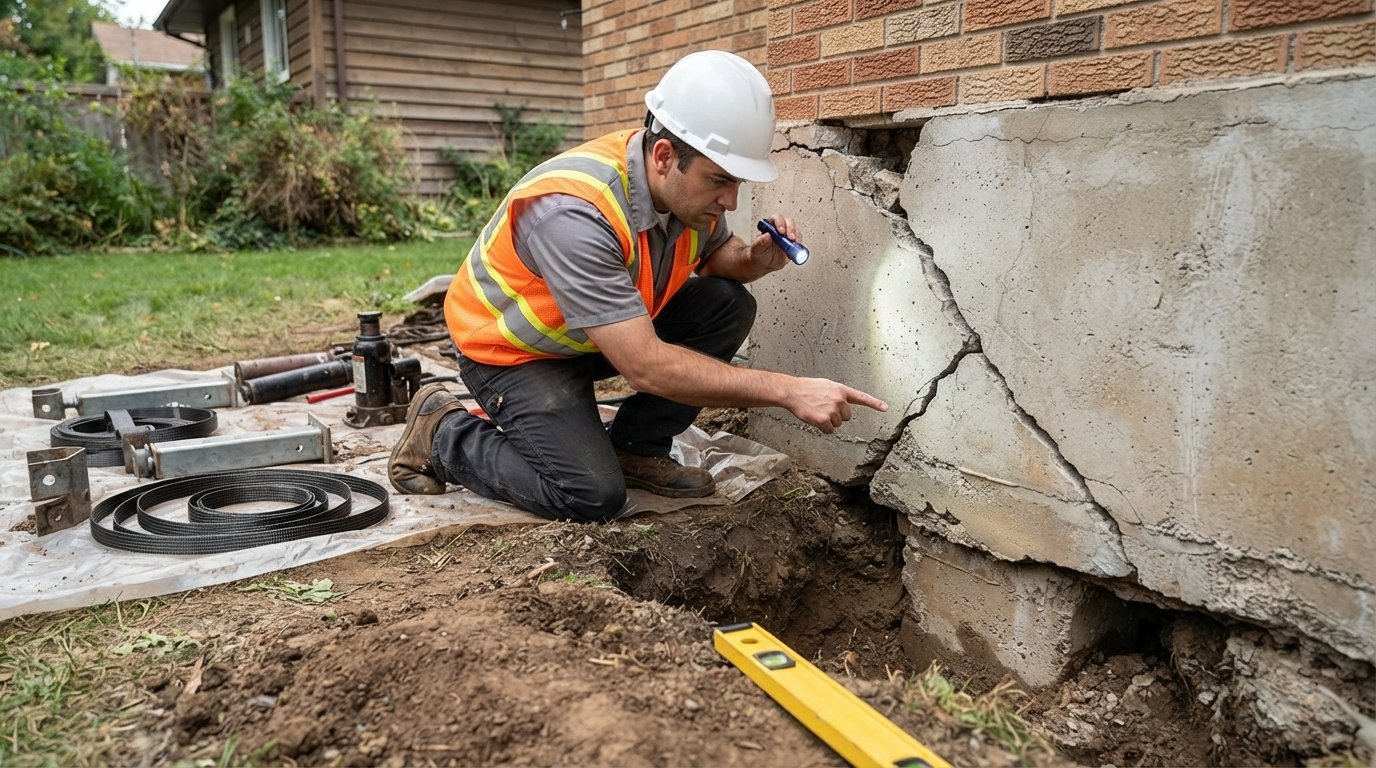
Foundation Repair vs House Leveling: When to Call an Engineer
Foundation repair vs house leveling: learn when to call a structural engineer. Call 8333658755 for expert help.

By Joshua Benson
Learn more about Foundation Repair for guides, costs, and what to expect.
Compare Foundation Repair Pros Near You

Enter your ZIP code to compare top-rated local professionals and request free quotes.
Your floors slope, cracks spiderweb across the drywall, and doors stick in their frames. You know something is wrong with your home's foundation, but the terminology is confusing: is this a foundation repair problem or a house leveling problem? And at what point does a structural engineer need to get involved? These questions matter because the wrong diagnosis can lead to unnecessary spending, missed structural issues, or a repair that fails within a few years. Understanding the difference between foundation repair and house leveling, and knowing when to escalate to a licensed structural engineer, can save you thousands of dollars and protect your home's long-term value.
Understanding the Difference Between Foundation Repair and House Leveling
Foundation repair and house leveling are related but distinct processes. Foundation repair addresses damage to the foundation itself, such as cracks in the slab, bowing basement walls, or deteriorated footings. House leveling, by contrast, focuses on restoring the home to a level position by adjusting the supports beneath it. In many cases, leveling is the method used to fix a foundation problem, but the two terms are not interchangeable.
Foundation repair can involve sealing cracks, installing carbon fiber straps, adding steel piers, or addressing soil erosion through drainage improvements. House leveling typically involves lifting the structure using hydraulic jacks and then stabilizing it with piers or shims. The scope of work depends on whether the problem is cosmetic (minor cracks) or structural (settling that affects the entire home).
To clarify further, here is a breakdown of what each service typically includes:
- Foundation repair: Fixing cracks, waterproofing, repairing footings, installing piers, and addressing soil issues.
- House leveling: Raising or shimming the home to correct slopes, often using piers or mudjacking.
- Structural stabilization: Combining both approaches to ensure the home remains safe and level long-term.
The key takeaway is that house leveling is often a subset of foundation repair, but not all foundation repairs require leveling. For example, a cracked foundation wall due to hydrostatic pressure may need waterproofing and crack injection, but the home itself may still be level. Conversely, a home that has settled unevenly will require leveling, which may or may not involve extensive foundation repair.
Common Signs You Need Foundation Repair or House Leveling
Homeowners often wonder whether their symptoms point to a simple repair or a full leveling job. The signs can overlap, but certain indicators suggest one over the other. Here are the most common red flags:
- Uneven floors: Sloping or sagging floors are a classic sign of settlement, which usually calls for house leveling.
- Sticking doors and windows: When frames go out of square, it often means the foundation has moved unevenly.
- Cracks in walls or floors: Horizontal cracks in foundation walls suggest structural pressure, while stair-step cracks in brickwork indicate settlement.
- Gaps around windows or exterior doors: These can appear when the foundation shifts.
- Bowing or leaning walls: This is a serious structural issue that requires immediate attention.
If you notice multiple signs, especially those affecting the entire house, it is time to call a professional. Ignoring these symptoms can lead to further damage, including plumbing leaks, roof misalignment, and even collapse in extreme cases.
It is also important to differentiate between cosmetic issues and structural ones. A hairline crack in a concrete slab that has not changed in years may be harmless, but a widening crack that runs diagonally across a wall is a cause for concern. When in doubt, consult a foundation repair specialist or structural engineer.
When to Call a Structural Engineer
A structural engineer is a licensed professional who evaluates the integrity of a building's structure and designs repair plans. While foundation repair contractors are skilled at implementing fixes, they are not always qualified to diagnose the root cause of complex structural problems. Knowing when to bring in an engineer can save you from making costly mistakes.
You should call a structural engineer if you observe any of the following:
- Major cracks: Cracks wider than 1/4 inch, horizontal cracks in foundation walls, or cracks that progress rapidly.
- Significant settlement: Floors that slope more than an inch over 20 feet, or doors that no longer close.
- Previous repairs failed: If a contractor has already attempted repairs and the problem persists, an engineer can diagnose why.
- You are buying or selling a home: A professional evaluation can provide peace of mind and prevent liability issues.
- Multiple trades are involved: When plumbing, electrical, and structural issues intersect, an engineer can coordinate a comprehensive solution.
An engineer will typically perform a thorough inspection, which may include soil testing, laser leveling, and structural analysis. They will then provide a report with recommendations, often specifying the type and extent of repairs needed. This report can be used to obtain accurate bids from contractors, ensuring everyone is working from the same plan.
Hiring an engineer upfront might seem like an extra cost, but it often saves money by preventing unnecessary or ineffective repairs. It also gives you leverage when negotiating with contractors, as you have an expert opinion on your side. In our guide on understanding foundation repair quotes, we explain how to compare bids and spot red flags, which is especially useful once you have an engineer's report in hand.
The Risks of Skipping a Structural Engineer
Some homeowners skip the engineer to save a few hundred dollars, relying solely on a contractor's assessment. This can be a costly mistake. Contractors may have a financial incentive to recommend their own services, even if those services are not the best solution for your situation. Without an independent evaluation, you may end up paying for leveling when the real issue is a plumbing leak, or for crack injection when the foundation needs piers.
Moreover, some foundation problems are symptoms of larger issues, such as poor soil drainage or tree roots invading the foundation. A structural engineer can identify these root causes and recommend holistic solutions, whereas a contractor might simply treat the symptom. For example, if a downspout is discharging water next to the foundation, an engineer will note that fixing the drainage is essential to prevent recurrence.
Another risk is that repairs without engineering oversight may not meet building code requirements or may void warranties. If you plan to sell your home, a lack of proper documentation could raise red flags during a buyer's inspection. In short, the modest fee for an engineer's evaluation is a wise investment in your home's future.
How to Choose the Right Professional for Your Foundation Issue
Once you have determined that you need professional help, the next step is to select the right team. You may need a structural engineer, a foundation repair contractor, or both. Here is a step-by-step approach to finding qualified professionals:
- Get a referral from a trusted source: Ask friends, family, or your real estate agent for recommendations.
- Verify licenses and insurance: Ensure the contractor is licensed in your state and carries both general liability and workers' compensation insurance.
- Check for engineer credentials: Structural engineers should be licensed Professional Engineers (PE) with experience in residential foundations.
- Request multiple quotes: Obtain at least three bids, ideally based on the same engineer's report, to compare apples to apples.
- Ask about warranties: A reputable contractor will offer a transferable warranty on their work.
When comparing quotes, be wary of extremely low bids, as they may indicate cut corners or inferior materials. Also, avoid contractors who pressure you to sign immediately or who cannot provide references. For a deeper dive into vetting contractors, our article on finding pre-vetted local contractors offers practical tips on how to screen professionals and get free quotes.
Remember that the lowest price is not always the best value. A well-executed repair that addresses the root cause will last longer and cost less over time than a cheap fix that fails in a few years.
Cost Considerations: Foundation Repair vs House Leveling
The cost of foundation repair and house leveling varies widely depending on the severity of the problem, the method used, and your geographic location. On average, foundation repair can range from $2,000 to $10,000, while whole-house leveling might cost $5,000 to $15,000 or more. These figures are rough estimates and should be verified with local contractors.
Factors that influence cost include:
- Extent of damage: Minor cracks cost less to fix than widespread settlement.
- Repair method: Piering is more expensive than mudjacking but offers a permanent solution.
- Accessibility: Crawl spaces are easier to work in than slab-on-grade foundations.
- Permits and engineering fees: These add to the total but are necessary for compliance and quality.
It is also worth noting that some repairs may be covered by homeowners insurance if the damage is sudden and accidental (e.g., a burst pipe causing soil erosion). However, most policies exclude earth movement, so check your coverage carefully. An engineer's report can help substantiate a claim if you decide to file one.
To get a more accurate picture for your specific situation, request itemized quotes from multiple contractors. Be sure to ask what is included and what is not, such as permits, cleanup, and follow-up inspections.
Preventive Measures to Avoid Future Foundation Problems
While not all foundation issues are preventable, you can take steps to minimize the risk. Proper drainage is key: ensure gutters are clean and downspouts discharge at least 5 feet away from the foundation. Maintain consistent soil moisture by watering during dry spells, but avoid overwatering. Also, plant trees at a safe distance (at least 10 feet for large species) to prevent roots from disrupting the soil.
Regular inspections can catch small problems before they become major. Walk around your home twice a year, looking for new cracks, gaps, or uneven floors. If you spot anything suspicious, consult a professional early. Early intervention is almost always cheaper and less disruptive than waiting for a crisis.
Finally, keep records of all repairs and maintenance. This documentation can be valuable when selling your home or filing insurance claims. It also helps you track the performance of past repairs and identify recurring issues.
Navigating foundation repair versus house leveling does not have to be overwhelming. By understanding the differences, recognizing the warning signs, and knowing when to call a structural engineer, you can make informed decisions that protect your home and your wallet. Whether you need a simple crack repair or a full leveling job, working with qualified professionals ensures the job is done right the first time.