
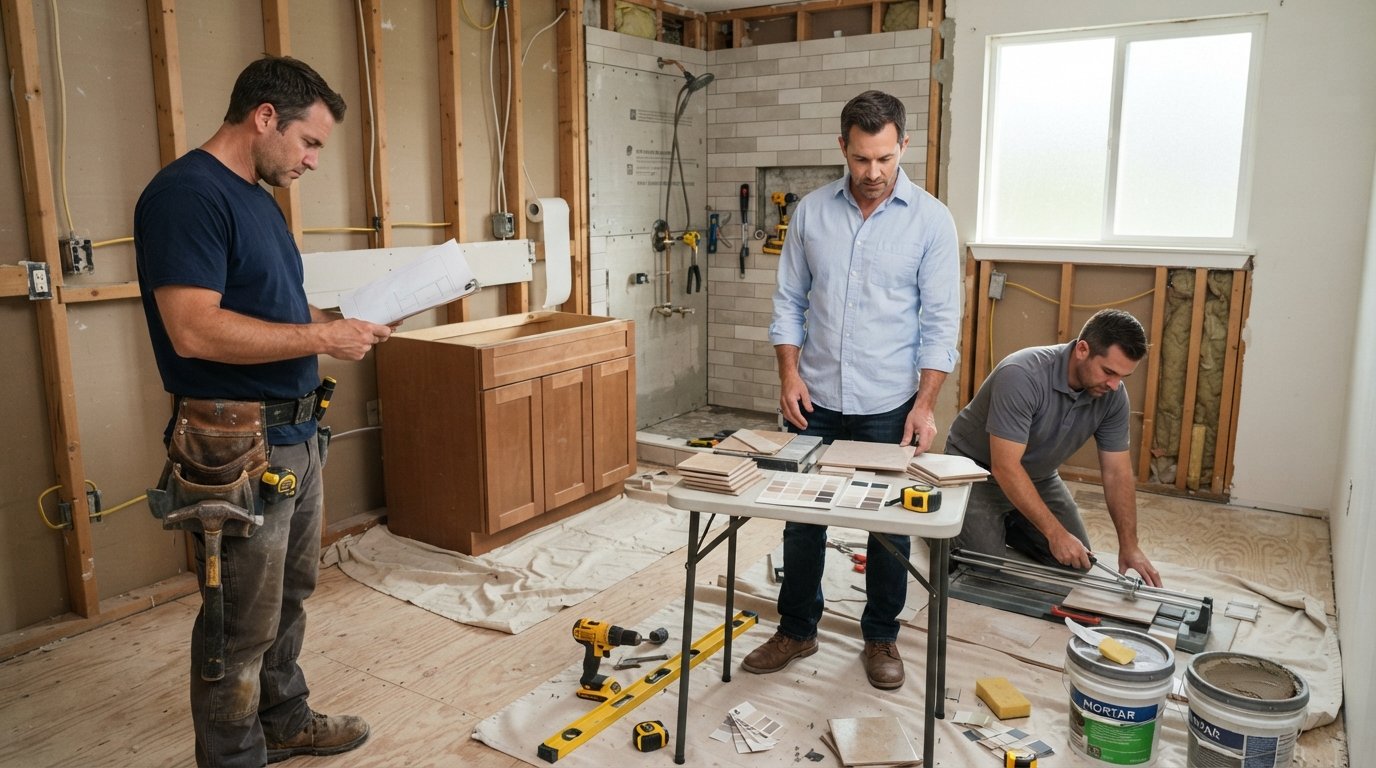
Big Box Store vs Local Contractor Bathroom Remodel
Compare big box store vs local contractor bathroom remodel options. Learn which path offers better value, quality, and control for your renovation budget.
By Scott Thompson
Learn more about Bathroom Remodel for guides, costs, and what to expect.
Compare Bathroom Remodel Pros Near You

Enter your ZIP code to compare top-rated local professionals and request free quotes.
You have finally decided to tackle that outdated bathroom. Maybe the tile is cracking, the vanity is too small, or you simply want a spa-like retreat in your own home. Once the demolition daydreams fade, the first major decision hits: who is going to do the work? You can walk into a big box store and sign a contract at the service desk between the paint aisle and the garden center, or you can hire an independent local contractor who runs their own crew. The choice affects your budget, your timeline, and the quality of the final result more than almost any other decision you will make. Understanding the differences between these two paths is essential before you put down a deposit.
How Big Box Store Bathroom Remodeling Works
Big box stores like Home Depot and Lowes have made a massive push into the home services market over the past decade. Their model is built on convenience and brand familiarity. You walk into a store you already trust, talk to a sales associate, and sign a contract for a bathroom remodel. From that point forward, the store typically subcontracts the actual installation work to a network of independent installers who have agreed to their pricing and scheduling terms. This means the person swinging the hammer is usually not a store employee, but a third-party contractor working under the store's umbrella.
The primary appeal here is simplicity. You do not have to research multiple contractors, check licenses, or negotiate separate contracts for materials and labor. The store handles the product sourcing, the installation scheduling, and often the financing through their proprietary credit cards. If something goes wrong, you have a corporate customer service number to call and a large company with a reputation to protect. For homeowners who feel overwhelmed by the vetting process, this one-stop-shop approach reduces decision fatigue.
However, this convenience comes with trade-offs in customization and pricing transparency. Big box stores typically sell specific packages or proprietary brands. If you want a specific imported tile or a custom vanity that is not on their shelf, you may be out of luck. Additionally, the pricing structure often bundles labor and materials in a way that makes it difficult to see exactly how much you are paying for the installation versus the products. This lack of granularity can make it harder to compare quotes or identify where you could save money by sourcing your own fixtures.
How Local Contractors Approach Bathroom Remodels
Hiring a local contractor is a completely different experience. You are dealing directly with the business owner or a dedicated project manager who works for a small or medium-sized local company. These professionals live and work in your community, and their reputation is built on word-of-mouth referrals, online reviews, and the quality of their finished projects. When you hire a local contractor, you are often hiring a specific crew of tradespeople who have worked together on dozens or hundreds of bathrooms.
The biggest advantage here is customization and direct communication. A local contractor can source materials from local suppliers, specialty tile shops, or even salvage yards to match your specific vision. If you want to move a wall, change the plumbing layout, or install a niche in the shower, a local contractor has the flexibility to make those changes on the fly. You have a direct line to the person in charge, which means questions get answered quickly and changes can be approved without navigating a corporate call center.
On the other hand, hiring a local contractor requires more legwork from you. You have to vet them, check their license and insurance, verify references, and negotiate a contract. There is a higher variance in quality because there is no corporate brand policing the work. You might find a hidden gem who does incredible work for a fair price, or you might run into a fly-by-night operation that disappears with your deposit. The burden of due diligence falls squarely on your shoulders.
Cost Comparison: Big Box Store vs Local Contractor
When you compare the costs of a big box store versus a local contractor, the sticker price is rarely the whole story. Big box stores often advertise promotional pricing or special financing that looks very attractive upfront. However, because they rely on subcontractors who need to be paid, and because they have large corporate overheads, their pricing often includes a markup that covers the store's profit margin and the installer's labor. In many cases, homeowners find that the big box store quote is higher than a comparable quote from a local contractor for the same scope of work.
Local contractors, by contrast, have lower overhead. They do not have to pay for a massive retail space or a national advertising campaign. This often allows them to offer more competitive pricing, especially if you are willing to be flexible with materials. However, local contractors may charge more for labor if they are highly skilled specialists or if the project involves complex structural changes. It is also important to remember that local contractors may require a larger deposit upfront to cover material costs, whereas big box stores often offer financing with no interest for a set period.
To get a clear picture of what you should expect to pay, it helps to look at industry averages. According to our guide on the average cost for a bathroom remodel, a mid-range remodel can cost anywhere from $15,000 to $25,000, while an upscale remodel can exceed $50,000. These averages vary widely based on your location, the size of the bathroom, and the materials you choose. Big box stores often try to hit a specific price point with their packages, which can be a good option if your budget is tight and your tastes are standard.
Material and Labor Breakdown
One of the biggest differences in cost comes down to materials. Big box stores have exclusive deals with manufacturers to supply their own brands, which can keep costs down but limit selection. For example, a big box store might offer a vanity for $400 that is made from particle board and veneer, while a local contractor might recommend a solid wood vanity from a local supplier that costs $800 but will last decades longer. The labor costs also differ: big box stores typically pay their subcontractors a fixed rate per square foot or per fixture, which incentivizes speed over precision. Local contractors, who often charge by the hour or by the project, may take longer to ensure the tile is level and the grout lines are perfect.
| Cost Factor | Big Box Store | Local Contractor |
|---|---|---|
| Materials | Limited to store brands, often lower quality | Wide selection, can source specialty items |
| Labor | Subcontracted, fixed price, speed-focused | Directly hired, often higher quality, detail-focused |
| Financing | Proprietary credit cards, promotional periods | Cash, check, or third-party financing |
| Change Orders | Difficult and expensive to process | Flexible, negotiated directly with contractor |
Quality of Workmanship and Materials
Quality is where the big box store model often shows its cracks. Because the store subcontracts to the lowest bidder or a pre-vetted network, the installer you get is not necessarily the best in your area, just the one who agreed to the store's terms. These installers are often under pressure to complete jobs quickly so they can move on to the next one. This can lead to rushed work, such as poorly waterproofed shower pans, uneven tile, or improperly sealed plumbing fixtures. While the store will warranty the work, getting them to honor that warranty can be a bureaucratic nightmare involving phone calls, emails, and waiting for a resolution.
Local contractors, especially those who specialize in bathrooms, often take more pride in their craftsmanship. They know that their next job depends on the referral from your neighbor, not on a corporate marketing budget. A good local contractor will spend extra time on waterproofing, ensuring the subfloor is level, and making sure the plumbing rough-in is correct. They also tend to use higher-quality materials because they know that cheap materials lead to callbacks and warranty issues down the road. If you are planning to stay in your home for a long time, the durability of a local contractor's work is often worth the slightly higher price or the extra effort of finding them.
However, this is not a universal rule. There are plenty of excellent big box store installers and plenty of terrible local contractors. The key difference is accountability. With a big box store, you have a corporate entity to complain to, but you also have layers of bureaucracy. With a local contractor, you have a direct relationship, but if they go out of business or refuse to fix a mistake, your recourse is limited to legal action. This is why vetting is so critical when you hire locally.
Timeline and Project Management
Timelines for bathroom remodels can vary dramatically between these two options. Big box stores often promise a specific timeline, such as "three weeks from start to finish," but these timelines are often optimistic. Because they rely on subcontractors who may be juggling multiple jobs, delays are common. If a subcontractor does not show up, you cannot call them directly; you have to call the store, who then calls the subcontractor. This chain of communication can add days or weeks to your project. Additionally, big box stores may have long lead times for materials if they are not in stock, and they may not schedule installation until all materials have arrived.
Local contractors, on the other hand, often provide a more realistic timeline and are more agile when problems arise. If a pipe is corroded or the subfloor is rotted, a local contractor can often pivot quickly, pick up the necessary parts, and keep the project moving. They are also more likely to communicate proactively about delays. However, local contractors can also be delayed by material shortages or other projects. The difference is that you have a direct line to the person responsible, which usually results in faster problem-solving.
Communication and Change Orders
Communication is another major differentiator. With a big box store, you typically deal with a salesperson who then hands you off to a project coordinator. If you want to make a change, such as upgrading the faucet or adding a shelf, you have to go through a formal change order process that can be slow and expensive. Local contractors are often much more flexible. You can text them a picture of a fixture you like and ask if they can install it. They can give you a quick yes or no and adjust the price on the spot. This flexibility is invaluable if you are indecisive or if you discover a new idea halfway through the project.
That said, you should always get any changes in writing, even with a local contractor. A handshake agreement on a change can lead to disputes later. A professional local contractor will provide a written change order that outlines the additional cost and time required. Big box stores are usually very strict about change orders, and they may charge a fee just to process the paperwork. This rigidity can be frustrating if you are trying to customize your bathroom.
Warranties and Accountability
Warranties are a critical consideration. Big box stores typically offer a one-year warranty on labor and pass through the manufacturer's warranty on materials. If something fails within that year, you can call the store and they will send someone out to fix it. However, after the first year, you are on your own. The store may also require you to use their preferred installers for warranty work, which can be inconvenient. Additionally, if the store discontinues a product line, you may not be able to get a matching replacement.
Local contractors often offer longer warranties on their labor, sometimes up to five years or more. They also stand behind their work because they want to maintain their reputation in the community. If a tile cracks or a faucet leaks two years later, a reputable local contractor will often come back and fix it, sometimes for free or at a reduced cost. This level of accountability is a major advantage. However, if the contractor goes out of business, your warranty is worthless. This is why it is important to choose a contractor with a long track record and to check their insurance and bonding.
Finding the Right Professional for Your Project
So, how do you decide between a big box store and a local contractor? It depends on your priorities. If you value convenience, brand familiarity, and easy financing, a big box store might be a good fit, especially for a simple, standard remodel. If you value customization, quality craftsmanship, and direct communication, a local contractor is likely the better choice. Many homeowners find that the best approach is to get quotes from both options and compare them side by side.
To make the process easier, you can use a service like FreeQuotes.Contractors to connect with pre-vetted local contractors in your area. This allows you to get multiple quotes without spending hours researching individual companies. You can also visit local showrooms, talk to neighbors who have recently remodeled, and read online reviews to get a sense of who the reliable contractors are in your community. The more quotes you get, the better your understanding of the fair market price for your project will be.
When you evaluate quotes, do not just look at the bottom line. Look at the scope of work, the materials being used, the timeline, and the warranty. A low quote that excludes plumbing or electrical work may end up costing more in the long run. A high quote from a local contractor may include premium materials and superior craftsmanship that will last for decades. Take the time to ask questions and clarify any ambiguities before you sign a contract.
Making the Final Decision
Ultimately, the decision between a big box store and a local contractor comes down to your specific needs and risk tolerance. If you are on a tight budget and need a quick, standard update, a big box store package can be a convenient solution. If you are looking for a custom design, high-end finishes, and a contractor who will treat your home like their own, a local professional is usually the way to go. There is no single right answer, but understanding the trade-offs will help you make a decision you can feel confident about.
Remember that a bathroom remodel is a significant investment. Whether you choose a big box store or a local contractor, the most important thing is to do your homework. Get multiple quotes, check references, and never pay the full amount upfront. With the right team in place, you can transform your bathroom into a space you love while protecting your home's value.
Learn more about Bathroom Remodel for guides, costs, and what to expect.
Compare Bathroom Remodel Pros Near You
Enter your ZIP code to compare top-rated local professionals and request free quotes.