
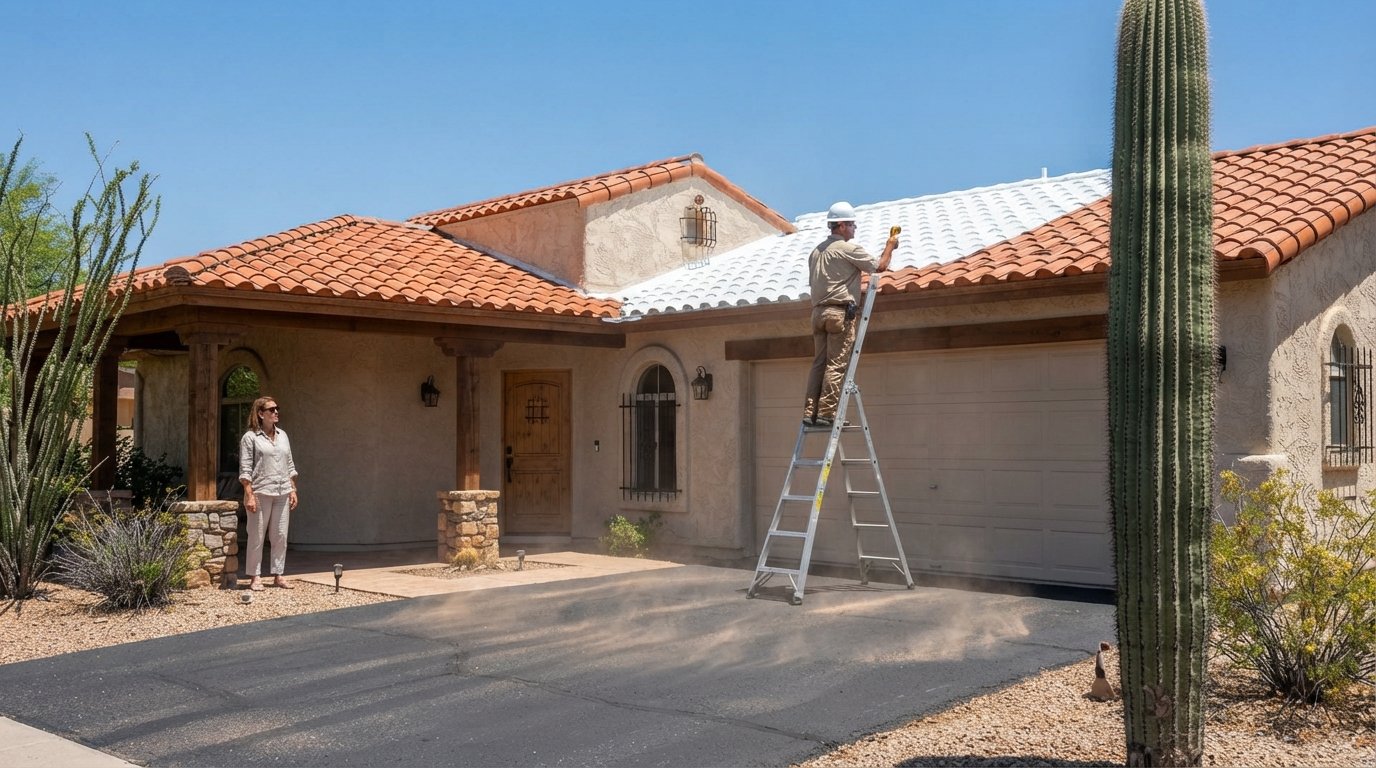
Best Roofing Materials for Hot Climates: 2026 Picks
Discover the best roofing materials for hot climates to cut cooling costs and boost durability. Compare metal, tile, and cool shingles for your home.

By Chelsea Kris
Learn more about Roof Installation or Replacement for guides, costs, and what to expect.
Compare Roof Installation or Replacement Pros Near You

Enter your ZIP code to compare top-rated local professionals and request free quotes.
When the summer sun turns your attic into a furnace and your cooling bills climb faster than the temperature, your roof is the first line of defense. In hot climates across the southern United States, from Arizona to Florida, the choice of roofing material can mean the difference between a comfortable, energy-efficient home and one that constantly fights the heat. Homeowners often focus on curb appeal, but the best roofing materials for hot climates are those that reflect solar radiation, emit absorbed heat quickly, and withstand intense UV exposure without deteriorating. This guide will help you understand the science behind heat-resistant roofing, compare the top options on the market, and make a choice that keeps your home cooler and your energy costs lower.
Roofing is not a one-size-fits-all decision. The material you select affects not only your home's temperature but also its longevity, maintenance needs, and resale value. In hot regions, the wrong material can crack, warp, or fade within a few years, leading to costly repairs. By understanding how different materials perform under extreme heat, you can avoid these pitfalls and invest in a roof that pays for itself over time. This article covers everything from reflective coatings to natural clay tiles, and it includes practical tips on working with contractors to get the best installation for your specific climate.
What Makes a Roofing Material Ideal for Hot Climates?
To choose the best roofing materials for hot climates, you first need to understand two key scientific concepts: solar reflectance and thermal emittance. Solar reflectance is the ability of a material to reflect sunlight away from the roof surface, while thermal emittance is the ability to release absorbed heat back into the atmosphere. Together, these properties determine a roof's Solar Reflectance Index (SRI), a value from 0 to 100 that measures how well it stays cool under the sun. A high SRI means the roof stays cooler, reducing the amount of heat that transfers into your living space.
The orientation of your roof, the amount of shade it receives, and the local climate patterns also play a role. For example, a roof in a humid coastal area faces different challenges than one in a dry desert. Humidity can accelerate mold growth on certain materials, while intense UV radiation can break down others. Therefore, the ideal roofing material for hot climates must not only have high reflectance and emittance but also be durable enough to resist the specific environmental stresses of your region. Additionally, proper attic ventilation and insulation work hand-in-hand with your roofing material to minimize heat gain, so even the best material will underperform without adequate airflow.
The Role of Cool Roof Ratings and Energy Codes
Many building codes in hot states now require minimum SRI values for new roofs or re-roofing projects. Cool roof ratings, such as those from ENERGY STAR or the Cool Roof Rating Council (CRRC), provide a standardized way to compare products. ENERGY STAR-certified roof products must meet specific reflectance criteria, which vary by roof slope. For steep-slope roofs, the initial solar reflectance must be at least 0.25, and for low-slope roofs, it must be at least 0.65. These ratings are not just suggestions; they can significantly affect your home's energy consumption and your eligibility for local rebates or tax incentives.
When you consult with a roofing contractor, ask for the SRI and ENERGY STAR status of the materials they recommend. This data will help you make an apples-to-apples comparison. Keep in mind that some materials, like metal, can be painted with reflective coatings to boost their performance, while others, like asphalt shingles, are available in "cool" versions that use specially formulated granules to increase reflectance. Understanding these ratings ensures that you are not just relying on marketing claims but on verifiable performance metrics.
Top Roofing Materials for Hot Climates Compared
Now that you understand the criteria, let's explore the most popular and effective roofing materials for hot climates. Each option has its strengths and trade-offs, so consider your budget, aesthetic preferences, and long-term maintenance expectations. The following comparison will help you narrow down your choices based on performance, cost, and durability.
Metal Roofing: The Reflective Champion
Metal roofing is widely regarded as one of the best roofing materials for hot climates, and for good reason. Standing seam metal roofs and metal shingles are highly reflective, especially when coated with light-colored, reflective paint. A bare metal surface can reflect up to 70% of solar radiation, and with special cool coatings, that number can exceed 80%. Metal also has high thermal emittance, meaning it quickly releases any heat it does absorb. This combination keeps your home cooler and reduces the strain on your air conditioning system.
Beyond heat reflection, metal roofs are incredibly durable. They can withstand high winds, hail, and extreme temperature fluctuations without cracking or warping. A quality metal roof can last 50 years or more, which means you will likely never need to replace it again. The initial cost is higher than asphalt, but the long-term savings in energy bills and maintenance make it a smart investment. Additionally, many metal roofs are made from recycled materials and are themselves fully recyclable at the end of their life, adding an eco-friendly dimension to your choice.
Clay and Concrete Tiles: Timeless Heat Resistance
Clay and concrete tiles have been used in hot climates for centuries, particularly in Mediterranean and Spanish-style architecture. Their inherent thermal mass helps regulate indoor temperatures by absorbing heat during the day and releasing it slowly at night. This natural temperature buffering can reduce your reliance on air conditioning. Clay tiles are also highly reflective, especially in lighter shades, and they have excellent thermal emittance. They are resistant to fire, rot, and insects, making them a durable option for hot and humid regions.
However, clay and concrete tiles are heavy, requiring a reinforced roof structure to support their weight. This can add to the installation cost. They are also brittle and can break if walked on or hit by falling debris. Despite these drawbacks, many homeowners choose tile for its aesthetic appeal and longevity, which can exceed 50 years. If you live in a climate with frequent freeze-thaw cycles, you should avoid clay tiles because water absorption can cause cracking, but in consistently hot climates, they are an excellent choice.
Slate and Synthetic Slate: Premium Durability
Natural slate is a premium roofing material that offers exceptional longevity, often lasting over 100 years. It is naturally resistant to fire, water, and UV damage, and its dark color can be a downside in hot climates unless you choose lighter shades. Slate has a low solar reflectance compared to metal or white tile, which means it can absorb more heat. However, its high thermal mass can help moderate temperature swings. The main drawbacks are its heavy weight, high cost, and the need for specialized installation skills.
Synthetic slate, made from a blend of rubber and plastic, mimics the look of natural slate but at a lower weight and cost. It is more reflective than natural slate, especially when manufactured with heat-reflective pigments, and it is virtually indestructible. Synthetic slate is a rising star among the best roofing materials for hot climates because it offers the aesthetics of slate without the installation challenges. It is also more environmentally friendly, as it often contains recycled materials.
Cool Roof Asphalt Shingles: Budget-Friendly Efficiency
Traditional asphalt shingles are the most common roofing material in North America, but they are not the most heat-efficient. However, manufacturers now produce "cool" asphalt shingles that use specially coated granules to reflect more sunlight. These shingles can have an SRI up to 30% higher than standard shingles, making them a viable option for homeowners on a tighter budget. They come in a variety of colors, including light gray, white, and pastel shades, which perform better than dark colors.
Cool asphalt shingles are not as durable as metal or tile, with a typical lifespan of 20 to 30 years. They are also more susceptible to wind damage and algae growth in humid climates. Despite these limitations, they are an affordable way to improve your roof's energy performance without a major investment. If you are planning a re-roofing project and your budget is a primary concern, ask your contractor about cool-rated asphalt shingles.
Green Roofs and Reflective Coatings: Alternative Solutions
For flat or low-slope roofs, a green roof (a layer of vegetation over a waterproof membrane) can be an excellent way to reduce heat gain. Plants absorb sunlight and release moisture through evapotranspiration, cooling the air around your home. Green roofs also provide excellent insulation and extend the life of the waterproof membrane. However, they require a robust structural system to support the weight of soil and plants, and they need ongoing maintenance, including irrigation and weeding.
Another alternative is to apply a reflective coating to an existing roof. These liquid-applied coatings, typically white or light-colored, can be used on metal, single-ply membranes, and even some asphalt roofs. They significantly increase solar reflectance and are a cost-effective way to improve an older roof's performance. However, coatings are not a permanent solution; they may need to be reapplied every 5 to 10 years, depending on the product and weather exposure.
How to Choose the Right Material for Your Home
Selecting the best roofing material for your home involves more than just picking a name off a list. You need to consider your local climate specifics, your home's architectural style, and your personal priorities. Here is a practical framework to guide your decision:
- Assess your climate: Is it primarily dry and hot, or hot and humid? Humid climates require materials that resist mold and algae, while dry climates may prioritize UV resistance.
- Evaluate your roof's slope and structure: Heavy materials like tile and slate need a strong structural frame. Low-slope roofs may be better suited for single-ply membranes or metal systems.
- Consider your aesthetic preferences: The roof color and texture should complement your home's exterior. Lighter colors reflect more heat but may not match every architectural style.
- Set a realistic budget: Include not only the initial installation cost but also long-term maintenance and energy savings. A more expensive material may save you money over time.
- Check local building codes and HOA rules: Some areas have restrictions on roof colors, materials, or solar reflectance. Always verify before making a final decision.
Once you have narrowed down your options, it is wise to get multiple quotes from licensed contractors. A professional can assess your roof's condition, measure the square footage, and recommend materials that suit your specific needs. They can also provide a detailed cost breakdown, which is essential for budgeting. For a comprehensive look at how material and labor costs vary by region, you can reference our guide on roofing materials and labor costs, which provides a framework that applies to many markets.
Installation and Maintenance Tips for Hot Climates
Even the best roofing materials will perform poorly if they are not installed correctly. Proper installation is especially critical in hot climates, where thermal expansion and contraction can stress fasteners and seams. Ensure that your contractor follows the manufacturer's specifications for ventilation, underlayment, and flashing. Inadequate ventilation can trap heat and moisture in your attic, shortening the life of your roof and increasing your cooling costs.
Regular maintenance is also essential. In hot, sunny regions, UV rays can degrade roofing materials over time, so inspect your roof at least twice a year, ideally in the spring and fall. Look for cracked, curled, or missing shingles, rust on metal panels, or cracks in tile. Clean gutters and downspouts to prevent water backup, and trim any overhanging branches that can drop leaves or debris. Addressing minor issues promptly can prevent them from becoming major, expensive repairs.
Another key maintenance task is to check the attic for signs of heat damage, such as warped rafters or brittle insulation. If your roof is not performing as expected, consider adding a radiant barrier to the underside of the roof deck. This reflective foil can block up to 95% of radiant heat, working in tandem with your roofing material to keep your home cooler.
Cost Considerations and Energy Savings
The initial cost of a new roof can be significant, but it is a long-term investment. The price varies widely depending on the material, roof size, complexity, and labor rates in your area. Asphalt shingles are generally the most affordable, costing between $3 and $5 per square foot installed, while metal can range from $7 to $12 or more. Clay and concrete tiles are even pricier, often exceeding $10 per square foot, and slate can be $15 or more. However, these higher upfront costs often translate to longer lifespans and lower energy bills.
Energy savings are a crucial part of the equation. A cool roof can reduce your cooling energy consumption by 10% to 15% in hot climates, which can translate to hundreds of dollars in savings each year. Over the life of the roof, these savings can offset the higher initial cost of materials like metal or tile. Additionally, many utilities and local governments offer rebates or incentives for installing energy-efficient roofing. Check with your local energy provider to see if you qualify for any programs.
To get an accurate estimate for your project, you should obtain multiple quotes from reputable contractors. When comparing bids, look beyond the total price and evaluate the quality of materials, the warranty offered, and the contractor's experience with hot-climate roofing. A slightly higher quote from a contractor with a proven track record can be a better investment than a low bid from an inexperienced installer.
Finding a Qualified Roofing Contractor
Choosing the right contractor is just as important as choosing the right material. A skilled installer will ensure that your roof is properly ventilated, flashed, and sealed, maximizing its performance and longevity. Start by asking for recommendations from friends, family, or neighbors who have recently had roofing work done. You can also use online directories and review sites, but always verify a contractor's license and insurance before hiring.
When interviewing potential contractors, ask about their experience with the specific material you are considering. For example, not all roofers are experienced with installing clay tile or standing seam metal. Ask for references from past clients in your area and follow up with them to ask about their experience. A reputable contractor will be happy to provide references and will offer a detailed written estimate that outlines the scope of work, materials, timeline, and warranty.
To streamline your search and ensure you are comparing qualified professionals, you can use a service like FreeQuotes.Contractors, which connects homeowners with pre-screened local contractors. This platform allows you to receive multiple no-obligation quotes, saving you time and helping you find a contractor who meets your needs. Additionally, the site offers educational resources to help you understand the process and make informed decisions.
Frequently Asked Questions About Hot-Climate Roofing
What is the most energy-efficient roofing material for hot climates? Metal roofing with a cool coating is generally the most energy-efficient, as it reflects the highest percentage of solar radiation and has excellent thermal emittance. White or light-colored metal can reflect up to 80% of sunlight.
Can I install a cool roof over my existing roof? In some cases, yes. A reflective coating can be applied to certain existing roofs, like metal or single-ply membranes. However, for asphalt shingles, it is usually better to tear off the old roof and install new cool shingles.
Do dark-colored roofs always absorb more heat? Not necessarily. Some dark-colored materials are manufactured with infrared-reflective pigments that reflect invisible light, helping to keep the roof cooler even though it looks dark. However, in general, lighter colors are more effective at reflecting sunlight.
How long do roofing materials last in hot climates? Lifespan varies by material. Asphalt shingles typically last 20-30 years, metal 40-70 years, clay and concrete tile 50-100 years, and slate over 100 years. Proper installation and maintenance significantly extend the lifespan.
Is it worth paying more for a high-SRI roof? Yes, especially in hot climates. The energy savings over time can be substantial, and a high-SRI roof can also extend the life of your roofing material by reducing thermal stress.
Final Thoughts on Choosing Roofing for Hot Climates
Selecting the best roofing materials for hot climates is a decision that balances performance, durability, aesthetics, and budget. Metal roofing stands out for its exceptional reflectivity and longevity, while clay and concrete tiles offer timeless beauty and natural thermal regulation. Cool asphalt shingles provide an affordable upgrade for those on a budget, and green roofs or reflective coatings are innovative options for flat roofs. Whatever material you choose, ensure it is installed by a qualified professional and properly maintained to maximize its benefits.
By investing in a heat-resistant roof, you are not just improving your home's comfort; you are also reducing your environmental footprint and increasing your property's value. Before you make a final decision, use the resources available to you, including cost guides and contractor matching services, to gather the information you need. With the right approach, you can enjoy a cooler home, lower energy bills, and peace of mind for decades to come.