
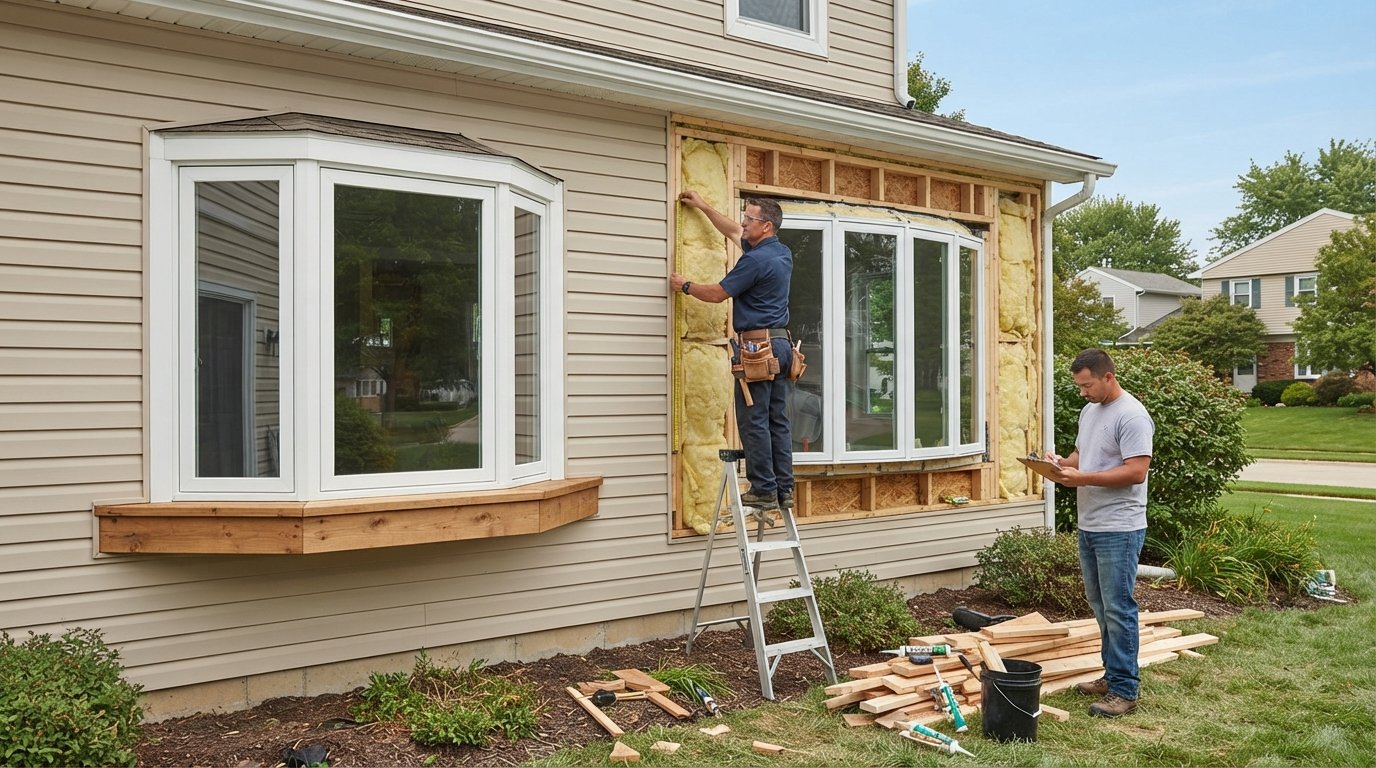
Bay Window vs Bow Window Installation Cost Comparison
Compare bay window vs bow window installation cost comparison with national price ranges and key cost drivers to budget accurately.

By Danica Leslie
Learn more about Window Installation for guides, costs, and what to expect.
Compare Window Installation Pros Near You

Enter your ZIP code to compare top-rated local professionals and request free quotes.
Choosing between a bay window and a bow window often comes down to two things: the look you want and the budget you can live with. Both project outward from your home's exterior wall and both flood a room with natural light, but their installation costs can differ by hundreds or even thousands of dollars depending on size, materials, structural requirements, and labor complexity. Understanding what drives those cost differences before you request quotes is the single best way to avoid overpaying or getting stuck with a surprise change order.
This guide breaks down the bay window vs bow window installation cost comparison in detail, including national price ranges, the factors that push costs up or down, and how to evaluate contractor bids with confidence. Whether you are upgrading a living room, adding curb appeal to a dining area, or replacing an aging window unit, the numbers and planning tips below will help you budget realistically and hire the right professional for the job.
What Sets Bay Windows and Bow Windows Apart
A bay window is typically made up of three panels: one large fixed center window flanked by two smaller windows angled back toward the wall. The classic configuration creates a distinct, angular projection and often includes a built-in window seat or ledge. Because of its sharper geometry, a bay window tends to make a bold architectural statement and works well in rooms where you want a defined focal point.
A bow window, by contrast, uses four or more panels arranged in a gentle curve or arc. The result is a softer, more rounded projection that feels more like a panoramic viewing area than a single feature window. Bow windows are often wider than bay windows and can span a larger section of wall, which affects both material quantities and installation labor.
These structural differences matter for cost because they change how much framing, header support, roofing, and finishing work is required. A three-panel bay window usually involves less material and simpler framing than a five-panel bow window, but bay windows sometimes require more complex roof flashing because of their sharper angles. The section below explains how these variables translate into real dollar figures.
National Cost Ranges for Bay and Bow Window Installation
Across the United States, bay window installation generally costs between $1,200 and $4,500 per window, with most homeowners paying around $2,500 for a standard vinyl unit with professional installation. Bow windows typically run from $2,000 to $6,500 per window, with a national average closer to $3,800. The wider spread for bow windows reflects the fact that they use more panels, more glass, and more framing labor.
These figures include the window unit itself, standard labor, and basic interior and exterior trim. They do not include structural modifications, custom sizing, high-end materials, or major repairs discovered during installation. Those extras can add several hundred to several thousand dollars to either project.
To put the comparison in perspective, here is a quick breakdown of typical cost ranges by project type:
- Standard three-panel bay window, vinyl frame: $1,200 to $3,000 installed
- Premium bay window, wood or fiberglass frame: $2,500 to $4,500 installed
- Standard four-panel bow window, vinyl frame: $2,000 to $4,000 installed
- Wide five-panel bow window, custom sizing: $3,500 to $6,500 installed
- Structural modifications, new header, or roof extension: add $500 to $3,000 or more
Notice that the overlap between the two categories is significant. A small bow window with basic materials can cost less than a large custom bay window with premium finishes. This is why a direct bay window vs bow window installation cost comparison must always be tied to your specific dimensions, material choices, and home structure, not just the window style name.
Material Choices and How They Move the Price
Frame material is one of the largest cost variables for either window style. Vinyl is the most affordable and energy-efficient option for most homeowners, and it dominates the replacement window market because it requires little maintenance. Wood frames offer a traditional look and can be painted or stained, but they cost more and need periodic upkeep. Fiberglass and aluminum-clad wood fall in the middle to upper range, offering durability and a premium appearance.
Glass options also affect pricing. Double-pane glass with low-E coating and argon fill is standard in most modern windows and adds moderate cost. Triple-pane glass, laminated glass for noise reduction, and custom grid patterns push prices higher. For a bay or bow window with three to five panels, upgrading glass on every panel multiplies the cost quickly, so it helps to prioritize which panels truly need premium glazing.
Hardware, interior trim, and exterior finishes round out the material budget. A window seat, custom shelving, or built-in bench under a bay window is a popular upgrade but adds carpentry labor and materials. Bow windows rarely include window seats because of their curved shape, which is one reason some homeowners choose a bay window even when a bow window would fit the space.
Labor, Structural Work, and Hidden Cost Drivers
Installation labor for bay and bow windows is more involved than for standard flat windows. The window must be supported by a properly sized header, the exterior opening must be framed and flashed correctly, and the projection often needs its own small roof or cap to shed water. If the existing wall opening is too small, a contractor must cut and reframe the wall, which adds labor and possibly structural engineering.
Other cost drivers include:
- Second-story installation, which requires scaffolding or lift equipment
- Removal and disposal of the old window and surrounding materials
- Repairing rot, water damage, or insect damage discovered during removal
- Matching interior and exterior finishes to the rest of the home
- Permits and inspections, which vary by municipality
Because these factors are site-specific, two homeowners in the same city can receive quotes that differ by thousands of dollars for what sounds like the same project. This is normal, and it is why getting multiple itemized bids is essential. A bid that simply lists one lump sum for a bow window tells you very little about whether the contractor has accounted for flashing, header work, and finish carpentry.
If you are also weighing other exterior upgrades, our roof repair vs replace cost comparison guide explains how to evaluate similar trade-offs between repairing an existing structure and investing in a full replacement.
Bay Window vs Bow Window Installation Cost Comparison: Side by Side
When you line up the two styles directly, the bay window usually wins on upfront cost for comparable quality and size. The three-panel design uses less glass and fewer frames, and the framing geometry is simpler to build in many cases. A bow window's curved layout requires more panels, more joints to seal, and more careful alignment, all of which increase labor time.
That said, the gap narrows or reverses in certain scenarios. A very large bay window with custom wood framing and a built-in seat can cost more than a modest bow window in vinyl. Similarly, if your home already has a curved opening or an existing bow window that only needs replacement, the labor to swap it out may be lower than converting a flat wall to a bay projection.
Here is a practical framework for comparing quotes on equal footing:
- Normalize the size: ask each contractor for pricing on the same width and height, or the closest standard size.
- Match the material: compare vinyl to vinyl, wood to wood, and so on.
- Confirm what is included: unit, labor, trim, flashing, disposal, and permits.
- Ask about structural work: is a new header or roof extension included or excluded?
- Check the warranty: unit warranty, labor warranty, and glass breakage coverage.
Once quotes are normalized, the bay window vs bow window installation cost comparison becomes much clearer. You can see whether the bow window premium is justified by extra glass area and curb appeal, or whether a bay window delivers the same functional benefit for less money.
Energy Efficiency and Long-Term Cost Impact
Both bay and bow windows can be highly energy efficient when specified correctly. The larger glass area of a bow window means more potential for heat gain in summer and heat loss in winter, so investing in low-E coatings, argon fill, and thermally broken frames matters more on a bow window than on a smaller bay window. Over time, a well-specified bow window can perform as well as a bay window, but the upfront glass upgrade cost is higher.
From a resale perspective, both styles add perceived value by increasing natural light and visual interest. Real estate professionals often note that bay windows feel like a bonus feature, while bow windows create a more open, airy atmosphere. Neither guarantees a specific return on investment, but both tend to compare favorably to flat window replacements in terms of buyer appeal.
Maintenance costs also differ slightly. Bow windows have more seams and joints, which means more places for caulk to fail over time. Bay windows have fewer panels but sharper angles that can collect debris. Either way, annual inspection and resealing are inexpensive habits that prevent costly water damage later.
How to Get Accurate Quotes and Avoid Overpaying
The most reliable way to control costs on a bay or bow window project is to gather at least three itemized quotes from licensed, insured contractors. Itemized bids let you compare labor, materials, and allowances line by line instead of guessing why one quote is higher than another. They also protect you from change orders that appear after work begins.
Before you request quotes, measure the rough opening, decide on your preferred style and material, and set a realistic budget range based on the national figures above. Then ask each contractor the same set of questions: What is the lead time? Who handles the permit? What does the warranty cover? How will the exterior be flashed and finished? A contractor who answers these clearly is usually a safer bet than one who quotes the lowest price without detail.
For homeowners who want a faster way to compare local professionals, FreeQuotes.Contractors connects you with pre-vetted contractors and free, no-obligation quotes for window replacement and other home improvement projects. Using a quote platform alongside your own research helps you benchmark pricing and avoid the guesswork that leads to overpaying.
Finally, do not overlook timing. Window manufacturers often run promotions in spring and fall, and contractors may offer better pricing during slower seasons. Scheduling your installation during an off-peak period can shave hundreds of dollars off either a bay or bow window project without sacrificing quality.
Making the Right Choice for Your Home and Budget
The bay window vs bow window installation cost comparison ultimately comes down to how you weigh upfront price against design preference and long-term performance. Bay windows generally cost less for comparable quality, use fewer panels, and offer a classic angular look with the option of a window seat. Bow windows cost more, use more glass, and deliver a sweeping curved view that many homeowners find worth the premium.
Whichever style you choose, the keys to a successful project are the same: understand the full scope of work, get multiple itemized quotes, verify licensing and insurance, and plan for contingencies. With accurate cost expectations and a vetted contractor, your new window will improve comfort, appearance, and energy performance for years to come.