
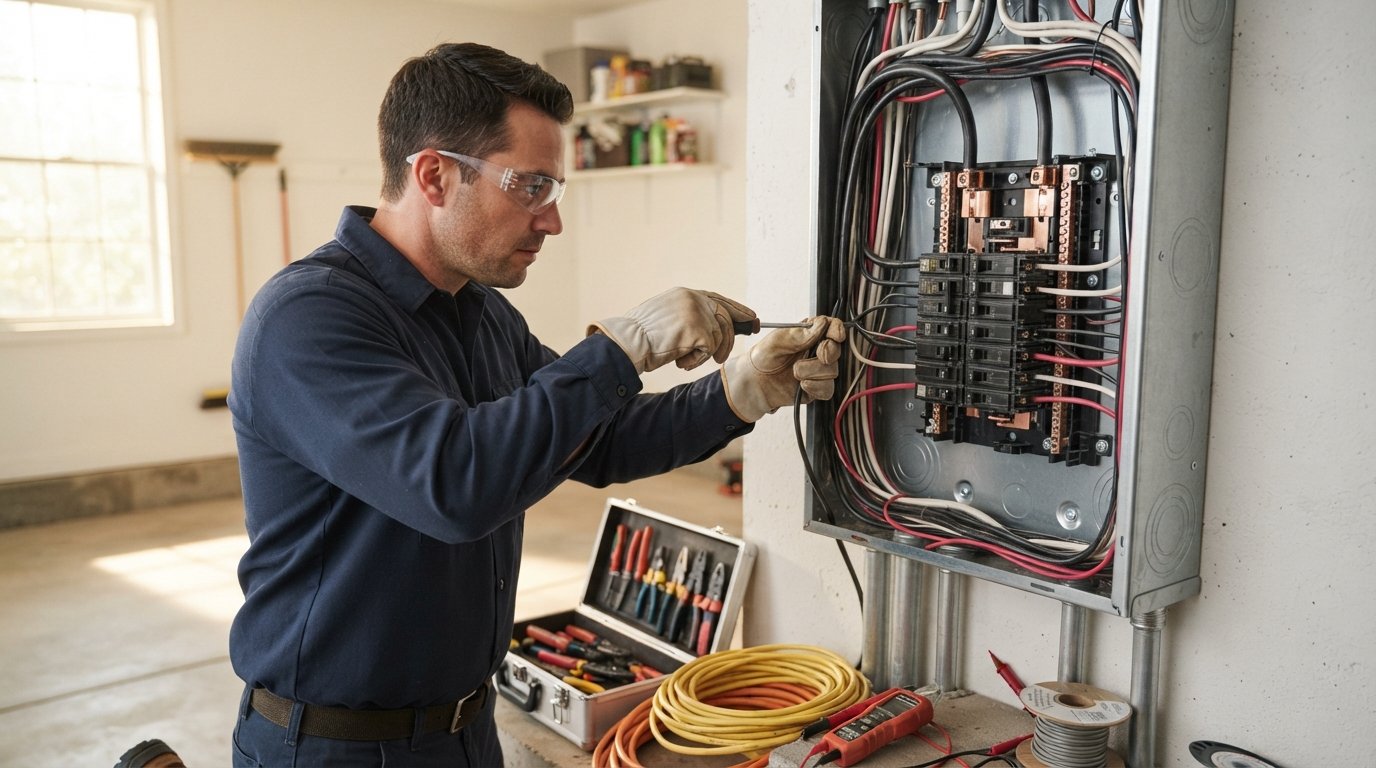
Electrical Panel Upgrade Cost and When It Is Needed
Get clear insights on electrical panel upgrade cost and when it is needed. Call (833)-365-8755 for expert guidance and free quotes from local pros.

By Danica Leslie
Learn more about Circuit Breaker Panel or Fuse Box Installation for guides, costs, and what to expect.
Compare Circuit Breaker Panel or Fuse Box Installation Pros Near You

Enter your ZIP code to compare top-rated local professionals and request free quotes.
Your electrical panel is the heart of your home's power system, quietly distributing electricity to every outlet, appliance, and light fixture. But when it starts to show signs of strain, or when you're planning a major renovation, you may face a critical question: do you need an electrical panel upgrade, and how much will it cost? Understanding the answers can save you from surprise expenses, safety hazards, and project delays. In this guide, we'll break down the typical costs for a 200-amp upgrade, explain when an upgrade is truly necessary, and help you navigate the process from permits to contractor selection.
Understanding Electrical Panel Upgrade Costs
The cost of an electrical panel upgrade varies widely based on your home's current electrical service, local labor rates, and the scope of work required. For a typical 200-amp panel replacement, homeowners can expect to pay between $1,500 and $4,000, with most falling in the $2,000 to $3,000 range. However, if your service line (the wires from the utility pole to your meter) also needs replacement, the price can climb to $4,000 or more. These figures include the panel itself, labor, permits, and standard materials, but they don't account for unexpected complications like outdated wiring or code violations that must be addressed.
Several factors influence the final cost. The amperage of the new panel (100-amp, 200-amp, or 400-amp) is a primary driver, as is the brand and features (such as AFCI/GFCI breakers or smart monitoring). Labor costs vary by region and contractor availability. Permits and inspection fees, typically $100 to $500, add to the total. If your home has aluminum wiring, knob-and-tube wiring, or a fuse box, additional remediation work may be necessary. To get a more precise estimate for your situation, it's wise to consult a detailed guide on understanding electrical panel upgrade quotes for your home, which explains how to read and compare contractor bids.
What Does a 200-Amp Upgrade Include?
A standard 200-amp upgrade typically involves removing the old panel, installing a new 200-amp main breaker panel, upgrading the service entrance cables if needed, replacing the meter base, and adding new grounding and bonding. It also includes labor for disconnecting and reconnecting circuits, labeling, and testing. Some contractors may include a whole-home surge protector or AFCI breakers as part of the package, while others charge extra. Always confirm what's included in the quote to avoid surprises.
Warning Signs You Need an Electrical Panel Upgrade
Recognizing the signs that your panel is struggling can prevent dangerous situations and costly emergency repairs. Here are the most common red flags:
- Frequent breaker trips: If breakers trip regularly when you run multiple appliances, your panel may be overloaded.
- Fuses blow repeatedly: Old fuse boxes are not only inconvenient but also inadequate for modern electrical loads.
- Burning smell or discoloration: A burning odor or scorch marks around the panel indicate overheating and require immediate attention.
- Lights flicker or dim: Flickering lights when appliances turn on suggest an undersized service or loose connections.
- Insufficient outlets: If you rely heavily on extension cords and power strips, your panel may not support your needs.
These symptoms often point to an undersized service or a panel that has reached the end of its lifespan. Fuse boxes, in particular, are outdated and may not meet current electrical codes. If you notice any of these signs, it's time to call a licensed electrician for an evaluation.
When Renovations or New Appliances Trigger an Upgrade
Adding major electrical loads to your home often necessitates a panel upgrade. For example, installing a Level 2 EV charger typically requires a dedicated 40- to 60-amp circuit, which many older panels cannot accommodate. Similarly, replacing a gas furnace with a heat pump or adding central air conditioning can push your electrical demand beyond the panel's capacity. Home additions, finished basements, or kitchen remodels with new appliances (electric range, double oven, etc.) also increase the load. In these cases, a load calculation performed by an electrician will determine whether your existing panel can handle the additional demand or if an upgrade is required.
Even if your panel technically has enough capacity, local codes may require upgrades for certain additions. For instance, many jurisdictions now require AFCI protection for new circuits, which may not be available in older panels. Additionally, if you're selling your home, an outdated panel can be a red flag for buyers and may complicate the inspection process.
Permits and Utility Coordination
An electrical panel upgrade is not a DIY project. It requires a permit from your local building department and coordination with your utility company to disconnect and reconnect power. The process typically follows these steps:
- Obtain a permit: Your contractor will pull the permit, which ensures the work will be inspected for code compliance.
- Schedule the utility disconnect: The utility company must temporarily shut off power to your home, usually for a few hours.
- Install the new panel: The electrician performs the upgrade, which may take one to two days.
- Inspection: A local inspector verifies the work meets code.
- Utility reconnect: Once approved, the utility restores power.
The entire process can take anywhere from a few days to several weeks, depending on permit processing times and utility schedules. It's essential to plan ahead, especially if you're coordinating with other renovation work. Delays can occur if the utility requires a new meter base or if the inspection reveals issues.
Panel Replacement vs. Subpanel Addition
Sometimes, adding a subpanel is a more cost-effective alternative to a full panel upgrade. A subpanel is a smaller distribution panel that draws power from the main panel and provides additional circuit capacity. This can be a good solution if your main panel has some spare capacity but you need more breaker spaces for a specific area, such as a workshop or a new addition. However, a subpanel does not increase the total amperage of your service; it simply redistributes it. If your main panel is already maxed out, a subpanel won't solve the problem, and a full upgrade is necessary.
The cost of adding a subpanel typically ranges from $500 to $1,500, depending on the distance from the main panel and the number of circuits. While it's cheaper upfront, it may not be a long-term solution if your overall electrical demand continues to grow. A licensed electrician can help you weigh the options based on your current and future needs.
Choosing the Right Contractor for Your Panel Upgrade
Given the safety and code implications, hiring a qualified electrician is crucial. Look for a licensed, insured professional with experience in panel upgrades. Get multiple quotes, ask for references, and verify that the contractor will handle permits and utility coordination. A reputable contractor will also perform a load calculation to ensure the new panel meets your needs. For homeowners seeking vetted professionals, platforms like Repairmen connect you with licensed electricians and other service pros across the U.S., offering a convenient way to compare quotes and read reviews.
When comparing bids, don't automatically choose the lowest price. Ensure the quote includes all necessary permits, materials, and labor, and that the contractor is familiar with local codes. A detailed contract should specify the scope of work, timeline, and payment schedule. Also, confirm that the contractor will arrange for the utility disconnect and reconnect, as this is often a point of confusion.
Long-Term Benefits of Upgrading Your Electrical Panel
Beyond safety, a modern electrical panel offers several advantages. It can increase your home's resale value, as buyers appreciate updated electrical systems. It also provides capacity for future needs, such as solar panels, battery storage, or additional appliances. Moreover, new panels often come with improved safety features like arc-fault circuit interrupters (AFCIs) and ground-fault circuit interrupters (GFCIs), which protect against electrical fires and shocks. Upgrading can also improve energy efficiency by ensuring proper grounding and reducing the risk of power quality issues.
In summary, understanding the electrical panel upgrade cost and when it is needed empowers you to make informed decisions for your home. Whether you're facing frequent breaker trips or planning a major renovation, consulting a licensed electrician and obtaining multiple quotes will help you navigate the process confidently. For more resources on home improvement costs and contractor selection, explore our other guides and tools designed to simplify your project planning.