
True Cost of Deferred Home Maintenance: What Delay Really Costs
The true cost of deferred home maintenance compounds fast: a $200 gutter cleaning can prevent $8,000 in repairs. Call (833)-365-8755 for vetted contractor quotes.

By Justin Blake
Learn more about Handyman for guides, costs, and what to expect.
Compare Handyman Pros Near You

Enter your ZIP code to compare top-rated local professionals and request free quotes.
A $200 gutter cleaning sounds like an annoying chore. Skipping it for two years can quietly set off a chain reaction that ends with an $8,000 foundation and fascia repair bill. That is the central lesson of deferred home maintenance: the expense does not disappear, it simply migrates from a small, predictable line item to a large, unpredictable emergency. Homeowners who understand the true cost of deferred home maintenance make better decisions about when to spend, what to fix first, and how to protect the value of their largest asset.
This guide breaks down the real numbers behind procrastination. It covers the most common deferral traps, the compounding cost curves for plumbing, HVAC, roofing, and exterior systems, and a practical framework for building a maintenance calendar that prioritizes risk over convenience. The goal is not to scare you into fixing everything at once. It is to show you where delay is cheap and where it is quietly expensive, so you can allocate your budget where it actually protects your home.
Why Deferred Maintenance Costs More Than the Original Repair
Every home system fails along a predictable curve. A small defect creates minor damage, minor damage accelerates wear, and accelerated wear eventually causes a catastrophic failure. The true cost of deferred home maintenance is the difference between the price of intervening early and the price of repairing everything that failed downstream. That gap is rarely small. In most cases, the downstream repair costs three to ten times the original maintenance task.
There is also a hidden cost that never shows up on a contractor invoice: the loss of negotiating power. A home with visible deferred maintenance issues appraises lower, inspects worse, and sells slower. Buyers price in the risk of unknown repairs, and lenders may require repairs before closing. Even if you never plan to sell, deferred maintenance reduces the useful life of expensive components like roofs, HVAC systems, and foundations, which means you replace them sooner and pay for them more often.
The compounding effect is what makes deferral so dangerous. Each skipped task does not just save you money once; it creates conditions that make every related system work harder. Clogged gutters push water into the foundation. A failing AC compressor runs longer and stresses the ductwork. A small roof leak saturates insulation and rots decking. The true cost of deferred home maintenance is the sum of all these interconnected failures, not just the one repair you avoided.
The Gutter-to-Foundation Pipeline: A Case Study in Compounding Costs
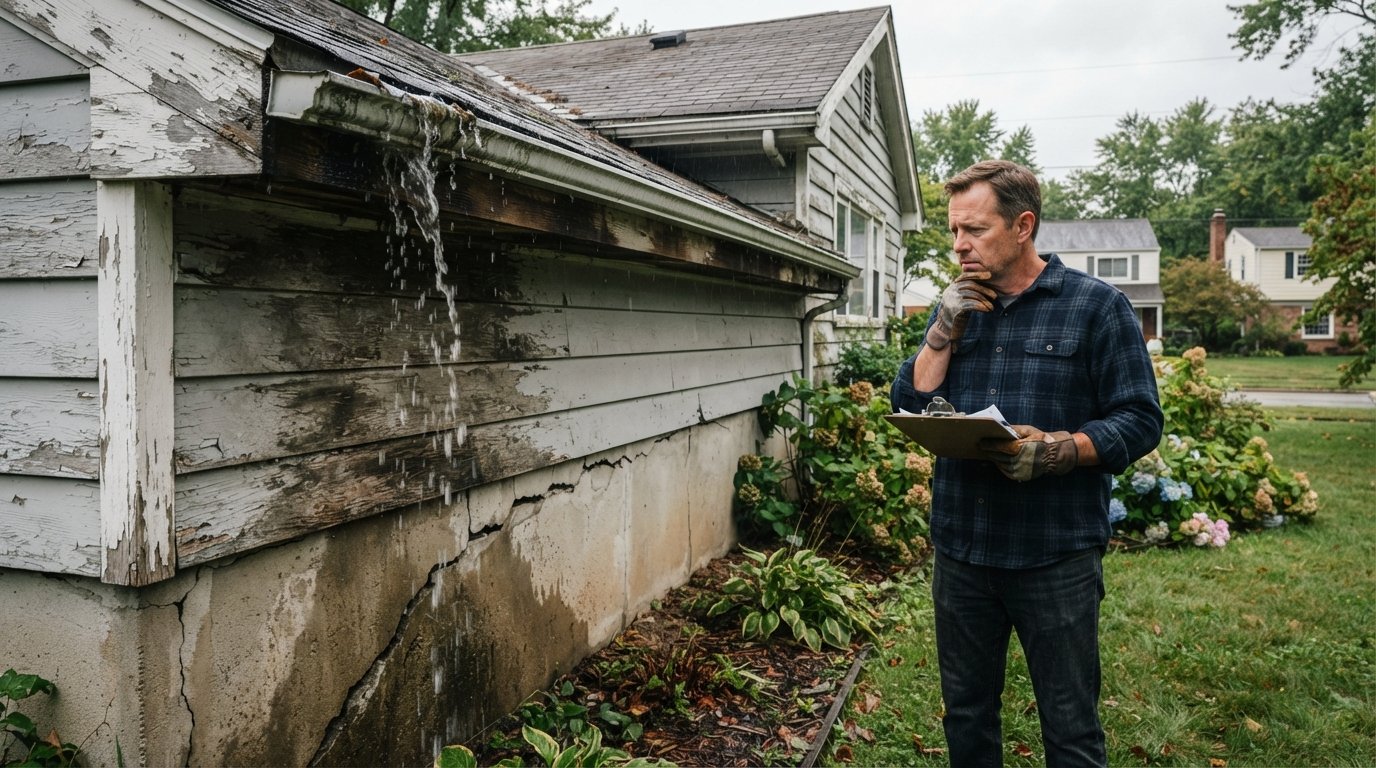
Gutters are the most commonly deferred maintenance item in American homes, and they offer the clearest illustration of how small savings become large losses. A typical gutter cleaning costs $150 to $300. When gutters clog, rainwater spills over the edges and lands next to the foundation instead of being channeled away. That water saturates the soil, increases hydrostatic pressure against the foundation wall, and finds its way into basements and crawl spaces.
From there, the damage branches in several directions at once. Fascia boards behind clogged gutters stay wet and rot, which can compromise the roof edge and require carpentry repairs. Foundation walls develop cracks and bowing, which can require piering or carbon fiber reinforcement. Basement waterproofing and drainage corrections often run $3,000 to $10,000. Mold remediation in a damp crawl space adds another $1,500 to $6,000. None of these costs appear on the gutter cleaning invoice, but all of them trace back to it.
Consider the timeline. In year one, a clogged gutter causes minor overflow and some staining on the fascia. In year two, the fascia begins to soften and the soil around the foundation stays saturated after storms. In year three, a crack appears in the basement wall and water enters during heavy rain. By year four, the homeowner is paying for foundation repair, fascia replacement, and mold remediation, all because a $200 service was postponed. The true cost of deferred home maintenance in this scenario is not $200 saved; it is $8,000 or more in avoidable repairs.
Gutter maintenance is also seasonal. Leaves accumulate in fall, and debris from spring storms adds to the load. A simple spring maintenance checklist can help you stay ahead of these seasonal risks before they compound. For a structured approach, see our spring home maintenance checklist, which covers gutters, roof inspections, and drainage checks in the order that matters most.
Small Plumbing Leaks and the Mold Multiplier
Plumbing leaks are deceptive because they often start invisible. A slow drip under a sink or behind a wall can run for months before it produces a visible stain. During that time, water saturates drywall, insulation, and framing lumber. The repair cost is not just the plumbing fix; it is the drywall removal, mold remediation, structural drying, and reconstruction that follow.
The cost curve for plumbing deferral is steep. A $150 supply line replacement or a $250 shutoff valve repair prevents thousands in water damage. Once mold colonizes a wall cavity, remediation costs typically range from $2,000 to $8,000 depending on the area affected, and that is before reconstruction. If the leak reaches subflooring or joists, structural repairs can push the total past $10,000. Insurance may cover sudden bursts, but slow leaks are often classified as maintenance issues and excluded from coverage, which means the homeowner absorbs the entire cost.
There is also a health dimension. Mold growth in living spaces can trigger respiratory issues and allergies, particularly in children and older adults. The true cost of deferred home maintenance includes these quality-of-life impacts, which are harder to quantify but no less real. Homeowners who address small leaks promptly avoid the mold multiplier entirely.
A practical rule: any water stain, musty smell, or unexplained increase in water bills deserves immediate investigation. These are early warning signs that the cost curve is already rising.
HVAC Neglect: From Refrigerant Leak to Compressor Failure
HVAC systems are expensive to replace and easy to neglect. A routine tune-up costs $100 to $200 and includes refrigerant level checks, coil cleaning, and electrical inspections. Skipping that tune-up for several years allows small issues to compound. A slow refrigerant leak, for example, forces the compressor to run longer and hotter, which accelerates wear on the most expensive component in the system.
The cost trajectory is predictable. A refrigerant leak repair might cost $200 to $600 if caught early. If ignored, the compressor eventually fails, and compressor replacement often costs $1,200 to $2,500, or more depending on the system. At that point, many homeowners face a choice between replacing the compressor on an aging system or replacing the entire unit for $5,000 to $12,000. The deferred tune-up did not save money; it simply deferred the decision until the options were worse and the costs were higher.
Ductwork adds another layer. Leaky ducts waste 20 to 30 percent of conditioned air, which raises energy bills year-round. Over time, that waste can cost more than the duct sealing itself. The true cost of deferred home maintenance for HVAC includes higher utility bills, shorter equipment lifespan, and reduced comfort, all of which accumulate silently until the system fails.
Seasonal tune-ups are the cheapest insurance available for HVAC systems. Scheduling one in spring for cooling and one in fall for heating keeps refrigerant levels in check, catches electrical issues early, and preserves manufacturer warranties, many of which require documented maintenance.
Roof and Exterior Deferral: The Replacement Timing Trap
Roofs fail slowly and then all at once. A missing shingle or a small flashing leak is inexpensive to repair, often under $500. Left alone, water enters the attic, saturates insulation, and rots decking. By the time the leak is visible from inside the house, the damage often extends beyond the roof itself.
The replacement timing trap is the hidden cost here. A well-maintained asphalt shingle roof lasts 20 to 25 years. A neglected roof may need replacement at 15 years, which means the homeowner pays for a full replacement five to ten years earlier than necessary. On a $10,000 to $15,000 roof replacement, that premature timing effectively adds thousands of dollars to the annual cost of homeownership. The true cost of deferred home maintenance for roofing is not just the repair you skipped; it is the accelerated replacement schedule you triggered.
Exterior paint and siding follow the same pattern. Paint protects siding, and siding protects the building envelope. When paint fails, moisture enters the siding, which leads to rot, mold, and structural damage. A $3,000 to $6,000 paint job every seven to ten years prevents repairs that can exceed $15,000 when rot reaches framing. Caulking and flashing repairs are even cheaper and prevent the same cascade.
Roof and exterior inspections should happen annually, ideally in spring and fall. A qualified roofer can identify flashing issues, granule loss, and sealant failures before they become leaks. Homeowners who need help finding vetted professionals can use a trusted contractor directory to compare local roofing and exterior specialists without guessing who to call.
Building a Risk-Based Maintenance Calendar
The most effective way to avoid the true cost of deferred home maintenance is to stop treating maintenance as a list of chores and start treating it as a risk management schedule. Not all tasks are equally urgent. Some protect against catastrophic water damage, some protect equipment lifespan, and some are purely cosmetic. Prioritizing by risk and cost of delay ensures that limited time and budget go where they prevent the most expensive failures.
A risk-based calendar ranks tasks by two factors: the likelihood of failure if neglected and the cost of the resulting damage. Gutter cleaning, for example, is low cost but prevents high-cost foundation and fascia damage, so it ranks near the top. Cosmetic landscaping ranks lower because delay does not cause structural harm. This framework helps homeowners decide what to do first when budgets are tight.
Here is a practical sequence for prioritizing deferred maintenance tasks:
- Water management first: Clean gutters, check downspouts, grade soil away from the foundation, and inspect for leaks. Water damage is the most expensive and most preventable failure mode in most homes.
- Life-safety systems second: Test smoke and carbon monoxide detectors, inspect the electrical panel for signs of overheating, and service the HVAC system to prevent carbon monoxide risks from cracked heat exchangers.
- Envelope protection third: Inspect the roof, flashing, caulking, and exterior paint. These systems keep water out and are cheapest to maintain before damage spreads.
- Equipment longevity fourth: Schedule HVAC tune-ups, water heater flushes, and appliance maintenance. These tasks extend the life of expensive equipment and prevent mid-season failures.
- Cosmetic and aesthetic last: Painting, landscaping upgrades, and minor cosmetic repairs can wait without causing structural or safety consequences.
Once the sequence is set, map tasks to seasons. Spring is for roof inspections, gutter cleaning, and AC tune-ups. Fall is for heating tune-ups, gutter cleaning again, and weatherstripping. Winter is for indoor checks like plumbing insulation and detector testing. Summer is for exterior painting and siding repairs. A calendar with specific months attached to specific tasks is far more effective than a vague to-do list.
Budgeting matters as much as scheduling. A common guideline is to set aside 1 to 3 percent of the home's value annually for maintenance. On a $400,000 home, that is $4,000 to $12,000 per year, which sounds high until you compare it to the cost of a single foundation repair or roof replacement. Homeowners who fund maintenance steadily avoid the financial shock of emergency repairs and the higher true cost of deferred home maintenance.
When to DIY and When to Call a Professional
Some maintenance tasks are genuinely DIY-friendly: changing HVAC filters, testing detectors, cleaning gutters from the ground with extensions, and caulking small exterior gaps. Others involve real risk or require specialized knowledge. Roof inspections, electrical work, gas appliance service, and foundation assessments should be handled by licensed professionals, both for safety and for warranty compliance.
The decision framework is simple. If a task involves heights, gas, electricity, or structural systems, hire a professional. If a mistake could cause water damage, fire, or injury, hire a professional. If the task is routine, low-risk, and well within your comfort level, DIY is reasonable. The cost of a professional inspection is almost always less than the cost of correcting a DIY mistake in these categories.
When hiring, obtain at least three quotes and verify licensing and insurance. Contractor selection is its own skill, and the difference between a good and bad hire often shows up years later in the quality of the work. Homeowners who want to compare vetted local professionals for free can use ContractorHomeQuotes to request no-obligation estimates and make informed decisions without pressure.
The Bottom Line on Deferral
The true cost of deferred home maintenance is not the invoice you avoided. It is the foundation repair, mold remediation, compressor replacement, and premature roof replacement that follow. It is the lost resale value, the higher insurance risk, and the emergency spending that disrupts budgets. Small tasks protect large systems, and the cheapest time to fix almost anything in a home is before it fails.
Homeowners who build a risk-based maintenance calendar, fund it consistently, and address water management and life-safety issues first avoid the compounding cost curve entirely. The goal is not perfection; it is prioritization. Fix what protects the most expensive systems, schedule the rest, and treat maintenance as an investment in the home's value rather than a cost to postpone.