
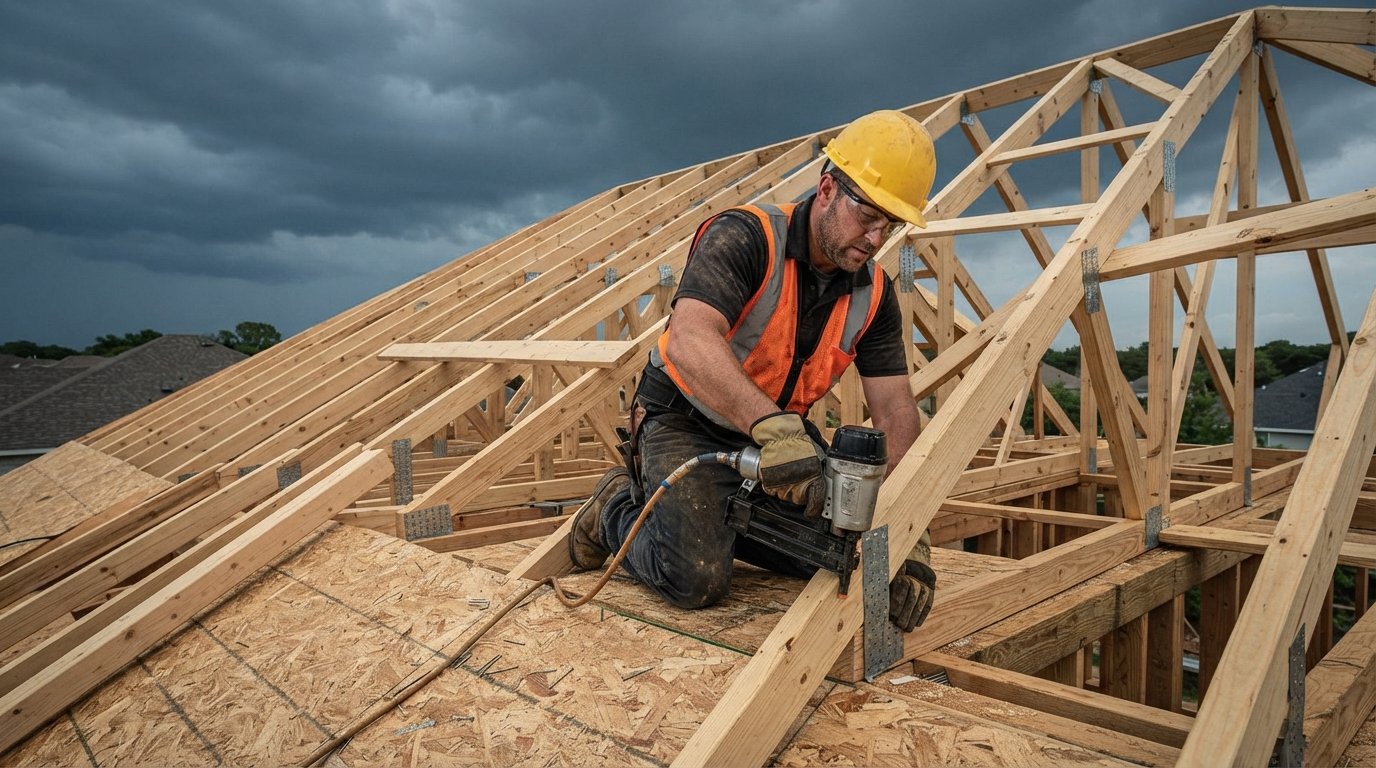
Building Materials for High Wind Zones: Storm Protection Guide
Selecting the right building materials for high wind zones storm protection is crucial for home safety. Learn which materials and techniques offer the best defense against severe weather.
By Adnan Nazir
Learn more about Roof Installation or Replacement for guides, costs, and what to expect.
Compare Roof Installation or Replacement Pros Near You

Enter your ZIP code to compare top-rated local professionals and request free quotes.
When a severe storm rolls in, the difference between minor cosmetic damage and a catastrophic structural failure often comes down to the materials holding your home together. In high wind zones, standard construction practices are simply not enough. The intense pressure changes, flying debris, and sustained wind speeds of hurricanes, tornadoes, and derechos test every component of a house, from the roof shingles down to the foundation anchors. Choosing the right building materials for high wind zones storm protection is not just about meeting code requirements; it is about safeguarding your family and your financial investment.
Understanding how wind interacts with your home is the first step toward fortifying it. Wind does not just push against a wall; it creates lift on the roof and suction on the leeward side, essentially trying to pull the house apart. To combat this, you need a system of materials that work together to create a continuous load path. This guide will walk you through the specific materials and techniques that provide the highest level of storm protection, helping you make informed decisions whether you are building a new home or retrofitting an existing one.
Understanding the Forces of High Wind Events
To select the right materials, you must first understand the enemy. High wind events are not uniform; they exert three distinct types of pressure on a structure. The first is positive pressure, which is the direct force of the wind pushing against a wall. The second is negative pressure, or suction, which occurs on the sides and top of the home as wind flows over it, effectively trying to suck the roof off. The third is lateral force, which pushes the entire structure sideways. Materials must be rated to withstand all three.
Furthermore, the impact of debris is a major factor. In a hurricane or tornado, a two-by-four piece of lumber can become a lethal projectile. Standard building materials like vinyl siding or asphalt shingles offer little resistance to these impacts. In contrast, engineered materials and reinforced systems are designed to absorb energy or deflect it without shattering or peeling away. Understanding the difference between these material classes is crucial for anyone living in a designated high wind zone, such as coastal areas or the Midwest tornado alley.
Roofing Systems: Your First Line of Defense
The roof is the most vulnerable part of a home during a storm. If the roof fails, the entire structure is compromised. Therefore, the materials you choose for the roof deck, underlayment, and covering are critical. In high wind zones, standard felt underlayment is often replaced with synthetic, peel-and-stick membranes that create a watertight seal even if the primary roofing material is blown away. This secondary barrier is essential for preventing water intrusion, which can destroy the interior of a home even if the structure itself survives.
For the primary roof covering, you have several high-performance options. Asphalt shingles must have a high wind rating, typically 110 mph or higher, and must be installed with six nails per shingle rather than the standard four. However, for the highest level of protection, homeowners often turn to metal roofing or concrete tile. Metal roofs, particularly those with standing seams, are excellent at resisting uplift because they are mechanically attached to the structure and allow wind to flow over them. Concrete tiles are heavy and impact-resistant, but they require a reinforced roof structure to support their weight.
Essential Roofing Components for Wind Resistance
Beyond the visible covering, the hidden components of the roof system play a vital role in storm protection. A complete high wind roofing system includes:
- Reinforced Roof Decking: Thicker plywood or oriented strand board (OSB) that is nailed and glued to the trusses.
- Secondary Water Barrier: A self-adhering polymer membrane applied over the entire roof deck to prevent leaks.
- Impact-Resistant Shingles: Products rated Class 4 for impact resistance, which can withstand hail and flying debris.
- Hurricane Straps: Metal connectors that tie the roof trusses to the top plates of the walls, preventing uplift.
Investing in these components can be the difference between needing a roof repair and needing a full roof replacement. When planning a roof replacement, it is wise to consult with a professional to ensure your roof can handle the specific wind loads in your area. You can use resources like our guide on U-Factor in windows to understand how different components of your home envelope work together, though for roofs, the focus should be on uplift and impact ratings.
Wall Systems and Sheathing
While the roof takes the brunt of the lift, the walls must withstand the direct pressure and impact of the storm. The exterior cladding is your first barrier. In high wind zones, vinyl siding is generally discouraged unless it is specifically rated for high winds and installed with reinforced nailing hem. Better options include fiber cement siding, such as HardiePlank, or engineered wood siding. These materials are dense and heavy, making them more resistant to wind-driven rain and impact. They also hold paint better and do not become brittle in cold weather, which can lead to cracking and failure during a storm.
Behind the siding, the structural sheathing is what actually holds the house together. Standard 7/16-inch OSB may not be sufficient in high wind zones. Many builders now use 5/8-inch plywood or OSB, which provides greater racking strength (resistance to lateral forces). Even more important is the attachment method. Sheathing must be nailed at closer intervals than standard code, often every 4 inches on the edges and 6 inches in the field. This creates a stronger, more rigid box structure that resists twisting and shifting during a storm.
For the ultimate in wall protection, some homeowners install a continuous layer of structural sheathing, such as a zip system, which combines the sheathing and the water-resistive barrier into one product. This eliminates the seams where wind-driven rain can penetrate. Additionally, reinforcing the connection between the walls and the foundation is critical. This is achieved through anchor bolts and hold-downs that tie the wall framing directly to the concrete slab or foundation walls.
Windows, Doors, and Openings
Windows and doors are the weakest points in a home's exterior envelope. Once a window is breached, the internal pressure of the house changes, which can cause the roof to blow off from the inside out. Therefore, protecting these openings is paramount. There are two main approaches: impact-resistant glass and storm shutters.
Impact-resistant windows are manufactured with a layer of plastic (polyvinyl butyral) sandwiched between two panes of glass. When struck by debris, the glass may crack, but the plastic interlayer holds it together, preventing the window from shattering and allowing the wind to enter. These windows are available in vinyl, aluminum, and wood frames, but the frame must also be reinforced to withstand the impact without twisting out of the wall. For sliding glass doors, impact-resistant glass is also available and highly recommended.
Alternatively, homeowners can install permanent or removable storm shutters. These must be tested and approved for the specific wind zone. Plywood is often used as a last-minute measure, but it is rarely strong enough to withstand the impact of a major hurricane. Proper shutters, whether accordion-style, roll-down, or colonial, are engineered to transfer the impact load to the wall structure. When selecting doors, ensure they are solid core or have a reinforced frame and are equipped with at least three hinges and a heavy-duty deadbolt. Garage doors are particularly vulnerable; a standard garage door can fail at wind speeds of 70 mph. Reinforced garage doors with vertical bracing are essential to prevent the door from collapsing inward, which can cause a pressure explosion inside the home.
Connectors and Fasteners: The Hidden Heroes
The strongest materials in the world will fail if they are not properly connected. In high wind zones, the continuous load path is a critical concept. This path must transfer the force of the wind from the roof to the foundation. This is achieved through a series of metal connectors, including hurricane straps, clips, and bolts. These inexpensive pieces of hardware are the difference between a home that stays intact and one that disintegrates.
For example, where the roof trusses meet the walls, hurricane straps wrap over the truss and are nailed to the wall. At the floor levels, metal connectors tie the upper wall to the lower wall. At the foundation, anchor bolts embedded in the concrete secure the bottom plate. In a high wind zone, it is also advisable to use ring-shank nails instead of smooth-shank nails. Ring-shank nails have ridges that grip the wood, providing significantly more withdrawal resistance. Using construction adhesives in addition to nails further strengthens the connection and reduces the chance of squeaks and movement.
Selecting Materials for Your Project
When planning a building or remodeling project in a high wind zone, the selection process can be overwhelming. It is not just about picking the most expensive option; it is about choosing the right materials for your specific risk level and budget. A good rule of thumb is to look for materials that have been tested and approved by organizations like the American Society for Testing and Materials (ASTM) or the Miami-Dade County Building Code, which is known as the gold standard for hurricane protection.
To ensure you are making the right choices, consider the following steps:
- Determine Your Wind Zone: Check local building codes to find out the design wind speed for your area. This will dictate the minimum ratings for your materials.
- Prioritize the Envelope: Focus your budget on the roof, windows, and doors first, as these are the most vulnerable.
- Verify Installation: Even the best materials can fail if installed incorrectly. Ensure your contractor follows the manufacturer's instructions and local codes for high wind zones.
It is also important to consider the maintenance requirements of different materials. For instance, while wood siding offers excellent impact resistance, it requires regular painting and sealing to prevent rot. Fiber cement siding is more durable but requires repainting every 10 to 15 years. Metal roofs are low maintenance but can be noisy in the rain. Weighing these factors against your long-term goals will help you make a decision that balances safety, cost, and aesthetics.
Retrofitting Existing Homes
If you already own a home in a high wind zone, you do not have to start from scratch to improve your protection. Retrofitting can significantly increase your home's resilience. One of the most cost-effective retrofits is reinforcing the garage door. This can often be done with a kit that adds vertical bracing. Another is installing storm shutters, which can be permanent or removable. If you are planning a roof replacement, that is the ideal time to upgrade to a secondary water barrier and hurricane straps, as the roof will already be open.
For a comprehensive assessment of your home's vulnerabilities, it is wise to hire a licensed contractor or home inspector who is experienced in wind mitigation. They can identify weak points, such as missing straps or inadequate nailing, and recommend specific upgrades. Many insurance companies offer discounts for homes that have been retrofitted with wind-resistant features, which can help offset the cost of the improvements. To find qualified professionals in your area, you can use a platform like FreeQuotes.Contractors to request quotes from pre-vetted local contractors who specialize in storm protection and high wind zone construction.
Cost Considerations and Insurance Benefits
Building materials for high wind zones storm protection do come at a premium. Impact-resistant windows can cost 20 to 30 percent more than standard windows. A metal roof may cost twice as much as asphalt shingles. However, these costs should be viewed as an investment in your home's longevity and safety. The potential savings from avoiding storm damage repairs can far exceed the upfront cost. Furthermore, many insurance companies provide significant discounts on premiums for homes that meet certain wind mitigation standards.
When budgeting for your project, be sure to factor in the cost of permits, labor, and potential engineering fees. It is also a good idea to get multiple quotes from contractors to ensure you are getting a fair price. The cost of materials can vary by region, so what is affordable in one area may be expensive in another. For homeowners looking to finance these improvements, options such as home equity loans or government-backed loans for disaster mitigation may be available. Always consult with a financial advisor to understand the best way to fund your storm protection upgrades.
Building a Resilient Future
As weather patterns become more unpredictable, the importance of building resilient homes cannot be overstated. The materials you choose today will determine how your home weathers the storms of tomorrow. By understanding the forces at play and selecting materials that are engineered to resist them, you can create a safer living environment for your family. Whether you are building new or retrofitting, the goal is to create a continuous, strong load path that ties your home together from the foundation to the roof.
Remember that storm protection is a system, not a single product. A strong roof needs a strong wall to attach to, and strong walls need a solid foundation. By taking a holistic approach and prioritizing quality materials and installation, you can have peace of mind knowing that your home is prepared for whatever nature throws at it. If you are ready to start your project, consider reaching out to local professionals who can help you navigate the specific requirements of your area and ensure your home is built to withstand the wind.
Learn more about Roof Installation or Replacement for guides, costs, and what to expect.
Compare Roof Installation or Replacement Pros Near You
Enter your ZIP code to compare top-rated local professionals and request free quotes.